
During heatwaves, you should regularly check your refrigerator’s temperature with a thermometer, keeping it between 35°F and 40°F, and verify the cooling system works properly. Store raw meats on the bottom shelf, and keep leftovers refrigerated within two hours. Avoid overloading your fridge for proper air circulation, and keep doors closed as much as possible. To prevent spoilage, monitor food storage times and use cooling methods if needed—continue to explore ways to keep your food safe and fresh.

Get backup power and energy gear delivered free with Prime
- Fast, free delivery on millions of items
- Prime Video, Amazon Music and more included
- Member-only deals all year
Key Takeaways
- Regularly monitor fridge and freezer temperatures, maintaining 35°F-40°F for the fridge and 0°F or lower for the freezer.
- Keep refrigerator doors closed as much as possible to prevent temperature fluctuations during heatwaves.
- Store raw meats on the bottom shelf in sealed containers and refrigerate leftovers promptly within two hours.
- Use airtight containers and label stored items to prevent spoilage and facilitate easy identification of freshness.
- Transfer perishable items to secondary coolers with ice packs if the refrigerator isn’t cooling properly or during extended power outages.
During heatwaves, maintaining proper food storage temperatures becomes more vital to prevent spoilage and foodborne illnesses. When temperatures soar outside, the risk of bacteria multiplying quickly increases, making it essential to follow effective food safety practices. You need to pay close attention to how you store your perishable items and guarantee your refrigeration setup is optimized. Implementing proper refrigeration tips can help you keep your food safe and fresh despite the intense heat.
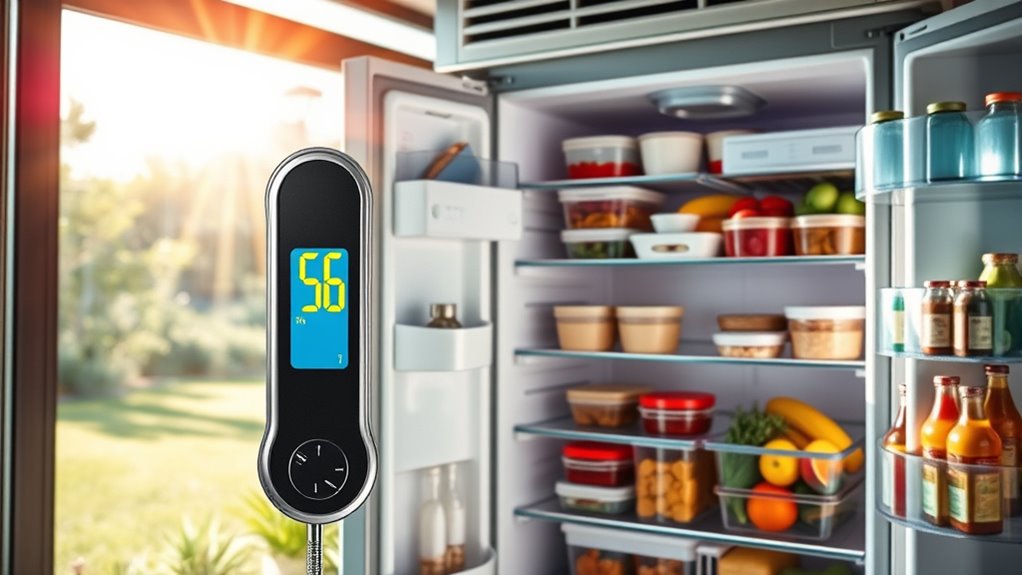
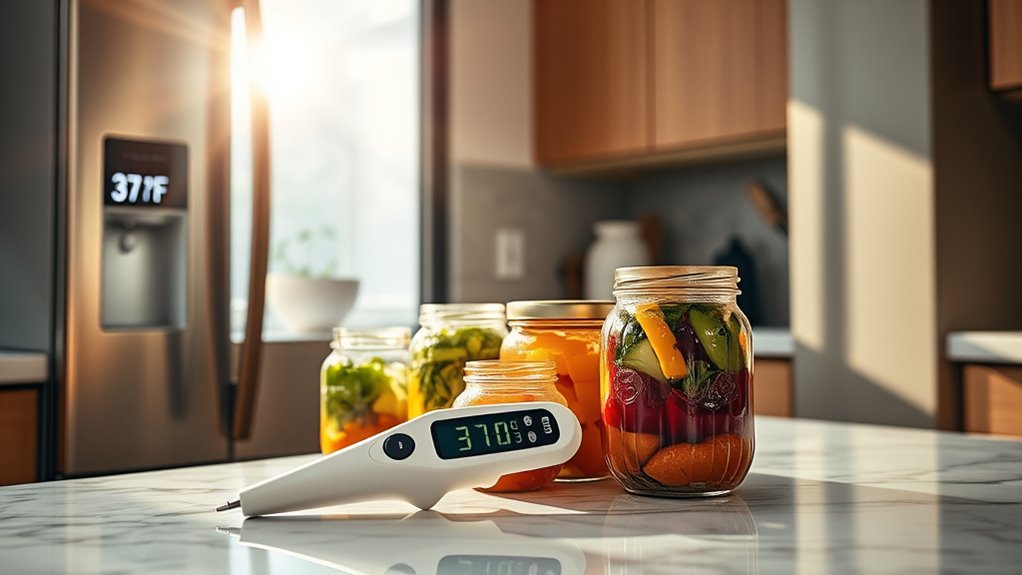
First, check your refrigerator’s temperature regularly using a thermometer. The ideal range for safe food storage is between 35°F and 40°F (1.7°C to 4.4°C). If your fridge is too warm, it won’t inhibit bacterial growth effectively, and your food could spoil faster. Adjust the thermostat accordingly, and make sure the cooling system is functioning properly. Keep the fridge door closed as much as possible to maintain a consistent temperature, especially during heatwaves when outside temperatures are high. Avoid overloading your fridge, which can obstruct air circulation and compromise temperature regulation.
Check your fridge’s temperature regularly and keep the door closed to prevent spoilage during heatwaves.
Next, consider the placement of your food items. Store raw meats, poultry, and seafood on the bottom shelf in sealed containers to prevent cross-contamination. Fruits and vegetables should be kept in crisper drawers, which help regulate humidity and maintain freshness. Be vigilant about leftovers and cooked foods—these should be refrigerated within two hours of cooking or purchase. During a heatwave, that window shortens; bacteria multiply rapidly in warm environments. If you notice your fridge isn’t cooling sufficiently or if the power goes out, transfer perishables to a cooler with ice packs or a secondary refrigeration unit to prevent spoilage.
In addition to the fridge, your freezer plays a vital role in food safety during heatwaves. Ensure it’s set at 0°F (-18°C) or lower, and keep it fully stocked to maintain cold temperatures more efficiently. If your freezer isn’t freezing properly, don’t hesitate to contact a technician. When storing leftovers or bulk items, use airtight containers and label them with dates to keep track of freshness.
Finally, remember that proper storage practices are supported by understanding food safety principles, which help prevent contamination and spoilage. Stay mindful of how long food stays stored during extended heatwaves. Even with proper refrigeration, some foods have limited shelf lives. Regularly inspect your stored items for signs of spoilage, such as off odors, mold, or slimy textures. When in doubt, it’s safer to discard questionable items rather than risk foodborne illness. By following these food safety guidelines and refrigeration tips, you can protect your food and health during the hottest days of the year.
refrigerator thermometer for food safety
As an affiliate, we earn on qualifying purchases.
As an affiliate, we earn on qualifying purchases.
Frequently Asked Questions
Can I Store Perishable Foods Outside During a Heatwave?
Storing perishable foods outside during a heatwave isn’t recommended. Outdoor storage can expose food to extreme temperatures, risking spoilage and bacteria growth. If you must, keep only heat-resistant foods in a shaded, cool, and secure area, and use insulated containers. Always monitor the temperature to guarantee it stays safe, and avoid storing perishables outside for extended periods. Your best bet is to keep perishable items refrigerated indoors.
How Do I Prevent Food Spoilage Without Refrigeration?
You can prevent food spoilage without refrigeration by using alternative preservation methods like curing, drying, or fermenting—these techniques might seem old-fashioned but are incredibly effective. Unconventional storage options such as cool, dark caves or underground cellars keep foods at stable temperatures. Keep perishable items in airtight containers, minimize exposure to sunlight, and use ice packs or natural cooling sources to extend freshness and avoid spoilage during heatwaves.
Are There Specific Foods That Tolerate Higher Temperatures Better?
Certain foods have higher temperature tolerance and are better suited for warm conditions. Canned goods, dried foods, and root vegetables like potatoes and carrots tolerate heat well without compromising food safety. Fresh fruits such as bananas and apples also handle higher temperatures better than perishable items like dairy or seafood. Knowing these temperature tolerances helps you prevent spoilage and maintain food safety during heatwaves, ensuring your supplies stay safe longer.
How Often Should I Check Temperature Levels During a Heatwave?
You should check your food storage temperature at least twice a day during a heatwave. Make sure your thermometer is properly calibrated for accurate readings. Keep an eye on temperature fluctuations and adjust your storage practices if needed. Insulate your storage containers to maintain stable temperatures, and regularly monitor to prevent spoilage. Consistent checks help you catch problems early and keep your food safe.
What Are the Signs of Food Spoilage Caused by Heat?
You’ll notice signs of food spoilage caused by heat such as a sour or off smell, slimy texture, and discoloration. Mold growth may appear as fuzzy spots on the surface. If you see these signs, avoid eating the food to prevent food poisoning. Heat accelerates bacterial growth, increasing the risk of illness. Always check for unusual odors, textures, and colors to keep food safe during hot weather.
airtight food storage containers
As an affiliate, we earn on qualifying purchases.
As an affiliate, we earn on qualifying purchases.
Conclusion
As heatwaves threaten your food’s safety, remember: your vigilance is your shield. Keep your fridge cold, your freezer colder, and never leave perishables out in the sun. Think of your kitchen as a fortress, guarding against spoilage like a sentinel standing firm. Stay attentive, adjust temperatures promptly, and let your quick actions echo the rhythm of safety. Because in the battle against heat, your mindful efforts turn chaos into control—preserving your food and peace of mind.
cooler with ice packs for food preservation
As an affiliate, we earn on qualifying purchases.
As an affiliate, we earn on qualifying purchases.
digital freezer temperature monitor
As an affiliate, we earn on qualifying purchases.
As an affiliate, we earn on qualifying purchases.
Halloween Picks
halloween
As an affiliate, we earn on qualifying purchases.