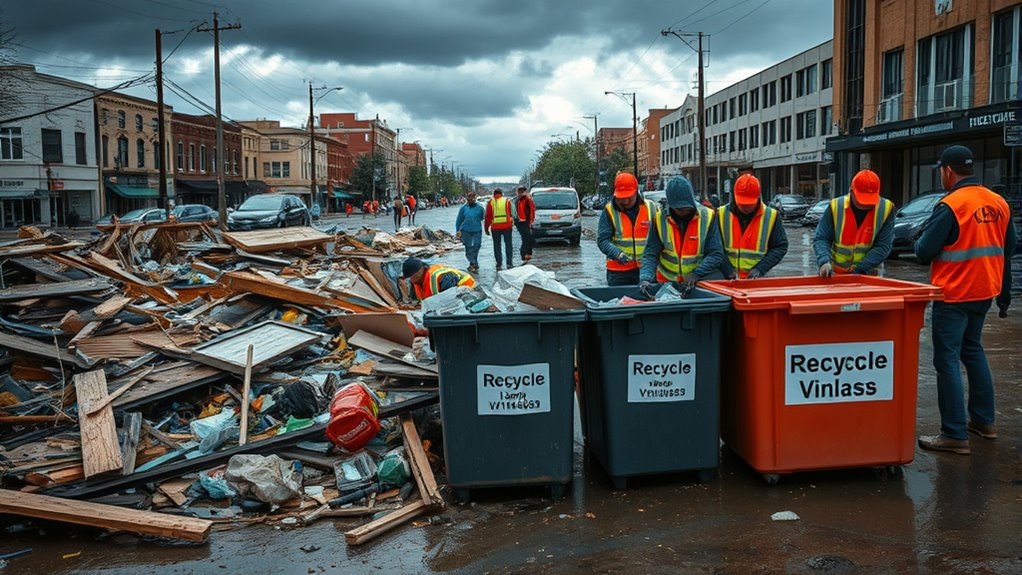

After a major storm, proper debris sorting is essential to keep everyone safe and protect the environment. You should separate vegetative waste, construction debris, hazardous materials, and household items according to your local guidelines. Proper sorting prevents injuries, avoids recycling contamination, and helps manage waste efficiently. Remember, some debris may require special disposal methods or recycling processes. To find out how to handle your specific situation, keep exploring further tips and strategies for effective storm debris management.

Get backup power and energy gear delivered free — and shop member deals
- Fast, free delivery on millions of items
- Access to Prime Big Deal Days deals on October 6–7
- Prime Video, Amazon Music and more included
Key Takeaways
- Properly segregate vegetative, construction, hazardous, and household debris to ensure safe and effective disposal.
- Follow local recycling guidelines to determine which materials can be composted, recycled, or require special handling.
- Use source separation techniques to reduce contamination and facilitate efficient processing at recycling centers.
- Coordinate with waste management services for collection schedules and bundling requirements for storm debris.
- Consider alternative disposal methods like composting or salvage before sending debris to landfills to minimize environmental impact.
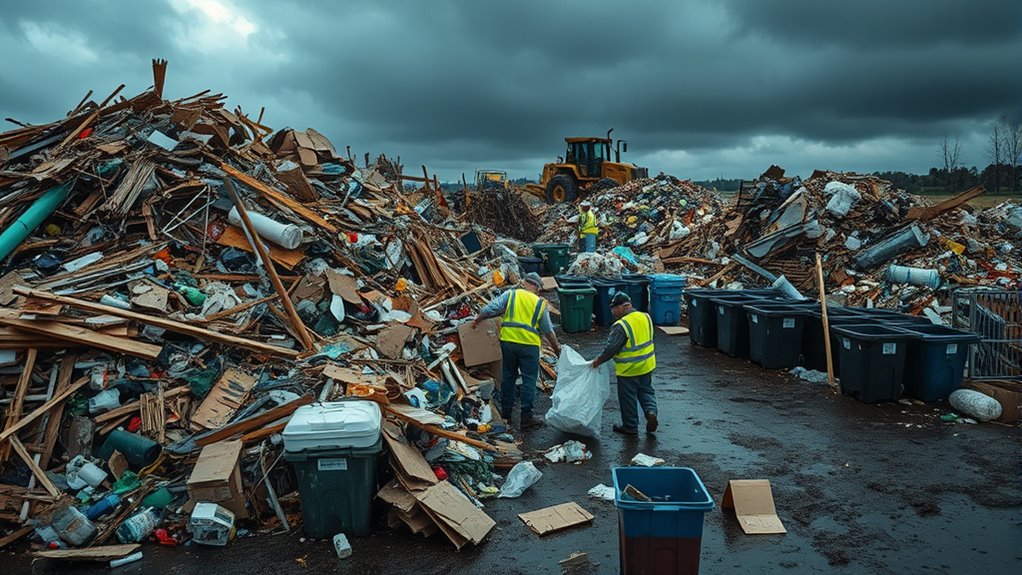
Sorting debris and recycling effectively are vital steps toward reducing waste and protecting the environment. After a major storm, you’re likely faced with a mountain of storm debris that can seem overwhelming. Branches, fallen trees, damaged roofing, and scattered household items pile up quickly, making it tempting to toss everything into the trash. But understanding how to sort this debris properly and navigate recycling challenges can make a significant difference in managing cleanup efficiently and minimizing environmental impact.
Storm debris isn’t just ordinary trash; it often contains hazardous materials, such as broken glass, damaged appliances, and contaminated items. Properly sorting this debris is fundamental to prevent injuries, avoid contaminating recycling streams, and facilitate proper disposal. You should start by separating vegetative debris—branches, leaves, and wood— from construction and demolition debris like drywall, roofing materials, and insulation. This helps streamline disposal and ensures each type goes to the right facility. Keep in mind that some debris might require special handling, especially if it contains hazardous substances like chemicals or asbestos. Always check local guidelines to identify what can be recycled and what must be disposed of as waste.
Properly sorting storm debris prevents injuries, contamination, and ensures safe disposal of hazardous materials like chemicals and asbestos.
Recycling challenges become evident when handling storm debris, especially because many materials aren’t straightforward to recycle. For example, mixed debris from damaged structures often includes items like plastics, metals, and treated wood, which need to be sorted meticulously. Recycling centers may not accept certain contaminated or mixed materials, leading to more waste ending up in landfills. You’ll need to educate yourself on what’s recyclable locally—some areas accept storm debris for composting or mulch, while others require special pickups for hazardous waste. Proper segregation at the source reduces contamination, making recycling more effective and less costly. Additionally, incorporating field recording techniques can help document and track debris types for proper disposal and recycling efforts.
Another challenge is the volume of debris generated after a storm, which can quickly overwhelm local waste management systems. Coordinating with municipal or private services can help you understand collection schedules and sorting protocols. If your community offers curbside pickup for vegetative debris, make sure to follow guidelines on how to bundle or stack materials correctly. When recycling is limited or unavailable for certain items, consider alternative solutions such as composting organic waste or repurposing salvageable materials.
Frequently Asked Questions
How Can Residents Prepare for Debris Removal Prior to a Storm?
To prepare for debris removal before a storm, you should focus on storm preparedness and debris collection planning. Clear your yard of loose items, trim trees, and secure outdoor furniture. Label or separate recyclable debris to make collection easier. Keep emergency supplies handy, and stay informed about local debris removal schedules. Proper planning helps guarantee cleanup is swift and safe, minimizing damage and making recovery smoother after the storm passes.
Are There Specific Safety Tips for Handling Hazardous Debris?
Did you know that nearly 70% of storm-related injuries involve hazardous materials? When handling hazardous debris, always wear protective gear like gloves, masks, and goggles to prevent exposure. Avoid touching or inhaling hazardous materials directly, and keep a safe distance from unstable structures. If you encounter hazardous debris, report it to authorities immediately. Prioritize safety to protect yourself and others during storm cleanup efforts.
What Are the Costs Associated With Debris Disposal Services?
The costs associated with debris disposal services vary depending on the volume and type of debris, but typically include service fees and cost estimates based on weight or cubic yardage. You should expect to pay for hauling, sorting, and recycling. It’s wise to request quotes from local providers to compare fees. Keep in mind that hazardous waste disposal may incur additional charges, so clarify these details upfront to avoid surprises.
How Does Recycling Debris Differ by City or Region?
Like a river flowing through varied landscapes, recycling debris differs by city or region. You’ll find that regional policies dictate how waste is sorted at local facilities, influencing recycling practices. Some areas have advanced sorting facilities that maximize material recovery, while others rely on simpler methods. Your local regulations and available infrastructure shape how efficiently debris is recycled, making each region’s approach unique, much like different tributaries feeding into a larger stream.
What Innovations Are Emerging in Debris Sorting Technology?
You should know that emerging innovations in debris sorting technology include advanced sorting systems and robotic technology. These advancements allow faster, more accurate separation of recyclable materials from debris, reducing manual labor and increasing efficiency. Robotic arms equipped with AI can identify and sort different materials on the fly, making debris recycling more effective and environmentally friendly. These innovations are transforming how cities handle post-storm debris cleanup and recycling efforts.
Conclusion
After a major storm, you might think all debris should just be thrown away, but recycling proves otherwise. Studies suggest that properly sorting storm debris can markedly reduce landfill waste and even recover valuable materials. It’s a common misconception that recycling isn’t effective during emergencies, but evidence shows organized efforts can make a big difference. So, by sorting debris carefully, you’re not just helping cleanup—you’re supporting a more sustainable future, proving that even chaos can be managed responsibly.
Fall Picks
fall essentials
As an affiliate, we earn on qualifying purchases.