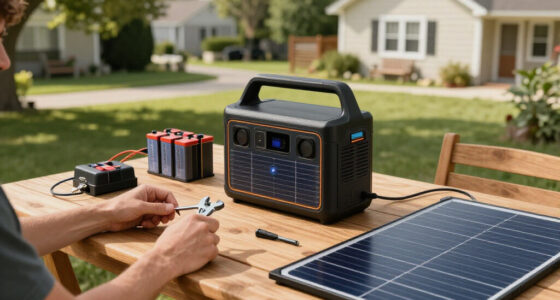
Choosing the right portable power station with extra capacity around 10kWh can be daunting, given the range of options available. If you need reliable backup power for home, RV, or outdoor adventures, there are standout models to consider. The AFERIY P280 offers a high-capacity 2048Wh LiFePO₄ battery with fast charging and multiple charging inputs, making it ideal for critical devices. EF ECOFLOW DELTA 3 Max Plus provides a robust 2048Wh capacity with a 3000W output and expandable options, perfect for longer-term use. Meanwhile, the Jackery HomePower 3600 Plus combines high power output with portability and expandability, suited for larger household needs. Each of these models balances capacity, portability, and features differently, so understanding your specific needs helps narrow down the best fit.

Get backup power and energy gear delivered free with Prime
- Fast, free delivery on millions of items
- Prime Video, Amazon Music and more included
- Member-only deals all year
Complete the kit


Key Takeaways
- Higher capacity models like Jackery’s and EF ECOFLOW’s can power larger appliances but are heavier and less portable.
- LiFePO₄ batteries provide longer cycle life and safety, making them better for long-term use despite higher initial costs.
- Expandable capacity is key for future-proofing, but it often comes with increased weight and price.
- Fast charging and multiple input options enhance usability, especially when relying on solar or vehicle power.
- Weight and size remain the main tradeoffs for maximum capacity and extended run times.
| AFERIY P280 Portable Power Station 2800W (Peak 5600W) UPS Solar Generator |  | Best Overall for Critical Backup and Fast Charging | Wattage: 2800 watts | Battery Capacity: 2048Wh | Battery Type: LiFePO₄ | VIEW ON AMAZON | See Our Full Breakdown |
| UDPOWER S1000 Pro Portable Power Station, Solar Generator for Home Backup, RV, Camping |  | Best for Long-Lasting Power and Quiet Operation | Wattage: 2200 watts | Battery Capacity: 3000Wh | Battery Type: LiFePO₄ | VIEW ON AMAZON | See Our Full Breakdown |
| EF ECOFLOW Portable Power Station DELTA 3 Max Plus, 2048Wh, 3000W Output |  | Best for Expandability and App Control | Wattage: 3000 watts | Battery Capacity: 2048Wh | Battery Type: LiFePO₄ | VIEW ON AMAZON | See Our Full Breakdown |
| Jackery HomePower 3600 Plus Portable Power Station, 3600W AC Output, 3584Wh LFP Solar Generator |  | Best for Large Household and Emergency Backup | Wattage: 3600W | Capacity: 3584Wh | Expandable Capacity: Up to 21kWh | VIEW ON AMAZON | See Our Full Breakdown |
| ABOK Ark3600 Portable Power Station 3600W, 3840Wh LiFePO4 Battery |  | Best for Heavy-Duty Off-Grid and Emergency Use | Wattage: 3600W | Battery Capacity: 3840Wh | Expandable Capacity: Up to 11520Wh | VIEW ON AMAZON | See Our Full Breakdown |
| portable power station with extra battery 10kwh | Wattage | Weight | Battery Capacity | Charging Time |
|---|---|---|---|---|
| AFERIY P280 Portable Power Sta | 2800 watts | 44 pounds | 2048Wh | 38 minutes to 80% |
| UDPOWER S1000 Pro Portable Pow | 2200 watts | 41 pounds | 3000Wh | Fast solar charging |
| EF ECOFLOW Portable Power Stat | 3000 watts | 49 pounds | 2048Wh | 43 minutes to 80% |
| Jackery HomePower 3600 Plus Po | 3600W | 77.2 pounds | — | 2.5 hours AC, 4 hours solar |
| ABOK Ark3600 Portable Power St | 3600W | 92 pounds | 3840Wh | — |
More Details on Our Top Picks
AFERIY P280 Portable Power Station 2800W (Peak 5600W) UPS Solar Generator
The AFERIY P280 stands out for its impressive 2800W continuous inverter and a large 2048Wh LiFePO₄ battery, making it suitable for critical devices and emergency backup. Compared to other models, its fast charging capability—reaching 80% in just 38 minutes—is a major advantage for quick recharging. Its dual solar inputs add flexibility, especially for off-grid use. However, its weight of 44 pounds limits portability, which could be a drawback for frequent travelers. This pick is ideal for users primarily seeking reliable backup power with quick recharge times and a durable battery that can expand to 10.24kWh.
Pros:- Fast charging from 0 to 80% in just 38 minutes
- High-capacity 2048Wh LiFePO₄ battery, expandable to 10.24kWh
- Pure sine wave AC output for sensitive electronics
- Supports dual solar inputs for flexible recharging
Cons:- Relatively heavy at 44 pounds
- Limited to one AC outlet
- Bulkier design reducing portability
Best for: Home backup, emergency preparedness, RV use
Not ideal for: Frequent travelers needing lightweight gear
- Wattage:2800 watts
- Battery Capacity:2048Wh
- Battery Type:LiFePO₄
- Weight:44 pounds
- Charging Time:38 minutes to 80%
- Outputs:1 AC outlet
Our verdict“A robust choice for backup power with rapid charging and expandable capacity, best suited for stationary use.”
UDPOWER S1000 Pro Portable Power Station, Solar Generator for Home Backup, RV, Camping
The UDPOWER S1000 Pro offers a steady 2200W continuous output with a 3000W surge, making it suitable for powering a range of appliances. Its over 3000 cycle Lithium Iron Phosphate battery ensures durability over years of use. Compared to other options, its quiet operation and safety protections make it appealing for outdoor and residential environments. The main tradeoff is its weight of 41 pounds and the absence of wheels or handles, which complicates mobility. This model works well for users who prioritize long-term reliability and quiet operation, especially in stationary settings.
Pros:- Long-lasting over 3000 cycles
- Quiet operation with protective features
- Fast solar charging capability
- Reliable power for diverse appliances
Cons:- Heavy at 41 pounds
- Limited to 12V DC output without adapters
- No built-in wheels or handles
Best for: Home backup, outdoor activities, RV use
Not ideal for: Frequent movers who need lightweight options
- Wattage:2200 watts
- Battery Capacity:3000Wh
- Battery Type:LiFePO₄
- Weight:41 pounds
- Charging Time:Fast solar charging
- Outputs:Multiple DC and AC ports
Our verdict“An excellent choice for those seeking dependable, quiet power with long battery life, ideal for stationary use.”
EF ECOFLOW Portable Power Station DELTA 3 Max Plus, 2048Wh, 3000W Output
The EF ECOFLOW DELTA 3 Max Plus offers a substantial 2048Wh capacity with a 3000W continuous output, making it suitable for home backup, camping, and RV use. Its expandable capacity up to 10kWh with additional batteries provides future-proofing. The device’s fast charging—reaching 80% in just 43 minutes—and smartphone app control add convenience. The main limitation is its weight of 49 pounds and a relatively high price point, which might be a barrier for budget-conscious buyers. Its expandability makes it perfect for those planning to increase capacity over time.
Pros:- Fast charging from 0 to 80% in 43 minutes
- Expandable capacity up to 10kWh
- Long-lasting 10-year lifespan LiFePO₄ battery
- Remote monitoring via app
Cons:- Heavy at 49 pounds
- Higher initial cost
- Limited outlets for high-power appliances
Best for: Long-term users needing expandable capacity
Not ideal for: Lightweight portable needs or budget buyers
- Wattage:3000 watts
- Battery Capacity:2048Wh
- Battery Type:LiFePO₄
- Weight:49 pounds
- Charging Time:43 minutes to 80%
- Outputs:3 AC outlets
Our verdict“A versatile, expandable power station suited for users planning long-term growth and remote control features.”
Jackery HomePower 3600 Plus Portable Power Station, 3600W AC Output, 3584Wh LFP Solar Generator
The Jackery HomePower 3600 Plus features a powerful 3600W AC output and a generous 3584Wh capacity, making it suitable for larger household backup and emergency scenarios. Its expandability up to 21kWh provides significant future-proofing, and its multiple charging options—including solar and AC—offer flexibility. Despite its impressive capacity, the 77.2-pound weight and large size limit portability. This model is best for those who need serious backup power for extended periods and can accommodate its size within a home or stationary setup.
Pros:- High capacity expandable to 21kWh
- Multiple charging options including solar
- Long lifespan with high cycle count
- Wheels and telescopic handle for mobility
Cons:- Heavy at 77.2 pounds
- Expensive compared to smaller units
- Requires ample storage space
Best for: Home backup, emergency planning, large RVs
Not ideal for: Frequent travelers or those needing portable units
- Wattage:3600W
- Capacity:3584Wh
- Expandable Capacity:Up to 21kWh
- Weight:77.2 pounds
- Charging Time:2.5 hours AC, 4 hours solar
- Outlets:2
Our verdict“Best suited for large-scale backup needs where capacity and expandability outweigh portability concerns.”
ABOK Ark3600 Portable Power Station 3600W, 3840Wh LiFePO4 Battery
The ABOK Ark3600 offers a massive 3840Wh capacity with expandable options up to 11520Wh, making it a top contender for off-grid living and long-term emergencies. Its LiFePO₄ batteries with over 4000 cycles promise durability, and its 3600W continuous output can handle large appliances. The main tradeoff is its weight of 92 pounds, which is less suited for frequent transport. This model is ideal for users who need extensive power capacity and don’t mind the size and weight for stationary setups.
Pros:- High capacity expandable to 11520Wh
- Durable batteries with over 4000 cycles
- Multiple versatile output ports
- Long lifespan and Bluetooth app control
Cons:- Heavy at 92 pounds
- High cost due to advanced features
- Large size limits portability
Best for: Off-grid living, long-term emergencies, stationary backup
Not ideal for: Portable use or frequent moving
- Wattage:3600W
- Battery Capacity:3840Wh
- Expandable Capacity:Up to 11520Wh
- Weight:92 pounds
- Cycle Life:Over 4000 cycles
- Connectivity:Bluetooth app
Our verdict“Best for stationary, heavy-duty off-grid applications where capacity and durability outweigh portability concerns.”

How We Picked
In selecting these portable power stations with 10kWh capacity, I prioritized models that balance capacity, portability, and expandability. I examined their battery chemistry—favoring LiFePO₄ for longevity—and looked at charging options, especially solar compatibility. The review also considers user-friendly features like multiple outlets, remote control, and ease of transport. Price was a factor, but I focused on models that deliver value for their capacity and features. Ultimately, my goal was to identify options suitable for varied needs—from emergency backup to off-grid living—while highlighting their strengths and tradeoffs.
Factors to Consider When Choosing Portable Power Station With Extra Battery 10kwh
When choosing a portable power station with a 10kWh capacity, several factors come into play beyond just the size of the battery. I focus on the type of battery chemistry, overall weight, expandability, charging options, and intended use scenarios. Understanding these aspects helps ensure you select a model that aligns with your specific needs—whether for emergency backup, outdoor adventures, or off-grid living. Since capacity often correlates with weight and cost, balancing these tradeoffs is key to making a satisfying purchase.
Capacity and Expandability
While 10kWh is a substantial capacity, not all models are created equal in terms of how easily they can be expanded. Look for units that support additional batteries or modules if you anticipate needing more power in the future. Keep in mind that larger capacities often come with increased weight, so consider your portability needs alongside long-term power requirements.
Battery Chemistry and Longevity
LiFePO₄ (Lithium Iron Phosphate) batteries dominate high-capacity portable stations because of their longer cycle life and safety profile. These batteries can handle over 4000 cycles, meaning they last years longer than traditional lithium-ion options. While initially more expensive, they tend to be more cost-effective over time due to their durability and stability, especially for off-grid or emergency use.
Portability vs. Power
High-capacity units are generally heavier and bulkier, which can limit portability. If you need a portable option for outdoor activities or frequent moves, look for models like the AFERIY P280 or UDPOWER S1000 Pro that balance capacity with manageable weight. Conversely, if your setup is stationary, larger models like Jackery’s or ABOK Ark3600 provide more power at the expense of mobility.
Charging Options and Speed
Fast charging—via AC, solar, or vehicle—can significantly improve usability, especially when relying on solar or when needing quick recharges. Look for units with multiple input options and rapid charge times, particularly if you plan to use solar panels or need to recharge in a short window. This feature is especially valuable for off-grid or emergency scenarios.
Additional Features and Outlets
Multiple outlets, USB ports, and remote control capabilities add convenience. For larger appliances, sufficient AC outlets are necessary. If you plan to monitor power remotely or control the unit via an app, ensure the model supports these features. Remember, more features often come with increased weight and cost, so prioritize based on your specific needs.
Frequently Asked Questions
How long can a 10kWh portable power station run my appliances?
The runtime depends on the wattage of your appliances. For example, a 1000W device could run for roughly 10 hours on a 10kWh capacity, but higher-wattage appliances will drain the battery faster. Always consider the continuous wattage and surge capacity of the station in relation to your devices’ power needs.
Are LiFePO₄ batteries worth the extra cost?
Yes, LiFePO₄ batteries typically last over 4000 cycles, which means they retain capacity for many years. They are also safer, with more stable chemistry and less risk of thermal runaway. For long-term use, especially in off-grid or emergency scenarios, their durability justifies the higher initial investment.
Can I expand capacity later if I start with a smaller unit?
Many high-capacity units, like the EF ECOFLOW DELTA 3 Max Plus or Jackery HomePower, support additional batteries or modules, allowing you to increase capacity over time. However, this often involves additional costs and space considerations, so plan for future expansion if you anticipate needing more power.
What are the main tradeoffs between portability and capacity?
Higher capacity models tend to be heavier and bulkier, limiting portability. If portability is a priority, opt for smaller, lighter units with slightly less capacity. Conversely, stationary setups can accommodate larger, heavier models that deliver extended run times and higher power output.
How do solar inputs impact charging speed?
Multiple solar inputs can significantly reduce recharging times, especially in sunny conditions. Fast solar charging is a major advantage for off-grid use, allowing you to replenish your power station during daylight hours. Always check the maximum solar input wattage to gauge potential charging speeds.
Conclusion
For those seeking reliable backup power at home or in an RV, models like the Jackery HomePower 3600 Plus or EF ECOFLOW DELTA 3 Max Plus offer excellent expandability and capacity. If portability is a priority for outdoor adventures or camping, the AFERIY P280 or UDPOWER S1000 Pro provide a good balance between power and weight. Heavy-duty off-grid living or long-term emergency preparedness favors the ABOK Ark3600 with its massive capacity. Choose based on your specific mobility, capacity, and budget needs to get the best fit for your situation.
As an affiliate, we earn on qualifying purchases.Halloween Picks
halloween