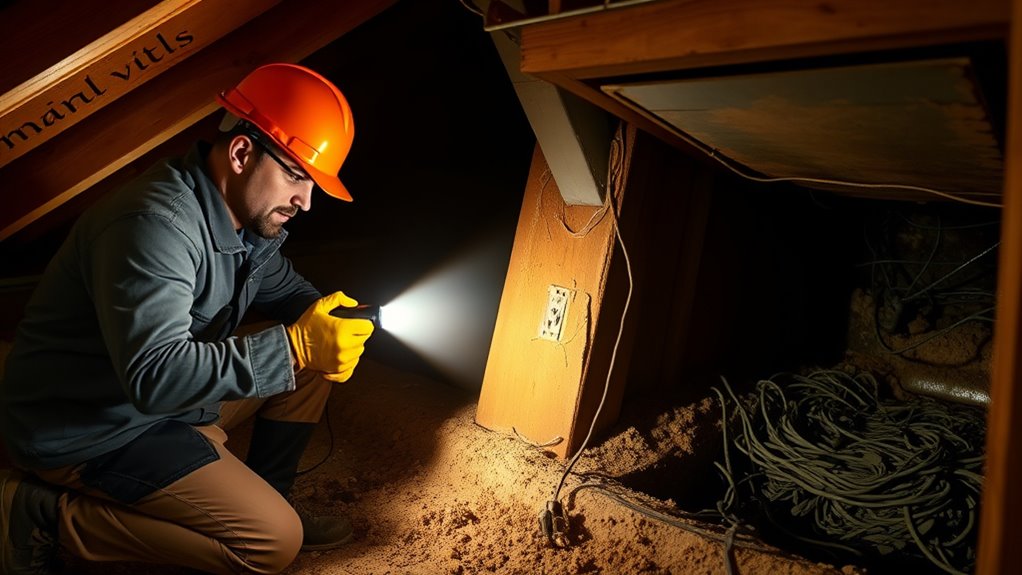

After a storm, safely inspect your attic and crawlspace by checking for signs of water damage, mold, or soft wood. Use a flashlight and moisture meter if needed, and look for discolored spots, pooling water, or sagging beams. Be cautious of unstable areas and wear protective gear. Look behind walls or under insulation for hidden damage. Continuing with these steps helps you catch problems early before they cause bigger issues later on.

Get backup power and energy gear delivered free with Prime
- Fast, free delivery on millions of items
- Prime Video, Amazon Music and more included
- Member-only deals all year
Key Takeaways
- Use a sturdy ladder and proper safety gear when accessing attics or crawlspaces after storms.
- Turn off power and check for exposed wiring or electrical hazards before inspection.
- Wear gloves, a dust mask, and protective clothing to avoid contact with mold, debris, or pests.
- Look for signs of water intrusion, mold, or structural damage without forcing entry or causing further harm.
- When in doubt, consult a professional for thorough assessment and safe repair recommendations.

After a storm, inspecting your attic and crawlspace is essential to identify hidden damage that could lead to future problems. Storms can compromise your home’s structure in ways that aren’t immediately visible from the outside. By carefully checking these spaces, you can catch issues early, saving money and preventing extensive repairs later. One of your main priorities should be moisture detection. Water intrusion from leaks or roof damage can seep into these areas, fostering mold growth and weakening the building materials. Look for signs of dampness, discoloration, or pooling water. Use a moisture meter if you have one, as it provides precise readings that help determine the extent of water intrusion. Detecting moisture early enables you to address issues before they escalate, safeguarding your home’s structural integrity. Incorporating proper water chemistry practices can also help prevent mold and deterioration caused by excess moisture.
When inspecting, pay close attention to the support beams, joists, and rafters. If you notice warping, cracking, or sagging, these could be signs of compromised structural integrity. Storm-related damage can weaken the framework, especially if water has infiltrated or if high winds have caused physical harm. Check for any loose or missing nails, damaged trusses, or areas where the wood appears soft or rotted. These are indicators that the structural elements may need reinforcement or replacement. Remember, even small cracks or shifts can be signs of larger problems brewing beneath the surface. Addressing these issues promptly prevents further deterioration and maintains the safety and stability of your home.
In addition to visual cues, listen for unusual sounds like creaking or cracking when you’re inspecting. Such noises might indicate stress points or weakened structures. Also, examine insulation for signs of water stains or mold, which point to leaks. If you encounter standing water or excessive moisture, it’s imperative to identify the source and repair it promptly. Sometimes, damage occurs in hidden places—behind walls or under insulation—so be thorough in your inspection. If you’re unsure about what you find, don’t hesitate to consult a professional. They can perform detailed assessments and provide targeted repairs, especially for issues related to moisture detection and maintaining your home’s structural integrity.
Taking the time to inspect your attic and crawlspace after a storm is an essential step in home maintenance. It helps you catch hidden damage early, preventing costly repairs down the line. Focus on moisture detection and structural assessment, and act swiftly to address any issues. Your proactive approach will ensure your home remains safe, stable, and protected from future storm damage.
moisture meter for home inspection
As an affiliate, we earn on qualifying purchases.
As an affiliate, we earn on qualifying purchases.
Frequently Asked Questions
How Can I Tell if Mold Is Growing After a Storm?
To tell if mold is growing after a storm, look for moisture signs like water stains, damp insulation, or warped wood. Use your senses—check for a musty odor or visible black, green, or white patches. Mold detection can be tricky, so if you notice these signs, it’s best to get a professional inspection. Address moisture issues promptly to prevent mold from spreading and causing health problems.
What Safety Gear Is Essential for Attic Inspections?
Think of your safety gear as your armor when you venture into the storm’s aftermath. You need an attic ladder safety harness to prevent falls and sturdy protective clothing to shield against mold, dust, and debris. Wear gloves, goggles, and a mask to avoid inhaling mold spores. Always make certain your ladder is secure before climbing, and take your time—safety first keeps you protected in every inspection.
How Often Should I Inspect My Attic and Crawlspace Post-Storm?
You should inspect your attic and crawlspace within a week after a storm to prevent further damage. Regular inspections help with storm damage prevention and catch issues early. Use roof inspection tips like checking for leaks, water stains, or damaged insulation. Stay vigilant, especially after severe storms, and conduct inspections periodically to guarantee your home stays protected and any issues are addressed promptly.
Can Animals or Pests Enter Through Storm-Damaged Areas?
Did you know that around 60% of home invasions involve pests entering through damaged areas? Storm-damaged spots in your attic or crawlspace can easily become entry points for wildlife or pests. You should inspect these areas promptly after storms to prevent wildlife entry and pest infestation. Seal any openings you find and consider professional help if you’re unsure how to properly secure your home against unwanted visitors.
When Should I Call a Professional for Storm Damage?
You should call a professional for storm damage assessment as soon as you notice significant damage or safety concerns. Experts provide accurate evaluations and professional repair guidance, ensuring your home is safe. Don’t delay if you see roof leaks, fallen trees, or compromised structural elements. Prompt professional help prevents further damage, keeps you safe, and helps restore your home efficiently. Always prioritize expert advice after severe storms.
As an affiliate, we earn on qualifying purchases.
Conclusion
After a storm, imagine stepping into your attic or crawlspace, feeling the cool air and listening for any odd creaks or drips. By carefully inspecting every corner, you catch hidden damages before they worsen—like spotting a tiny leak before it floods your home. Taking these precautions lets you breathe easy, knowing your space is safe. So, trust your eyes and hands, and give your home the care it needs to weather any storm.
As an affiliate, we earn on qualifying purchases.
As an affiliate, we earn on qualifying purchases.
Fall Picks
fall essentials
As an affiliate, we earn on qualifying purchases.