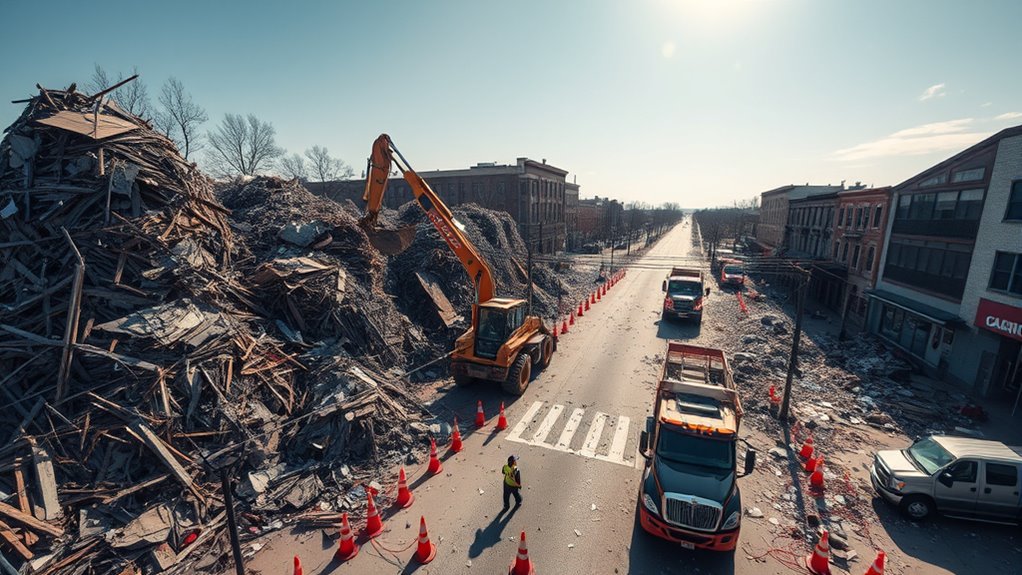

To coordinate debris removal with local services, open channels of communication early and share your priorities and safety protocols. Collaborate closely with public works and emergency management teams to align efforts and guarantee compliance with regulations. Develop clear plans for debris pile locations and disposal methods, and keep community resources like recycling centers in mind. By staying organized and maintaining transparency, you’ll streamline cleanup, reduce legal risks, and help restore safety more quickly—exploring more will reveal additional critical steps.
Key Takeaways
- Establish open communication channels with local public works and emergency management agencies.
- Share debris removal priorities, safety protocols, and disposal guidelines regularly.
- Develop coordinated debris management plans specifying pile locations and transportation methods.
- Ensure proper documentation and adherence to legal and environmental regulations to minimize liability.
- Monitor progress through coordination meetings and community feedback to optimize debris removal efforts.
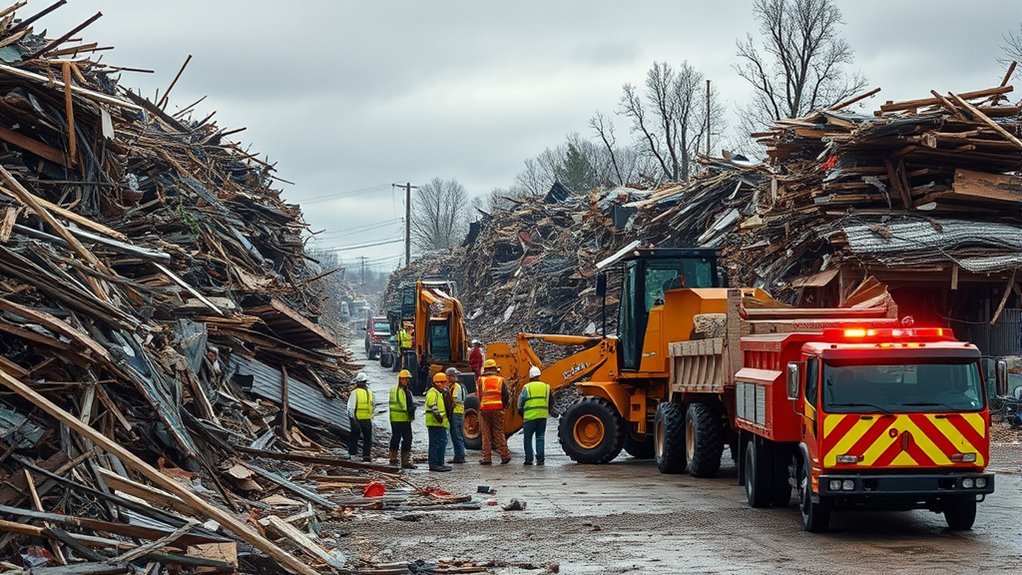
Effective debris removal coordination is vital after a disaster to restore safety and normalcy quickly. When a catastrophe strikes, your primary goal is to clear debris efficiently while minimizing risks to residents and responders. To do this effectively, working closely with local services is essential. These agencies understand the community’s needs and can help streamline the debris removal process. However, navigating the responsibilities and liabilities involved can be complex. You need to ensure that contractor liability is managed properly, especially when it comes to debris pile management. Missteps here can lead to legal complications or delays that worsen the situation.
Effective debris coordination is crucial for safety, efficiency, and legal protection after a disaster.
When coordinating with local services, your first priority should be establishing clear communication channels. Local agencies, such as public works departments and emergency management teams, can provide vital information regarding debris removal priorities and safety protocols. By maintaining open dialogue, you can align your efforts with community needs and governmental regulations. It’s also crucial to understand the legal responsibilities involved in debris pile management. Contractors need to be aware of liability issues, including potential damages or injuries during debris removal operations. Proper documentation and adherence to safety standards help protect all parties involved, reducing the risk of liability claims against contractors.
Involving local authorities early in the process allows you to develop a comprehensive debris removal plan. This plan should specify how debris piles are managed, where they’re located, and how they’re transported. Effective debris pile management minimizes environmental hazards, prevents obstruction of roads, and ensures that debris is disposed of in accordance with local regulations. When debris piles are poorly managed, they can quickly become safety hazards or legal liabilities, impacting contractor liability if injuries occur or regulations are violated. Maintaining organized and safe debris piles not only speeds up the cleanup but also shields your team from potential legal repercussions. Additionally, understanding the importance of proper equipment and how it influences debris management can significantly enhance safety and efficiency on-site.
Furthermore, coordinating with local services helps you leverage community resources and streamline logistics. Local disposal sites, recycling centers, and waste management services can be identified early, reducing delays and costs. Regular coordination meetings help monitor progress and address any issues related to debris pile management or liability concerns. By staying proactive and transparent, you foster trust within the community and ensure that debris removal efforts meet safety and legal standards. Ultimately, effective debris removal coordination combines strategic planning, clear communication, and diligent management of debris piles to protect everyone involved and restore normalcy swiftly.

10 Ft Construction Trash Chute with Circular Top Steel Ring and 4 Adjustable Handles, Heavy Duty Construction Chute, Construction Debris Chute for Removal of Construction Waste
CONSTRUCTION WASTE DISPOSAL: Construction chute is designed to solve the problem of difficult to dispose of construction waste,…
As an affiliate, we earn on qualifying purchases.
As an affiliate, we earn on qualifying purchases.
Frequently Asked Questions
How Do I Request Debris Removal Assistance From Local Services?
You can request debris removal assistance from local services by contacting your city or county emergency management office. They coordinate volunteer efforts and debris recycling programs, so reaching out directly helps. Provide details about the debris, your location, and any specific needs. Volunteer coordination is key, and local agencies often offer guidance on safe debris disposal and recycling options, ensuring a coordinated and efficient cleanup effort.
What Permits Are Needed for Debris Removal Coordination?
You need to check permit requirements for debris removal coordination to guarantee regulatory compliance. Typically, you’ll need a permit from your local government or environmental agency, especially if you’re handling large quantities or hazardous debris. Investigate specific regulations in your area, as requirements vary by location. Securing the proper permits helps you stay compliant and avoids potential fines, making your debris removal process smooth and lawful.
How Can I Identify Authorized Debris Removal Contractors?
You can identify authorized debris removal contractors by checking their contractor licensing and verifying their insurance. Make sure they hold valid licenses issued by local or state agencies and request proof of insurance to safeguard yourself from liability. Contact local licensing boards or official contractor registries for approved lists. Always confirm their credentials directly and ask for references to ensure they’re qualified and reputable before hiring.
What Are Typical Timelines for Debris Clearance?
Debris clearance typically takes one to two weeks, depending on debris volume and equipment safety. You’ll want to coordinate volunteer efforts early and guarantee all safety protocols are followed. Efficient debris removal hinges on clear communication, proper equipment use, and safety measures. Regular updates help track progress and address any issues promptly, ensuring timely cleanup while keeping everyone safe during the process.
How Is Debris Removal Funded or Reimbursed?
You’ll find that debris removal is often funded through a mix of sources. Insurance reimbursement can cover some costs if you have proper coverage, while federal aid usually kicks in after major disasters, helping cover cleanup expenses. Coordinating with local agencies guarantees you tap into all available funds, making the process smoother. Keep records of all expenses to streamline reimbursement and maximize your financial support during recovery.

Evolution Power Tools Cyclone Magnetic Swarf & Chip Collector Wand – Pickup Magnet Tool For Metal Cuttings & Shavings
STRONG MAGNETIC ADHESION: Collect up to 6.5kg of Metal Shavings, Scraps or Dropped Items
As an affiliate, we earn on qualifying purchases.
As an affiliate, we earn on qualifying purchases.
Conclusion
By working closely with local services, you’re guiding the cleanup process like a skilled conductor leading an orchestra, ensuring every piece comes together smoothly. Your coordination helps clear the path for recovery, turning chaos into harmony. Remember, your efforts are the steady hand steering the community through the storm’s aftermath. With teamwork and communication, you create a brighter, safer future—one debris-free step at a time.

XIUCAI Reusable 132 Gallon Yard Waste Bag, with Work Gloves – 2 Pack Heavy Duty Freestanding Debris Removal Bags, for Outdoor Cleanup,2bags 1glove
1. COMPLETE CLEANUP KIT: Includes 2 132 Gallon capacity large yard waste bags and one pair of enhanced…
As an affiliate, we earn on qualifying purchases.
As an affiliate, we earn on qualifying purchases.

Sturdy Essentials Multi Bin Recycling System with Three Stackable 6 Gallon Recycle Bins to Build Your Recycling Center for Offices, Kitchen, Garages, Businesses (3 Pack, Blue/Grey/Green)
SPACE-SAVING STACKABLE RECYCLING BIN DESIGN: Maximize your space with stacking recycling bins that easily fit in small areas…
As an affiliate, we earn on qualifying purchases.
As an affiliate, we earn on qualifying purchases.