If you want independence from the utility grid and existing infrastructure, an off-grid backup system is your best choice, but it comes with higher upfront costs, requires maintenance, and relies on durable batteries. Conversely, grid-tied backups are more affordable initially, easier to install, and depend on grid stability, but offer less independence and may lack backup during outages unless additional systems are added. Exploring these options further will help you decide what fits your needs best.

Get backup power and energy gear delivered free — and shop member deals
- Fast, free delivery on millions of items
- Access to Prime Big Deal Days deals on October 6–7
- Prime Video, Amazon Music and more included
Key Takeaways
- Off-grid systems offer complete independence but require costly batteries and higher upfront installation expenses.
- Grid-tied systems are more affordable initially, utilizing the utility grid as backup, reducing hardware and installation costs.
- Off-grid setups depend heavily on battery longevity and maintenance, impacting long-term reliability and expenses.
- Grid-tied systems rely on grid stability; outages may require additional backup solutions for continuous power.
- Choice depends on your need for independence, budget, and local grid reliability considerations.
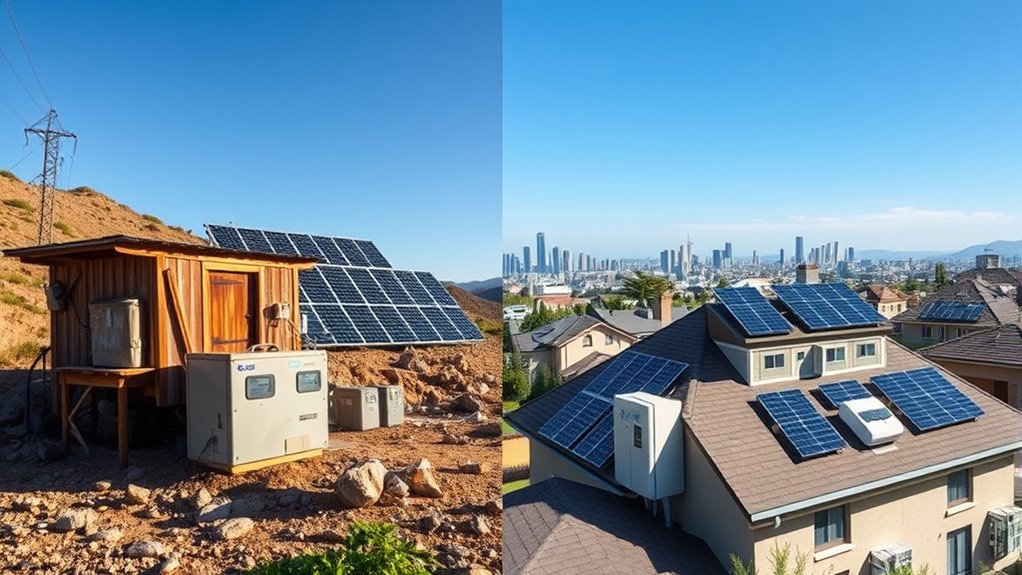
When choosing a backup power system, understanding the differences between off-grid and grid-tied options is vital. Both systems serve the purpose of providing reliable energy during outages, but they operate very differently, impacting your long-term costs and maintenance. One key factor to contemplate is battery longevity. Off-grid systems typically rely entirely on batteries to store energy, which means you’ll want batteries with high durability and long lifespan. Selecting batteries with better longevity can lead to fewer replacements over time, saving you money in the long run. Conversely, grid-tied systems often use the grid itself as a backup source, reducing the stress on batteries and extending their lifespan, but they still require batteries if you want true independence or backup during outages.
Installation costs are another essential aspect. Off-grid systems tend to have higher upfront expenses because they require a complete standalone setup, including batteries, inverters, charge controllers, and sometimes more extensive solar panel arrays to generate enough power independently. These components can be costly, and the installation process may be more complex, requiring specialized skills to guarantee the system works efficiently and safely. In contrast, grid-tied systems generally have lower installation costs because they connect directly to the existing utility grid. They often need fewer batteries, as the grid acts as the primary backup, which reduces hardware and labor expenses. Plus, if your goal is to supplement your power needs rather than become entirely independent, a grid-tied system can be a cost-effective solution.
Another consideration is system reliability, which varies significantly between the two options. Off-grid systems, while more expensive initially, can provide peace of mind if you live in remote areas with unreliable grid access. Their reliance on batteries means you need to pay attention to battery maintenance and replacement schedules, which can affect overall costs over time. On the flip side, grid-tied systems are generally less costly upfront but depend on the grid’s stability. If the grid goes down, unless you have additional backup like batteries, your power supply may still be interrupted despite the system’s ability to feed excess energy back to the grid.
Ultimately, your choice depends on your specific needs and circumstances. If you prioritize independence and are prepared for higher initial costs and maintenance, an off-grid system might be the way to go. If you’re looking for a simpler, more affordable solution that enhances your existing grid connection, then a grid-tied backup system could be the better choice. Both options have their merits, but understanding how battery longevity and installation costs play into each will help you make an informed decision.
As an affiliate, we earn on qualifying purchases.
Frequently Asked Questions
What Are the Maintenance Requirements for Each System Type?
You need to check your batteries regularly to guarantee battery longevity, which affects system performance. Off-grid systems usually require more frequent maintenance, including inspecting and watering batteries and cleaning connections. Grid-tied systems generally need less upkeep, mainly monitoring inverter performance and ensuring proper integration with the grid. Overall, maintenance frequency varies, but staying proactive helps optimize system efficiency and extends the lifespan of your backup setup.
How Do Costs Compare Over the System’s Lifespan?
It’s ironic how the cheaper upfront system costs often lead to higher long-term expenses. In a lifespan analysis, grid-tied systems usually cost less over time due to lower maintenance and no need for batteries. Off-grid setups may seem affordable initially but can pile up expenses with battery replacements and maintenance. So, when comparing costs, remember that the true price unfolds over the system’s entire lifespan, not just the purchase price.
Can These Systems Be Integrated With Existing Energy Setups?
Yes, you can integrate these systems with your existing energy setup, but it depends on your current infrastructure. For renewable integration, make sure your system supports solar or wind sources, and for backup compatibility, check if your backup system can seamlessly switch with your main grid. Consulting with an expert helps optimize the integration, making your energy setup more efficient and resilient without unnecessary upgrades.
What Are the Environmental Impacts of Each System?
You’ll find that off-grid systems often rely on renewable sources like solar or wind, reducing your carbon footprint and minimizing environmental impact. Grid-tied systems, while connected to the main grid, can still support renewable energy use but may contribute indirectly to pollution if the grid relies on fossil fuels. Overall, both systems can be eco-friendly choices, but off-grid setups tend to have a smaller environmental footprint.
How Scalable Are Off-Grid and Grid-Tied Backup Options?
You might find that off-grid systems face scalability challenges because adding capacity often means significant upgrades and more storage. Conversely, grid-tied systems offer greater system flexibility, allowing you to expand easily by connecting to the grid or adding panels. While both options can grow, your choice depends on your needs and the infrastructure’s ability to adapt, making scalability a key factor in your decision-making process.
As an affiliate, we earn on qualifying purchases.
Conclusion
Choosing between off-grid and grid-tied backup systems is about your independence and peace of mind. While off-grid offers true freedom from the utility, it might feel intimidating to rely solely on your system. But imagine the confidence you’ll gain knowing you’re prepared for any outage. Don’t let fear hold you back—empower yourself with the right backup system and enjoy the security of being truly self-sufficient, no matter what challenges come your way.
solar inverter for off-grid system
As an affiliate, we earn on qualifying purchases.
As an affiliate, we earn on qualifying purchases.
As an affiliate, we earn on qualifying purchases.
Fall Picks
fall essentials
As an affiliate, we earn on qualifying purchases.