
TL;DR

Get backup power and energy gear delivered free with Prime
- Fast, free delivery on millions of items
- Prime Video, Amazon Music and more included
- Member-only deals all year
A GreenBuildingAdvisor contributor described adding an electricity monitor to an HVAC subpanel that lacked room for the monitor itself. The solution was a separate enclosure connected to the panel, along with an additional breaker; the contributor stressed that panel work requires safety checks and may need a licensed electrician.
A homeowner who wanted to track the electricity use of two heat pumps found that the monitor would not fit inside their HVAC subpanel, so he installed it in a separate enclosure connected to the panel. In a GreenBuildingAdvisor report, he described the workaround and the additional breaker needed to supply a voltage reference, while warning that electrical-panel work presents safety and code concerns.
The writer said he had monitored electricity use in his all-electric home since 2022. After a basement remodel, the electrical system included a 200-amp main panel, a basement subpanel, an HVAC subpanel, a panel below the meter and a photovoltaic system. He had three monitors installed and wanted another for the HVAC panel serving two heat pumps.
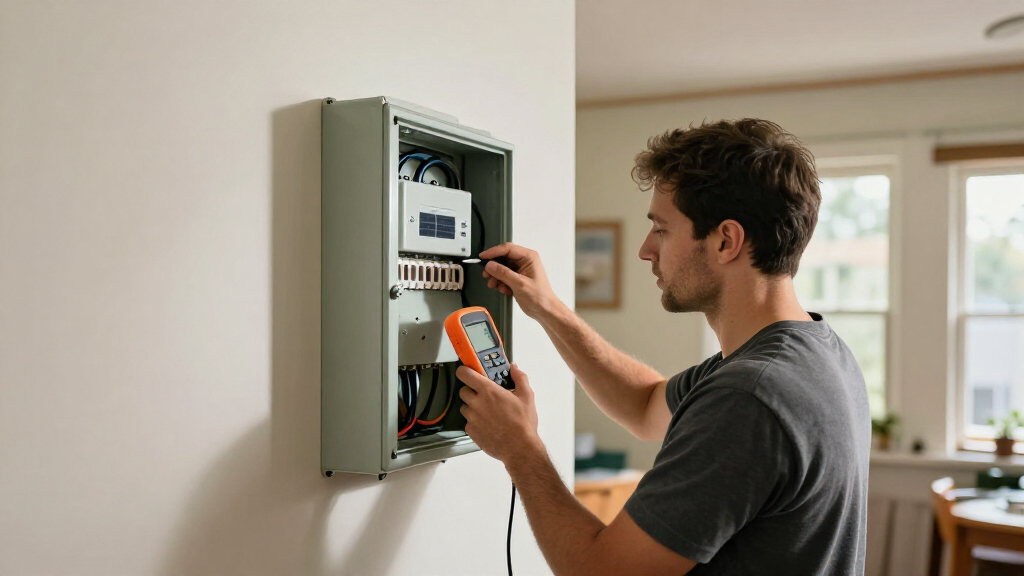
Although the subpanel appeared to have space, it could accommodate the monitor’s current transformers, or CTs, but not the Refoss EM16P monitor unit those sensors connect to. The homeowner initially thought he might not be able to monitor the heat pumps. He instead mounted the monitor in a separate weatherproof enclosure above the subpanel, joining the two with fittings and conduit.
The installation also required an additional breaker. The writer explained that the monitor needed power and a voltage reference for both electrical phases. The existing outlet breaker provided a connection for one side, but he said the heavy-gauge heat-pump wiring made a standard pigtail unsuitable for the other. He installed a fourth breaker matching the outlet breaker, rather than connecting the monitor wire directly alongside a heat-pump wire in a breaker. He reported that the system has worked since installation.
Monitoring Heat-Pump Electricity Use
The project shows one practical obstacle for homeowners seeking circuit-level data: a panel may have room for sensor clamps but not for the monitor that gathers and transmits their readings. A separate enclosure can address a space constraint, but the account also shows that the installation may involve more than fitting a device into an electrical panel.
For households with heat pumps, tracking a dedicated circuit could help them observe electricity use over time. The report does not provide measured savings, a cost-benefit calculation or evidence that monitoring alone changes energy use. Its significance is narrower: the writer found a physical installation solution and documented the electrical and layout issues involved.
The account is also relevant to anyone considering similar work because the monitor needed appropriate electrical connections, and the panel installation had to account for safety and local code requirements. The author explicitly advised readers who lack the necessary expertise to consult a licensed electrician.
As an affiliate, we earn on qualifying purchases.
From One Panel to Four
The homeowner said monitoring began in 2022, when his home had a single panel to track. A later basement remodel added complexity, including additional subpanels and a photovoltaic system. The HVAC subpanel became the problem because the CTs could fit but the monitor itself could not.
The subpanel’s Square D design had an opening at the top, which allowed the writer to connect a separate enclosure using compatible fittings and conduit. He said he used one-inch conduit, which he found just large enough for the installation. Finding the enclosure and fittings took several store trips, and he estimated the work took about 30 hours in total. Those details describe his particular installation; they do not establish that the same equipment or method will suit other panels.
The article focuses on the hardware arrangement and the writer’s experience, not a general installation guide. Panel designs, electrical codes and equipment requirements can vary, so his solution should not be treated as a universal template.
““The subpanel has enough room for the current transformers (CTs).””
— The GreenBuildingAdvisor report’s author
As an affiliate, we earn on qualifying purchases.
Limits of the Installation Account
The report describes one homeowner’s setup, but does not establish whether the same enclosure, fittings, breaker arrangement or monitor will work in other electrical systems. It also does not provide a detailed determination of code compliance for readers’ jurisdictions or a professional inspection record.
The writer said the system had been working since installation, but offered no monitoring results, quantified energy savings or comparison of heat-pump use before and after the monitor was installed. The article’s supplied text also ends while discussing the new breaker, so it does not provide further detail about the final wiring arrangement or configuration process. Readers should not infer those specifics from the described components alone.
As an affiliate, we earn on qualifying purchases.
Check Panel Requirements First
The report does not announce a scheduled follow-up or a broader product or code change. The next step for a homeowner considering similar monitoring is to check the panel and monitor instructions, review applicable local electrical requirements and consult a licensed electrician before attempting work inside a panel.
Anyone assessing the project should distinguish between the writer’s reported outcome and what remains unverified for other installations. A professional can determine whether the panel has a suitable connection point, what enclosure and fittings are permitted, and whether the proposed breaker and wiring arrangement meet local requirements.
electricity usage monitor for heat pumps
As an affiliate, we earn on qualifying purchases.
As an affiliate, we earn on qualifying purchases.
Key Questions
Why would an electricity monitor need a separate enclosure?
In this case, the panel had room for the current transformers but not the Refoss EM16P monitor unit they connect to. The homeowner placed the monitor in a separate enclosure joined to the subpanel.
What did the homeowner want to monitor?
He wanted to track the electricity use of the two heat pumps supplied by his HVAC subpanel.
Why did the installation involve another breaker?
The writer said the monitor needed power and a voltage reference for both electrical phases. He added a breaker after deciding that the existing connections and heavy-gauge heat-pump wiring did not allow the standard pigtail approach he considered.
Does the report show that the monitor reduced electricity bills?
No. The writer reported that the system was working, but the account supplied no measured energy savings, bill reductions or before-and-after usage comparison.
Can homeowners copy the installation?
The report is an account of one installation, not professional advice or a universal wiring plan. Electrical codes and panel configurations differ. The author advises confirming the panel is de-energized before any work and consulting a licensed electrician if the reader is not qualified.
Source: rss
Halloween Picks
halloween
As an affiliate, we earn on qualifying purchases.