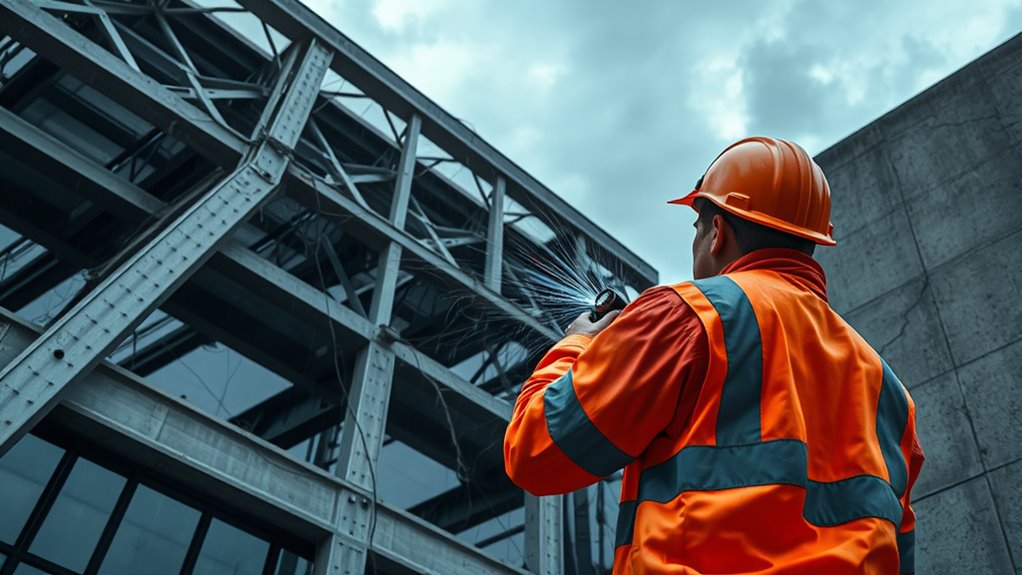

After high winds, you should conduct detailed structural safety checks by inspecting key elements like beams, walls, and joints for hidden damage such as hairline cracks, loose fasteners, or corrosion. Be vigilant for subtle issues that may not be immediately visible but could weaken the structure over time. Combine your visual inspections with an analysis of wind load data to assess if the building withstood the forces properly. Continue exploring to learn how to guarantee long-term resilience and safety.
Key Takeaways
- Conduct comprehensive visual inspections of all structural components, focusing on joints, connections, and load-bearing elements.
- Assess wind load impacts by reviewing weather data and comparing actual damage with design specifications.
- Check for subtle damages like hairline cracks, loose fasteners, corrosion, or deformation that may compromise safety.
- Document inspection findings meticulously to track damage progression and support maintenance decisions.
- Perform proactive maintenance and repairs promptly to reinforce structural integrity and prevent future vulnerabilities.
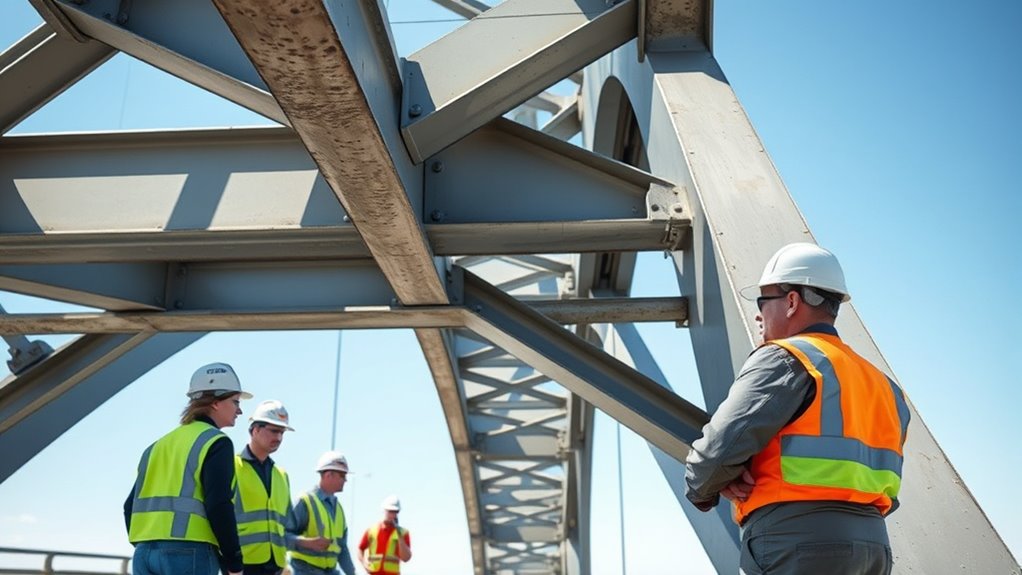
Are you confident that your building remains safe and sound over time? After a strong windstorm, it’s crucial to perform thorough safety checks to verify everything still stands as it should. One of the first steps is conducting a detailed wind load analysis. This process helps determine whether the structure has withstood the forces exerted by the wind. By analyzing wind load, you can identify potential weaknesses or areas vulnerable to future damage. It’s not just about checking for visible cracks or damages—it’s about understanding how the wind’s force affected the entire structure, from the roof to the foundation. Accurate wind load analysis requires reviewing previous weather data, building design specifications, and current structural performance. This helps you assess whether the wind pressures exceeded the original design limits and if any reinforcements might be necessary.
Alongside this, material inspection becomes critical. You need to examine all key components—beams, columns, walls, and roofing materials—to spot any signs of stress or deterioration. Wind can cause subtle damages that aren’t immediately visible, such as hairline cracks or loosening of fasteners, which can compromise the integrity of your building over time. Carefully inspecting materials after a wind event ensures that you catch these issues early before they escalate into major problems. Pay particular attention to joints, connections, and areas where materials meet, as these are often the most vulnerable points. If you notice any corrosion, decay, or deformation, addressing these issues promptly is essential to maintaining the structural safety of your building.
Performing these checks isn’t just about reacting to damage; it’s about proactively maintaining your building’s resilience. Regular material inspections combined with wind load analysis give you a detailed picture of your structure’s health. Keep detailed records of your inspections and any repairs made, so you have a clear history of how your building responds to extreme weather. This documentation can also be valuable for future assessments or insurance claims. Remember, high winds can weaken your building in subtle ways that aren’t immediately obvious. By staying vigilant with detailed inspections and analysis, you guarantee your structure remains safe, reliable, and capable of withstanding future storms. Ultimately, these measures protect not only your investment but also the safety of everyone who uses or relies on the building daily.

Honeywell 22kW Home Standby Generator
PrecisionPower Technology delivers best-in-class power quality with less than 5 percent total harmonic distortion for clean, smooth operation...
As an affiliate, we earn on qualifying purchases.
Frequently Asked Questions
How Often Should Safety Checks Be Performed After High Winds?
You should perform safety checks immediately after high winds, especially if wind speeds exceed 50 mph. Then, conduct inspections at least weekly until you’re sure the structure is stable. Keep an eye out for damage like cracked walls or loose shingles. Adjust inspection frequency based on wind speed and damage severity. Regular checks help prevent accidents, ensuring your property remains safe and sound after strong storms.
Are There Specific Tools Needed for Structural Inspections?
Imagine standing beneath a towering structure, tools in hand, ready to guarantee safety. You’ll need inspection equipment like binoculars, flashlights, and ladders to spot hidden damages, along with safety gear such as helmets, harnesses, and gloves to protect yourself. These tools help you conduct thorough, precise inspections, ensuring every crack or bend is caught early. Proper equipment keeps you safe and makes your assessment accurate and efficient.
Can Minor Damages Be Safely Ignored Temporarily?
You shouldn’t ignore minor damages temporarily, especially if you’re planning to file insurance claims or do temporary repairs. Even small issues can worsen over time, risking safety and increasing costs. It’s best to document damages thoroughly and consult a professional to determine if immediate repairs are necessary. Doing so guarantees your property remains safe and that your insurance claim process goes smoothly, preventing further damage or complications.
Who Is Qualified to Conduct Safety Assessments?
Qualified inspectors with proper safety certifications should conduct safety assessments after high winds. You need professionals trained to identify structural issues and guarantee safety standards are met. These experts have the skills and credentials necessary to evaluate damage accurately and determine if your property is safe. Don’t rely on unqualified personnel; always choose certified inspectors to protect yourself and your property from potential hazards.
What Are the Signs of Hidden Structural Damage?
You should look for hidden cracks in walls, ceilings, or floors, which can indicate internal damage. Also, check for foundation shifts, such as uneven floors or gaps around doors and windows. These signs often aren’t obvious but suggest structural issues. If you notice any of these, it’s essential to get a professional assessment promptly to guarantee your building’s safety and prevent further damage.

Joinfworld Power Distribution Box,50A 125V/250V NEMA SS2-50 CS6375 Inlet, 30A Circuit Breaker, Individually Controllable Sockets, Heavy - Duty Waterproof Enclosure with Cooling Fan
UL-Certified - The power distribution box is UL-certified, featuring 1 50A socket, 5 NEMA 5-20 GFCI sockets, NEMA...
As an affiliate, we earn on qualifying purchases.
Conclusion
After high winds, you must prioritize structural safety checks to prevent disaster. Skipping these inspections is like ignoring a ticking time bomb—you never know when it might explode. By thoroughly evaluating your building’s integrity, you safeguard everyone inside and avoid catastrophic failures. Remember, a small check today can save you from a monumental disaster tomorrow. Don’t wait until it’s too late—act now and keep your structure standing strong like an unbreakable fortress.

Power Assemblies Power Distribution Box with 50A 125/250V CS6375 Inlet, 50A 125/250V CS6369 Outlet, & 6 20A 125V Duplex GFCI Receptacles
High-Performance Power Distribution Box: Includes (1) 50A CS6375 twist-lock inlet, (1) 50A CS6375 outlet, and (6) 20A GFCI-protected...
As an affiliate, we earn on qualifying purchases.

GXELZK Temporary Distribution Box, It has Both 50A and 30A inlets, six 120V CFGI duplexes, one L14-30R Outlet, one L6-30R, and one TT-30R,Safe and Reliable Power on Any Construction site (Yellow)
The temporary socket distribution box is equipped with ETL-certified L6-30R sockets and L14-30R sockets on one side, and...
As an affiliate, we earn on qualifying purchases.