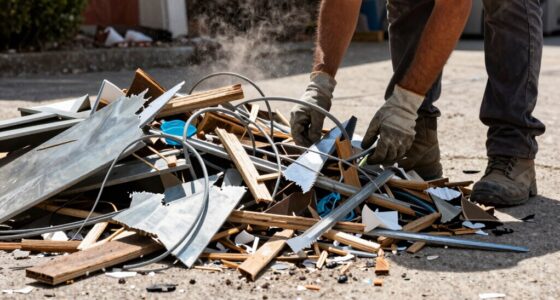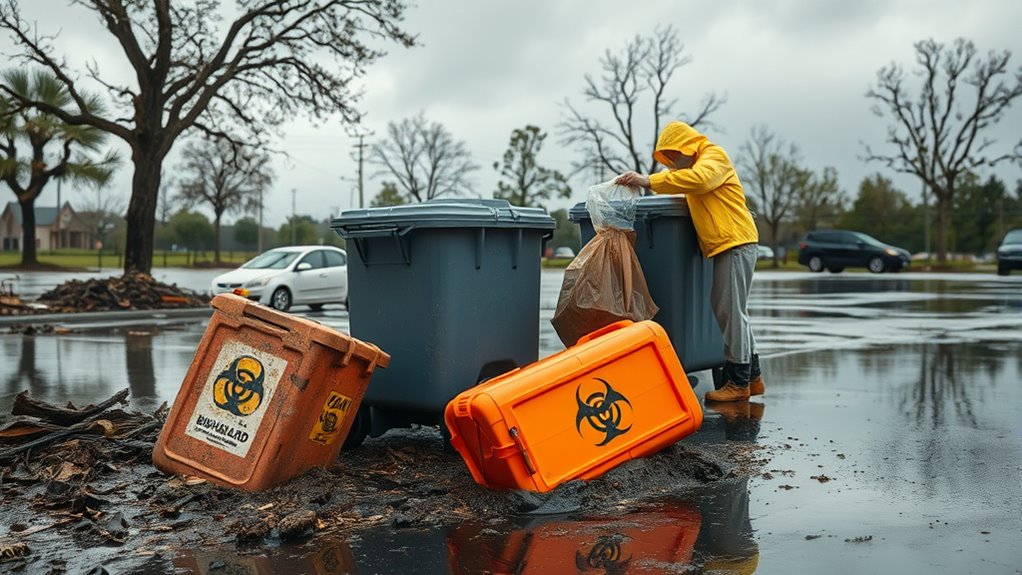

After storm events, you should identify any hazardous materials using labels or safety data sheets, then wear proper protective gear before handling them. Avoid trying to clean up spills yourself unless trained; instead, isolate the spill and contact environmental agencies or hazardous waste specialists. Never dispose of hazardous substances in regular trash or runoff; instead, use authorized disposal facilities. Staying informed about proper procedures helps guarantee safety and compliance—keep going to learn more about managing these risks effectively.

Get backup power and energy gear delivered free with Prime
- Fast, free delivery on millions of items
- Prime Video, Amazon Music and more included
- Member-only deals all year
Key Takeaways
- Identify hazardous materials using labels, SDS, and visible signs before disposal.
- Wear appropriate PPE and follow safety protocols during handling and cleanup.
- Contact environmental agencies or certified hazardous waste specialists for spill management.
- Dispose of hazardous waste only at authorized facilities compliant with regulations.
- Document all handling, cleanup, and disposal procedures for legal and environmental accountability.
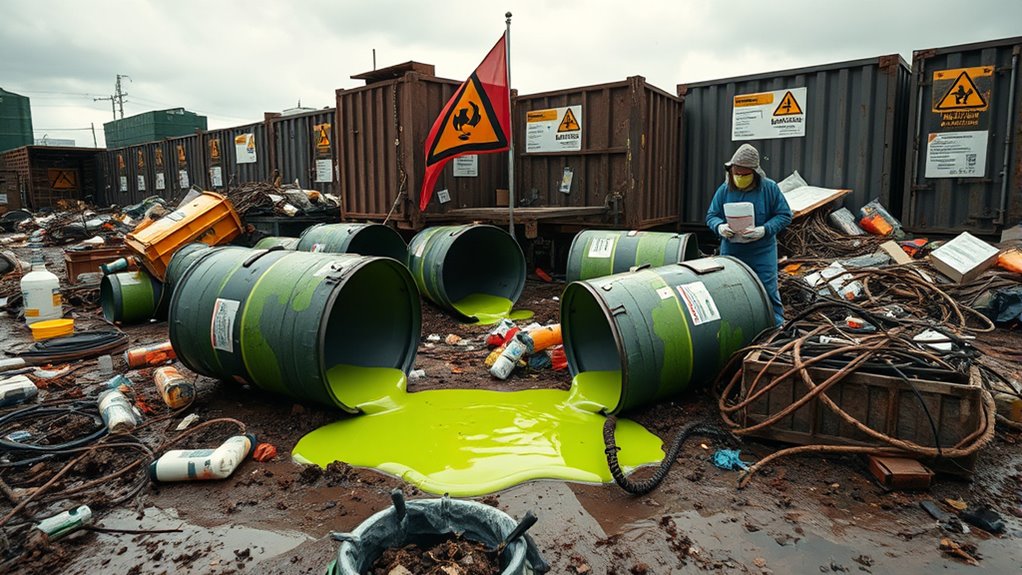
Disposing of hazardous materials safely is essential to protect both the environment and public health. After storm events, you might encounter a variety of hazardous substances, such as chemicals leaked from damaged containers, fuel spills, or contaminated water. Proper disposal isn’t just about throwing things away; it requires careful attention to chemical cleanup and adherence to safety procedures. Your goal is to prevent further contamination and ensure the safety of everyone around you.
Start by identifying the hazardous materials you’re dealing with. Look for labels, safety data sheets, or any visible signs that indicate the nature of the substances. Once identified, you need to follow established safety procedures for handling these materials. This includes wearing personal protective equipment such as gloves, goggles, and respirators if necessary. Safety procedures are in place to shield you from harmful exposure, and neglecting them could lead to serious health risks or environmental damage.
When it comes to chemical cleanup, you should never attempt to manage hazardous substances alone unless you’re properly trained. Instead, contact local environmental agencies or hazardous waste specialists. They have the expertise and equipment needed to handle and dispose of these materials correctly. If immediate action is necessary and professional help isn’t available, isolate the spill area to prevent further spread. Use absorbent materials suited for chemical spills—like specialized pads or neutralizing agents—only if you’re trained and equipped to do so safely.
Proper disposal is critical. You can’t just throw hazardous materials in the trash or pour them down drains. These substances require disposal at authorized facilities that can handle such waste safely and in compliance with environmental regulations. Always follow the instructions provided by environmental authorities or hazardous waste management guidelines. If you’re unsure, consult with professionals to avoid making mistakes that could lead to contamination or legal penalties.
Never dispose of hazardous waste improperly; always use authorized facilities and follow safety guidelines.
Documentation also plays a vital role. Keep records of what hazardous materials you’ve handled, how you cleaned them up, and how they were disposed of. This documentation can be crucial if authorities need to review your procedures or if you need to report incidents. Staying organized and compliant ensures you’re following the law and protecting public health. Additionally, understanding the prophetic dreams related to environmental events can sometimes provide insights or warnings related to hazards, emphasizing the importance of awareness and preparedness in disaster response.
Products Worth Considering

Bose SoundLink Flex Bluetooth Speaker (2nd Gen), Portable Waterproof Speaker, Black

Coway Airmega 250 Air Purifier for Large Rooms

Shark AI Ultra Robot Vacuum with Self-Empty Base
As an affiliate, we earn on qualifying purchases.
Frequently Asked Questions
How Can I Identify if a Material Is Hazardous After a Storm?
You can identify if a material is hazardous after a storm by checking for chemical signs like color changes, odors, or residue. Always look for labels that meet labeling standards, which clearly indicate hazards such as flammability, toxicity, or corrosiveness. If labels are damaged or unclear, consult Material Safety Data Sheets (MSDS) or contact professionals. Trust these visual and informational cues to determine if a material poses risks.
Are There Specific Disposal Timelines for Storm-Related Hazardous Waste?
You should dispose of storm debris and hazardous waste promptly, ideally within 90 days, to prevent health risks. Proper waste storage during this period is essential—use labeled, leak-proof containers and keep them in secure areas. Check local regulations for specific timelines, as some jurisdictions may require quicker disposal. Acting swiftly helps minimize environmental impact and guarantees safe cleanup after storm events.
What Protective Gear Should I Wear When Handling Hazardous Materials?
Sure, because handling hazardous materials is just a walk in the park, right? You should wear personal safety gear like gloves, goggles, and a respirator to safeguard yourself from dangerous splashes, fumes, and contamination. Don’t forget a long-sleeved suit and sturdy boots—because casual attire won’t cut it when dealing with hazardous waste. Prioritize protective equipment to guarantee your safety and avoid exposure to harmful substances.
Can I Dispose of Hazardous Waste at Regular Household Trash Sites?
You shouldn’t dispose of hazardous waste at regular household trash sites. Instead, you need to follow household disposal guidelines for non-hazardous waste, which often involve specific collection days or designated drop-off centers. Hazardous materials require special handling to prevent environmental contamination and health risks. Always check with local authorities or waste management services to find proper disposal options for hazardous waste, ensuring safety for you and your community.
Who Should I Contact for Emergency Hazardous Waste Removal Assistance?
Imagine hazardous waste explosions in your backyard—scary, right? You should contact emergency response contacts immediately for hazardous waste removal assistance. Always follow hazardous waste regulations to guarantee safety. Emergency responders are trained to handle dangerous materials safely, preventing disaster. Don’t delay—reach out to local fire departments, environmental agencies, or hazardous waste specialists. They’ll guide you through proper cleanup and keep your family and community safe from harm.
Conclusion
So, after all that cleanup, you might think disposing of hazardous materials is straightforward. Ironically, the very storm that caused the mess now demands your careful attention to dangerous waste. Instead of relaxing, you’re left steering through tricky regulations and safety risks. But hey, who wouldn’t want a little extra adventure in their clean-up routine? Just remember, handling hazardous materials properly keeps everyone safe—and spares you from a storm of legal trouble later on.