TL;DR

Get backup power and energy gear delivered free with Prime
- Fast, free delivery on millions of items
- Prime Video, Amazon Music and more included
- Member-only deals all year
The Agile Electrification Project has begun a 12-month study in which about 200 California households will help design hypothetical virtual power plant programs. Researchers plan to use participants’ preferences and modeled energy use to examine how different programs could affect household choices and the electric grid.
The Agile Electrification Project, led by the Design Lab at the University of California, San Diego, has launched a 12-month study in which about 200 California households will help researchers develop and test hypothetical virtual power plant programs. The project aims to learn what terms households would accept for sharing energy from devices such as solar panels, batteries and electric vehicles, and how those choices could affect the grid.
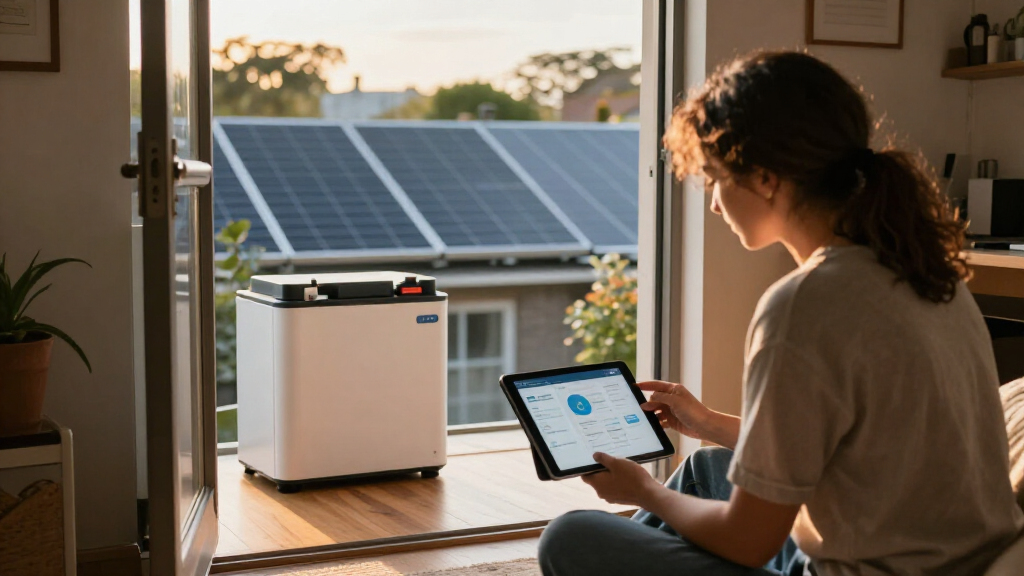
The volunteer households in the project’s Living Laboratory have solar panels, home batteries, electric vehicles, heat pumps, smart thermostats or other connected devices from different manufacturers. Researchers will survey participants about the conditions under which they might take part in a virtual power plant, including how much electricity they would share and what incentives they would expect.
Questions will include how often participants would accept having air conditioning turned down during heat waves and how much battery capacity they would reserve in case of a possible blackout. The study will also ask what motivates people to participate: financial returns, use of cleaner energy or helping neighbors who rely on medical equipment are among the motivations identified by the project team.
After surveys inform a set of hypothetical program designs, San Diego startup Balto Energy will track and analyze modeled household energy use under those programs. The project says those profiles will be sent to DERConnect, a UC San Diego-backed grid testing facility, where simulation tools will be used to estimate how the changes might affect the broader electric system. The report describes a research plan; it does not say that the households are already operating as a live, coordinated power plant.
Household Preferences Could Shape Programs
Virtual power plants coordinate distributed devices—such as batteries, solar systems and flexible electric loads—to support the electricity system. Their usefulness depends not only on the equipment available but also on whether households agree to let programs control or influence that equipment, and under what conditions.
The study could give utilities, policymakers and companies information about what potential participants value and what trade-offs they may accept. For example, a household’s willingness to use battery power during a grid event may differ from its willingness to reduce air conditioning during extreme heat. A program that reflects those limits and priorities could be more appealing to customers than one designed around a single incentive or operating rule. The project has not yet shown that any particular design will attract participants or improve grid performance.
The research also addresses a wider concern raised by project co-lead Andrew Krause: that households able to install solar and batteries could rely less on the grid while continuing to leave other customers with the costs of shared infrastructure. That is a concern, not a finding of this study. The project’s modeling may help examine how different participation choices interact with the grid, but the source does not report a conclusion about costs or who ultimately pays them.
home battery backup system for solar panels
As an affiliate, we earn on qualifying purchases.
As an affiliate, we earn on qualifying purchases.
From Utility Programs to Customer Choices
The report places this project alongside existing virtual power plant offerings associated with utilities, technology companies and solar-and-battery providers. The new research differs in emphasis: rather than starting with a fixed program and asking households to enroll, it will use participant feedback to build a range of simulated program rules.
The project is co-led by Northern Pacific Power Systems, a California solar, battery and home-electrification contractor. Andrew Krause said the study will test how changing program rules affects customer preferences and whether people can organize around options that provide more control. Thomas Familia, a former utility energy analyst and Arizona State University postdoctoral research scholar working on the project, said researchers want to understand the personal reasons households may have for participating.
The study combines surveys, household energy-use analysis and grid simulation. That makes its immediate output research data and modeled scenarios, rather than a new operating service or a commitment by utilities to adopt the resulting designs. The report does not identify specific participating utilities or state that regulators have approved any program arising from the work.
“What would happen if we put customers in a simulated environment, tweaked the rules, and found compelling, sophisticated program designs that give people agency to achieve their desired outcomes?”
— Andrew Krause, CEO of Northern Pacific Power Systems and project co-lead
smart thermostat with energy monitoring and utility demand response
As an affiliate, we earn on qualifying purchases.
As an affiliate, we earn on qualifying purchases.
What the Study Cannot Yet Show
The work is at its launch stage, and no survey findings or simulation results are reported in the source. It is not yet clear which program designs participants will prefer, how many will be willing to share energy under different conditions, or whether preferences will vary across household types and equipment manufacturers.
The project is testing hypothetical participation, so the findings will not by themselves establish how households behave in a live VPP. The source also does not specify the exact incentives under consideration, how the simulations will account for real-world grid conditions, or whether utilities and regulators will use the results to create programs. Krause’s concerns about grid costs and household independence are his stated views; they are not presented as conclusions from the project.
home energy monitor for solar battery and EV charging
As an affiliate, we earn on qualifying purchases.
As an affiliate, we earn on qualifying purchases.
Surveys, Models and Grid Tests
Over the next 12 months, researchers plan to survey the roughly 200 volunteers, use their responses to develop hypothetical VPP program options and model how participation would change household electricity use over time. Balto Energy will analyze the household energy profiles, which will then be assessed through DERConnect’s grid simulations.
The next substantive information will be what participants say they are willing to share, what they want in return and how those choices perform in the modeled grid scenarios. The source does not give dates for interim results or say whether the research team plans to publish a final report by a particular deadline.
Level 2 smart EV charger with scheduled charging
As an affiliate, we earn on qualifying purchases.
As an affiliate, we earn on qualifying purchases.
Key Questions
What is the project announcing?
The Agile Electrification Project has launched a 12-month research phase in which about 200 California households will help researchers shape and evaluate hypothetical virtual power plant programs.
What is a virtual power plant in this study?
It refers to coordinating household devices and energy resources—such as solar panels, batteries and flexible electricity use—as part of a program that could support the grid. The project is modeling possible participation, not announcing a new live VPP.
What will participants be asked?
Surveys will ask how much energy households might share, what incentives they value and what operating conditions they would accept. Examples include reducing air conditioning during heat waves or keeping battery capacity in reserve for a possible blackout.
How will researchers assess grid effects?
Balto Energy will analyze modeled household energy-use profiles. The project plans to send those profiles to DERConnect, a UC San Diego-backed facility that uses grid simulation tools to estimate system effects.
Are the results available yet?
No results are reported in the source. The project has begun its research phase, and participant preferences and grid-simulation findings remain to be collected and analyzed.
Source: rss
Halloween Picks
halloween
As an affiliate, we earn on qualifying purchases.