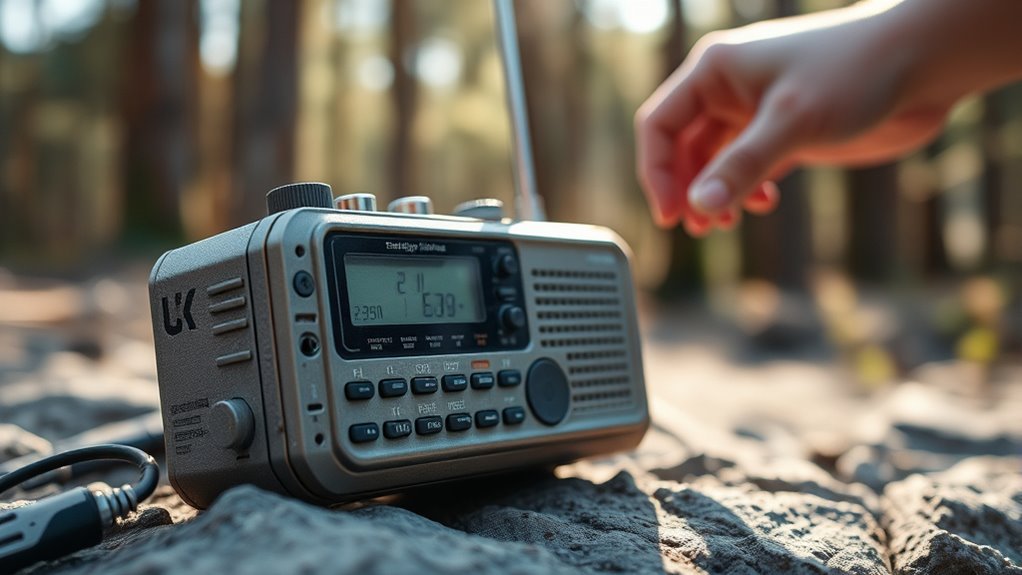

To use emergency radios for reliable communication, keep the antenna fully extended and positioned upright for the best signal. Regularly check batteries and switch to low-power mode when possible to conserve energy. Place the antenna near windows or outdoors to improve reception and avoid crossing or bending it. Have spare batteries ready and utilize alternative power sources like hand cranks or solar chargers. Mastering these tips will help guarantee your radio stays functional when you need it most.

Get backup power and energy gear delivered free with Prime
- Fast, free delivery on millions of items
- Prime Video, Amazon Music and more included
- Member-only deals all year
Key Takeaways
- Keep the antenna fully extended and positioned upright to maximize signal reception during emergencies.
- Regularly check and replace or recharge batteries to ensure the radio remains operational when needed.
- Use outdoor, high, and unobstructed locations for antenna placement to improve signal clarity and strength.
- Turn the radio off when not in use to conserve battery life for critical moments.
- Familiarize yourself with multiple power sources like hand cranks or solar chargers for reliable operation.
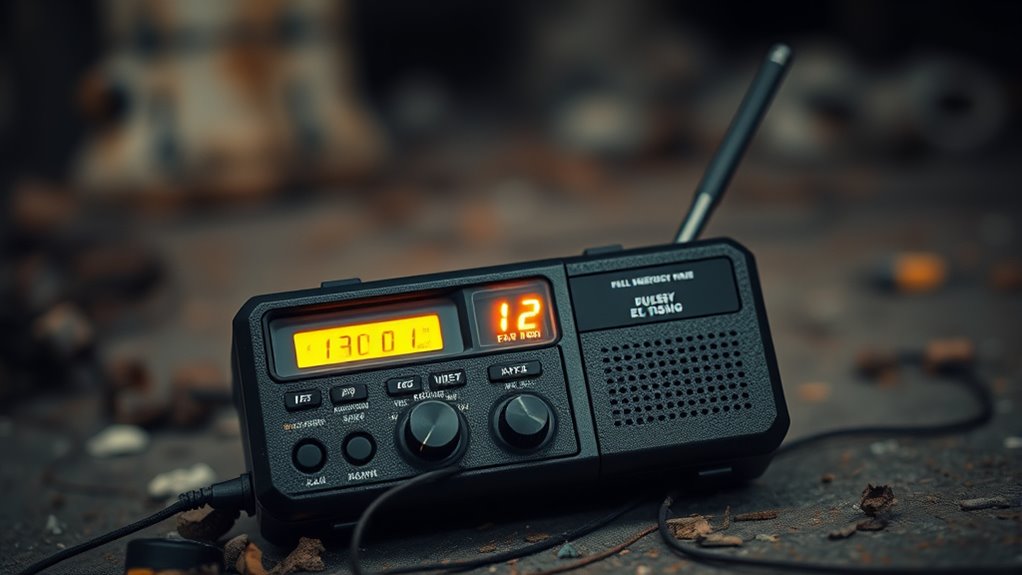
During emergencies, reliable communication can be a lifesaver, which is why having an emergency radio is fundamental. When disaster strikes, your ability to stay informed and connected can make all the difference. One of the most critical aspects to guarantee your radio performs well is proper antenna placement. The antenna is your link to signals, so positioning it correctly can considerably enhance reception. You should keep the antenna fully extended and upright whenever possible, especially when trying to pick up distant broadcasts. Avoid crossing or bending it, as that can weaken signals. If you’re indoors, placing the antenna near a window often results in better reception compared to placing it inside a closet or behind thick walls. In outdoor settings, holding the antenna high and clear of obstructions maximizes signal strength. Making small adjustments to antenna position often results in clearer audio and more dependable reception, which is essential during emergencies. Proper antenna positioning is especially important because signal quality directly impacts your ability to receive critical information. Equally important is managing your radio’s battery life. In a crisis, power sources might be scarce, so conserving battery life guarantees your radio remains operational when you need it most. Start by choosing a radio with a long-lasting battery or options for rechargeable batteries. Regularly check and replace or recharge batteries before emergencies occur, so you’re not caught off guard. During use, turn the radio off when you’re not actively listening to save power. If your radio offers multiple power options, like hand cranks or solar charging, familiarize yourself with those features and keep them accessible. When you’re outdoors or in a situation where charging isn’t possible, switch to low-power settings if available. Keeping spare batteries in a waterproof container also guarantees you can swap them out quickly if needed. Remember, even the most advanced radio is ineffective if it runs out of power; therefore, maintaining battery life is a top priority.
emergency radio with long battery life
As an affiliate, we earn on qualifying purchases.
As an affiliate, we earn on qualifying purchases.
Frequently Asked Questions
How Long Do Emergency Radios Typically Operate on Batteries?
Emergency radios typically operate on batteries for about 8 to 24 hours, depending on the device and usage. Your battery life can be extended through effective power management, such as turning off the radio when not in use and reducing unnecessary functions. Always carry spare batteries or a charger to guarantee reliable communication during critical moments, especially in emergencies where staying connected is essential.
Can Emergency Radios Be Used Internationally Across Different Frequencies?
You can’t rely on emergency radios for international use due to frequency variations, which can differ markedly across countries. About 80% of emergency radios are designed for specific regions, limiting their international compatibility. If you plan to travel or operate across borders, look for radios that support multiple frequency bands or are specifically labeled for global use. This ensures you stay connected when it matters most, regardless of location.
Are There Legal Restrictions on Using Emergency Radios in Certain Areas?
You need to be aware that legal restrictions and licensing requirements can limit your use of emergency radios in certain areas. Some regions enforce strict regulations to prevent interference with official communications, so you might need a license to operate these radios legally. Always check local laws beforehand, as using emergency radios without proper authorization could lead to fines or confiscation. Staying compliant guarantees safe, reliable communication during emergencies.
How Do I Troubleshoot if My Emergency Radio Isn’T Receiving Signals?
If your emergency radio isn’t receiving signals, start troubleshooting by checking the antenna for issues like damage or poor connection, as this can affect reception. Make sure the power supply is working correctly—replace batteries if needed or recharge the unit. Also, verify you’re on the correct frequency and that there are no obstructions blocking the signal. These steps can help you identify and fix common reception problems quickly.
What Maintenance Is Required to Keep an Emergency Radio Functional?
To keep your emergency radio functional, regularly perform battery checks and replace batteries as needed to guarantee reliable power. Keep the antenna clean and inspect it for damage or corrosion, replacing it if necessary. Store your radio in a dry, cool place to prevent moisture damage. Test your radio periodically to confirm it’s working correctly, and follow the manufacturer’s maintenance instructions for peak performance during emergencies.
hand crank solar emergency radio
As an affiliate, we earn on qualifying purchases.
As an affiliate, we earn on qualifying purchases.
Conclusion
When disaster strikes, emergency radios become your lifeline, cutting through chaos like a beacon in the storm. They’re your trusted compass, guiding you when all else feels lost. Keep one nearby, and you’ll turn the tide in your favor, transforming uncertainty into confidence. Remember, in the symphony of survival, your radio is the melody that keeps hope alive, ensuring you’re never truly alone in the darkness. Stay prepared, stay connected, and let your radio be your guiding star.
waterproof portable emergency radio
As an affiliate, we earn on qualifying purchases.
As an affiliate, we earn on qualifying purchases.
emergency radio antenna extender
As an affiliate, we earn on qualifying purchases.
As an affiliate, we earn on qualifying purchases.
Halloween Picks
halloween
As an affiliate, we earn on qualifying purchases.