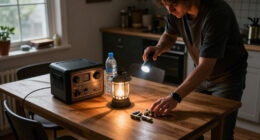
When using flashlights and LED lanterns indoors, always handle batteries carefully and check for damage, corrosion, or leaks before use. Store batteries in a cool, dry place away from metal objects and heat sources. Make certain your devices are functioning properly and avoid forcing batteries into compartments. Keep the devices away from children, and remove batteries when not in use for a long time. Continuing will help you grasp more safety tips to keep your indoor lighting secure and effective.

Get backup power and energy gear delivered free with Prime
- Fast, free delivery on millions of items
- Prime Video, Amazon Music and more included
- Member-only deals all year
Key Takeaways
- Regularly inspect batteries and device compartments for corrosion or damage before use indoors.
- Use only recommended batteries and ensure correct installation to prevent leaks or malfunctions.
- Keep flashlights and lanterns away from flammable materials and heat sources during operation.
- Turn off devices when not in use and remove batteries if they won’t be used for an extended period.
- Store batteries properly in cool, dry places and avoid mixing old and new batteries to ensure safe indoor use.

When using flashlights and LED lanterns indoors, safety should always come first. These devices are convenient during power outages or when you need extra light, but mishandling them can lead to accidents or damage. One of the most important safety considerations involves battery safety. Always check batteries for corrosion, leaks, or damage before inserting them into your flashlight or lantern. Damaged batteries can leak acid or even explode, so it’s essential to replace them promptly and dispose of old batteries properly. Avoid mixing old and new batteries, or different types, as this can cause uneven power distribution and increase the risk of malfunction. When handling batteries, wash your hands afterward, and keep them away from children who might swallow or mishandle them.
Proper storage of batteries is equally critical. Store batteries in a cool, dry place, away from direct sunlight and heat sources. High temperatures can cause batteries to degrade faster or become unstable, increasing the risk of leaks or fires. Keep batteries in their original packaging or in a designated container to prevent accidental contact with metal objects like keys or coins. Metal contact can cause short circuits, which might lead to overheating or fires. Never store batteries loosely in drawers or pockets where they could come into contact with metal objects, as this can cause sparks or damage. If you’re not planning to use your flashlight or lantern for a while, remove the batteries to prevent any potential leaks that could damage the device or create a hazardous situation. When storing devices, verify that the battery compartment is secure and that no corrosion or damage is present. Regularly inspect both the batteries and the device to guarantee everything remains in good condition. Additionally, understanding cookie categories on the website can help you manage your privacy preferences related to online safety information.
Alongside proper storage, always follow the manufacturer’s instructions for battery insertion and removal. Using the correct type and size of batteries ensures your device functions properly and reduces safety risks. Remember, never force batteries into a compartment if they don’t fit, and always align the positive and negative terminals correctly. This prevents damage to the device and guarantees optimal operation. By paying attention to battery safety and proper storage, you minimize risks like leaks, fires, or device malfunction. These precautions are simple but critical steps in keeping your indoor lighting devices safe and effective. When you handle batteries with care and store them appropriately, you protect yourself, your family, and your home from potential hazards. Ultimately, responsible use and maintenance of your flashlights and LED lanterns keep your indoor environment safe and your devices ready when you need them most.
Products Worth Considering

Bose SoundLink Plus Portable Bluetooth Speaker, Wireless Outdoor Speaker, Up to 20 Hours Battery Life, Waterproof and Dustproof, Black

Philips Hue Smart LED Candle Bulbs, B39, E12, White and Color Ambiance, 2-Pack

Dyson Ball Animal 3 Upright Vacuum
As an affiliate, we earn on qualifying purchases.
Frequently Asked Questions
Can I Use Outdoor LED Lanterns Indoors Safely?
You can’t safely use outdoor LED lanterns indoors because they aren’t designed for indoor lighting or emergency preparedness. These lanterns often have higher wattage, lack proper ventilation, and may generate excessive heat or fumes. To guarantee safety, stick to indoor-specific lighting options and emergency lanterns that meet safety standards. This way, you protect yourself and your loved ones while maintaining reliable indoor lighting during power outages or emergencies.
Are Rechargeable Flashlights More Dangerous Indoors?
Rechargeable flashlights aren’t necessarily more dangerous indoors if you follow proper battery safety and charging precautions. Always use the correct charger and avoid overcharging, which can cause overheating or fire hazards. Keep the flashlight in a cool, dry place, and don’t leave it charging unattended. By handling batteries carefully and observing charging guidelines, you can safely use rechargeable flashlights indoors without increased risk.
How Do I Prevent Fire Hazards With LED Lanterns Indoors?
Like a cautious gardener tending delicate plants, you should follow fire safety tips to prevent hazards with LED lanterns indoors. Keep lanterns away from flammable materials, never leave them unattended, and guarantee proper ventilation to avoid overheating. Make sure cords are secure and not frayed. By staying vigilant and practicing these safety tips, you create a safe environment where your lanterns can shine without risking fire.
Is It Safe to Leave Flashlights on Overnight?
It’s not safe to leave flashlights on overnight. You should turn them off when not in use to prevent battery drain and potential overheating. Proper storage helps maintain battery health, so remove batteries if you’re not using the flashlight for an extended period. Regular battery maintenance, like replacing old batteries, reduces the risk of leaks or damage. Always follow manufacturer instructions to guarantee safety and prolong the lifespan of your flashlights.
Can LED Lanterns Affect Indoor Electronics or Wi-Fi?
LED lanterns can affect indoor electronics or Wi-Fi due to electromagnetic interference, which disrupts signals, and power surges, which damage devices. You need to be cautious, monitor your devices, and make certain of proper grounding. By doing so, you protect your electronics, maintain a stable Wi-Fi connection, and prevent costly repairs. Stay vigilant, stay safe, and keep your technology running smoothly while enjoying the benefits of your LED lanterns indoors.
Conclusion
So, next time the power goes out, impress everyone by wielding your flashlight like a seasoned explorer. Remember, LED lanterns are your trusty sidekicks—just don’t blind yourself or set the house on fire with reckless enthusiasm. With these simple tips, you’ll navigate the dark like a pro, all while secretly wondering if you’re auditioning for a horror movie. Stay safe, stay bright, and try not to turn your living room into a blackout battleground.