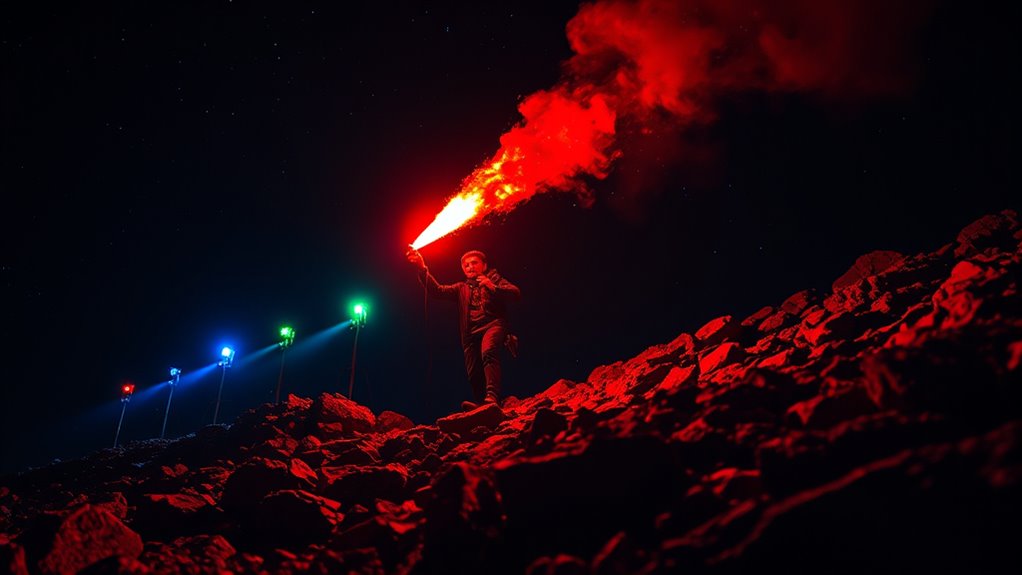

To use signal flares and light beacons safely, always inspect your equipment regularly and handle it with care. Follow manufacturer instructions for activation, hold flares steady, and aim away from your body in open areas. Be aware of weather conditions and visibility limits, and combine visual with sound signals when possible. Practice proper deployment and safety procedures to prevent injuries or accidents. If you want to make certain you’re fully prepared, the following tips will guide you through safe and effective signaling techniques.
Key Takeaways
- Follow manufacturer instructions carefully and practice proper deployment techniques before use.
- Activate signals in open areas, away from flammable materials, and aim safely away from the body.
- Inspect all equipment regularly for damage, corrosion, or corrosion, and ensure batteries are charged or replaced.
- Use visual signals in conjunction with sound signals like whistles or radios for increased effectiveness.
- Be aware of environmental conditions and local regulations that may affect signal visibility and legality.
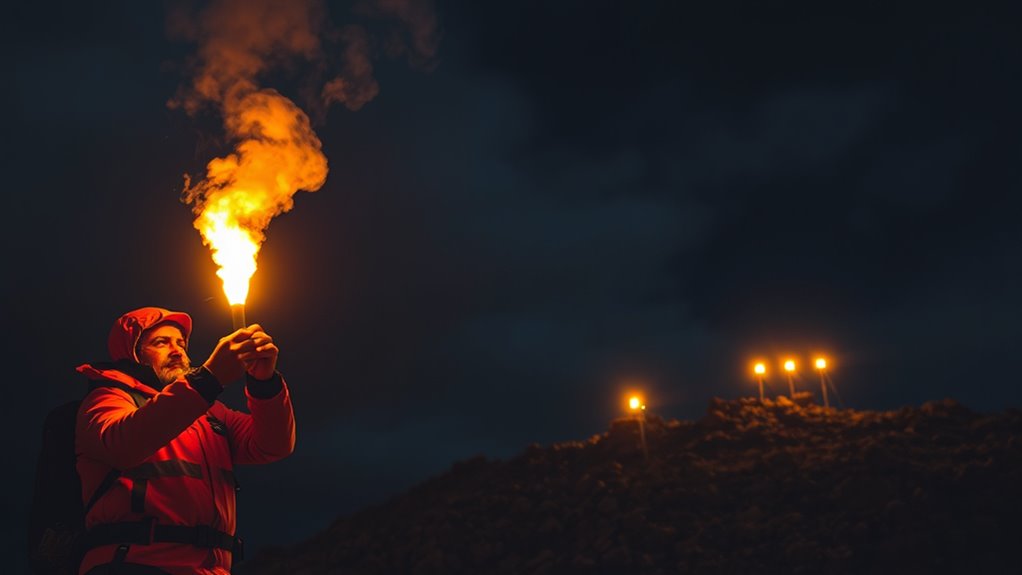
Using signal flares and light beacons can be vital for safety in emergency situations, but only if used correctly. When you’re in a crisis—whether lost in the wilderness, stranded at sea, or facing a vehicle breakdown—effective emergency signaling can make the difference between rescue and prolonged hardship. These devices serve as visual alerts, drawing attention from rescuers or nearby individuals. However, their effectiveness depends heavily on proper handling and regular equipment maintenance.
Emergency signaling equipment must be checked and maintained routinely. Before heading out into remote areas, you should verify that your signal flares and light beacons are in working order. This means inspecting for corrosion, cracks, or damage to the casing, ensuring batteries are fully charged or replaced, and confirming that the devices activate properly. Proper maintenance reduces the risk of failure when you need these signals the most. Keep spare batteries and extra flares on hand, and store all equipment in a cool, dry place to prevent deterioration. Remember, even if your signaling devices look fine, performing a test, if possible, guarantees they will function when needed.
Regularly inspect and test your emergency signaling devices to ensure reliable performance when needed most.
Using your emergency signaling equipment correctly is vital. When deploying signal flares, hold them steady and aim them away from your body to prevent burns or injuries from sparks or chemicals. Follow manufacturer instructions precisely—ignite them in open areas, away from flammable materials, and ensure you have a clear line of sight. Light beacons, such as LED or strobe lights, should be activated and placed in visible spots, ideally elevated, to maximize their visibility. If you’re using multiple signals, coordinate their placement to create a broad, easily noticeable area. Always be aware of local regulations concerning flare use, especially in wilderness or marine environments, to avoid accidental wildfires or legal issues.
In addition to equipment maintenance and proper usage, you should also understand the limitations of your signaling devices. Flares might only be visible from a certain distance or under specific weather conditions. Light beacons work best in clear visibility but can be obscured by fog, rain, or snow. That’s why it’s wise to combine different signaling methods—visual signals with sound signals like whistles or radios—for a higher chance of being noticed. Regular training on how to use these devices can help you respond swiftly and confidently during an emergency, ensuring that your signaling efforts are as effective as possible when every second counts.
Furthermore, understanding the importance of regular maintenance and inspection can significantly increase the reliability of your signaling equipment in critical moments.
Frequently Asked Questions
Can Signal Flares Be Used for Non-Emergency Recreational Activities?
Yes, you can use signal flares for non-emergency signaling during recreational activities like camping or night hikes. They add fun and excitement, but always remember to utilize them responsibly and follow safety guidelines. Avoid using flares recklessly, as they can cause fires or misunderstandings. Properly storing and handling signal flares ensures safe recreational use, helping you communicate effectively while enjoying outdoor adventures without risking safety or legal issues.
Are There Environmental Concerns Associated With Deploying Light Beacons?
You might cause a ripple of chaos if you ignore environmental concerns with light beacons. Excessive or poorly timed signals can create light pollution, blinding the night sky and disrupting natural cycles. Wildlife disturbance happens when animals mistake these bright flashes for threats or mates, throwing their behaviors into disarray. Be mindful—your light beacons can unintentionally harm ecosystems, so always use them responsibly to protect the environment.
How Long Do Signal Flares Typically Remain Usable After Purchase?
Signal flares typically remain usable for about 3 to 4 years from their manufacture date, but you should verify the expiration date printed on the packaging. Over time, their flare shelf life decreases as chemicals degrade, which can affect performance. To guarantee safety and reliability, always store them in a cool, dry place and replace them once they reach or near their expiration dates.
What Should I Do if a Flare Fails to Ignite?
Imagine holding a flare, ready to send a bright signal, but it fails to ignite. First, check your flare’s condition and guarantee proper flare maintenance; sometimes dirt or moisture can hinder ignition. Use correct igniting techniques—firmly press the cap or strike the designated area. If it still doesn’t spark, don’t try to force it. Dispose of the malfunctioning flare safely and replace it to guarantee your safety and effectiveness in emergencies.
Are There Legal Restrictions on Using Signal Flares in Certain Areas?
You need to be aware that there are legal restrictions on using signal flares in certain areas, especially near airports, populated regions, or protected sites. Always check local regulations to ascertain regulatory compliance before deploying flares. Ignoring these restrictions can lead to fines or legal trouble. When in doubt, consult local authorities or maritime and aviation regulations to avoid unintended consequences and ensure you’re acting within the law.
Conclusion
Remember, safety first when using signal flares and light beacons. Always follow instructions and keep a safe distance to avoid accidents. Did you know that over 80% of rescue operations involve signaling devices? That shows how essential they are in emergencies. By using them correctly, you increase your chances of being seen and rescued. Stay prepared, stay safe, and use your signals wisely—your safety depends on it.