
During a blackout, you can rely on long-term food preservation methods like solar drying and fermentation. Solar drying uses sunlight to dehydrate fruits, vegetables, and meats, creating lightweight, shelf-stable foods that require no electricity. Fermentation naturally preserves foods such as sauerkraut and pickles while boosting their flavor and nutrients. These techniques are simple and sustainable, ensuring you have nutritious options during extended outages. Keep exploring to learn more ways to prepare for blackout conditions effectively.

Get backup power and energy gear delivered free with Prime
- Fast, free delivery on millions of items
- Prime Video, Amazon Music and more included
- Member-only deals all year
Key Takeaways
- Solar drying is an effective method to preserve fruits, vegetables, and meats without electricity during blackouts.
- Fermentation extends food shelf life naturally, producing probiotic-rich foods suitable for off-grid storage.
- Both techniques require minimal equipment, making them practical for emergency long-term food preservation.
- Dried and fermented foods retain nutrients and flavor, ensuring nutritious options during extended outages.
- Implementing these methods enhances food security and sustainability during blackout conditions.
Have you ever wondered how to keep your food safe and fresh for months or even years? When traditional refrigeration isn’t an option—like during a blackout—knowing effective preservation methods becomes essential. Two techniques worth mastering are solar drying and fermentation techniques. Both require minimal equipment and can greatly extend the shelf life of your food, ensuring you have nutritious options during long-term emergencies.
Solar drying is one of the simplest and most energy-efficient ways to preserve perishables. It harnesses the sun’s heat to dehydrate fruits, vegetables, herbs, and even meats. To start, you’ll need a clean, flat surface or specially designed solar dehydrator. Spread thin layers of sliced produce or meat to maximize surface area, then place them in a sunny, well-ventilated spot. Over several hours or days, depending on the climate and item, the moisture will evaporate, creating a stable, dried product that resists spoilage. Solar drying is ideal because it doesn’t require electricity, making it perfect for blackout scenarios. Plus, dried foods retain much of their flavor and nutrients, with the added benefit of being lightweight and easy to store. Incorporating food preservation techniques like solar drying can help you maintain a sustainable food supply during extended outages.
Fermentation techniques, on the other hand, use beneficial bacteria to preserve foods through natural processes. Fermentation not only extends shelf life but can also enhance flavor and nutritional value. During fermentation, naturally occurring microbes convert sugars into acids, alcohol, or gases, creating an environment hostile to harmful bacteria. You can ferment vegetables like cabbage into sauerkraut, cucumbers into pickles, or even fruits into fermented jams. To get started, you’ll need clean jars, some salt or starter cultures, and patience. Simply chop your produce, add salt or starter culture, pack tightly into jars, and allow fermentation to occur at room temperature. The process can take days to weeks, but once finished, the fermented foods can last for months without refrigeration. This method is especially valuable because it relies on natural processes, requires no electricity, and produces probiotic-rich foods that support your health.
Both solar drying and fermentation techniques are cost-effective, sustainable, and reliable for long-term food storage. They’re also adaptable to various climates and resource levels, making them practical options regardless of your living situation. With a little planning and effort, you can build a resilient food supply that withstands power outages and other disruptions. By mastering these methods, you ensure that your food remains safe, nutritious, and enjoyable long after your electrical supply is gone.
As an affiliate, we earn on qualifying purchases.
Frequently Asked Questions
How Can I Prevent Pests in Stored Food During Blackouts?
To prevent pests during blackouts, you should use pest-resistant packaging like airtight containers or vacuum-sealed bags. Keep stored food in cool, dry, and dark areas to deter pests. You can also use natural repellents, such as dried herbs or essential oils like peppermint or lavender, around storage areas. Regularly check your supplies for signs of pests and promptly remove any affected items to keep your food safe and pest-free.
What Are the Best Containers for Long-Term Food Storage?
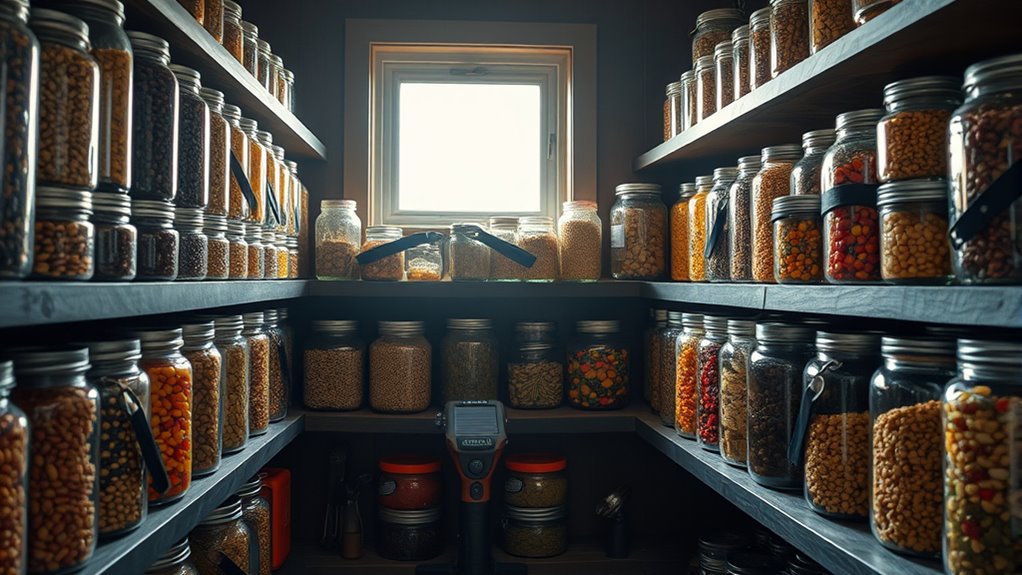
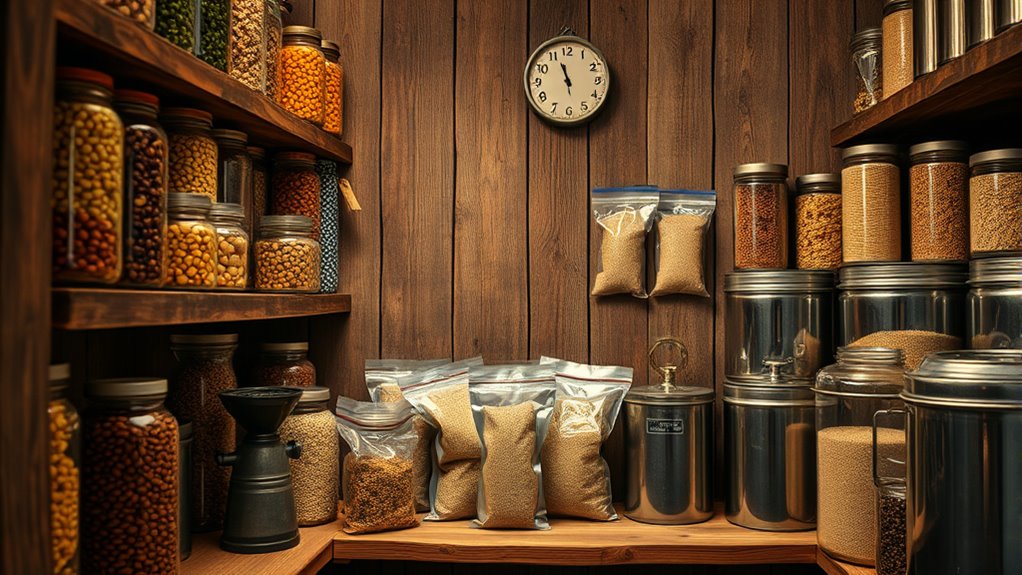
Imagine your food as treasures in a vault; the best containers are vacuum-sealed bags with oxygen absorbers inside. These airtight marvels lock out pests and moisture, keeping your supplies fresh for years. Glass jars with tight seals also work well, especially for grains and dried goods. Choose containers that are durable, airtight, and easy to store, ensuring your food remains safe and nourishing through any blackout storm.
How Do Temperature Fluctuations Affect Food Preservation Quality?
Temperature fluctuations can seriously impact your food preservation quality by causing spoilage or nutrient loss. When temperatures aren’t stable, it stresses preservation methods like canning or dehydration, which rely on consistent conditions. To keep your food safe and maintain quality, aim for temperature stability in your storage area. Using proper containers and monitoring conditions guarantees your food stays fresh longer, even during weather changes or power outages.
Can I Reuse Stored Food After a Blackout?
Think of your stored food as a fragile treasure chest. After a blackout, you shouldn’t reuse food past its safe storage lifespan or if it shows signs of spoilage. Food safety is essential, so check for off smells, colors, or textures before deciding. If in doubt, discard it. Properly stored and timely consumed, your food remains a reliable shield during outages, but never gamble with safety.
What Emergency Foods Are Most Cost-Effective Long-Term?
For budget-friendly options and shelf-stable supplies, consider dried beans, rice, oats, and canned goods. These foods are cost-effective, have long shelf lives, and require minimal prep, making them ideal for emergencies. You can also stock up on dehydrated fruits and canned meats for variety. Focus on versatile, nutrient-dense items that provide energy and sustenance during blackouts, ensuring you’re prepared without breaking the bank.
fermentation starter culture kit
As an affiliate, we earn on qualifying purchases.
As an affiliate, we earn on qualifying purchases.
Conclusion
To prepare for blackout conditions, focus on long-term food preservation methods like canning, dehydration, and storing in airtight containers. Did you know that nearly 40% of food in the U.S. goes to waste annually? By preserving your food properly, you not only guarantee your safety during emergencies but also reduce waste. Stay proactive, plan ahead, and you’ll be better equipped to handle extended power outages with confidence and resilience.
As an affiliate, we earn on qualifying purchases.
long-term food storage containers
As an affiliate, we earn on qualifying purchases.
As an affiliate, we earn on qualifying purchases.
Halloween Picks
halloween
As an affiliate, we earn on qualifying purchases.