
During a blackout, act quickly to preserve your refrigerated foods by keeping doors closed to maintain cold temperatures. Transfer perishable items to coolers with ice packs, and if possible, use a generator safely to power your fridge or freezer. Place ice or dry ice on top of foods to lower their temperature, and monitor temperatures regularly with a thermometer. If the fridge warms above 40°F for over two hours, discard affected foods. Continue for expert tips on protecting your food.
Key Takeaways
- Keep refrigerator doors closed as much as possible to maintain cold temperatures.
- Transfer perishables to coolers with ice packs if temperatures rise above 40°F.
- Use a thermometer to monitor fridge temperature regularly during the outage.
- Fill empty fridge space with frozen bottles or ice packs to help retain cold.
- Discard perishable foods if the refrigerator remains above 40°F for over two hours.
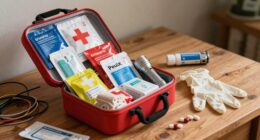
During a blackout, your refrigerated foods are at risk of spoiling quickly if you don’t take immediate steps to preserve them. Time is critical, and having a well-stocked set of emergency supplies can make all the difference in maintaining food safety. First, gather your supplies, including coolers, ice packs, bottled water, and any portable power sources if available. These items will help you keep perishable foods cold longer and prevent bacteria growth that leads to foodborne illnesses.
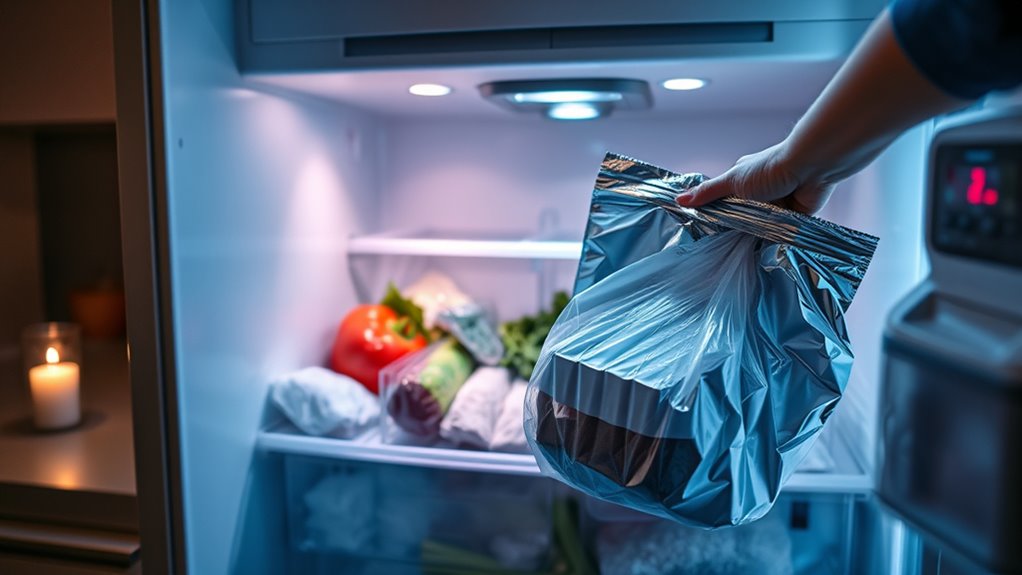
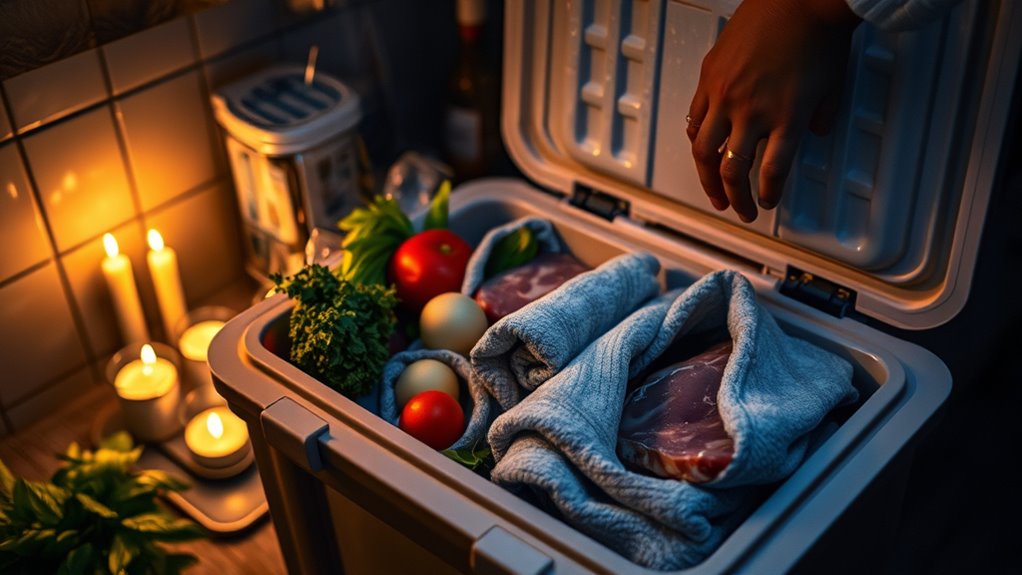
If your power is out, the goal is to keep the refrigerator and freezer as cold as possible. Keep the doors closed as much as you can. Every time you open the fridge, warm air enters, raising the temperature and increasing the risk of food spoilage. A full freezer retains cold better than an empty one, so if your freezer isn’t full, consider filling empty spaces with frozen bottles of water or ice packs. This extra mass helps keep the temperature stable. When possible, transfer perishable items to a cooler with ice packs, especially if you notice the fridge temperature rising above 40°F (4°C). This preserves food safety by slowing bacterial growth.
Monitoring the temperature is essential. Use a thermometer to check the fridge and freezer temperatures periodically. If the fridge temperature exceeds 40°F for more than two hours, discard perishable foods like dairy, meat, seafood, and leftovers to prevent foodborne illnesses. When the power comes back, check the condition of all foods. Any items that are spoiled, have an off smell, or show signs of spoilage should be discarded immediately.
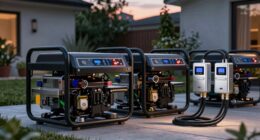
In some cases, you can extend the freshness of your refrigerated foods by utilizing emergency supplies like ice or dry ice. Place these on top of perishable foods in the fridge to keep temperatures down longer. If you have a generator, use it strategically to power your fridge or freezer, but never run it indoors due to carbon monoxide risk. Always follow safety instructions when handling emergency supplies and generators. Additionally, understanding the shelf life of various foods can help you determine what is safe to keep and what should be discarded after a power outage.
Maintaining food safety during a blackout isn’t just about keeping food cold; it’s about preventing health risks. Properly using emergency supplies like coolers, ice packs, and thermometers allows you to manage the situation effectively. Staying vigilant and acting quickly can protect your family from foodborne illnesses and minimize waste. Once power is restored, inspect all foods carefully. When in doubt, throw it out. Preserving refrigerated foods during a blackout requires swift action, proper planning, and a focus on food safety to keep everyone safe and healthy.
Top picks for "preserve refrigerat food"
Open Amazon search results for this keyword.
As an affiliate, we earn on qualifying purchases.
Frequently Asked Questions
How Can I Tell if Refrigerated Food Has Spoiled During a Blackout?
You can tell if refrigerated food has spoiled by checking for spoilage indicators like a sour smell, slimy texture, or discoloration. If the food has been above 40°F for over two hours, it’s safer to discard it to guarantee food safety. Always trust your senses; if something seems off, it’s better to avoid eating it. Remember, identifying spoilage indicators helps prevent foodborne illnesses during a blackout.
Are There Safe Methods to Refreeze Thawed Refrigerated Foods?
Think of refreezing thawed foods as catching a falling star—you want to do it carefully. You can safely refreeze thawed foods if they stayed at 40°F or below and haven’t been out for more than two hours. Use safe refreeze methods like quick freezing and verify the food is still good—no off smells or slimy textures. When in doubt, it’s safer to discard to avoid health risks.
What Emergency Supplies Should I Prepare for Food Preservation?
You should prepare emergency supplies like canning supplies and food-grade containers to safeguard food. Canning supplies help you safely process and store foods without refrigeration, while food-grade containers keep perishables safe from contamination. Stock up on these essentials, along with manual can openers and coolers, to ensure your food stays safe and edible during power outages. Being prepared with these supplies gives you peace of mind and food security in emergencies.
Can I Use Dry Ice to Keep My Fridge Cold During a Blackout?
Yes, you can use dry ice to keep your fridge cold during a blackout, but handle it safely. Think of dry ice storage as a delicate dance—you must wear gloves and ensure proper ventilation to avoid CO₂ buildup. Place the dry ice in a well-ventilated area, away from children, and insulate it from direct contact with food. With careful handling, dry ice can buy you precious hours to preserve your perishables.
How Long Can Refrigerated Foods Stay Safe Without Power?
Refrigerated foods typically stay safe for about 4 hours without power if the door stays closed. To maximize safety, you should follow proper storage tips like keeping the door shut and using coolers with ice if possible. Food safety is essential, so check for spoilage or unusual odors before consuming. After 4 hours, perishable items may no longer be safe, so prioritize consuming or discarding them promptly.
Conclusion
When the power fades and your fridge falls silent, think of your foods as treasures in a locked chest. With a little quick thinking—using coolers, ice, and minimizing door openings—you become the guardian of their freshness. Like a skilled captain steering through stormy seas, you’ll keep your perishables safe and sound, weathering the blackout’s storm. Remember, your swift actions are the lighthouse guiding your food safely to calmer waters.