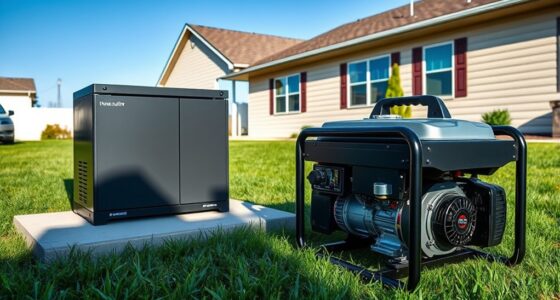
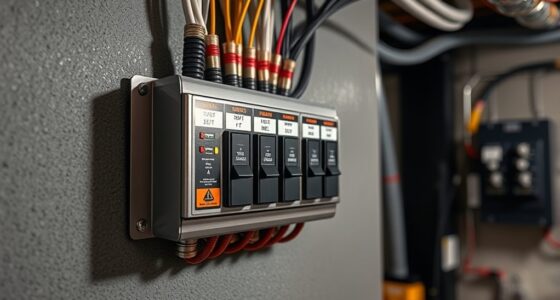
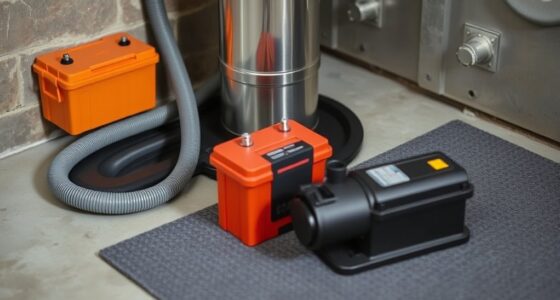
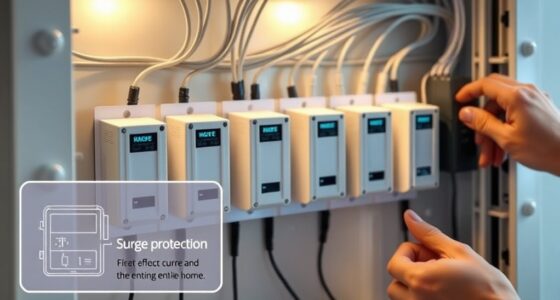
To evaluate hybrid backup systems for your modern home, focus on how well they integrate solar energy, smart grid compatibility, and battery capacity. Make certain the system maximizes solar power usage, communicates efficiently with the grid, and is scalable for future needs. Prioritize systems that provide reliable, continuous power during outages while optimizing energy costs. Exploring these aspects helps you choose solutions that boost your home’s resilience and sustainability—if you keep exploring, you’ll discover even more ways to enhance your system.
Key Takeaways
- Assess system compatibility with solar energy integration and smart grid infrastructure for optimized energy management.
- Evaluate battery capacity and scalability to meet current and future home energy needs.
- Ensure seamless communication between backup systems, grid, and renewable sources for efficient operation.
- Prioritize solutions that maximize solar energy use and support home resilience during outages.
- Consider user-friendly monitoring interfaces and adaptability to evolving home demands.
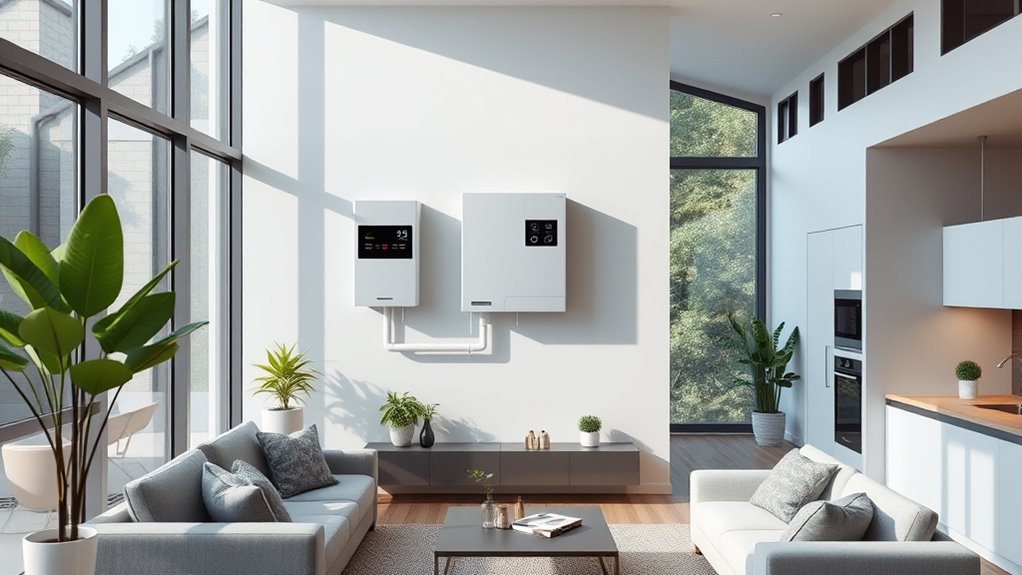
As homes become smarter and more connected, protecting your data and critical systems is more important than ever. Modern homes often rely on integrated systems that manage everything from security to appliances, and even your energy supply. That’s why evaluating hybrid backup systems is essential to ensure your home remains functional and secure, especially during power outages or cyber threats. A key factor in this evaluation is understanding how solar energy integrates with your backup setup. Solar panels can provide renewable power during the day, reducing reliance on the grid and lowering your energy costs. When combined with a smart grid, your home can intelligently manage energy flow, shifting loads and storing excess energy in batteries. This synergy allows your backup system to draw from your solar storage first, then seamlessly switch to grid power if needed, guaranteeing continuous operation without interruption.
Integrate solar with your backup system for seamless, sustainable, and reliable home power during outages and cyber threats.
You should also consider the compatibility of your backup system with existing smart grid infrastructure. A well-designed hybrid system communicates with the grid, optimizing energy usage based on real-time data. For example, during peak sunlight hours, your system can prioritize charging batteries with solar energy, reducing strain on the grid and maximizing renewable use. Conversely, if the grid is experiencing instability, your system can rely more heavily on stored solar power, providing a resilient backup. This dynamic interaction helps you not only maintain power but also contribute to a more sustainable energy ecosystem. Additionally, understanding battery capacity and how it aligns with your home’s energy needs is crucial for effective backup planning.
When evaluating different hybrid backup options, pay attention to the capacity and scalability of the system. Modern homes often grow and change, so your backup solution should be adaptable. Larger battery banks and more sophisticated energy management software allow you to expand your backup capabilities as your needs evolve. Furthermore, look into how user-friendly the system is. A straightforward interface and reliable automation make it easier to monitor and manage your backup power, reducing stress during emergencies. Remember, the goal is to have a system that seamlessly integrates with your home’s energy sources, like solar energy, and works harmoniously with the smart grid to provide reliable, efficient backup power.
In essence, a thorough evaluation of hybrid backup systems involves understanding how they leverage renewable energy sources, communicate with the grid, and adapt to your home’s changing demands. Prioritize solutions that maximize your solar energy potential and enhance your home’s resilience. With the right setup, you’ll enjoy peace of mind knowing your home can withstand outages while making the most of sustainable energy.
Frequently Asked Questions
How Do Hybrid Backup Systems Compare in Cost to Traditional Backups?
Hybrid backup systems typically cost more upfront than traditional backups due to their advanced features and multiple storage options. However, when considering the overall cost comparison, they often save you money in the long run by reducing the risk of data loss and minimizing maintenance needs. For budget considerations, weigh the initial investment against potential data recovery expenses, and choose a system that balances cost with your security and convenience needs.
Are Hybrid Backup Systems Suitable for Large-Scale Commercial Properties?
Absolutely, hybrid backup systems are a game-changer for large-scale commercial properties! They offer unparalleled commercial scalability, handling vast amounts of data effortlessly, and seamlessly integrate with existing infrastructure, making backups faster and more reliable. You’ll find these systems are designed to grow with your business, ensuring your data stays protected no matter how big your operations get. It’s like having a backup powerhouse built specifically for your commercial needs!
What Is the Typical Lifespan of a Hybrid Backup System?
You can expect a hybrid backup system’s battery longevity to range between 5 to 15 years, depending on usage and maintenance. System durability plays a key role in its lifespan; high-quality components and proper care can extend your system’s effectiveness. Regularly monitoring battery performance and scheduling professional checkups help guarantee your system stays reliable. Ultimately, investing in a durable hybrid system maximizes lifespan and protects your home during outages.
How Often Should Hybrid Backup Systems Be Maintained or Upgraded?
You should perform maintenance on your hybrid backup system every six months to prevent it from turning into an ancient relic. Upgrades are needed roughly every 2-3 years, or sooner if new technology emerges that could make your system faster and more reliable. Stick to a regular maintenance schedule and keep an eye out for upgrade frequency to guarantee your system stays as modern as your home.
Can Hybrid Backup Systems Be Integrated With Existing Home Automation Systems?
Yes, hybrid backup systems can be integrated with your existing home automation systems, especially through wireless integration. However, you might face compatibility challenges, as not all systems are designed to work seamlessly together. To guarantee smooth operation, check the compatibility of your backup system with your home automation platform and consult with professionals if needed. Proper integration enhances automation and data security, making your home smarter and safer.
Conclusion
Now that you’ve explored hybrid backup systems, the question is—are you ready to take the leap? Imagine your home protected, data safe, and peace of mind within reach. But the real surprise awaits in how seamlessly these systems can adapt to your changing needs. Will you choose the familiar or embrace the future? The choice is yours, and the next move could change everything—are you prepared to discover what’s next?