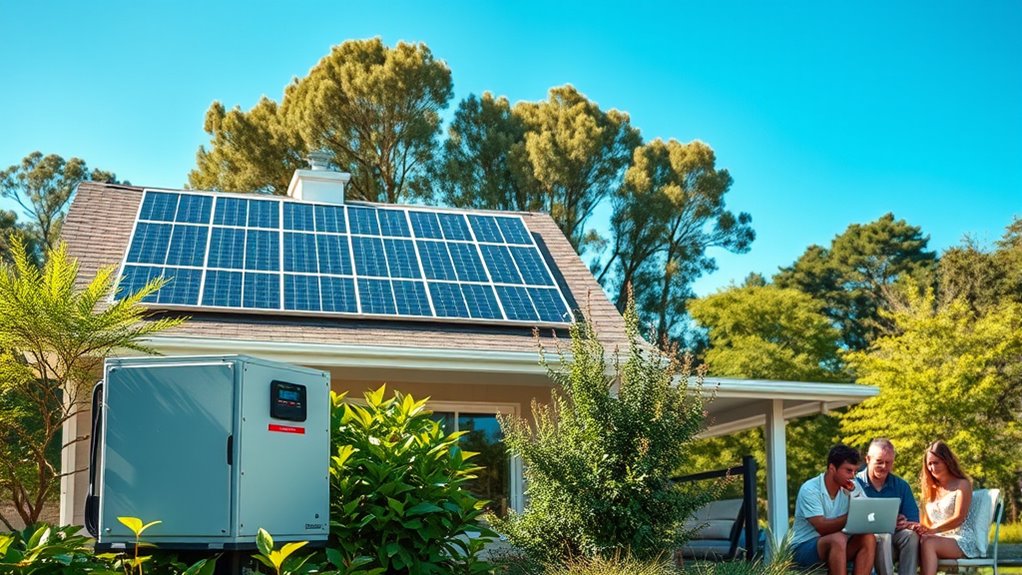

Developing a microgrid for your home boosts resilience by allowing you to generate, store, and manage your own energy. This setup guarantees you have reliable power during outages or storms, thanks to renewable sources like solar or wind combined with energy storage. Microgrids reduce dependence on the main grid and help manage weather disruptions effectively. To discover how you can implement this for your home and increase your energy security, keep exploring the options available.
Listen free for 30 days with Audible
Thousands of audiobooks and originals — cancel anytime.
As an affiliate, we earn on qualifying purchases.
Key Takeaways
- Microgrids enable local energy generation, storage, and management to ensure continuous power during outages.
- Integrating renewable sources like solar and wind enhances resilience and reduces reliance on the main grid.
- Energy storage systems, such as batteries, buffer renewable energy and provide backup during severe weather events.
- Microgrid systems improve home safety, comfort, and sustainability by maintaining power independence.
- Developing microgrids with renewables and storage offers long-term cost savings and increased disaster preparedness.
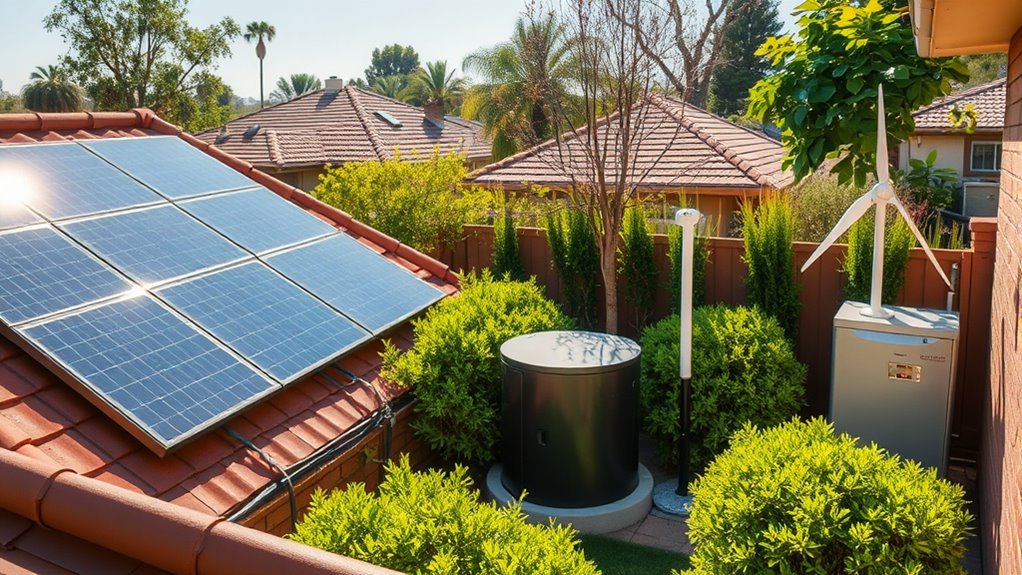
As extreme weather events become more frequent, developing microgrids for your home offers a reliable way to enhance resilience. A microgrid allows you to generate, store, and manage your energy locally, giving you greater control during outages or grid disruptions. Central to this setup is energy storage, which acts as a buffer, storing excess renewable energy generated during sunny or windy periods so you can use it when the weather isn’t favorable. This means you’re less dependent on the main grid, especially during storms or other emergencies, ensuring your home remains powered regardless of external conditions.
Develop a resilient home with microgrids and energy storage for reliable power during storms and outages.
When integrating renewable energy sources like solar panels or small wind turbines into your microgrid, energy storage becomes even more critical. Renewable integration enables you to produce clean energy directly at your property, reducing reliance on fossil fuels and lowering your carbon footprint. However, renewable sources are intermittent—they produce energy only when the sun shines or the wind blows. This is where energy storage systems, such as batteries, come into play. They store surplus renewable energy during peak production times and release it when production dips, maintaining a steady power supply for your home.
Building a microgrid with renewable integration helps you optimize energy usage and increase your home’s resilience. It’s not just about having backup power; it’s about creating a self-sufficient energy ecosystem. When the grid goes down, your microgrid can operate independently, seamlessly switching to stored energy. This minimizes disruption, especially during severe weather events that can knock out traditional power lines for hours or days. By installing a robust energy storage solution alongside renewable sources, you can ensure your home remains comfortable, safe, and functional no matter what’s happening outside.
Moreover, integrating renewable energy and storage into your microgrid can lead to long-term savings. While the initial investment might seem substantial, the reduced energy bills and potential incentives or tax credits make it financially worthwhile. Plus, you’re contributing to a cleaner environment by decreasing your reliance on grid-supplied fossil fuels.
In essence, developing a microgrid with a focus on energy storage and renewable integration empowers you to take charge of your energy needs. It provides a resilient, sustainable, and cost-effective solution that keeps your home powered during emergencies, reduces environmental impact, and offers peace of mind. As weather patterns continue to change, this proactive approach to energy management ensures your home is prepared today and for years to come. Reliable energy infrastructure is fundamental in supporting these microgrid systems and maximizing their benefits.
As an affiliate, we earn on qualifying purchases.
Frequently Asked Questions
What Is the Typical Cost of Installing a Residential Microgrid?
The cost of installing a residential microgrid typically ranges from $10,000 to $50,000, depending on size and complexity. You should conduct a thorough cost analysis to understand the investment needed. Explore financing options like loans, grants, or incentives to make the project more affordable. By weighing these factors, you can make informed decisions that enhance your home’s resilience without overspending.
How Long Does It Take to Set up a Home Microgrid?
Setting up a home microgrid is like planting a seed that takes time to grow. Usually, it takes around 3 to 6 months, depending on your system integration needs and the complexity of installing battery storage. You’ll work closely with installers, coordinating equipment and wiring, as they weave the components into your home’s energy fabric. Patience pays off when your microgrid blossoms into a resilient, reliable power source.
Are There Government Incentives for Microgrid Installation?
Yes, there are government incentives for microgrid installation. You can take advantage of policy incentives like tax credits, rebates, and grants that help reduce your costs. Funding programs are available at federal, state, and local levels, making it easier for you to invest in a microgrid. Check with your local energy authority or government agencies to find specific programs tailored to your area and needs.
What Maintenance Is Required for a Home Microgrid?
You’ll want to keep your microgrid in tip-top shape, almost like a finely-tuned sports car. Regular system monitoring is key—check for any glitches or unusual activity. Keep an eye on your battery lifespan, since batteries are the heart of your system and may need replacement after years of heroic service. Clean and inspect components, and guarantee software updates are installed. With consistent care, your microgrid will keep powering your home like a superhero!
Can Microgrids Integrate With Existing Home Energy Systems?
Yes, microgrids can integrate with your existing home energy systems. They work seamlessly with renewable sources like solar panels and wind turbines, enhancing renewable integration. Plus, they connect with smart grid technology, allowing you to monitor and control energy flow efficiently. This integration boosts your home’s resilience, reduces costs, and optimizes energy use, ensuring you get reliable power even during outages.
home energy storage battery system
As an affiliate, we earn on qualifying purchases.
As an affiliate, we earn on qualifying purchases.
Conclusion
So, after all this talk about microgrids boosting your home’s resilience, you might think you’re safe from power outages forever. Ironically, investing in a microgrid could be your best chance to enjoy the inconvenience of a blackout—on your terms. When the grid fails, you’ll be the one with power, all while others scramble in the dark. Who knew that building resilience could turn out to be the most entertaining way to stay prepared?
As an affiliate, we earn on qualifying purchases.
As an affiliate, we earn on qualifying purchases.
Flea & tick season Picks
flea and tick prevention
As an affiliate, we earn on qualifying purchases.