

To prepare for a 7-day outage, assess your power needs and gather essential supplies like water, food, and batteries. Create a safety plan, keep emergency tools handy, and stockpile essentials for the first few days. Communicate with family and neighbors, explore backup power options, and monitor outage updates. Once power is restored, inspect your home carefully. Follow these steps, and you’ll be ready to handle the situation confidently and safely. Keep going to learn detailed strategies that make your recovery smoother.
Key Takeaways
- Prioritize safety by assessing electrical hazards, securing emergency supplies, and maintaining proper generator operation.
- Stockpile essential food, water, and backup power sources to sustain your household during the outage.
- Establish clear communication plans with family and neighbors to coordinate support and share updates.
- Use accurate outage maps to identify affected areas and plan navigation or resource distribution effectively.
- After power restoration, inspect your property, verify system functionality, and follow safety protocols before resuming normal activities.
Assess Your Current Power Needs and Create a Basic Emergency Kit
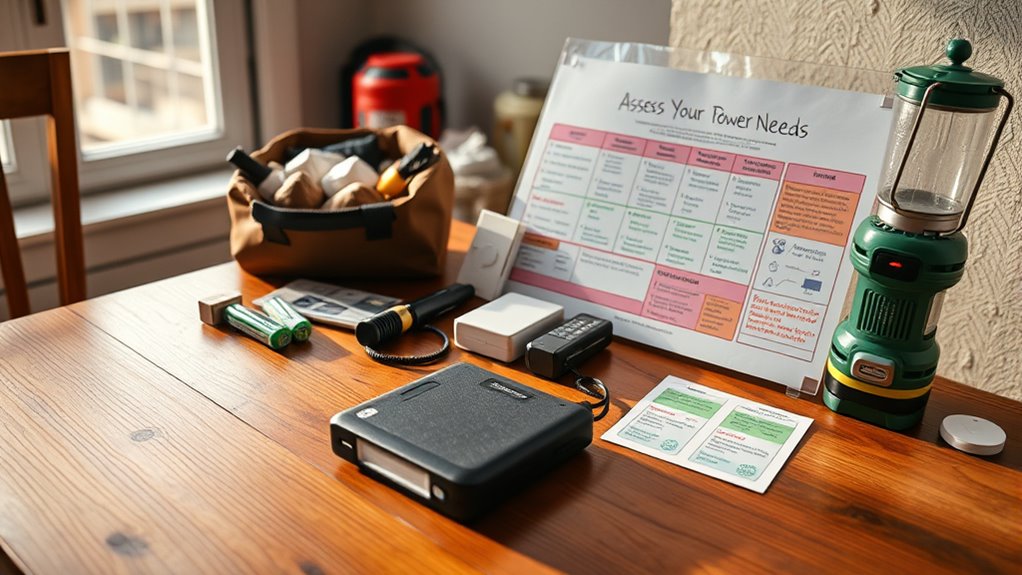
Before a power outage occurs, it is vital to evaluate your current energy needs and assemble a basic emergency kit. Start by assessing your power consumption: identify essential devices like medical equipment, lights, and communication tools. Knowing which items require power helps you prioritize your energy use and plan accordingly. Next, gather emergency supplies such as bottled water, non-perishable food, batteries, flashlights, and a portable charger. Having these supplies on hand guarantees you can stay safe and comfortable during an outage. Keep your emergency kit organized and accessible, so you’re ready to act immediately if the power goes out. By understanding your power needs and preparing essential supplies in advance, you’ll be better equipped to handle unexpected outages effectively.
Prepare Your Home for Power Loss: Safety and Convenience Measures

Preparing your home for a power loss involves taking practical steps to guarantee safety and maintain convenience. Start by scheduling regular generator maintenance to ensure your backup power source works reliably when needed. Always prioritize electrical safety by keeping cords away from water and avoiding overloaded outlets. Use surge protectors to safeguard electronics, and install carbon monoxide detectors if using a generator indoors. Additionally, prepare your home to prevent hazards and make it easier to stay comfortable during outages. Regularly checking your generator’s condition can help prevent unexpected failures when you need it most. Keep a fire extinguisher nearby for safety. Have flashlights and batteries accessible in key areas. Create a clear plan to shut off power safely if needed.
Stock Up on Essential Supplies for the First Few Days
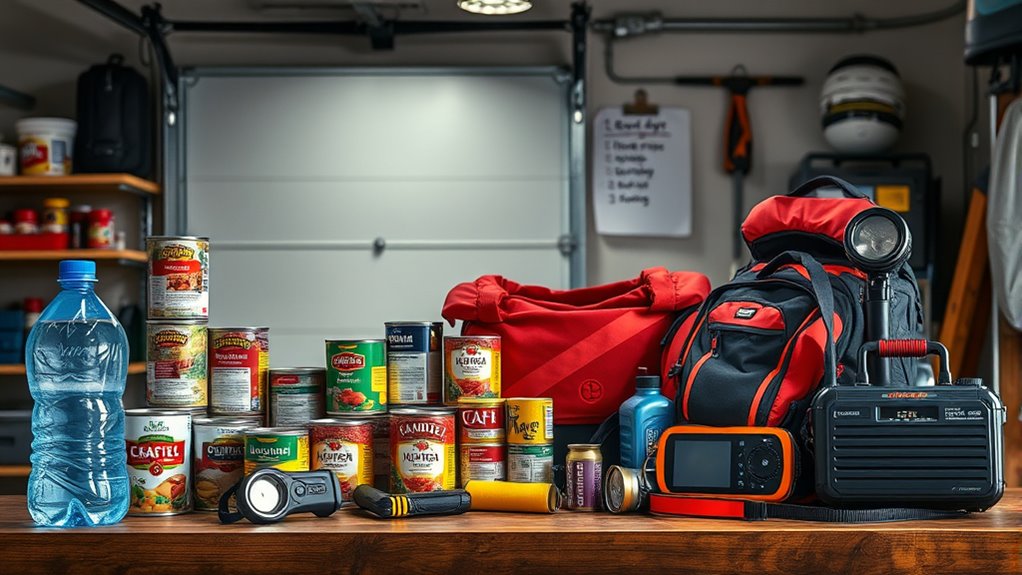
Stocking up on essential supplies makes sure you’re ready to handle the first few days of a power outage smoothly. Focus on food preservation by storing non-perishable items like canned goods, dried fruits, and energy bars. This guarantees you won’t run out of nourishment when refrigeration isn’t an option. Additionally, gather supplies like bottled water, batteries, and basic first aid kits. Mental preparedness is just as important; having these supplies on hand reduces stress and helps you stay calm. Keep in mind that having enough food and essentials close at hand allows you to focus on other aspects of your outage plan. Be organized, and double-check your stock regularly to ensure everything is in good condition. Incorporating emergency power solutions like portable generators or UST projectors during outages can also help maintain entertainment and communication. This way, you’re better prepared for the unexpected.
Develop a Communication Plan for Family and Neighbors

Creating a clear communication plan for your family and neighbors guarantees everyone stays informed and connected during a power outage. Effective communication strategies ensure that updates about safety, resources, and help are shared quickly. To succeed, coordinate with neighbors beforehand, establishing a reliable method to stay in touch. Utilizing clear communication strategies and technology can significantly improve response times and coordination. Some key points to focus on include: – Designate a primary contact person for your household and neighborhood – Share contact information and emergency plans in advance – Use multiple communication methods, like phone calls, texts, or radio – Schedule regular check-ins to monitor everyone’s safety and needs
Strong neighborhood coordination minimizes confusion and helps everyone respond promptly. Clear communication strategies build community resilience, ensuring you’re prepared for any extended outage.
Implement Energy Conservation and Alternative Power Solutions

To make your power supply last longer during an outage, focus on conserving energy and exploring alternative power options. Use energy-efficient appliances and LED lighting to reduce electricity consumption. Consider installing renewable sources like solar panels or wind turbines if feasible, as they provide sustainable backup power and decrease reliance on the grid. Use power strips to easily turn off multiple devices when not in use, preventing energy drain. Prioritize essential appliances, such as refrigeration, lighting, and communication devices, to minimize unnecessary load. Keep portable chargers and backup batteries handy for critical devices. Regularly inspecting and maintaining your bike’s drivetrain can ensure efficiency and longevity, which is especially helpful if you need to rely on alternative transportation methods during extended outages. By implementing these strategies, you maximize your limited energy resources and ensure essential functions stay operational during extended outages.
Stay Informed: Monitoring Weather and Power Outage Updates
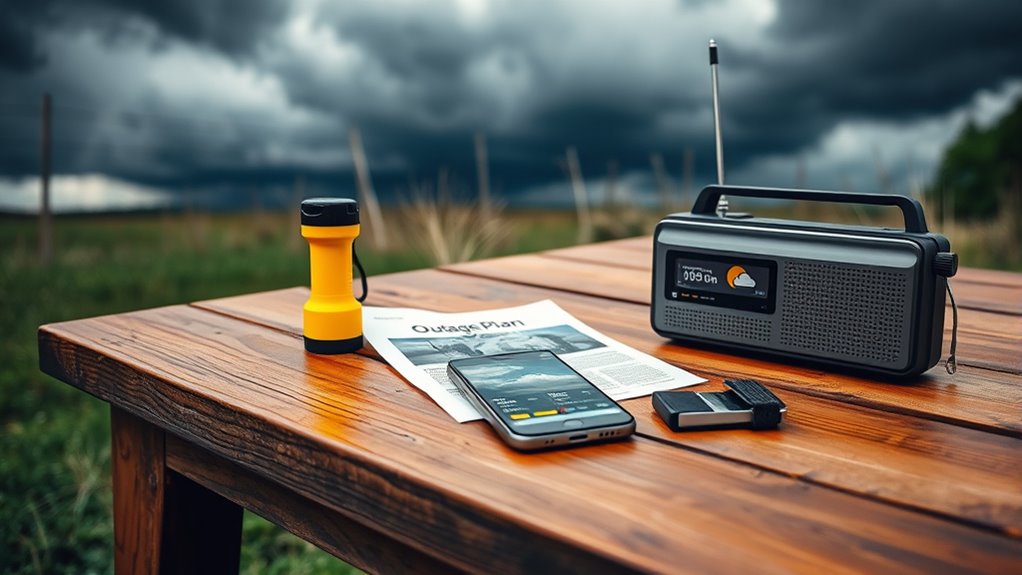
Staying updated on weather and outage information helps you prepare effectively. Make certain to track local alerts, sign up for notifications, and check reliable outage maps regularly. These steps ensure you’re always informed and ready to act.
Track Local Weather Alerts
Monitoring local weather alerts is essential to staying prepared during a power outage. By keeping an eye on weather alerts, you can track storms and anticipate outages before they happen. Reliable sources like weather apps, local news, and official agencies provide real-time updates on storm tracking and severe weather conditions. Staying informed helps you make timely decisions, such as securing outdoor items or conserving energy. Remember, weather alerts often include important safety instructions. To maximize your preparedness, consider the following:
- Enable notifications on weather apps for instant updates
- Follow local weather stations on social media
- Sign up for community alert systems
- Keep a battery-powered radio handy for updates when power is out
- Being aware of air quality levels can help you decide when to ventilate your home or use air purifiers during and after a storm.
Being proactive guarantees you’re ready for any weather-related surprises during an outage.
Sign Up for Notifications
Have you considered how signing up for notifications can keep you immediately informed about weather and power outage updates? Using notification apps on your phone or smart home system guarantees you get real-time alerts, so you’re never caught off guard. These apps send instant updates straight to your device, helping you stay prepared. To make it simple, here’s a quick overview:
| Method | Benefits |
|---|---|
| Notification Apps | Immediate alerts for weather and outages |
| Smart Home Devices | Automated updates and alerts |
| Email Alerts | Detailed information at your convenience |
| Text Messages | Quick, direct notifications |
Signing up for these notifications helps you stay ahead, ensuring safety and quick response during outages. Staying informed with Paint Sprayer Reviews & Buying Guides can also help you be prepared for home maintenance emergencies.
Use Reliable Outage Maps
Using reliable outage maps is one of the most effective ways to stay informed during weather events and power outages. Accurate outage map data helps you understand the scope of the problem and locate affected areas quickly. To maximize outage map accuracy, choose trusted sources and regularly refresh the map. When exploring these maps, keep these map navigation tips in mind: – Zoom in for detailed views of your neighborhood – Use filters to see specific outage types or areas – Cross-reference with local utility updates – Save or bookmark your outage map for quick access. Additionally, understanding juice detox can help you maintain hydration and nutrition if you experience prolonged outages that limit food options.
Recovery and Reassessment: Getting Back to Normal Safely
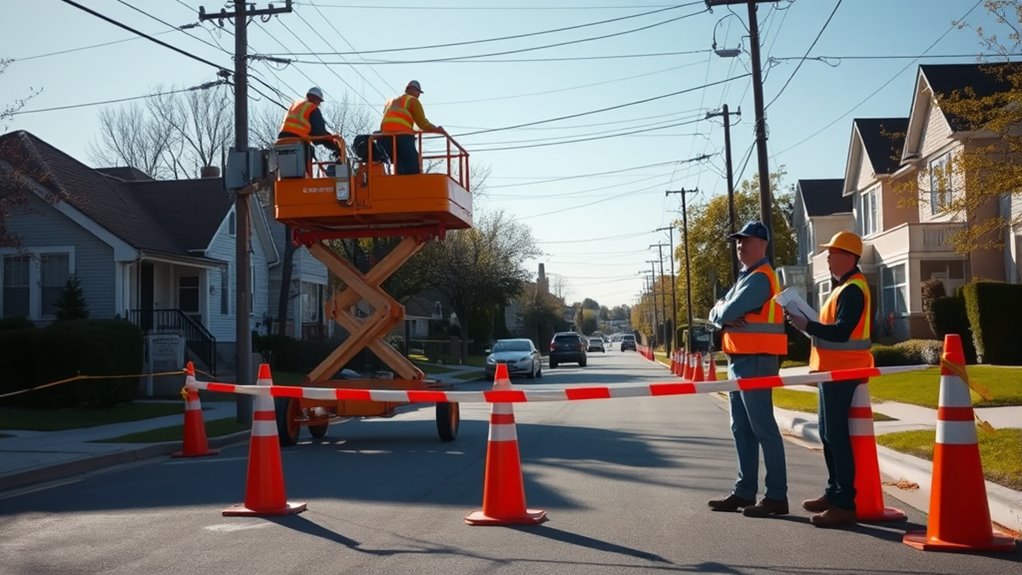
Once power is restored, you need to carefully inspect your property for damage and verify all systems are functioning properly. Testing and validating equipment helps prevent future issues, while implementing safety and preventative measures protects everyone moving forward. Taking these steps ensures a safe return to normal operations. Additionally, conducting a well-being assessment can help identify any emotional or physical needs that may have arisen during the outage, ensuring comprehensive recovery.
Damage Inspection and Assessment
After a disaster, conducting a thorough damage inspection is vital to determine the extent of the impact and identify immediate hazards. You need to assess both the power grid and infrastructure damage to prioritize repairs and guarantee safety. Look for signs of downed power lines, compromised structures, and water leaks that could cause further harm. It’s essential to document everything for insurance claims and repair planning. Remember:
- Check for live wires and avoid contact.
- Identify structural weaknesses or collapses.
- Evaluate the safety of electrical systems.
- Record damage with photos and notes.
- Understanding essential oils for safety and health can also support recovery efforts by promoting calming and stress relief during challenging times.
This process helps you understand what needs urgent attention and prevents additional risks during recovery. Accurate damage assessment is the foundation for a safe, efficient return to normalcy.
System Testing and Validation
System testing and validation are critical steps in ensuring the power grid and infrastructure are safe and fully operational before resuming normal activities. You’ll follow specific testing protocols to verify that all systems function correctly and safely. These protocols include checking for stability, confirming that repairs held, and ensuring no hidden issues remain. Conduct thorough system validation to confirm that power flows smoothly and safely across the network. This process involves running diagnostic tests, monitoring system responses, and verifying safety measures are in place. By carefully executing testing protocols, you reduce risks of future failures and ensure reliable service. Additionally, inspecting for signs of system degradation can help identify potential problems before they escalate. Only after successful testing and validation can you confidently move forward with restoring full operations, knowing the infrastructure is secure and functioning properly.
Safety and Preventative Measures
How can you guarantee that the power grid is safe and resilient as you move back to normal operations? Start with thorough generator maintenance to prevent malfunctions. Verify all equipment is properly inspected and functioning correctly. Prioritize fire safety by checking for potential hazards, such as overloaded circuits or flammable materials. Regularly test safety systems to ensure they respond effectively during emergencies.
- Conduct a detailed inspection of all backup generators
- Confirm fire safety protocols are in place and understood
- Reassess electrical connections for stability and safety
- Document all maintenance and safety checks for accountability
Frequently Asked Questions
How Long Should I Expect an Outage to Last?
The outage duration can vary depending on the nature of the issue, but generally, you should expect the expected time to be anywhere from a few minutes to several hours. If it’s a scheduled outage, check for updates from your service provider for a more accurate expected time. For unexpected outages, technicians work to resolve problems as quickly as possible, but the exact duration depends on the complexity of the repair.
What Are Common Safety Hazards During Power Outages?
Power outages can feel like steering through a dark forest, so stay alert. You face common hazards like electrical shocks from downed wires or faulty generator safety practices. Never touch power lines or use generators indoors; they produce dangerous carbon monoxide. Always keep a flashlight handy, stay away from water around electrical equipment, and make certain your generator is properly ventilated. Staying cautious helps you avoid these common electrical hazards and stay safe.
How Can I Prevent Food Spoilage During an Outage?
To prevent food spoilage during an outage, you should conserve energy by keeping your refrigerator and freezer doors closed as much as possible. Use an emergency kit with ice packs or dry ice to maintain cold temperatures if the outage lasts long. Avoid opening the fridge frequently, and if power is out for more than a few hours, consider relocating perishable items to a cooler with ice.
Are There Specific Insurance Considerations for Outage Damages?
Think of insurance as your safety net during an outage—without it, a fall can be costly. You should review your policy for specific insurance considerations regarding outage damages, as coverage exclusions often apply. For example, some policies exclude damage from power outages caused by storms. If you experience damage, filing insurance claims promptly is essential to guarantee you’re covered and avoid surprises, especially if your policy has limits.
How Do I Coordinate With Local Authorities During Outages?
You should establish clear communication channels with local authorities through community engagement initiatives. During outages, coordinate with them to stay updated on emergency communication plans and response efforts. Attend community meetings, maintain contact with local emergency services, and share outage information promptly. By building strong relationships, you guarantee timely updates, effective response coordination, and better support for those affected, making outage management smoother and safer for everyone involved.
Conclusion
By preparing proactively, you’ll promote peace, protect property, and prevent panic. Stay savvy by staying informed, stock supplies, and securing safety. Keep communication clear and conserve energy to calmly conquer challenges. A well-woven plan will protect your household, promote peace of mind, and pave the path to a safe, smooth recovery. Remember, preparedness empowers you to handle hardships with confidence, turning potential chaos into controlled comfort.