
To develop a 7-day power loss contingency plan, start by identifying essential needs like water, food, medications, and communication options. Guarantee you have reliable backup generators, portable power stations, and sufficient fuel stored safely. Create clear protocols for communication, including backup methods like satellite phones or radios, and designate a central contact. Regularly review, practice, and update your plan to stay prepared; further details can guide you through building an effective strategy.
Key Takeaways
- Assess critical equipment and determine backup power needs for a minimum of seven days.
- Create detailed procedures for operating, maintaining, and testing backup generators and systems.
- Assemble and store essential supplies, including food, water, medications, and communication tools, in an accessible location.
- Develop clear communication protocols, including contact points and alternative methods, to stay connected during outages.
- Regularly review, practice, and update the plan to ensure household readiness and effective response.
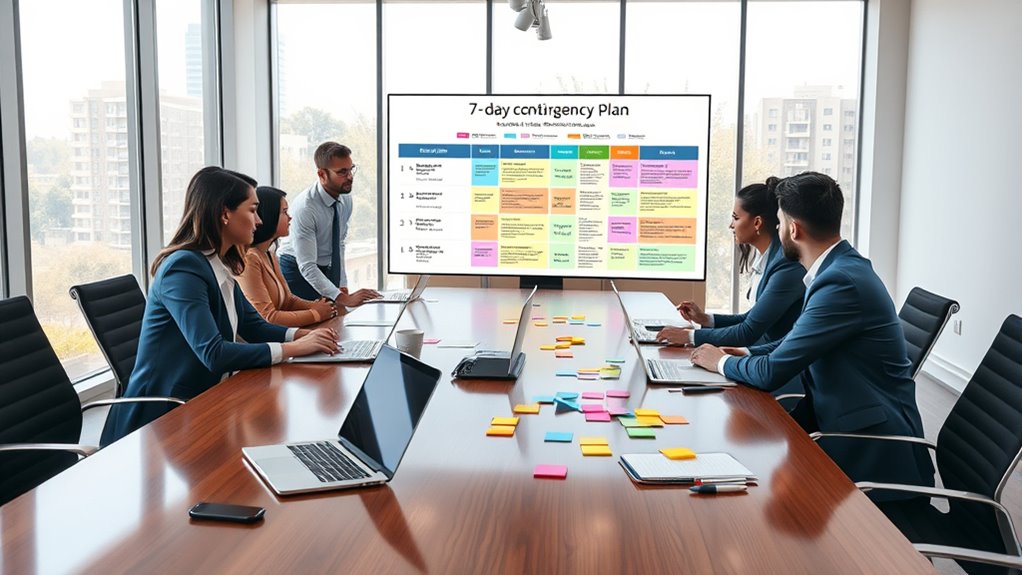
Have you ever considered what you’ll do if your power suddenly goes out? Preparing for a power outage isn’t just about having flashlights and batteries; it’s about creating a solid plan that keeps you safe and connected. One of the most critical components of your contingency plan is ensuring you have reliable backup generators in place. These generators can keep essential systems running, such as refrigeration, heating, and communication devices, until power is restored. When selecting a backup generator, consider the size and capacity needed to support your most crucial equipment. Regular maintenance and testing are key to ensuring they’ll operate smoothly during an outage. It’s also wise to store fuel safely and have enough on hand to last several days, as outages can sometimes extend longer than expected.
In addition to physical equipment, establishing clear communication protocols is essential. Power loss can cause disruptions in phone, internet, and other communication channels, making it harder to coordinate with family members, neighbors, or emergency services. Make sure everyone in your household knows how to use backup communication methods, such as portable radios or satellite phones, in case traditional systems fail. Designate a central point of contact outside your immediate area so everyone can check-in and share updates. Keep a printed list of important phone numbers, including emergency services, utility companies, and local shelters. Regularly review and practice these communication protocols so that everyone remains confident and prepared when an outage occurs. Additionally, backup power solutions like solar generators and portable power stations can provide silent and emissions-free energy options during extended outages.
You should also prepare a detailed inventory of essential supplies, including water, non-perishable food, medications, and first aid kits, to sustain you through the week. Incorporate these supplies into your contingency plan, along with instructions on how to access and use backup systems. Consider creating a dedicated space in your home where you can store these supplies and operate backup generators safely. Make sure everyone in your household knows how to safely start and shut down the backup generator, and never operate it indoors to avoid carbon monoxide poisoning.

Westinghouse 12500 Watt Dual Fuel Home Backup Portable Generator, Remote Electric Start, Transfer Switch Ready, Gas and Propane Powered
9500 Running Watts and 12500 Peak Watts (Gasoline); 8500 Running Watts, 11200 Peak Watts (Propane); Remote Start with…
As an affiliate, we earn on qualifying purchases.
As an affiliate, we earn on qualifying purchases.
Frequently Asked Questions
How Often Should the Contingency Plan Be Reviewed and Updated?
You should review your plan annually to guarantee it remains effective and relevant. Conduct regular plan reviews after any power loss incident or significant organizational change. Update your plan whenever you identify gaps or new risks. This proactive approach keeps your contingency plan current, helps you respond swiftly during a power outage, and minimizes disruptions. Consistent plan updates ensure you’re always prepared for unexpected power failures.
Who Should Be Designated as the Primary Contact During a Power Outage?
During a power outage, you should designate a single person as the primary contact for emergency communication, ensuring clear and quick information flow. This role is vital to avoid chaos and confusion, so choose someone with strong leadership and communication skills. The contact hierarchy must be well-defined, with backup contacts ready if needed. This streamlined approach keeps everyone informed, coordinated, and prepared, even in the darkest moments.
What Are the Costs Associated With Implementing a Power Loss Contingency Plan?
You should conduct a thorough cost analysis to understand the expenses involved in implementing your power loss contingency plan. Costs may include resource allocation for backup generators, communication systems, and staff training. Additionally, consider ongoing maintenance and potential productivity losses during outages. By evaluating these factors, you can allocate resources efficiently, ensuring your plan is cost-effective and ready to minimize disruptions during a power outage.
How Can Employee Training Be Integrated Into the Contingency Planning Process?
You actively integrate employee training by fostering engagement and emphasizing skill development. Use hands-on drills and scenario-based exercises to keep staff involved, making training engaging and practical. Encourage teamwork to build confidence, and include regular updates to reinforce learning. By doing so, you guarantee your team stays prepared, adaptable, and confident, transforming training from a task into an engaging process that strengthens your contingency plan’s effectiveness during a power loss.
What Technology Tools Can Assist in Executing the Contingency Plan Effectively?
You can use technology tools like a smart grid to monitor power systems in real-time and quickly identify issues. Battery backups guarantee essential operations stay running during outages. Implementing automated alerts and control systems helps you respond faster, coordinate efforts efficiently, and minimize downtime. These tools streamline execution, improve reliability, and keep your team prepared to handle power loss effectively throughout the contingency plan.

Jackery Solar Generator 1000 v2 with 200W Solar Panel,1070Wh Portable Power Station LiFePO4 Battery,1500W AC/100W USB-C Output, 1Hr Fast Charge for Outdoor,Off-Grid Living,RV,Emergency
Powerful yet Compact: Boasting a 1,500W AC output and a 3,000W surge peak, the Solar Generator 1000 V2…
As an affiliate, we earn on qualifying purchases.
As an affiliate, we earn on qualifying purchases.
Conclusion
By now, you see how preparing a 7-day power loss plan keeps you resilient, just like a well-trained sailor weathering storms at sea. Some say a strong contingency plan is unnecessary—yet history proves that those who plan ahead avoid chaos. Embrace this approach, trusting that your foresight turns potential disaster into a manageable challenge. With a solid plan, you’ll stay calm, confident, and ready to face any blackout head-on.

BlueCosmo Inmarsat IsatPhone 2.1 Satellite Phone Kit & 500 Unit Prepaid SIM (365 Days) – Global Coverage – Voice, SMS, GPS Tracking, Emergency SOS
GLOBAL COVERAGE: NO ROAMING CHARGES – make and receive voice calls, SMS, track your position with GPS from…
As an affiliate, we earn on qualifying purchases.
As an affiliate, we earn on qualifying purchases.

waterBOB Bathtub Emergency Water Storage Bladder Up To 100 Gallon Capacity – Food Grade Liner with Hand Pump for Hurricane and Disaster Preparedness – BPA Free Drinking Water Container
Space-Saving Up To 100-Gallon Emergency Water Storage: Transform your existing bathtub into a clean, safe water storage system…
As an affiliate, we earn on qualifying purchases.
As an affiliate, we earn on qualifying purchases.