
To create a family power outage communication plan, start by listing local emergency contacts, trusted neighbors, and medical facilities, then share it with everyone and store it in multiple places. Establish a designated outdoor meeting spot, set specific check-in times, and decide how to use communication devices like radios or mobile phones. Practice your plan regularly to guarantee everyone knows what to do. Keep reading to discover more tips to make your plan effective and reliable.

Get backup power and energy gear delivered free with Prime
- Fast, free delivery on millions of items
- Prime Video, Amazon Music and more included
- Member-only deals all year
Key Takeaways
- Establish a family communication plan with designated meeting spots, check-in times, and emergency contacts.
- Ensure all family members are trained to use backup devices like radios, power banks, and solar chargers.
- Share emergency contact lists in multiple formats and locations, including out-of-area contacts for message relay.
- Conduct regular drills to practice communication procedures and device operation during power outages.
- Keep devices charged and accessible, and develop alternative communication methods if networks are down.
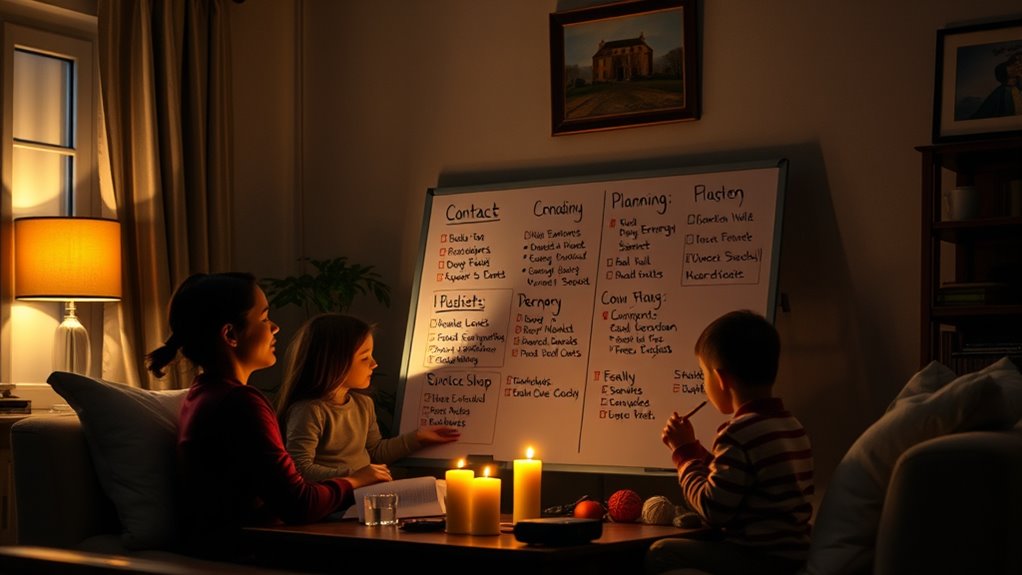
Power outages can happen unexpectedly, leaving your family in the dark and potentially unprepared. During these times, communication becomes vital. Without a clear plan, you may struggle to reach loved ones or emergency services, increasing stress and confusion. That’s why creating a family power outage communication plan is necessary. You need to establish reliable methods to stay in touch and ensure everyone’s safety.
Start by identifying your emergency contacts. Make a list of key numbers, including local emergency services, medical facilities, and trusted neighbors. Share this list with every family member and store it in multiple places, like on paper, on your phone, and in your emergency kit. This way, everyone knows who to call if communication lines are disrupted. It’s also wise to designate a family member or friend outside your immediate area as a central contact. During an outage, local networks might be overwhelmed, but a call to an out-of-town contact can help confirm everyone’s safety and relay messages.
Identify and share emergency contacts with family; store them in multiple places for quick access during outages.
Next, focus on communication devices. Traditional landlines may still work during a power outage if they’re wired directly into the house, but many modern phones and devices rely on electricity or internet connectivity. Invest in battery-powered or hand-crank radios to stay updated on weather alerts, emergency instructions, and news. Portable power banks are invaluable for charging mobile phones and tablets when power is out. Consider purchasing a solar charger for longer outages, ensuring your devices stay operational without relying on the grid. Also, encourage family members to keep their devices charged at all times, especially during severe weather warnings. An additional step is to explore alternative communication methods, such as satellite phones or two-way radios, which can be crucial in severe situations.
Create a clear, simple plan for how your family will communicate if separated. Decide on a designated meeting spot outside your home, and establish a check-in time. Make sure everyone understands how and when to use their communication devices in an emergency. For instance, if cell service is down, a text message might go through more reliably than a call. This is where emergency contacts become essential—having a predefined way to reach out can prevent panic and confusion.
Finally, practice your communication plan regularly. Conduct family drills to ensure everyone knows what to do, how to access emergency contacts, and how to operate communication devices. This familiarity can make all the difference during an actual outage. By planning ahead, you’ll help your family stay connected, safe, and informed, even when the power goes out unexpectedly.
As an affiliate, we earn on qualifying purchases.
Frequently Asked Questions
How Often Should I Update My Family Power Outage Plan?
You should review and update your family power outage plan at least once a year. Regular family drills help identify gaps and make certain everyone knows their roles. After any significant change in your family, such as new members or relocating, do a plan review. Keeping your plan current ensures you’re prepared for emergencies, and practicing drills makes sure everyone stays confident and ready to act quickly during an outage.
What Emergency Communication Tools Are Most Reliable During Outages?
You should rely on ham radios and satellite devices as your most reliable emergency communication tools during outages. Ham radios operate independently of power grids and can connect you with local or emergency services. Satellite devices, like GPS-enabled communicators, work anywhere, even when traditional networks fail. Keep these tools charged and accessible, and practice using them regularly so you’re prepared to stay connected when it matters most.
How Can I Include Children in Developing the Plan?
You can involve children in developing the plan by encouraging family involvement through age-appropriate planning. Talk with them about the importance of communication during outages, and ask for their ideas on what tools or signals they’d find helpful. Keep explanations simple and engaging, and practice the plan together regularly. This way, children feel included, understand their roles, and are more confident during actual power outages.
What Are Backup Options if Cell Phones Don’t Work?
If cell phones don’t work, you can turn to alternative communication options like battery-powered radios or walkie-talkies for non-digital methods. Keep these devices charged and accessible. Establish a designated meeting spot and use visual signals, like flashlights or flags, to communicate. Writing important information on a whiteboard or paper can also help. Practicing these backup options with your family ensures everyone knows what to do during a power outage.
How Do I Coordinate With Neighbors or Community in an Outage?
You can coordinate with neighbors by establishing a community communication plan before an outage occurs, such as setting up a neighborhood meeting or message board. During an outage, check on neighbors, especially the elderly or vulnerable, to confirm neighborhood safety. Share information about available resources and agree on a designated meeting spot. Community coordination strengthens everyone’s safety and helps ensure timely assistance when needed.
solar phone charger for emergencies
As an affiliate, we earn on qualifying purchases.
As an affiliate, we earn on qualifying purchases.
Conclusion
Think of your family’s communication plan like a lighthouse guiding ships safely home. When a power outage hits unexpectedly, your plan keeps everyone connected and on the same course. Just like a lighthouse ensures safe passage through storms, your plan guarantees your family stays informed and secure. Taking a few simple steps now can prevent chaos later. Prepare ahead, stay connected, and you’ll navigate any outage smoothly—your family’s safety depends on it.
portable power bank for power outages
As an affiliate, we earn on qualifying purchases.
As an affiliate, we earn on qualifying purchases.
two-way radio walkie talkies for families
As an affiliate, we earn on qualifying purchases.
As an affiliate, we earn on qualifying purchases.
Halloween Picks
halloween
As an affiliate, we earn on qualifying purchases.