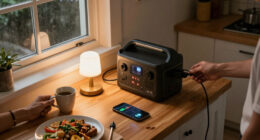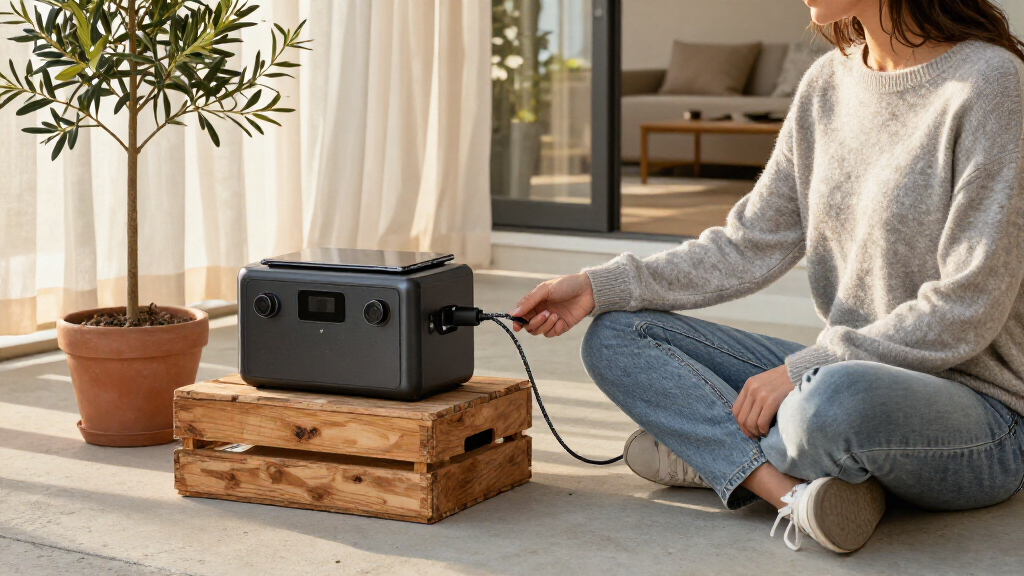

Choosing the right portable power station for home backup requires balancing immediate cost against long-term utility. Readers often compare these two categories because they represent distinct tiers of emergency preparedness. One option serves as a lightweight, plug-and-play solution for critical electronics, while the other acts as a robust, expandable system capable of powering larger appliances for longer periods.

Get backup power and energy gear delivered free with Prime
- Fast, free delivery on millions of items
- Prime Video, Amazon Music and more included
- Member-only deals all year
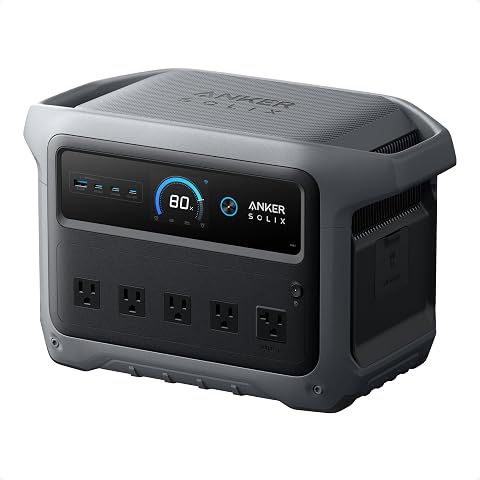
Anker SOLIX C1000 Gen 2 Portable Power Station
- ✔ Battery Capacity: 1,024Wh
- ✔ Battery Type: LiFePO4
- ✔ Output Power: 2,000W

Jackery HomePower 3600 Plus Portable Power Station, 3584Wh, 3600W
- ✔ Battery Capacity: 3,584Wh
- ✔ AC Output: 3,600W
- ✔ Parallel Output: 7,200W

Jackery HomePower 3600 Plus Portable Power Station with Two 200W Solar Panels
- ✔ Battery Capacity: 3,584Wh
- ✔ Output Wattage: 3,600W
- ✔ Included Panels: Two 200W Solar Panels
The decision hinges on your specific outage profile. If you experience occasional, brief blackouts where keeping Wi-Fi, phones, and lights running is sufficient, the compact model offers excellent value. However, if you live in an area prone to prolonged storms or grid instability, the high-capacity model provides the necessary headroom to run refrigerators, space heaters, or medical devices. This guide examines the tradeoffs between portability and power to help you select the unit that matches your household’s survival needs.
At a Glance
| Criteria | Compact Portable Power Station | High-Capacity Expandable Power Station | Winner |
|---|---|---|---|
| Energy Capacity | 500Wh – 1000Wh | 1000Wh – 3000Wh+ | B |
| Expandability | Fixed capacity | Expandable with extra batteries | B |
| Output Power (Watts) | 300W – 600W | 1000W – 2000W+ | B |
| Recharge Speed | 1.5 – 3 hours (AC) | 1 – 2 hours (AC) or solar | B |
| Portability | High (15-25 lbs) | Low (30-60+ lbs) | A |
| Initial Cost | $500 – $1,000 | $1,000 – $3,000+ | A |
| Appliance Compatibility | Low-power devices only | High-draw appliances | B |
Anker SOLIX C1000 Gen 2 Portable Power Station
This model redefines convenience in the mid-range backup category. While many power stations take hours to refill, the Anker SOLIX C1000 Gen 2 achieves a full AC recharge in just 49 minutes. This speed is a critical advantage for households with frequent, short-duration outages, as it ensures the unit is ready for the next event almost immediately. Compared to the Jackery 3600 Plus, which takes over two hours to recharge, the Anker unit offers a significant operational advantage for urban users who may not have the time or space for long charging cycles.The 2,000W continuous output is sufficient for most essential home appliances, including refrigerators and window AC units. However, its 1,024Wh capacity means it will run out of power faster than the larger Jackery models during prolonged blackouts. The UPS functionality with under-10ms switchover is a standout feature, protecting computers and servers from data loss. While the Jackery units excel in raw capacity and expandability, the Anker C1000 wins on agility and recharge efficiency, making it the superior choice for users who value rapid readiness over marathon endurance.
Pros:
- Extremely fast AC recharge time of 49 minutes
- Compact and lightweight design at 11.3kg
- True UPS functionality with <10ms switchover
- High peak output of 3,000W handles startup surges
Cons:
- Lower total capacity (1,024Wh) compared to larger competitors
- Solar input capped at 600W, limiting off-grid recharge speed
- Non-expandable capacity limits long-term scalability
Best for: Urban apartment dwellers and users who need rapid recharge times and compact storage.
Not ideal for: Users needing multi-day power for high-consumption appliances like well pumps or central AC.
Bottom line: The Anker SOLIX C1000 Gen 2 is the best choice for those prioritizing speed and portability over maximum capacity.
“The Anker SOLIX C1000 Gen 2 is the best choice for those prioritizing speed and portability over maximum capacity.”
Jackery HomePower 3600 Plus Portable Power Station, 3584Wh, 3600W
The Jackery HomePower 3600 Plus is engineered for serious home backup scenarios where capacity is paramount. With a massive 3,584Wh battery, it provides nearly triple the energy of the Anker C1000, allowing it to power essential household items for days rather than hours. Its standout feature is expandability; users can add additional battery packs to reach up to 21kWh per unit, or even more when connecting units in parallel. This scalability makes it a future-proof investment for homeowners who anticipate longer outages or want to supplement their grid usage.However, this power comes with significant physical constraints. Weighing 77.2 pounds, it is not easily moved by one person, unlike the portable Anker unit. Furthermore, the base model does not include solar panels, requiring a separate purchase to utilize its solar charging capabilities. While the Anker unit excels in quick-turnaround charging, the Jackery 3600 Plus shines in endurance and raw wattage (3,600W), making it the better choice for running heavy-duty appliances like electric kettles, microwaves, and power tools simultaneously. It is less about agility and more about establishing a robust, scalable energy reserve.
Pros:
- Massive 3,584Wh capacity supports extended backup
- Expandable up to 21kWh with add-on batteries
- 3,600W output handles high-draw appliances
- Supports parallel connection for 240V operation
Cons:
- Very heavy at 77.2 pounds, limiting portability
- Solar panels are sold separately
- Longer recharge time (2.5 hours via AC) compared to Anker
Best for: Homeowners preparing for multi-day outages who need expandable capacity and high wattage.
Not ideal for: Renters, apartment dwellers, or users with limited storage space or lifting ability.
Bottom line: This is the premier choice for scalability and endurance, though its weight and size demand a dedicated storage solution.
“This is the premier choice for scalability and endurance, though its weight and size demand a dedicated storage solution.”
Jackery HomePower 3600 Plus Portable Power Station with Two 200W Solar Panels
This bundle offers the same robust hardware as the standalone Jackery 3600 Plus but removes the friction of sourcing compatible solar panels. For users committed to off-grid preparedness, this kit provides a turnkey solution with two 200W panels included. While the core performance metrics—3,584Wh capacity and 3,600W output—remain identical to the non-bundled version, the inclusion of solar hardware enhances its utility for prolonged outages where grid access is unavailable.Compared to the Anker C1000, this bundle offers vastly superior energy storage and the ability to harvest power from the sun without additional purchases. However, the solar input from two 200W panels is modest for a 3,584Wh battery, meaning recharging via solar alone will take significantly longer than AC charging. The logistical drawback remains its weight; moving the station and setting up the panels requires more effort than the compact Anker alternative. This option is best for users who already have the space for the heavy unit and want to ensure they have a renewable charging path immediately upon delivery, avoiding the complexity of matching panel voltage and current specifications independently.
Pros:
- Includes two 200W solar panels for immediate off-grid charging
- Same high capacity and expandability as the standalone unit
- Simplifies the setup process for new solar users
- Supports hybrid charging (AC + Solar) for faster refills
Cons:
- Solar panels ship separately from the main unit
- Heavy and bulky, requiring significant storage space
- Solar recharge time is slow relative to the large battery capacity
Best for: Users who want a ready-to-go solar backup system without worrying about component compatibility.
Not ideal for: Those with tight budgets who can source cheaper solar panels separately, or users with no outdoor space for panels.
Bottom line: A convenient, all-in-one package for homeowners who prioritize immediate solar readiness over cost savings.
“A convenient, all-in-one package for homeowners who prioritize immediate solar readiness over cost savings.”
As an Amazon Associate we earn from qualifying purchases.
Key Differences
The most significant distinction lies in the relationship between capacity and flexibility. Option A operates on a fixed energy budget. Once its internal battery is depleted, it must be recharged before it can power anything again. This limitation dictates its use case: it is ideal for bridging short gaps in power where total energy consumption remains low. In contrast, Option B is designed with a modular architecture. Users can purchase additional battery packs that plug directly into the main unit, effectively doubling or tripling the available runtime without replacing the base unit. This scalability transforms it from a simple battery box into a semi-permanent backup power system.
Another critical divergence is output capability. While Option A may list a peak wattage that looks sufficient, its continuous output rating often restricts it to powering small electronics, laptops, and LED lights. It cannot safely handle devices with high startup surges, such as refrigerators with compressors or power tools. Option B features robust inverters capable of handling sustained high loads and significant surge currents. This means it can keep your refrigerator cold or run a CPAP machine with a humidifier, functions that are strictly off-limits for the smaller unit.
Portability represents the counter-argument for Option A. The high capacity of Option B comes with substantial weight and bulk. Moving a 50-pound unit up and down stairs during an emergency is physically demanding and potentially dangerous. Option A is light enough to be carried by one person with ease, allowing for rapid deployment to different rooms or even outdoor use. For users who prioritize ease of handling over raw power, the physical burden of Option B is a decisive negative factor.
Detailed Comparison
Energy Capacity and Runtime (High-Capacity Expandable Power Station wins — major)
Option A typically provides 500 to 1000 watt-hours of storage. In practical terms, this might run a 50-watt laptop for 10 hours or a small TV for 5 hours. It is sufficient for a night of emergency lighting and charging phones. Option B starts at 1000 watt-hours and can scale upwards. A 2000Wh unit can run a 100-watt light bulb for 20 hours or a small refrigerator for 6-8 hours. The difference is major. If your goal is to keep perishable food from spoiling, Option A is inadequate. Option B provides the margin of safety needed for multi-day outages.
Expandability and Future-Proofing (High-Capacity Expandable Power Station wins — major)
Option A is a closed system. What you buy is what you get forever. If your energy needs grow, you must buy a second unit. Option B supports external battery expansion modules. This allows you to start with a base unit and add capacity as your budget or needs change. This flexibility is a major advantage for long-term owners. It prevents obsolescence; you can adapt the system to new appliances without discarding the original investment.
Output Power and Appliance Support (High-Capacity Expandable Power Station wins — major)
Option A usually caps out at 600 watts continuous. This excludes most kitchen appliances, space heaters, and power tools. It is strictly for electronics and small gadgets. Option B offers 1000 to 2000+ watts, supporting high-draw devices like microwaves, coffee makers, and refrigerators. The gap is critical for home backup. If you rely on electric heat or medical devices, Option A is not a viable option. Option B wins decisively for utility.
Recharge Efficiency (High-Capacity Expandable Power Station wins — moderate)
Both options support AC charging, but Option B often includes higher input wattage capabilities and better solar integration features. While Option A might take 3 hours to recharge from a wall outlet, Option B can often recharge faster via dedicated inputs or dual-AC charging. Furthermore, Option B’s ability to accept high-wattage solar input makes it more effective for off-grid recharging. Option A is adequate for quick top-ups but lacks the advanced management systems found in larger units for efficient solar harvesting.
Portability and Ergonomics (Compact Portable Power Station wins — moderate)
Option A is the clear winner here. Weighing between 15 and 25 pounds, it is easy to lift, store, and carry. It fits easily in a closet or under a bed. Option B is heavy, often exceeding 30 pounds even without expansion batteries. Lifting a 40-pound unit onto a table or carrying it to a garage is a chore. For elderly users or those with physical limitations, the weight of Option B is a significant barrier to usability. Option A offers superior convenience.
Cost and Value Proposition (Compact Portable Power Station wins — moderate)
Option A is significantly cheaper, often costing half as much as a base Option B unit. For users who only need to charge phones and run a router, Option A offers better value. You are not paying for capacity you do not need. Option B commands a premium price, but the cost-per-watt-hour is often competitive when expansion batteries are considered. However, the upfront barrier is high. If your budget is tight, Option A is the only realistic entry point. Option B is an investment in robustness.
Compact Portable Power Station: Pros and Cons
Pros:
- Lightweight and easy to store in small spaces
- Lower upfront cost makes it accessible
- Sufficient for basic electronics and short outages
- Simple setup with fewer components to manage
Cons:
- Cannot power high-draw appliances like fridges
- No option to expand capacity later
- Short runtime for any meaningful load
- Not suitable for extended emergency scenarios
High-Capacity Expandable Power Station: Pros and Cons
Pros:
- Can run refrigerators, heaters, and medical devices
- Expandable capacity allows for future growth
- High surge capability handles motor startups
- Better solar charging integration for off-grid use
Cons:
- Heavy and difficult to move for some users
- Significant upfront financial investment
- Takes up considerable storage space
- Overkill for minor, short-duration power dips
Who Should Choose What
Choose Compact Portable Power Station if:
- You only need to charge phones, laptops, and keep Wi-Fi running
- You have limited storage space or physical strength to move heavy items
- Your budget is under $1,000 and you face only occasional, short outages
- You plan to use the unit primarily for camping or tailgating as well as home backup
Choose High-Capacity Expandable Power Station if:
- You need to keep a refrigerator or freezer running during outages
- You rely on medical devices like CPAP machines or oxygen concentrators
- You live in an area with frequent, multi-day power outages
- You want to integrate solar panels for sustainable, long-term recharging
Skip both if: You experience no power outages and have no interest in portable energy for outdoor activities.
Value for Money
Is paying more for Option B worth it? For most homeowners concerned with genuine emergency preparedness, yes. The ability to keep food from spoiling alone can save hundreds of dollars in groceries after a single major storm. Additionally, the expandability means you do not have to guess your perfect size at purchase; you can start small and add batteries later. Option A is better value only if your definition of backup is strictly limited to digital connectivity. If you view home backup as protecting your household’s comfort and safety, Option A leaves critical gaps that money cannot fix later.
Final Verdict
Choose the High-Capacity Expandable Power Station (Option B) if you are serious about home backup. Its ability to run essential appliances and expand with your needs makes it the superior long-term asset. The higher cost is justified by the protection it offers against food spoilage and the loss of comfort during extended blackouts. Choose the Compact Portable Power Station (Option A) only if your primary concern is keeping electronics alive during short interruptions and you prioritize portability and low cost over utility. For true resilience, Option B is the decisive choice.
Frequently Asked Questions
Can I use a solar panel with either option?
Yes, both options typically support solar charging. However, Option B usually accepts higher wattage solar inputs, meaning it charges faster and more efficiently from panels. Option A may have lower input limits, requiring smaller panels or longer charging times.
How long do these batteries last before degrading?
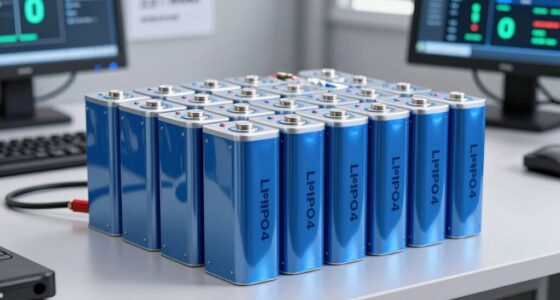
Most modern units use LiFePO4 (Lithium Iron Phosphate) chemistry, which offers 2000 to 3000 charge cycles. Both Option A and Option B, if using this chemistry, will last 5 to 10 years of regular use. Older Li-ion models degrade faster, so checking the battery chemistry is important regardless of which option you choose.
Do I need an extension cord to use these indoors?
Yes, for Option B. Because it is heavy and bulky, you will likely keep it in a garage or basement and run extension cords into your living space. Option A is light enough to place on a table near your devices, minimizing the need for long cords. Always use heavy-duty extension cords rated for the wattage you are drawing.
Can I plug a refrigerator into a 600W unit?
Generally, no. While a refrigerator might draw 150-200 watts running, the compressor startup surge can spike to 1000-1500 watts. A 600W unit will likely trip its safety shut-off. You need a unit with a surge rating well above 1500W, which is a feature of Option B.