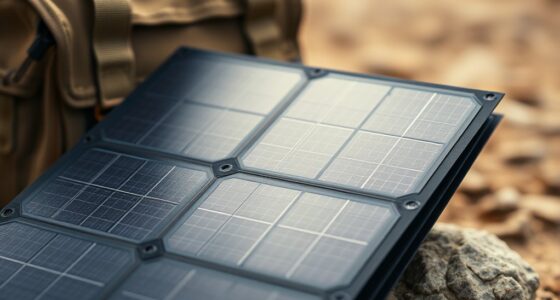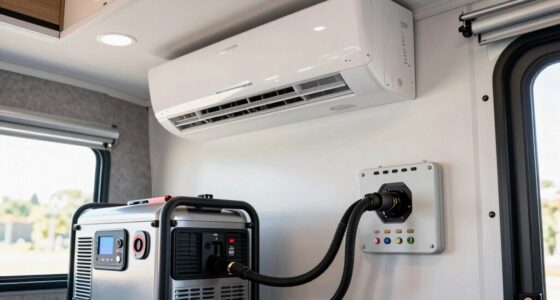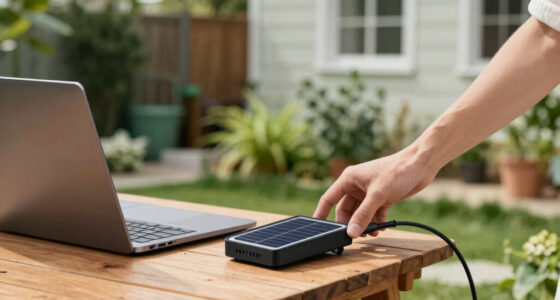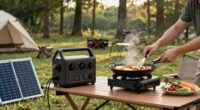
Choosing a solar-powered generator for outdoor cooking means balancing the appliances you want to use against the weight, cost and recharge time you can accept. A compact solar power station with a folding panel is easier to transport and can suit short trips built around a small electric cooker or other modest loads. A high-capacity solar generator with a larger panel costs more and occupies more space, but it offers a better chance of powering higher-wattage cooking equipment and serving several meals between charges.

Get backup power and energy gear delivered free with Prime
- Fast, free delivery on millions of items
- Prime Video, Amazon Music and more included
- Member-only deals all year

Jackery Solar Generator 1000 v2 and 200W Solar Panel, 1024Wh LiFePO4 Battery
- ✔ Battery capacity: 1,024Wh
- ✔ Continuous AC output: 1,500W
- ✔ Peak output: 3,000W

Portable Solar Generator with Panel, 300W Portable Power Station with Foldable Solar Panel 40W
- ✔ Battery capacity: 280Wh
- ✔ Continuous AC output: 300W
- ✔ Peak output: 550W listed

MARBERO 155Wh Solar Generator with Solar Panel Included 30W Solar Panel Kit
- ✔ Battery capacity: 155Wh
- ✔ Listed output: 100W
- ✔ Surge output: 150W listed
The key question is not which system has the bigger battery on paper; it is whether its usable output and energy supply match your cooking routine. Choose the compact option for occasional, simple meals and easy packing. Choose the larger option if you need longer cooking sessions, more appliance flexibility or less reliance on grid charging. Exact runtimes vary with appliance draw, battery design, sunlight, temperature and conversion losses, so check the generator’s continuous AC output and the appliance’s actual wattage before buying.
At a Glance
| Criteria | Compact solar power station with a folding panel | High-capacity solar generator with a larger panel | Winner |
|---|---|---|---|
| Portability | Lighter and easier to carry; panel is also compact | Heavier, with a larger panel to transport and position | A |
| Cooking appliance compatibility | Best for low-wattage or brief cooking loads; check output limits | More headroom for demanding appliances, subject to inverter rating | B |
| Meal-to-meal runtime | More limited stored energy, especially with repeated cooking | More stored energy for repeated meals and other campsite loads | B |
| Solar recharge potential | Smaller panel generally collects less energy per hour in good sun | Larger panel can harvest more energy in favorable conditions | B |
| Setup and storage | Takes less vehicle and storage space | Needs more room and a more deliberate setup | A |
| Purchase value | Lower entry cost for modest cooking needs | Higher cost can pay off when capacity is used often | Depends |
| Best trip length | Day trips and short outings | Longer trips and higher-use camps | Depends |
Jackery Solar Generator 1000 v2 and 200W Solar Panel, 1024Wh LiFePO4 Battery
For cooking with electricity, the key advantage of the Jackery Explorer 1000 v2 is its stated 1,500W continuous output, far above the 300W ZeroKor and 100W MARBERO listings. That gives us a realistic path to powering some electric pots and other modest appliances, provided each device’s running and startup draw falls within the station’s limits. Its 1,024Wh battery also gives more stored energy to work with than the other two options, though a high-draw cooker can use that reserve quickly.The included 200W solar panel is the most substantial panel in this comparison, making it better suited to replenishing energy between meals. It still cannot guarantee continuous cooking from sunlight: output varies with weather, shade, panel angle, and appliance use. At 23.4 pounds, this unit is much less packable than the MARBERO’s 3.7-pound station, but the tradeoff buys substantially more cooking headroom. We would choose it for a car-camping kitchen, and skip it if the plan is backpacking or running large heating appliances for long stretches.
Pros:
- 1,500W continuous AC output offers the broadest cooking-appliance compatibility in this set.
- 1,024Wh battery stores substantially more energy than the other two stations.
- Included 200W panel provides the largest stated solar input option here.
- LiFePO4 battery is specified for 4,000 charge cycles to 70% capacity.
Cons:
- At 23.4 pounds, it is the heaviest and least convenient option to carry far from a vehicle.
- High-wattage cooking can drain the battery quickly; exact runtime depends on the appliance.
- The fastest charging mode requires enabling emergency charging in the app.
Best for: Car campers who want to run a compatible electric pot or other moderate AC cooking appliance and can carry a 23.4-pound station.
Not ideal for: Backpackers, buyers needing long cooking sessions from a high-draw appliance, or anyone whose cooker exceeds 1,500W continuous output.
Bottom line: We recommend the Jackery when cooking capability matters most and its weight and finite battery reserve fit the trip.
“We recommend the Jackery when cooking capability matters most and its weight and finite battery reserve fit the trip.”
Portable Solar Generator with Panel, 300W Portable Power Station with Foldable Solar Panel 40W
The ZeroKor 300W station sits between the Jackery and MARBERO in both output and capacity, but 300W remains a strict ceiling for cooking plans. It may suit a genuinely low-wattage appliance that stays within that limit; the listing specifically cautions against devices over 300W and calls out heat-producing appliances such as coffee makers. We should treat it as a campsite power source for lights, phones, and small accessories first, with cooking only after checking the appliance label.Its 280Wh battery is larger than MARBERO’s 155Wh reserve but much smaller than Jackery’s 1,024Wh. The included 40W panel is also modest, so solar replenishment is likely to take time and depends on strong sun. Compared with MARBERO, ZeroKor gives more wattage headroom for a carefully chosen small load; compared with Jackery, it is less capable of heating food but is a more restrained kit for simple campsite needs. The description also references a separate 100W power pack, which makes it important to confirm exactly which unit is included before relying on that feature list.
Pros:
- 300W output is three times MARBERO’s listed 100W output.
- 280Wh capacity provides more stored energy than the MARBERO station.
- 40W foldable solar panel is included in the kit.
- Multiple USB and DC ports support campsite accessories alongside AC use.
Cons:
- 300W is too low for many common electric cooking appliances.
- The included 40W panel is small for rapid replenishment of the 280Wh battery.
- Product description also mentions a distinct 100W power pack, so included-unit details merit confirmation.
Best for: Car campers with a verified sub-300W cooking device who also want a compact source for lights and charging small electronics.
Not ideal for: Anyone planning to run a typical high-wattage hot plate, kettle, coffee maker, or cooker without first confirming its draw is within the station’s limit.
Bottom line: We see ZeroKor as a better fit than MARBERO for carefully selected low-wattage gear, but not as a general electric-cooking solution.
“We see ZeroKor as a better fit than MARBERO for carefully selected low-wattage gear, but not as a general electric-cooking solution.”
MARBERO 155Wh Solar Generator with Solar Panel Included 30W Solar Panel Kit
The MARBERO M365 kit is the easiest of these three to carry, with a 3.7-pound station and an included 30W panel. For outdoor cooking, though, its listed 100W output is the limiting fact: that makes it a poor match for electric pots, hot plates, and most appliances that generate heat. Its useful role is supporting the cooking setup with phone charging, LED lighting, or other small electronics while food is prepared by a different method.Compared with the ZeroKor, MARBERO is lighter and has a smaller panel, but it also has less battery capacity and less output headroom. The integrated panel cable and solar converter make it a convenient starter kit for basic off-grid charging, and the built-in flashlight adds practical campsite utility. The 155Wh reserve is limited, however, and a 30W panel should not be mistaken for a fast way to replenish energy under ordinary outdoor conditions. We would choose it for a minimal kit, not as the power source for an electric cooking plan.
Pros:
- 3.7-pound station is easiest to carry in this comparison.
- 30W panel and solar converter are included as a ready-to-use kit.
- Multiple USB and DC outputs support small campsite electronics.
- Built-in flashlight includes steady, SOS, and strobe modes.
Cons:
- 100W listed output is inadequate for most electric cooking appliances.
- 155Wh capacity is the smallest reserve among the three options.
- 30W panel is a limited solar input for replenishing the station during active use.
Best for: Day hikers and minimalist campers who need light charging and illumination around a camp kitchen, while cooking with gas, fire, or another source.
Not ideal for: Buyers who want solar power to operate electric cooking appliances or need substantial multi-day energy storage.
Bottom line: We recommend MARBERO as compact cooking support for lights and devices, not as a generator for electric meal preparation.
“We recommend MARBERO as compact cooking support for lights and devices, not as a generator for electric meal preparation.”
As an Amazon Associate we earn from qualifying purchases.
Key Differences
The central tradeoff is carrying convenience versus cooking headroom. The compact system keeps transport and setup simpler, but its smaller battery and inverter may rule out common high-wattage appliances or leave little energy for other gear after cooking. The larger system has more capacity to absorb those demands, though buyers still need to match appliance surge and continuous wattage to the unit’s specifications.
Solar panels can extend a trip’s energy supply, but they do not guarantee a full battery each day. Output depends on direct sunlight, panel orientation, shade and weather, while cooking can draw power faster than a modest panel replaces it. For frequent electric cooking away from outlets, the larger panel and battery make a meaningful difference. For an occasional short meal, their added weight and cost may buy capacity that goes unused.
Value depends on the cooking pattern, not just the purchase price. The compact option is the better buy when it can reliably run the intended appliance for the planned session. Paying more for the larger option makes sense when it prevents regular charging stops, supports several meals or powers other equipment as well. If dependable cooking is the priority and sun or battery limits are unacceptable, a gas stove or another fuel-based setup may suit better than either generator.
Detailed Comparison
Portability (Compact solar power station with a folding panel wins — moderate)
Winner: A. Minor to moderate gap. A compact station and folding panel are easier to pack, carry and move into position. The larger system asks for more vehicle space and effort, which matters at walk-in campsites or when cooking gear already fills the load. For car camping, the extra burden may be manageable.
Cooking appliance compatibility (High-capacity solar generator with a larger panel wins — major)
Winner: B, if its inverter rating matches the appliance. A larger unit is more likely to offer the continuous output and surge capacity needed by demanding electric cookers. That advantage is not automatic: verify both ratings against the appliance label, and account for startup surges. The compact unit remains suitable for lower-wattage gear, but can be a poor fit for appliances that exceed its limit.
Meal-to-meal runtime (High-capacity solar generator with a larger panel wins — major)
Winner: B. Major gap for repeated cooking. More battery capacity generally provides more stored energy for cooking across multiple meals, though real runtime depends on appliance draw and conversion losses. A compact battery can be enough for one brief session; several meals may consume its reserve quickly, especially if it also charges phones or runs lights.
Solar recharge potential (High-capacity solar generator with a larger panel wins — moderate)
Winner: B. Moderate gap in favorable sun. A larger panel can capture more energy over the same period when placed in good sunlight, helping replenish a larger battery. Cloud, shade, poor angle or short daylight can reduce output sharply, and panel input limits may cap charging. Treat solar as a variable energy source, not a promise of a complete daily recharge.
Setup and storage (Compact solar power station with a folding panel wins — minor)
Winner: A. Minor gap for simple trips, moderate for tight packing. Fewer and smaller pieces are generally easier to store and deploy. The larger panel needs more room and careful placement to avoid shade, and may be inconvenient at crowded sites. If the generator stays in a vehicle and the campsite has clear sun, this difference is less important.
Purchase value (moderate difference)
Winner: Depends. The compact system gives better value for occasional, low-demand cooking because it avoids paying for unused capacity. The larger system earns its premium when its extra output and stored energy are regularly used for multiple meals, higher-draw appliances or other camp equipment. Compare total system cost, including panel, cables and any needed accessories, against the actual loads.
Best trip length (moderate difference)
Winner: Depends. A works well for day outings and brief use where a charged battery is enough. B is the stronger choice for longer stays, provided sunlight and panel access support recharging. Neither option guarantees uninterrupted electric cooking through poor weather or heavy daily use; plan a backup if meal preparation cannot depend on available charge.
Compact solar power station with a folding panel: Pros and Cons
Pros:
- Easier to carry and fit into limited vehicle space
- Lower upfront cost for modest cooking loads
- Simpler to store and set up
Cons:
- Less stored energy for repeated meals
- May not support higher-wattage appliances
- Smaller panel can limit replenishment during a sunny day
High-capacity solar generator with a larger panel: Pros and Cons
Pros:
- More battery capacity for multiple cooking sessions
- Greater potential appliance compatibility when inverter ratings allow
- Larger panel can collect more energy in good sunlight
Cons:
- Higher purchase cost
- Heavier and bulkier to transport
- Still vulnerable to weak sunlight and loads above its rated output
Who Should Choose What
Choose Compact solar power station with a folding panel if:
- You mainly cook one brief meal on a day trip.
- Your appliance has low enough wattage for the unit’s continuous and surge ratings.
- Easy carrying, compact storage and lower cost matter more than long runtime.
Choose High-capacity solar generator with a larger panel if:
- You plan to cook several meals between grid charges.
- You need more inverter headroom for a higher-draw appliance and have checked its ratings.
- You camp long enough to use the added capacity and can place the panel in good sun.
Skip both if: Skip both if your cooking appliance exceeds the available inverter output, you need reliable electric cooking through poor weather without another charging source, or you cannot carry the system. Consider a fuel stove or a different power plan.
Value for Money
Paying more is worthwhile when the larger system solves a recurring constraint: the compact unit runs short, cannot power the intended cooker or leaves too little energy for other camp needs. In those cases, extra battery and panel capacity can make longer outings more practical. If cooking is brief and occasional, the premium is hard to justify; a compact unit sized to the appliance is better value. Compare watt-hours, continuous and surge output, panel input limits, weight and included accessories rather than relying on a broad “solar generator” label.
Final Verdict
For most outdoor cooks who take short trips and use modest appliances, choose the compact solar power station. It is easier to transport and avoids paying for capacity you may not need. Choose the high-capacity system if you cook repeatedly, require more output or plan longer stays where the added battery and panel will see regular use. The deciding factor is whether the appliance’s wattage and your meal schedule fit within the compact unit’s ratings and usable energy. If they do not, the larger system is the more practical purchase; if neither can meet the load reliably, use another cooking method.
Frequently Asked Questions
Can a solar generator run an electric camping stove?
It can if the generator’s continuous AC output and surge rating meet the stove’s requirements, and the battery stores enough energy for the cooking session. Check the appliance label and generator specifications before buying; a larger battery alone does not guarantee compatibility.
Will the solar panel recharge the battery while I cook?
Possibly, but do not assume the panel will keep pace with cooking. Its output changes with sunlight, angle and shade, while the appliance may draw more power than the panel supplies. The battery typically covers the difference, so long sessions can still reduce charge.
Is the larger solar generator worth the extra cost?
Yes when you regularly cook multiple meals, use higher-draw appliances supported by its inverter, or need capacity for other campsite equipment. For a single short meal on occasional trips, the compact option is usually the better value.
How do I estimate cooking runtime?
Compare the appliance’s wattage and expected cooking time with the generator’s usable battery energy, allowing for conversion losses. As a rough starting point, watt-hours divided by appliance watts estimates hours before losses; actual runtime is shorter and varies by system and conditions.