
To charge portable batteries safely, use high-quality, certified cables that fit snugly and avoid forcing incompatible ones into ports. Monitor the battery during charging for signs of overheating or swelling, and unplug once fully charged. Keep batteries and cables in cool, dry places away from sunlight, and follow manufacturer guidelines for charging times. Regularly inspect your equipment and use proper storage to extend battery life. Continue to explore these best practices for safe, effective charging.

Get backup power and energy gear delivered free with Prime
- Fast, free delivery on millions of items
- Prime Video, Amazon Music and more included
- Member-only deals all year
Key Takeaways
- Use high-quality, certified cables compatible with your device to prevent damage and ensure secure connections.
- Monitor batteries during charging for signs of overheating, swelling, or unusual behavior, and unplug if issues arise.
- Keep batteries and chargers in cool, dry places away from direct sunlight and moisture to prevent damage.
- Avoid overcharging by unplugging batteries once fully charged to maintain battery health and safety.
- Follow manufacturer guidelines for charging times and accessories, and avoid unofficial chargers to ensure safety and longevity.
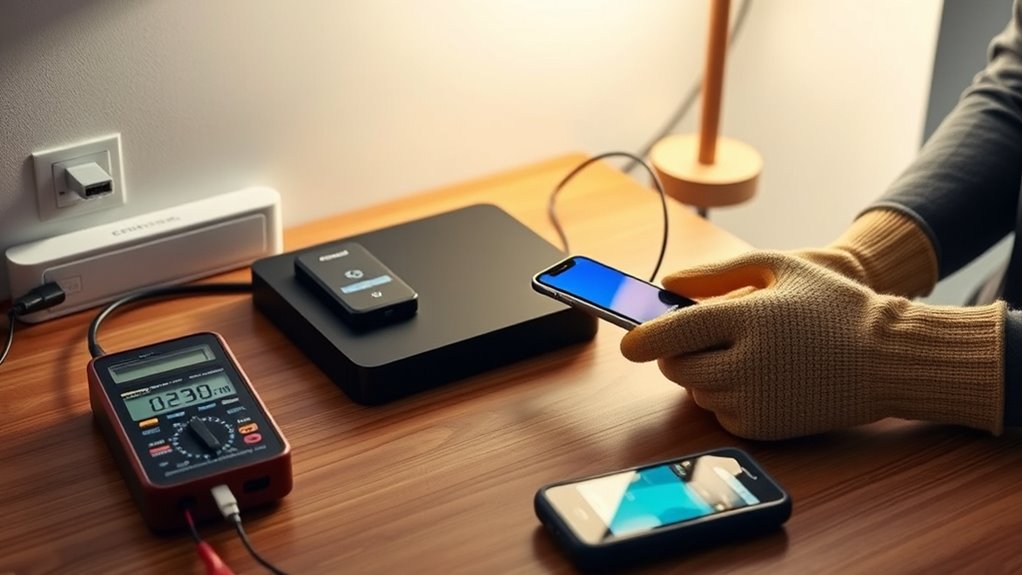
Charging portable batteries safely is essential to prevent damage, guarantee longevity, and avoid potential hazards. To do this effectively, you need to pay attention to your battery’s capacity and the charging cables you use. Understanding your battery’s capacity helps you avoid overcharging or undercharging, both of which can diminish performance over time. Most portable batteries have a specified capacity, measured in milliamp-hours (mAh), indicating how much charge they can hold. When charging, ensure that the power source and cables match or are compatible with your device’s specifications. Using the wrong charging cables can lead to inconsistent power flow, overheating, or even damage to the battery.
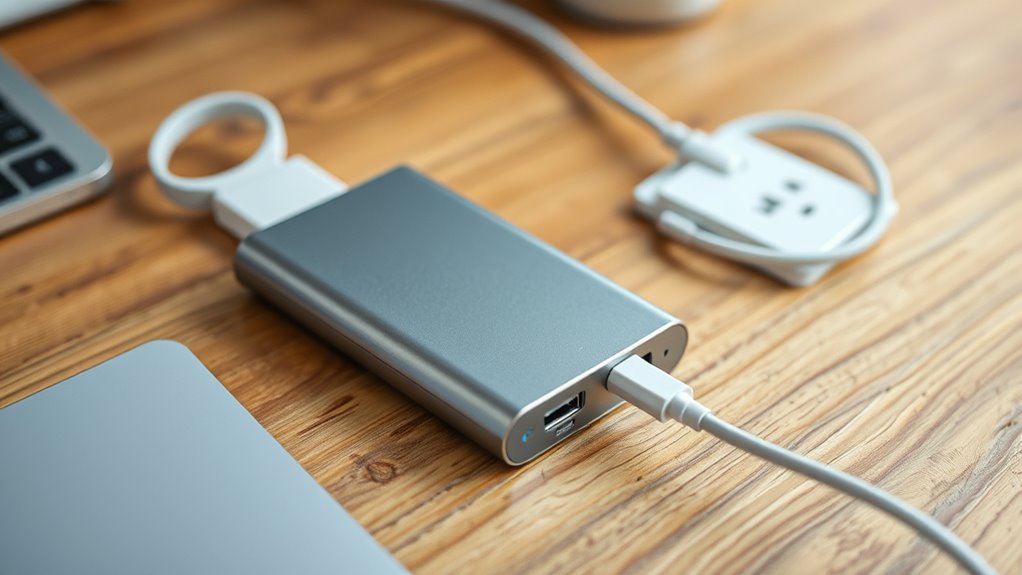
Always use high-quality, certified charging cables designed for your specific device or battery type. Cheap or incompatible cables may have poor insulation or faulty connectors, increasing the risk of short circuits or power surges. When connecting your portable battery to a power source, verify that the cable fits snugly and securely. A loose connection can cause intermittent charging, which stresses the battery and reduces its lifespan. Additionally, avoid forcing incompatible cables into ports, as this can damage both the cable and the device.
Use high-quality, certified cables for safe, secure connections and to protect your battery’s lifespan.
Monitoring the charging process is another critical step. Keep an eye on your battery while it’s charging, especially during the initial stages. If you notice excessive heat, swelling, or any unusual behavior, unplug the device immediately. Excessive heat is a sign that the battery is being overcharged or that the charging process is not proceeding correctly. To prevent this, don’t leave your portable battery plugged in longer than necessary. Once it reaches full capacity, disconnect it promptly. Many modern batteries have built-in safeguards, but it’s still best practice to remove the charger once fully charged. Additionally, being aware of cybersecurity vulnerabilities associated with charging devices helps protect your data and device integrity from potential threats.
It’s also wise to follow manufacturer guidelines for charging times and recommended charging accessories. Overcharging or using unofficial chargers can compromise battery health. Keep your charging cables and portable batteries in a cool, dry place, away from direct sunlight and moisture, which can lead to corrosion or damage. Proper storage ensures that your batteries remain in excellent condition and are ready for use when needed.
high-quality certified portable battery charging cable
As an affiliate, we earn on qualifying purchases.
As an affiliate, we earn on qualifying purchases.
Frequently Asked Questions
Can I Leave My Portable Battery Charging Overnight Regularly?
Yes, you can leave your portable battery charging overnight, but it might affect battery longevity over time. Modern batteries and chargers are designed to handle overnight charging safely, but consistently doing so can cause wear and reduce overall lifespan. To maximize battery longevity, avoid leaving it plugged in continuously once fully charged. Instead, unplug once it reaches full capacity to keep your portable battery in good condition longer.
Is It Safe to Use Third-Party Charging Cables With My Portable Battery?
Did you know that nearly 60% of portable battery failures are caused by using incompatible or low-quality cables? Using third-party cables with your portable battery can be safe if they’re compatible and certified, but there’s a risk of damage or safety issues. Always check compatibility concerns and choose reputable brands to guarantee safe charging. Avoid cheap, uncertified cables, as they may damage your device or pose safety hazards.
How Do I Know if My Portable Battery Is Overheating?
You’ll know your portable battery is overheating if it emits a thermal warning or feels unusually hot to the touch. Perform a temperature check by carefully touching the device, but avoid prolonged contact. If it’s hot, disconnect it immediately and let it cool down in a well-ventilated area. Always monitor for signs of overheating to prevent potential damage or safety hazards.
Can I Charge My Portable Battery in a Car or Outdoors?
Yes, you can charge your portable power bank in a car or outdoors, but take precautions. Use a reliable car charger or portable solar panel for outdoor charging to guarantee safety. Avoid extreme temperatures, moisture, and direct sunlight, which can damage the battery. Always follow the manufacturer’s instructions, and never leave your portable battery charging unattended. Proper outdoor charging extends your device’s lifespan and keeps your power bank safe.
What Are Signs of a Failing or Damaged Portable Battery?
A stitch in time saves nine, so watch for signs of a failing or damaged portable battery. If you notice battery swelling or leakage indicators, stop using it immediately. Other signs include rapid battery drain, overheating, or a sudden drop in performance. These issues suggest internal damage, risking safety. Regularly inspect your battery, and if you see any of these signs, replace it promptly to prevent accidents.
overheat protection portable power bank
As an affiliate, we earn on qualifying purchases.
As an affiliate, we earn on qualifying purchases.
Conclusion
By following these safe charging tips, you protect both your device and yourself. Don’t assume all chargers are created equal—using the right charger and avoiding overcharging can prevent accidents. It might seem like a hassle, but a little extra caution guarantees your portable battery lasts longer and keeps you safe. Remember, investing time in safe practices now saves you from potential hazards later. Stay vigilant and always prioritize safety when charging your batteries.
As an affiliate, we earn on qualifying purchases.
As an affiliate, we earn on qualifying purchases.
Halloween Picks
halloween
As an affiliate, we earn on qualifying purchases.