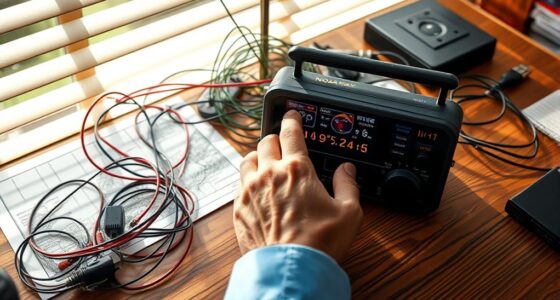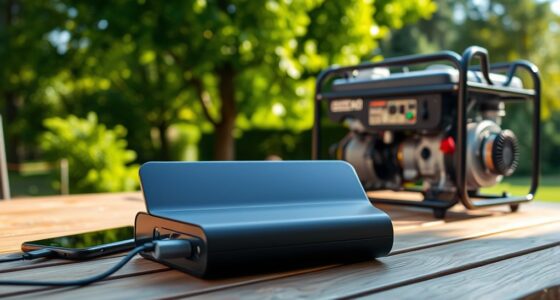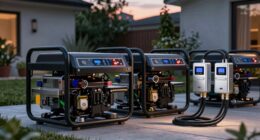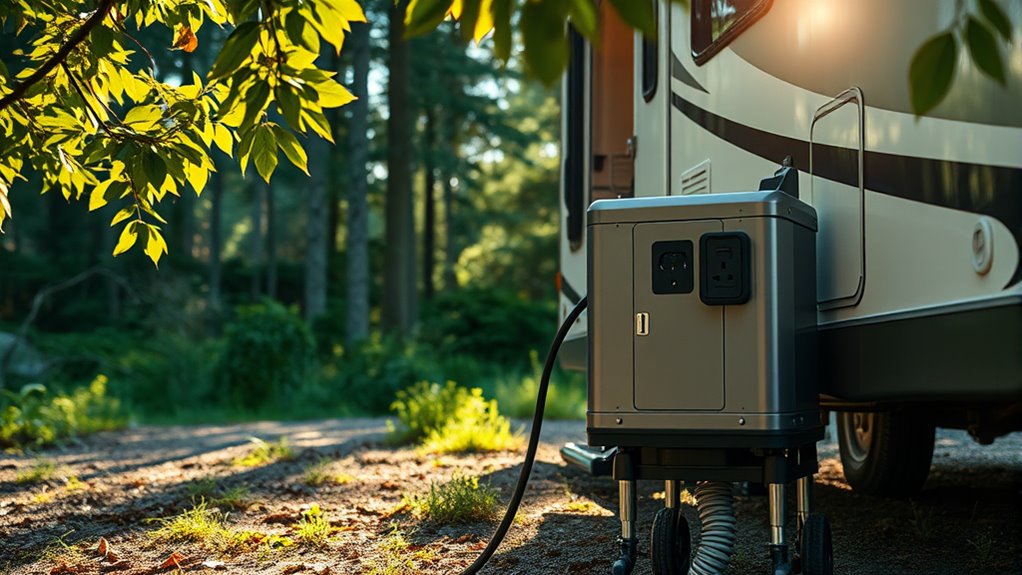

When using portable power in your RV or camper, always guarantee proper grounding to prevent electrical shocks and fire hazards. Connect all equipment to grounded outlets, check connections regularly, and avoid overloading circuits. Keep emergency shut-offs accessible and inspect cords and devices for damage before use. Regular maintenance and knowledge of safety procedures are key. Staying informed about safe practices helps protect you and your belongings—continue to explore essential tips to keep your outdoor adventures safe and enjoyable.
Key Takeaways
- Always properly ground portable power sources to prevent electrical shocks and fire hazards in RVs and campers.
- Regularly inspect cords, connections, and equipment for damage or corrosion before use.
- Use approved grounding methods and follow manufacturer instructions for safe setup.
- Keep emergency shut-off switches accessible and know how to disconnect power quickly if needed.
- Prepare an emergency kit and familiarize yourself with safety procedures for electrical issues on the road.
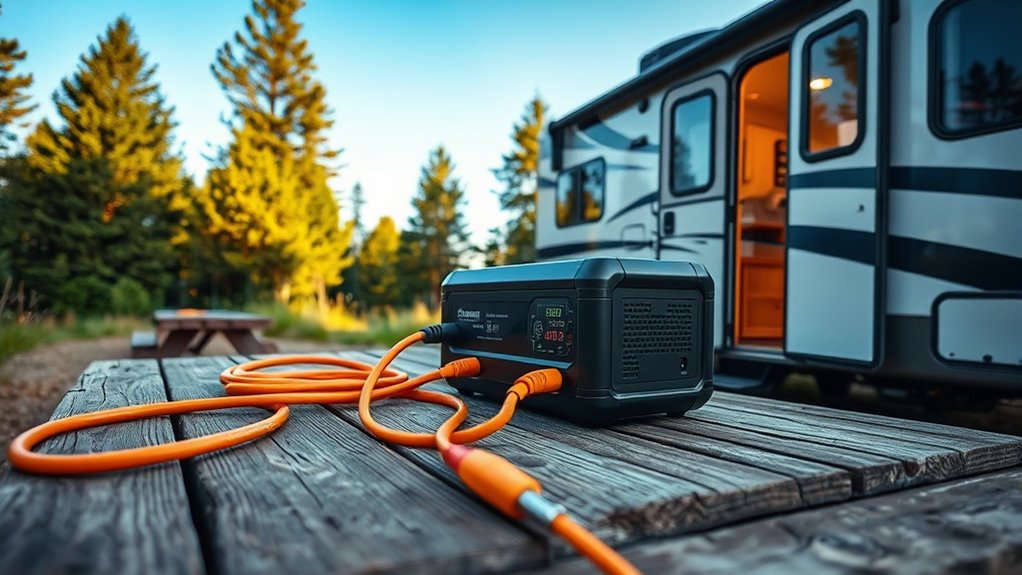
Have you ever wondered how to stay safe while using portable power devices? When you’re out on the road in your RV or camping in the woods, managing electrical power safely isn’t just about plugging in and turning on. It’s essential to understand grounding techniques, which help prevent electrical shock and protect your devices. Proper grounding involves connecting your power system to the earth, ensuring that any stray voltage has a safe path to dissipate. This simple step can drastically reduce the risk of electrical fires or shocks, especially when you’re dealing with portable generators or battery systems. Before setting up your power sources, double-check all connections and make sure your grounding methods are correctly implemented. This not only keeps you safe but also prolongs the life of your electrical equipment. Additionally, inspecting your equipment regularly can help identify potential hazards before they cause problems.
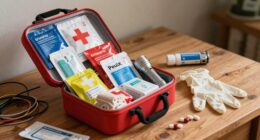
In addition to grounding, having an emergency response plan in place is critical. Accidents can happen unexpectedly, so knowing what to do can minimize harm and keep everyone safe. First, keep a well-stocked emergency kit nearby, including first aid supplies, flashlights, and a fire extinguisher rated for electrical fires. If you or someone else gets shocked or if you notice sparks, disconnect the power source immediately—never try to handle electrical issues while still connected. Once the power is off, assess the situation calmly and call for professional help if needed. Remember, quick action can prevent minor incidents from turning into major emergencies. It’s also wise to familiarize yourself with basic emergency response procedures, like how to perform CPR or how to shut off your power system quickly.
Education is key to safe portable power use. Before heading out, review your equipment’s manual and understand how it’s supposed to be grounded and operated safely. Make sure you know where the emergency shut-off valves or switches are located. Regularly inspect your power setup for loose connections, damaged cords, or corrosion, which can all lead to unsafe conditions. When using portable power devices, always keep safety in mind—don’t ignore warning signs like unusual smells, sparks, or overheating. Practicing good grounding techniques and having a clear emergency response plan in place can turn a potentially risky situation into a manageable one. Being prepared ensures you can enjoy your adventures without unnecessary hazards, keeping you and your loved ones safe every step of the way. Remember, understanding industry trends can also help you stay updated on the latest safety standards and equipment improvements.
![GEARGO RV Surge Protectors 30 Amp RV Circuit Analyzer, [𝟐𝟎𝟐𝟔 𝐍𝐞𝐰 𝐔𝐩𝐠𝐫𝐚𝐝𝐞𝐝 & 𝐆𝐞𝐧𝟐] Full Protection, RV Adapter Plug for Camper(Orange)](https://m.media-amazon.com/images/I/4100gu14RKL._SL500_.jpg)
GEARGO RV Surge Protectors 30 Amp RV Circuit Analyzer, [𝟐𝟎𝟐𝟔 𝐍𝐞𝐰 𝐔𝐩𝐠𝐫𝐚𝐝𝐞𝐝 & 𝐆𝐞𝐧𝟐] Full Protection, RV Adapter Plug for Camper(Orange)
Portable RV Surge Protectors: GEARGO RV Surge Protectors are designed to identifies faulty power and offers 8000 Joules…
As an affiliate, we earn on qualifying purchases.
As an affiliate, we earn on qualifying purchases.
Frequently Asked Questions
How Often Should Portable Power Equipment Be Inspected?
You should inspect your portable power equipment at least once a month to guarantee safety and proper function. Regular inspection schedules include checking battery maintenance, looking for corrosion, loose connections, or damage. It’s also wise to test the equipment’s performance periodically. By staying proactive with inspections, you prevent potential hazards, extend the lifespan of your power source, and guarantee reliable energy when you need it most.
Can Portable Power Stations Be Used in Rain?
Think of your portable power station as a brave sailor facing stormy seas. While many models boast weather resistance and waterproof features, you shouldn’t toss it into the rain without caution. Some stations can handle light rain, but heavy downpours may jeopardize their safety and function. Always check your unit’s specifications, keep it protected under cover during storms, and avoid prolonged exposure to guarantee your power source stays reliable and safe.
What Are the Signs of Battery Deterioration?
You’ll notice signs of battery deterioration like reduced capacity, longer charging times, or frequent outages. If your battery’s lifespan is nearing its end, it may also show swelling or leaks. To prevent corrosion, regularly inspect terminals and keep them clean and dry. If you see corrosion buildup or performance issues, it’s time to substitute the battery. Proper maintenance and timely replacement ensure your system stays reliable and safe.
Are There Any Legal Regulations for Portable Power Use?
You should know that legal compliance and safety regulations govern portable power use. These laws guarantee you handle power sources responsibly, preventing hazards. Regulations may include proper installation, ventilation, and storage requirements, depending on your location. Always check local, state, or federal guidelines before using or installing portable power devices. Staying informed helps you enjoy your adventures safely while respecting the rules that protect you and others.
How Do I Safely Store Backup Power Supplies?
To store backup power supplies safely, you should follow proper storage techniques like keeping batteries in a cool, dry place away from direct sunlight and flammable materials. Always verify they are fully charged before storage and check for any damage or corrosion regularly. Focus on charging safety by disconnecting batteries when not in use and avoiding overcharging, which can prevent hazards and extend the lifespan of your backup power supplies.

DriSentri 5 Point Car Universal Earth Ground Cables Grounding Wire System Kit High Performance Improve Power for Car Truck, Blue
Material: Grounding wire kit is made from high quality copper for maximum conductivity, strong & durable PVC plastic…
As an affiliate, we earn on qualifying purchases.
As an affiliate, we earn on qualifying purchases.
Conclusion
Now that you know the essentials of portable power safety, it’s clear that taking precautions isn’t just optional—it’s a must. Always follow manufacturer instructions, keep equipment in good shape, and stay alert to potential hazards. Remember, a stitch in time saves nine; addressing safety concerns early can prevent bigger problems down the road. Stay vigilant, and you’ll keep your adventures powered up and worry-free, ensuring your trips remain enjoyable and safe.

GOGONFLY Battery Disconnect Switch 12V-48V DC 275A Battery Power Master Isolator Shut Off Switch for Marine Boat Car Truck Camper RV Trailer
WATERPROOF & STURDY: The heavy duty cut off switch is made of ABS plastic housing and copper tin…
As an affiliate, we earn on qualifying purchases.
As an affiliate, we earn on qualifying purchases.
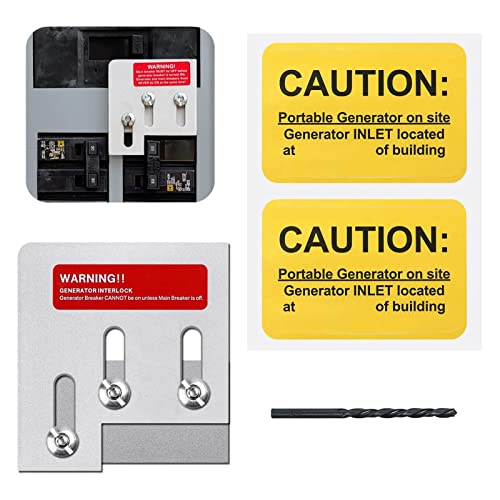
Natupal Generator Interlock Kit Compatible with Square D QO or Homeline 150 or 200 amp panels. 1 3/8 inches Spacing between main and generator breaker, Professional and Interlock Kit (SD200A)
【Compatible Models】Generator Interlock Kit Compatible with Square D QO or Homeline 150 or 200 amp panels.
As an affiliate, we earn on qualifying purchases.
As an affiliate, we earn on qualifying purchases.