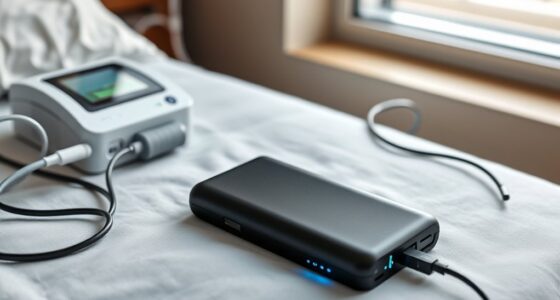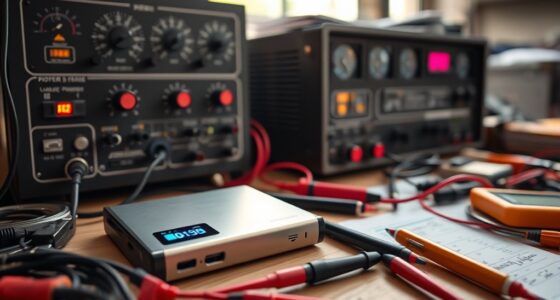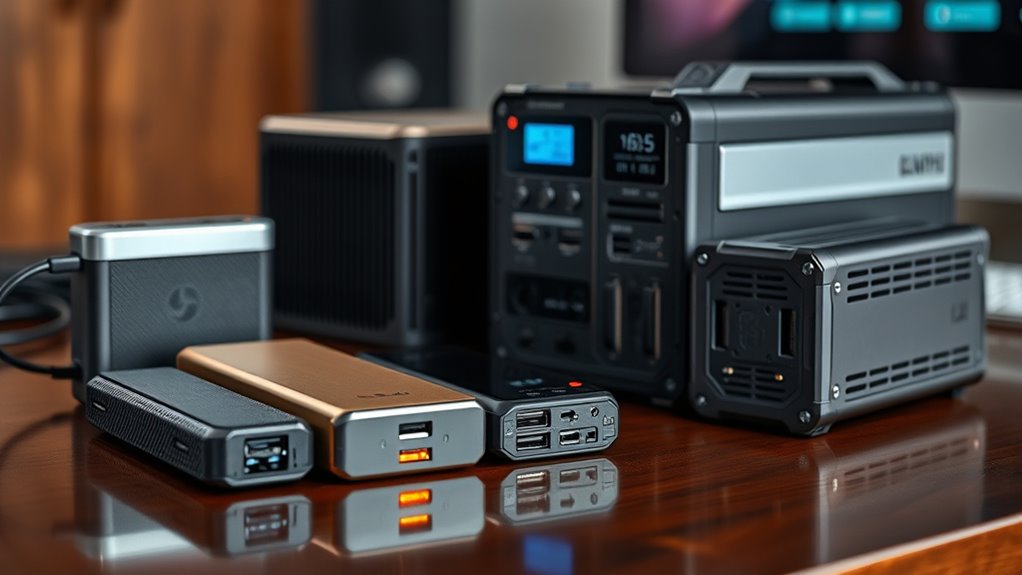

If you’re choosing between power banks and power stations, think about your energy needs and portability. Power banks are compact and perfect for charging smartphones or tablets quickly on the go. Power stations are larger, offering more capacity for multiple devices or small appliances during extended off-grid adventures. Understanding their differences helps you pick the best option for your activities. Keep exploring to discover which device suits your specific needs best.
Key Takeaways
- Power banks are portable, lightweight devices suited for quick charging of smartphones and tablets; power stations are larger, designed for extended off-grid use.
- Power stations have higher capacities and can power multiple devices or small appliances simultaneously, unlike smaller-capacity power banks.
- Both can be recharged via solar panels or outlets, making them useful for outdoor and emergency situations.
- Choose based on your energy needs: power banks for short trips and mobile charging; power stations for longer, more demanding applications.
- Consider weight, capacity, and device compatibility to select the right device for your specific power requirements.

Honeywell 22kW Home Standby Generator
PrecisionPower Technology delivers best-in-class power quality with less than 5 percent total harmonic distortion for clean, smooth operation...
As an affiliate, we earn on qualifying purchases.
Comparing Power Banks and Power Stations: Key Features and Differences
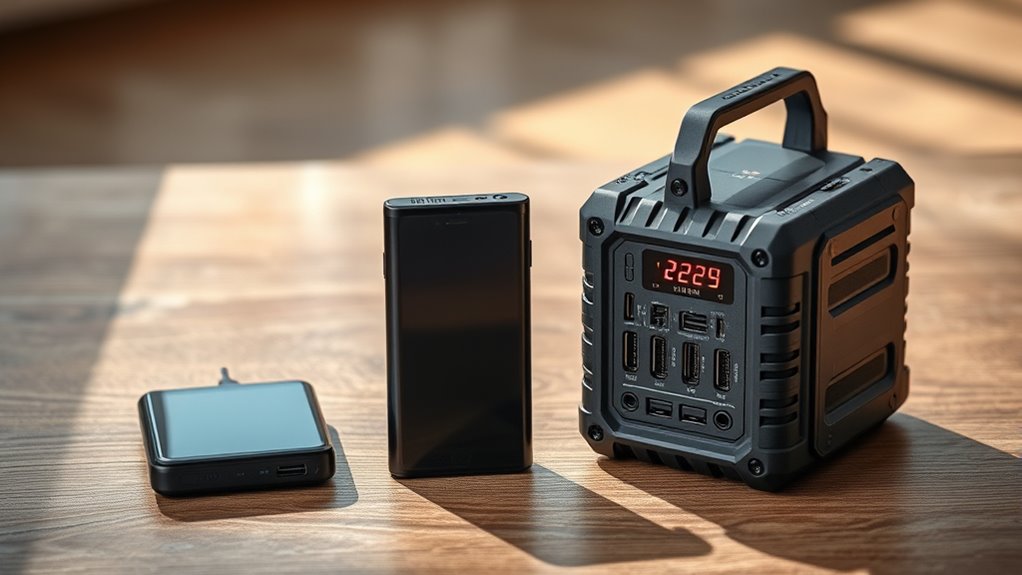
While power banks and power stations both serve the purpose of providing portable energy, they differ considerably in size, capacity, and functionality. Power banks are compact devices with smaller battery capacities, typically designed for charging smartphones and tablets. They often feature solar charging options, allowing you to recharge them using sunlight, which is ideal for outdoor use. Power stations, on the other hand, are larger, with markedly higher battery capacities that can power multiple devices or even small appliances. They usually include multiple outlets and may also support solar charging, making them suitable for extended off-grid use. The key difference lies in their capacity: power stations are built for longer, more demanding energy needs, while power banks are perfect for quick, on-the-go charges. Additionally, portable energy devices vary greatly in their design and intended uses, catering to different levels of power requirements.

Champion Power Equipment 201222 22 kW aXis Home Standby Generator with 200A Whole House Switch
Up to 20% more fuel efficient than leading competitors, this 22-kilowatt generator provides 22,000 watts of continuous power...
As an affiliate, we earn on qualifying purchases.
Choosing the Right Portable Power Solution for Your Needs
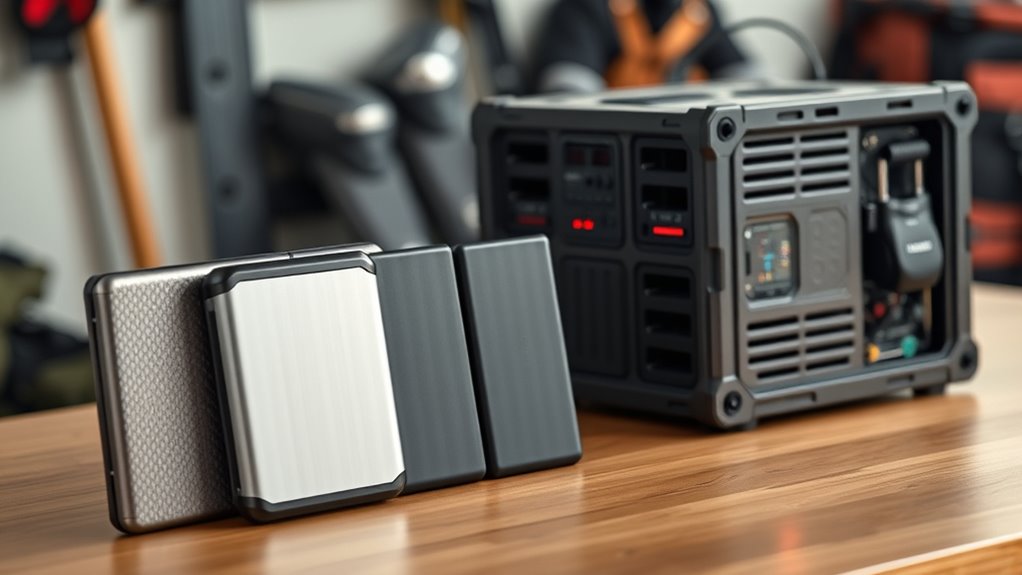
Choosing the right portable power solution depends on understanding your specific energy needs and how you’ll use the device. If you’re frequently outdoors or away from power sources, prioritize solar compatibility to harness sunlight for recharging. This is especially useful for extended trips or emergency situations. Consider weight considerations—lighter devices are easier to carry but may have limited capacity, while heavier options often provide more power but reduce portability. Think about what devices you’ll charge, like smartphones, laptops, or camping gear, and match the power solution accordingly. For short-term use and minimal devices, a compact power bank might suffice. For longer adventures or high-energy demands, a larger power station offers greater capacity and versatility. Additionally, understanding the power capacity needed ensures you select a device that can reliably meet your demands without over- or under-spending. Balancing these factors helps you select the best portable power solution for your needs.

Joinfworld Power Distribution Box,50A 125V/250V NEMA SS2-50 CS6375 Inlet, 30A Circuit Breaker, Individually Controllable Sockets, Heavy - Duty Waterproof Enclosure with Cooling Fan
UL-Certified - The power distribution box is UL-certified, featuring 1 50A socket, 5 NEMA 5-20 GFCI sockets, NEMA...
As an affiliate, we earn on qualifying purchases.
Frequently Asked Questions
How Do I Determine the Total Capacity I Need for My Devices?
To determine the total capacity you need, start with capacity planning by listing all your devices and their power requirements. Check each device’s compatibility with different power sources, noting their battery capacities and charging needs. Add up the watt-hours or milliamp-hours to find the total capacity. This helps you choose a power bank or station that reliably supports your devices without running out of power during use.
What Safety Features Should I Look for in Power Stations?
Ever wondered what keeps your power station safe during use? Look for safety features like battery management systems, which prevent overheating and overcharging, and overcurrent protection, which stops excessive current flow that could damage your devices. These features guarantee your power station operates reliably and safely. Prioritizing these safety measures helps protect both your equipment and you, giving you peace of mind during power outages or outdoor adventures.
Can Power Stations Be Used as Emergency Home Backup?
Yes, you can use power stations as emergency home backups, especially if they’re solar-compatible, allowing you to recharge them with solar panels during outages. When choosing one, consider portability, so it’s easy to move or store when needed. Guarantee it has enough capacity to power essential devices, and check for multiple outlets for convenience. This way, you stay prepared for power interruptions without sacrificing mobility or versatility.
Are There Specific Brands Known for Durable Power Banks?
Think of brands like Anker and RAVPower as the sturdy oak trees of power banks. They’ve built a solid reputation through durability testing, proving their products withstand daily wear and tear. You can count on these brands to deliver reliable, long-lasting power. Their commitment to quality makes them ideal choices if you want a power bank that’s resilient, ensuring your devices stay charged when you need them most.
How Do Environmental Conditions Affect Power Bank and Station Performance?
Environmental conditions profoundly impact your power bank or station’s performance. High temperatures can reduce battery lifespan and cause overheating, while cold temperatures slow down battery efficiency and charging speed. Solar efficiency drops in cloudy or shaded conditions, limiting recharging options outdoors. Keep devices in cool, shaded areas and avoid extreme temperatures to maintain ideal performance. Proper storage and mindful usage help extend your power bank’s or station’s longevity and reliability.

Power Assemblies Power Distribution Box with 50A 125/250V CS6375 Inlet, 50A 125/250V CS6369 Outlet, & 6 20A 125V Duplex GFCI Receptacles
High-Performance Power Distribution Box: Includes (1) 50A CS6375 twist-lock inlet, (1) 50A CS6375 outlet, and (6) 20A GFCI-protected...
As an affiliate, we earn on qualifying purchases.
Conclusion
When choosing between a power bank and a power station, consider your device needs and travel plans. For example, if you’re camping off-grid with multiple devices, a power station can keep everything running longer. But for quick phone charges during daily commutes, a compact power bank suffices. By understanding their differences, you can select the right portable power solution to keep your gadgets powered up whenever you need.