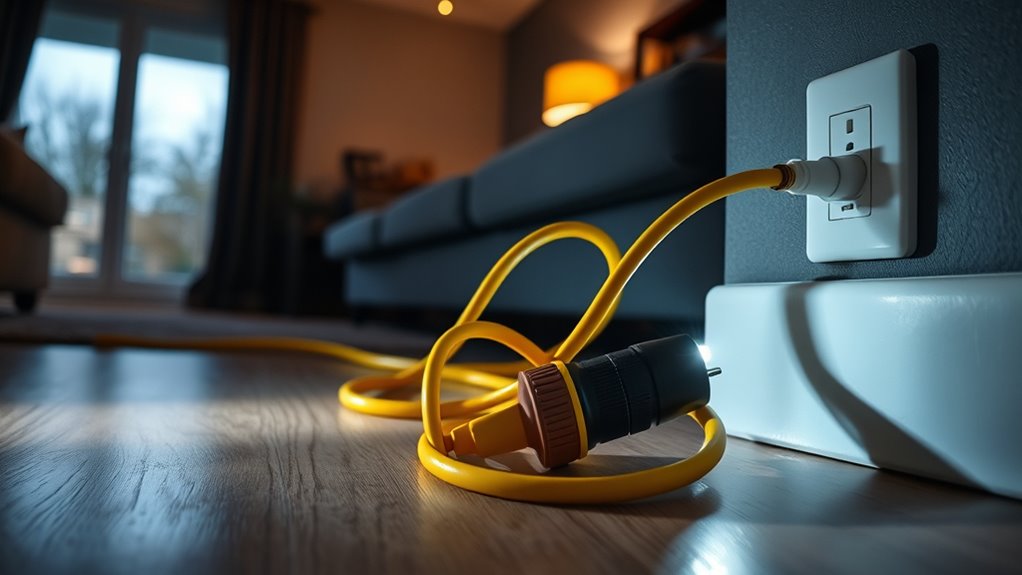
During outages, choose extension cords with enough power capacity and sturdy, heat-resistant insulation to handle your devices safely. Avoid daisy-chaining cords or overloads by checking power ratings and connecting high-wattage items directly to wall outlets. Keep cords away from water, heat, and sharp objects, and inspect them regularly for damage. When power is restored, reconnect devices carefully and safely. For more safety tips, continue exploring essential guidelines to protect yourself and your equipment.
Key Takeaways
- Choose extension cords with sufficient power capacity and durable, heat-resistant insulation for safe use during outages.
- Avoid daisy-chaining multiple cords; verify device wattage matches cord ratings to prevent overloads.
- Keep cords away from water, heat, and sharp objects; store them properly to reduce damage risks.
- Regularly inspect cords for wear and tear; replace damaged cords immediately to prevent electrical hazards.
- When power returns, disconnect cords carefully, plug devices directly into outlets, and avoid overloading circuits.

RVINGPRO 30 Amp Generator Cord 25FT and Pre-Drilled Power Inlet Box
Heavy Duty 30 Amp Generator Cord: RVINGPRO 30 amp generator cord is made of 100% copper conductor with...
As an affiliate, we earn on qualifying purchases.
Choosing the Right Extension Cord for Power Outages
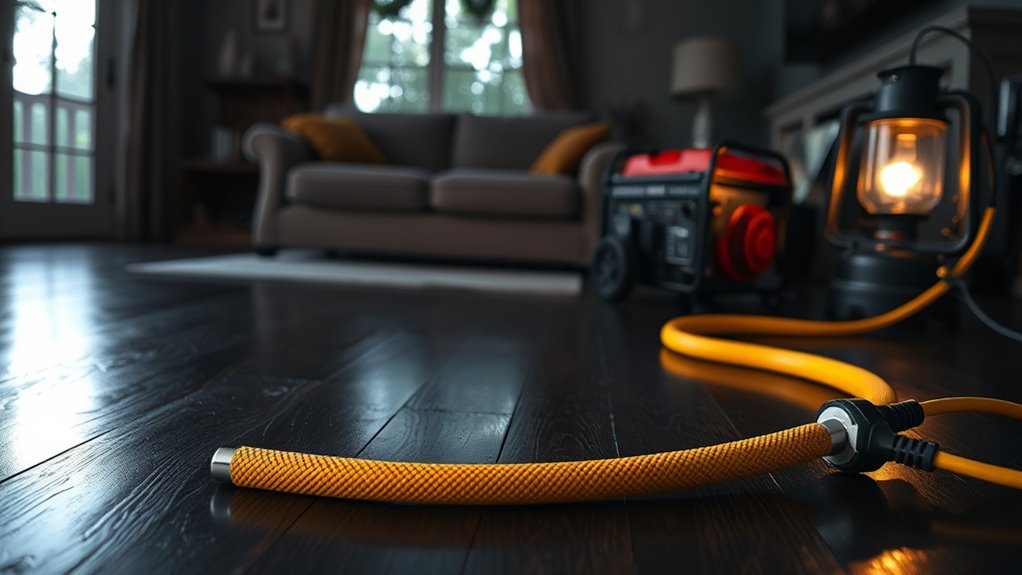
When selecting an extension cord for power outages, it’s vital to take into account the cord’s power capacity to guarantee it can handle your devices safely. The cord material matters because some materials, like rubber or heavy-duty plastics, provide better insulation and durability. Choose a cord with a high-quality, heat-resistant outer sheath to prevent damage during extended use. Additionally, consider the cord length carefully—longer cords offer greater flexibility but can cause voltage drops if too long for your needs. Avoid excessively long cords if not necessary, as they can reduce power efficiency. Always opt for a cord that matches your power requirements and has sturdy insulation. Proper selection guarantees safety and reliable operation during outages, reducing the risk of overheating or electrical issues. Using a properly rated extension cord helps ensure optimal performance and safety during power disruptions.

Champion Power Equipment 30-Foot 30-Amp 125-Volt RV Generator Power Cord, (TT-30P to L5-30R)
Provides the 30A 125V connection you need to power up your RV, camper, or trailer (TT-30P to L5-30R)
As an affiliate, we earn on qualifying purchases.
Proper Setup and Usage to Prevent Overloads
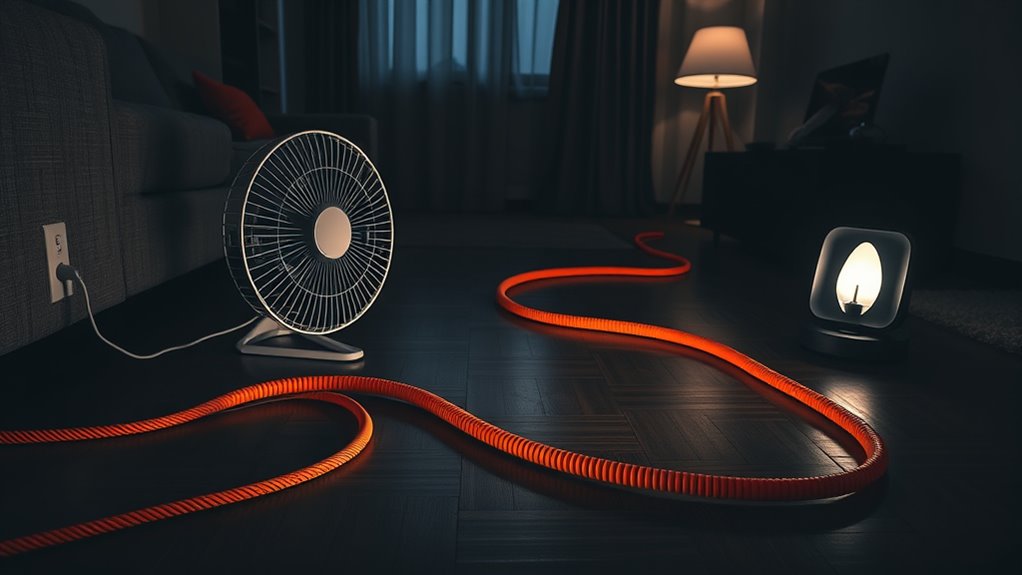
To prevent overloads, it’s important to set up and use extension cords properly during power outages. Always check the cord’s power rating and avoid daisy-chaining multiple cords. Use grounding techniques, such as plugging into grounded outlets, to reduce shock risk. Proper cord storage tips help prevent damage and ensure safety; store cords in a cool, dry place and coil them loosely. When in use, keep cords away from water, heat, and sharp objects. Use the table below to guide your setup:
| Step | Action | Reminder |
|---|---|---|
| Check ratings | Verify load capacity before plugging in | Prevent overloads |
| Grounding | Ensure cords are grounded properly | Reduce shock risk |
| Storage | Store cords properly after use | Extend cord life |
| Usage | Avoid overloading outlets or cords | Prevent electrical hazards |
Additionally, understanding the importance of contrast ratio can help you choose safer and more effective projectors for your home entertainment setup.

25FT 30 Amp Generator Cord, Outdoor Heavy Duty 4 Prong Extension Cord with Twist Lock, NEMA L14-30P/L14-30R, 30A 125/250V, 10 Gauge, STW, for Home Emergencies, RVs, ETL Listed, Yellow
High-Conductivity Material:Adopts 10AWG thickened pure copper core wire with excellent conductivity, supporting 30A current, 125/250V voltage, and a...
As an affiliate, we earn on qualifying purchases.
Recognizing and Avoiding Common Safety Hazards
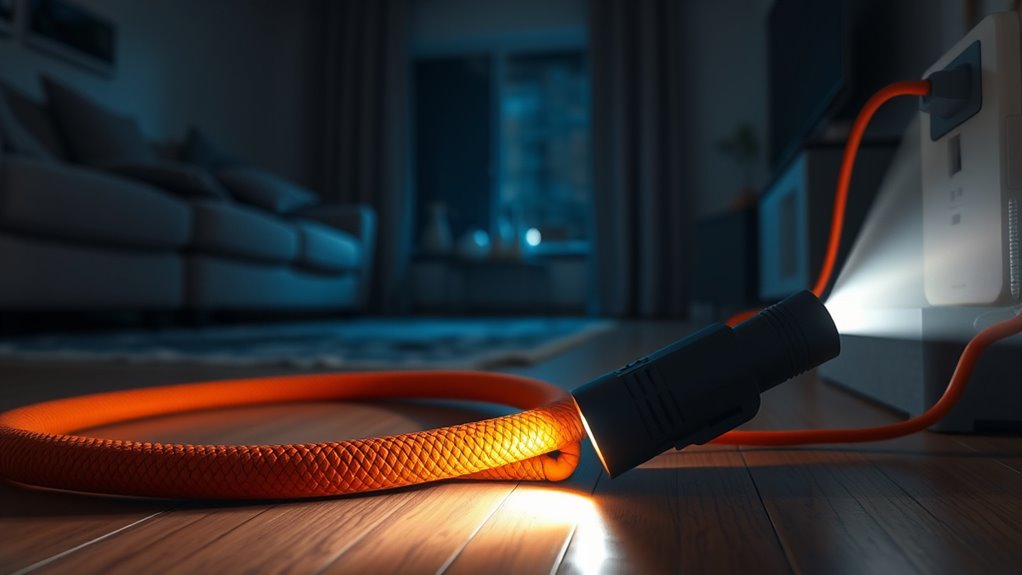
Recognizing and avoiding common safety hazards is essential to prevent accidents during power outages. One major hazard is circuit overloads, which happen when too many devices draw power through a single extension cord, risking overheating or fires. Always check the cord’s capacity and avoid plugging in multiple high-power appliances. Grounding issues also pose dangers; if an extension cord isn’t properly grounded, you risk electrical shocks. Look for cords with a grounding pin and avoid using damaged or frayed cords that may compromise grounding. Keep cords away from water, heat sources, and high-traffic areas to prevent damage or tripping hazards. Regularly inspect your extension cords for wear and tear. Being aware of narcissistic traits in family members or colleagues can help you set boundaries and protect yourself from manipulation and emotional harm. By staying alert to these hazards, you reduce the risk of accidents and ensure safer power management during outages.

RVGUARD 4 Prong 30 Amp 25 Foot Generator Extension Cord, ETL Listed
Quality Cable – NEMA L14-30P to L14-30R SJTW 10 Gauge 4 Prong 25FT generator extension cord 125/250V. Deliver...
As an affiliate, we earn on qualifying purchases.
Best Practices for Connecting Multiple Devices
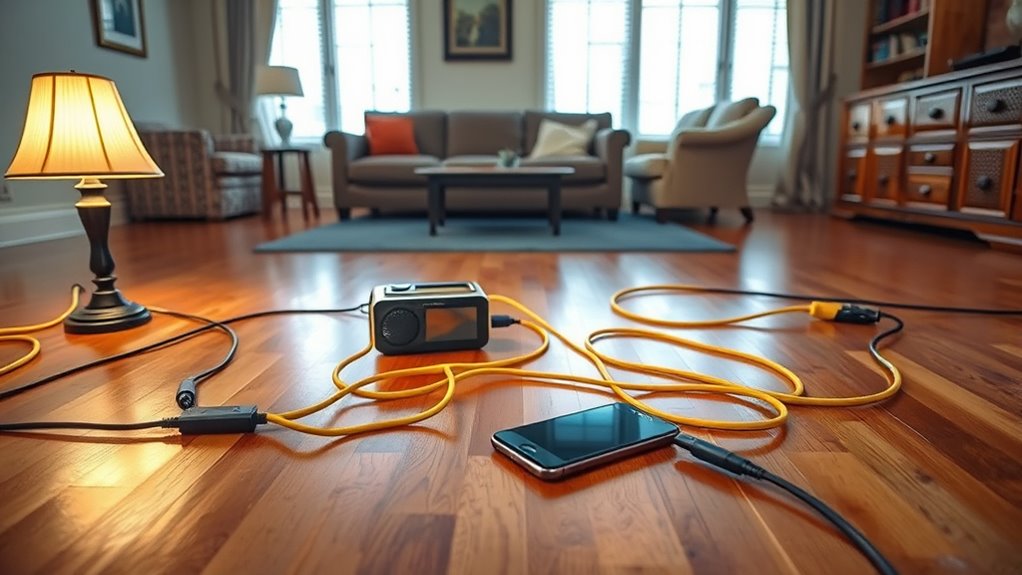
Connecting multiple devices to an extension cord requires careful planning to prevent overloads and hazards. First, check the cord’s power rating and avoid exceeding its capacity. Use grounding techniques by ensuring the extension cord has a proper grounding pin if powering grounded devices. To stay organized and safe, follow cord storage tips: coil cords loosely, keep them out of high-traffic areas, and avoid tangling. Visualize your setup with this table:
| Device Type | Power Rating | Connection Tips |
|---|---|---|
| Lighting | Low wattage | Use a dedicated outlet |
| Small appliances | Moderate wattage | Avoid daisy chaining |
| Heavy tools | High wattage | Connect directly to wall outlet |
What to Do When Power Is Restored
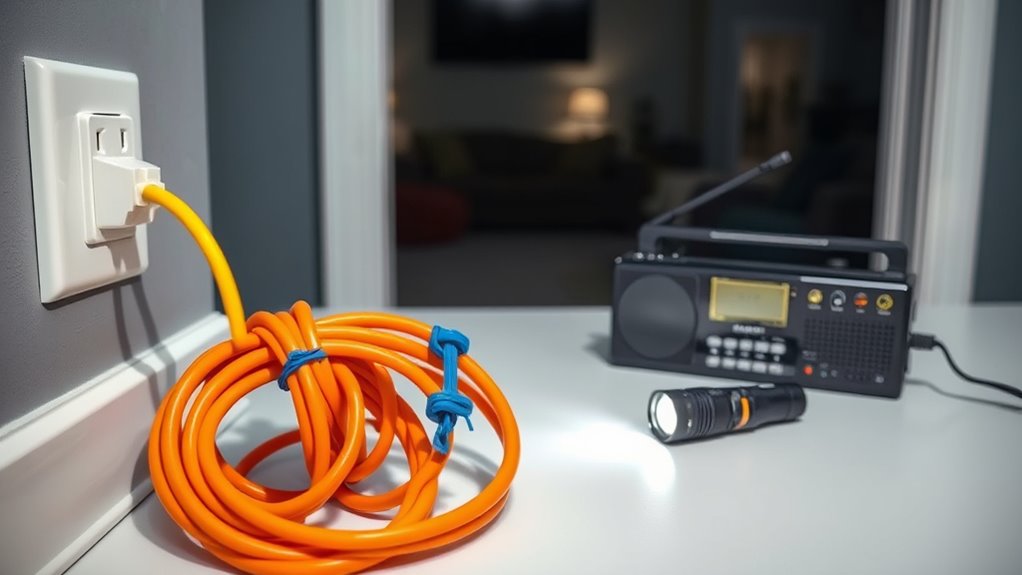
When power is restored, it’s important to reconnect your devices carefully to prevent electrical surges and damage. First, check the condition of your extension cords, ensuring the cord insulation is intact and free from cracks or frays. Use outlet safety practices by plugging devices directly into wall outlets, avoiding overloaded strips. Turn on devices gradually, starting with essential appliances, to reduce the risk of a surge. Be cautious of any sparks or unusual noises, which may indicate faulty connections. Don’t hurry, and avoid plugging multiple cords into one outlet or daisy-chaining extension cords. Properly inspecting your cords and maintaining outlet safety helps protect your devices and prevents potential electrical hazards when power is restored. Additionally, staying informed about technological innovations can help you adopt safer and more efficient electrical practices during power restoration.
Frequently Asked Questions
Can Extension Cords Be Used Outdoors During Storms?
You shouldn’t use extension cords outdoors during storms because it jeopardizes indoor safety. Stormy weather increases the risk of electrical shock and fire, especially if cords are not rated for outdoor use. Always check cord length considerations to guarantee you don’t overload the cord or create tripping hazards. Use only outdoor-rated extension cords, and unplug them when not in use or during thunderstorms to prevent accidents.
How Often Should I Inspect My Extension Cords for Damage?
You should inspect your extension cords regularly, ideally once a month, to catch any signs of damage early. During cord inspections, look for frayed wires, cracks in the insulation, or loose connections, which can lead to damage prevention issues. By staying vigilant and performing consistent inspections, you guarantee your cords remain safe and reliable, reducing the risk of electrical hazards during outages or routine use.
Are There Specific Extension Cords Rated for High-Power Appliances?
Did you know that over 30% of electrical fires are caused by improper extension cord use? For high-power appliances, you should look for extension cords with heavy-duty ratings or appliance-specific cords. These cords are designed to handle higher wattages safely, reducing fire risks. Always check the cord’s label for power capacity, and avoid using regular cords for appliances like space heaters or refrigerators to stay safe.
What Safety Measures Should Children Be Aware of Around Extension Cords?
You should supervise children closely around extension cords and make sure they stay away from them. Teach kids not to touch or play with cords, especially when they’re plugged in. Place cords out of reach or behind furniture to prevent pulling or tripping hazards. Always check that cords are in good condition and avoid running them across walkways. By actively supervising and managing cord placement, you keep children safe from electrical dangers.
How Do I Store Extension Cords Safely After Use?
After use, you should store extension cords properly by coiling them loosely to prevent damage. Use cord storage solutions like hooks or reels to keep cords off the ground and avoid kinks or cuts. Make sure cords are completely dry before storing to prevent deterioration. Proper storage helps damage prevention and extends the lifespan of your extension cords, ensuring they’re safe and ready for the next use.
Conclusion
By following these safety tips, you’re steering clear of hidden hazards like a captain charting treacherous waters. Keep your extension cords in top shape, avoid overloads, and stay alert for potential dangers. When power’s restored, treat your equipment with care, just like a delicate plant needing gentle watering. Staying vigilant guarantees your home stays safe and your outage experience doesn’t turn into a storm you didn’t see coming. Safety is your guiding light through any blackout.