TL;DR
Solar-powered laptop chargers transform sunlight into usable energy, providing a portable, eco-friendly power source. Advances in efficiency and design make them practical for outdoor adventures, emergencies, and off-grid living.
Imagine sitting in a remote mountain cabin or hiking deep into a forest, and your laptop’s battery drops to zero. Suddenly, a sleek, foldable solar panel catches the sunlight, and within hours, your device comes back to life. That’s the promise of solar-powered laptop chargers.
These portable devices turn the sun’s rays into usable energy, giving you a reliable power backup when outlets are nowhere in sight. Whether you’re camping, working outdoors, or prepping for emergencies, understanding how these chargers work can help you stay connected without relying on traditional power sources.
Choose a solar charger with wattage matching your laptop’s needs for faster, efficient charging.
Opt for foldable, weather-resistant models if you plan to use them outdoors or during travel.
Pair solar panels with portable batteries for reliable power during cloudy days or nighttime.
Understand that sunlight quality directly impacts charging speed; cloudy or shaded conditions slow down the process.
Invest in quality solar panels with high-efficiency cells—these generate more power in less space, making your setup more practical.
What exactly are solar-powered laptop chargers?
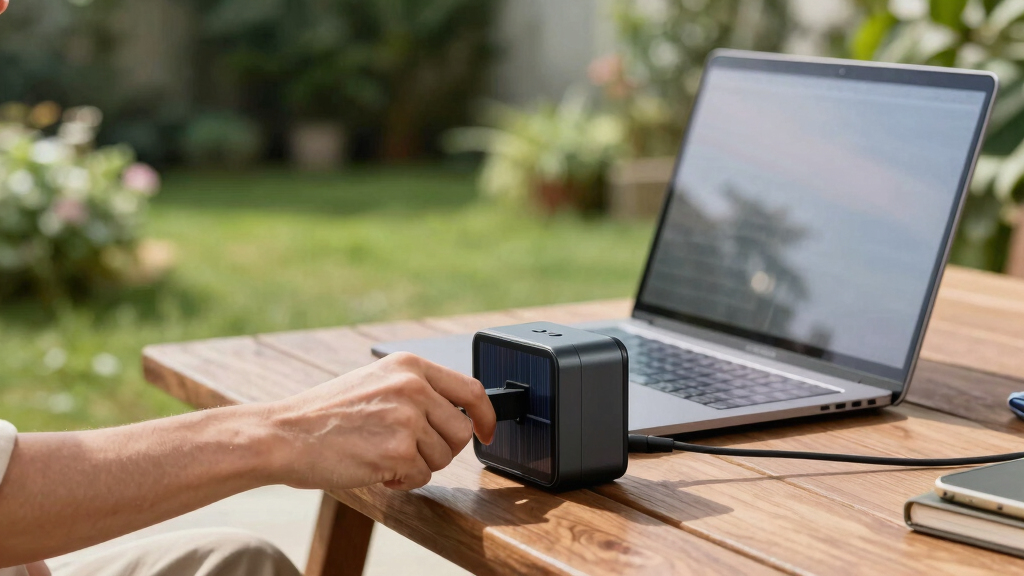
Solar-powered laptop chargers are compact, portable devices that use solar panels to generate electricity. They often feature foldable panels, making them easy to carry in a backpack or suitcase. Think of them as a mini power plant that harnesses sunlight to juice up your laptop whenever you need it.
For example, a camper might set up a 60W foldable panel on a sunny morning, then connect it to a compatible power bank or directly to their laptop. As the sun moves across the sky, the panel continues to generate energy, allowing the camper to work or stream videos without plugging into a wall.

DARAN Portable Power Station 89.6Wh LiFePO4 Battery 100W(200W Peak) Solar Power Bank, Portable Charger Small Generator with AC Outlets & PD Fast Charging for Home/Laptop/Camping(Solar Panel Optional)
- Compact and Lightweight: Fits in pocket, weighs 2.54 lbs
- Multiple Output Ports: 7 ports including AC, USB-C, USB-A, DC
- High Capacity Battery: 89.6Wh LiFePO4 for reliable power
As an affiliate, we earn on qualifying purchases.
As an affiliate, we earn on qualifying purchases.
How do solar laptop chargers actually work?
- Sunlight hits the solar panels: The panels contain solar cells—typically monocrystalline or polycrystalline—that absorb sunlight. The efficiency of this process is critical because it determines how much energy can be harvested in a given time. The better the cells, the faster and more reliably your device can be powered, especially in variable conditions.
- Conversion into electricity: The solar cells convert sunlight into direct current (DC) electricity. This step is vital because laptops and most portable devices require DC power. The quality of the conversion process impacts how much usable energy you get; inefficiencies here mean longer charging times and less reliable power.
- Power delivery: The generated power flows through a built-in controller to your device’s charging port, possibly passing through a battery bank for storage. This allows for a buffer, so even if sunlight fluctuates, your device can still draw a steady supply of energy, which is especially important during inconsistent weather or at different times of day.
- Charging your laptop: The charger supplies power to your laptop via compatible ports, such as USB-C, DC, or AC adapters. The choice of port influences compatibility and charging speed. A mismatch in voltage or current can damage your device or reduce efficiency, so understanding your laptop’s requirements is essential for safe, effective charging.
For instance, in bright midday sun, a 50W panel might generate enough power to top off a 50Wh battery in just a few hours, depending on the device’s consumption. Recognizing the importance of each step helps you appreciate the tradeoffs—like size versus efficiency—and guides better purchasing decisions.

FlexSolar 100W Foldable Portable Solar Panel Charger IP67 Waterproof
- Lightweight and Portable: Weighs only 4.1lbs, folds compactly
- Versatile 3-in-1 Outputs: PD 3.0, USB-A, DC outputs for multiple devices
- Universal Compatibility: Includes 4-in-1 charging cable for various power sources
As an affiliate, we earn on qualifying purchases.
As an affiliate, we earn on qualifying purchases.
Compare top features of popular solar laptop chargers
| Feature | Model A | Model B | Model C |
|---|---|---|---|
| Wattage | 60W | 100W | 50W |
| Weight | 2.5 lbs | 3.8 lbs | 2 lbs |
| Foldability | Yes | Yes | No |
| Battery Storage | Yes, 20000mAh | No | Yes, 15000mAh |
| Price | $150 | $300 | $100 |
Choosing between models depends on your power needs, portability preferences, and budget. For high output and quick charging, Model B excels, but for lightweight travel, Model C is ideal. Keep in mind that higher wattage models can charge devices faster but may come with increased weight and cost, which could impact portability—an important consideration for outdoor use or travel.

SOARAISE Solar Power Bank 48000mAh Wireless Portable Charger with 4 Cables
- High-Efficiency Solar Panels: Charges 5 times faster with 4 panels
- Large 48000mAh Capacity: Extended power for outdoor use
- Multi-Device Charging: Supports 7 devices simultaneously
As an affiliate, we earn on qualifying purchases.
As an affiliate, we earn on qualifying purchases.
How to pick the best solar charger for your needs
Follow these steps to find the perfect solar charger:
- Assess your device power needs: Know your laptop’s wattage and battery capacity. This helps determine the minimum wattage the charger must provide to ensure effective charging without overloading or underpowering your device.
- Check solar panel wattage: Higher wattage means faster charging, especially in variable sunlight. But remember, a higher wattage panel usually means increased size and weight, so balance your need for speed with portability.
- Decide on portability: Do you want something lightweight or more robust? Consider how often you’ll carry it and the environments you’ll encounter; heavier models may offer higher capacity but less convenience on the move.
- Look for weather resistance: Ensure it’s rated for outdoor use if you plan to hike or camp. IP ratings like IP65 or IP67 indicate protection against dust and water, which is crucial for durability and safety.
- Match your budget: Prices range from $50 to over $300. While cheaper models may suffice for casual use, investing in higher-quality, efficient panels can save you time and frustration, especially during critical moments.
For example, a hiker might prioritize a lightweight, foldable 60W panel with IP65 weather resistance to ensure durability without adding bulk. Conversely, an emergency prepper might opt for a larger, higher-capacity unit that can store enough energy for multiple devices over several days, accepting the tradeoff of increased weight and cost.

USB Solar Panel Charger, White, 5W, 5V 1PCS
- High-Efficiency Solar Conversion: Premium monocrystalline silicon design
- Weather-Resistant Durability: Built to withstand harsh outdoor conditions
- Multiple Device Compatibility: Suitable for phones, lights, and small appliances
As an affiliate, we earn on qualifying purchases.
As an affiliate, we earn on qualifying purchases.
What are the real-world benefits of using solar chargers?
Solar chargers turn sunlight into free, renewable energy, offering a sustainable alternative to traditional power sources. This shift matters because it reduces dependence on fossil fuels, lowers carbon footprints, and promotes energy independence—especially valuable in remote locations where grid access is impossible or unreliable.
Imagine camping in a remote national park—your solar panel quietly soaking up rays while you work or relax. This not only enhances your outdoor experience by keeping your devices operational but also minimizes environmental impact by utilizing a clean energy source.
They also shine in emergencies. During a blackout, a solar charger can keep your phone alive, your laptop running, or even power small appliances, as long as you have enough sunlight and the right setup. This capability transforms your device from a simple gadget into a vital survival tool, providing peace of mind during unpredictable situations.
Plus, they cut down your carbon footprint. Using sunlight instead of fossil fuels means fewer emissions—making your outdoor trips greener. This environmental benefit extends beyond individual use, contributing to global efforts to combat climate change and promote sustainable living.
What are the limitations to watch out for?
Solar chargers aren’t magic. They depend heavily on sunlight—cloudy days, shady spots, or indoor use significantly reduce their effectiveness. A 50W panel might generate less than 10W indoors or on a cloudy afternoon, which may be insufficient for charging larger devices or multiple gadgets in a timely manner. Recognizing these limitations allows for better planning: pairing solar chargers with portable batteries or backup power sources ensures continuous energy availability during less-than-ideal conditions.
Charging times can stretch over several hours, especially for larger devices like laptops. This means patience is essential, and in some cases, you might need to plan your usage around sunlight availability or carry additional power banks to bridge gaps. Weather resistance varies—check ratings before your outdoor adventures. And remember, a solar charger alone won’t power high-wattage appliances without larger, dedicated systems. Always verify that your device’s voltage and current match the charger’s output to avoid damage, as mismatched power levels can harm sensitive electronics or reduce lifespan.
Frequently Asked Questions
Can a solar-powered laptop charger fully replace my wall outlet?
It depends on sunlight, the charger’s wattage, and your laptop’s battery size. In optimal conditions, high-capacity models can fully charge a laptop, but they’re usually best as supplementary power sources.Are solar chargers effective indoors?
Solar panels need sunlight to generate power. Indoors or in low-light conditions, they are generally ineffective unless paired with a battery bank that was charged outdoors.How long does it take to charge a laptop with a solar panel?
It varies. In bright sunlight, it can take 2-4 hours to fully charge a laptop; on cloudy days, it might stretch to 8–12 hours or more. It’s all about sunlight intensity and panel wattage.Are solar chargers durable enough for outdoor adventures?
Many are designed with weather-resistant materials and have IP ratings indicating water and dust resistance. Always check product ratings before taking them into harsh environments.What’s the typical cost for a reliable solar laptop charger?
Prices range from around $50 for basic models to over $300 for higher-capacity, feature-rich options. Your choice depends on your power needs and portability preferences.Conclusion
Solar laptop chargers are no longer just a niche gadget—they’re a practical, eco-friendly way to stay powered in the wild or during emergencies. Their ability to transform sunlight into usable energy turns outdoor spaces into mobile offices and survival stations.
When choosing one, focus on your specific needs: portability, power output, durability, and budget. With the right model, you can enjoy the sun’s energy, worry less about outages, and embrace a greener lifestyle.