
TL;DR

Get backup power and energy gear delivered free with Prime
- Fast, free delivery on millions of items
- Prime Video, Amazon Music and more included
- Member-only deals all year
Solar backup power stations store energy in rechargeable batteries, supplied through solar panels or other sources. They power essential devices during outages, with key factors like capacity, output, and solar input determining performance. Knowing these helps you pick the right system for your needs.
Match your inverter’s surge capacity to your device startup demands, not just its running wattage.
A higher battery capacity extends runtime but doesn’t compensate for an underpowered inverter.
Solar input wattage and sunlight conditions directly influence recharge time—plan for cloudy days.
Lithium iron phosphate batteries last longer and are safer for frequent use than older chemistries.
Always use approved transfer equipment and consult professionals when connecting to home circuits.
How much power can a solar backup station really store?
Battery capacity is the heartbeat of a solar backup station. It’s measured in watt-hours (Wh) or kilowatt-hours (kWh), showing how much energy it can hold. But what you really care about is how much of that energy you can use. Inverter losses, standby drain, temperature, and battery management chip away at the total.
For example, a 1,000 Wh station might give you about 850 Wh of usable AC power. That’s enough to run a 100 W laptop for nearly 8.5 hours. But if you’re powering a fridge with a 200 W compressor that cycles on and off, you’ll need to measure the fridge’s average consumption to get a real picture of runtime.
Understanding usable capacity is crucial because it directly impacts how long your essential devices can stay powered during an outage. Overestimating the available energy can lead to unexpected shutdowns, especially if you’re not accounting for the inverter’s efficiency or the device’s startup surges. Choosing a station with a higher usable capacity than your minimum need provides a buffer, ensuring reliability when you need it most.
solar backup power station portable
As an affiliate, we earn on qualifying purchases.
As an affiliate, we earn on qualifying purchases.
Can your station handle your biggest appliances?
Output power, measured in watts, determines which devices you can run. A station might have a large battery but still fail to start your fridge if its inverter isn’t rated high enough. Surge capacity is crucial for appliances with motors or compressors, which need extra juice at startup.
Say you want to run a small window air conditioner pulling 1,200 W. You’ll need a station with a surge capacity above that, say 1,500 W, to handle the startup surge. Otherwise, the device won’t turn on, leaving you without cooling when you need it most.
Matching the surge capacity to your device’s startup requirements is essential because many appliances draw significantly more power at startup than during steady operation. Underestimating this can lead to equipment failure or the inability to power critical devices. When selecting a station, consider not only the continuous power rating but also the surge capacity, especially for appliances with motors, pumps, or compressors. This ensures your system can handle the initial energy spike, preventing shutdowns and ensuring reliable operation during emergencies.
| Feature | What It Means |
|---|---|
| Continuous Output | The max power it can deliver steadily (e.g., 1,000 W). This determines what devices can run simultaneously without overloading the system. |
| Surge Power | Brief power spike needed to start motors or compressors (e.g., 1,500 W). Ensuring this matches or exceeds your device’s startup surge is critical for reliable operation. |
home solar generator with high capacity
As an affiliate, we earn on qualifying purchases.
As an affiliate, we earn on qualifying purchases.
How quickly can solar panels recharge your station?
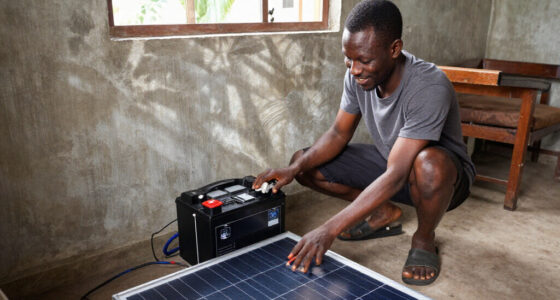
Solar input capacity determines how fast your station refills. A 200 W solar panel might take 5-6 hours of good sunlight to fully recharge a 1,000 Wh battery. But real-world conditions—clouds, angle, temperature—usually slow that process down.
Understanding recharge times is vital because it influences how often and how reliably you can depend on solar power. If you experience multiple outages or live in an area with inconsistent sunlight, opting for a system with higher solar input or supplementary charging options can make a big difference. Faster recharge times mean your station is ready to serve again sooner, reducing downtime and enhancing your energy independence. Additionally, considering the tradeoff between panel size and portability helps ensure your system remains practical for your specific needs, whether for camping, off-grid living, or emergency backup.
As a rule of thumb:
- Estimate needed energy: total watt-hours to replace.
- Divide by peak sunlight hours: usually 4-6 for most locations.
- Factor in system losses: aim for 20-25% extra.
As an affiliate, we earn on qualifying purchases.
What kind of batteries power these stations?
Most modern stations use lithium iron phosphate (LFP) batteries. They last longer—often over 2,000 full cycles—and handle heat better than older lithium-ion types. That means they keep their capacity longer, even with frequent use.
Choosing the right battery chemistry impacts not only longevity but also safety and maintenance. LFP batteries are less prone to thermal runaway and require less active cooling, making them safer for both portable and stationary setups. Their longer cycle life means you won’t need to replace batteries as often, saving money and hassle in the long run. Cheaper nickel-manganese-cobalt batteries might degrade faster, leading to reduced capacity and shorter lifespan, which could compromise your backup reliability over time. Investing in a station with quality lithium-based batteries ensures sustained performance and peace of mind during prolonged outages or off-grid use.
“LFP batteries are becoming the standard for reliable, long-lasting backup power,” says energy storage expert John Doe.
lithium iron phosphate solar generator
As an affiliate, we earn on qualifying purchases.
As an affiliate, we earn on qualifying purchases.
Why inverter quality matters more than you think
The inverter turns DC stored in the battery into AC power for your appliances. A pure sine-wave inverter produces smooth, clean power—ideal for sensitive electronics, medical devices, and refrigerators. Modified sine-wave inverters are cheaper but can cause noise, overheating, or even damage.
Using a high-quality inverter ensures your devices operate safely and efficiently, preventing potential damage or reduced lifespan. Sensitive electronics, like laptops or medical equipment, require clean power to function correctly and avoid data corruption or hardware failure. Moreover, a reliable inverter with a high surge capacity can handle startup demands of appliances with motors or compressors, preventing shutdowns during critical moments. Investing in a superior inverter often means better efficiency, less heat generation, and longer lifespan for your backup system, ultimately providing peace of mind during critical outages.
Check the inverter’s continuous and surge ratings. If you plan to run a microwave or power tools, make sure the surge capacity exceeds their startup wattage.
How long does it take to recharge your station?
Recharge times vary based on charging method. AC fast chargers can fill a 1,000 Wh station in 1-3 hours. Solar charging is slower—expect a full recharge over a day or more, depending on sunlight and panel wattage. Vehicle sockets and alternator chargers are usually slower or require special setups.
Understanding recharge timelines helps you plan for outages and off-grid scenarios more effectively. For instance, if you rely heavily on solar, knowing how long it takes to replenish your batteries during cloudy days or shorter winter days can guide your system design—perhaps by adding more panels or a secondary charging method. Combining solar and AC charging can optimize recharge times, but always verify if your station supports simultaneous charging and discharging. Recognizing these factors ensures your backup system remains ready when needed, avoiding surprises during extended outages.
Is portability a big deal?
The size and weight of a station matter if you plan to move it often. Larger batteries last longer but become heavier—sometimes over 50 pounds. Wheels, handles, and compact designs make a difference. Think about where you’ll place it during an outage or trip.
Choosing a portable unit involves balancing capacity with practicality. A heavier, more capable unit might provide longer runtime and higher power output but can be cumbersome to transport or position. Features like wheels, handles, and weatherproofing enhance usability, especially if you need to move the system outdoors or during emergencies. If your primary concern is portability, prioritize lighter models with sufficient capacity for your essential needs, recognizing that compromises may be necessary between size, weight, and power. Ensuring ease of transport and setup can make a significant difference in how effectively you utilize your backup power during critical moments.
Weather resistance and noise levels also influence portability decisions—some units are designed to withstand outdoor use and operate quietly.
Can you expand your system later?
Some stations allow adding extra batteries, solar panels, or higher-capacity inverters. This flexibility can grow your system from a portable backup to a full home energy solution. But check if expansion modules are proprietary or compatible across brands.
Planning for future expansion means selecting a system that can adapt to your evolving energy needs. Modular designs enable you to start small—perhaps for camping or emergency use—and scale up as your requirements grow, potentially powering more appliances or your entire home. Compatibility is key; ensure that additional batteries or solar panels are compatible with your existing system and that the control electronics can handle increased capacity without issues. This foresight can save you money and effort later, making your investment more versatile and long-lasting.
How do UPS features improve emergency power?
Some backup stations include pass-through or UPS modes, providing seamless transition during power outages. Look for transfer times under a few milliseconds—crucial for sensitive electronics like computers or medical devices. Check if battery charging continues during use, and whether the system supports simultaneous charge and discharge.
Having a UPS feature means your critical electronics can stay operational without interruption, even during power transitions. This is especially important for sensitive equipment that can be damaged by sudden power loss or fluctuations. A transfer time of less than 10 milliseconds ensures your devices don’t reboot or experience data loss. Additionally, systems that support continuous charging while discharging reduce downtime and maximize backup readiness. Recognizing these features allows you to select a station that offers not just backup power, but also peace of mind for your most valuable electronics during emergencies.
Safety tips for using portable stations
Safety comes first. Keep your station dry, well-ventilated, and within temperature limits. Never plug it into household wiring directly or use damaged cables. For outdoor use, ensure panels are weatherproof and protected from shading or debris.
Always follow manufacturer instructions. Remember, a portable station isn’t a substitute for professional wiring or backup systems. When in doubt, consult a licensed electrician for home integration or major upgrades.
Frequently Asked Questions
How large a power station do I need?
Make a list of your essential devices, note their wattage and startup surges. Add up total energy needs and compare with the station’s capacity. Ensure the inverter can handle both continuous and peak loads to cover your critical appliances.
How long will my refrigerator run on a backup station?
Calculate your fridge’s average daily energy use with a meter. Divide the usable battery capacity by that number to estimate runtime. Confirm that the inverter can handle compressor startup spikes to avoid shutdowns.
How many solar panels do I need?
Estimate daily energy needs, factor in peak sunlight hours, and system losses. Match your panels’ wattage and voltage to your station’s input specs. A common rule: get at least 20-25% more panel wattage than your calculated needs for cloudy days.
Can I connect solar panels directly to the station while it powers devices?
Many stations support simultaneous use, but check their input limits and whether pass-through charging affects battery health. Not all models allow continuous charging while discharging—review manufacturer specs before setup.
Will a solar backup station power my heating or cooling devices?
If the inverter supports your device’s wattage, yes. But heating appliances like kettles or space heaters draw a lot of power—often over 1,000 W—and drain batteries quickly. Use them sparingly or consider a dedicated solution for high-demand loads.
Conclusion
A solar backup power station can turn a dark, powerless moment into a manageable inconvenience. The key is choosing the right size, quality inverter, and matching solar input to your energy needs. When set up properly, it’s a quiet, reliable shield against power outages—without the fumes or noise of a gas generator. Think of it as a small battery-powered fortress—ready to keep your essentials alive when the grid fails. When the next storm hits, you’ll be glad you invested in smart, dependable backup power.Halloween Picks
halloween
As an affiliate, we earn on qualifying purchases.