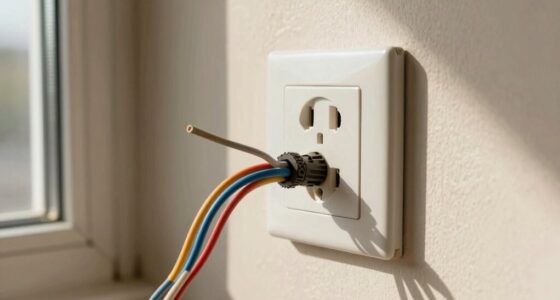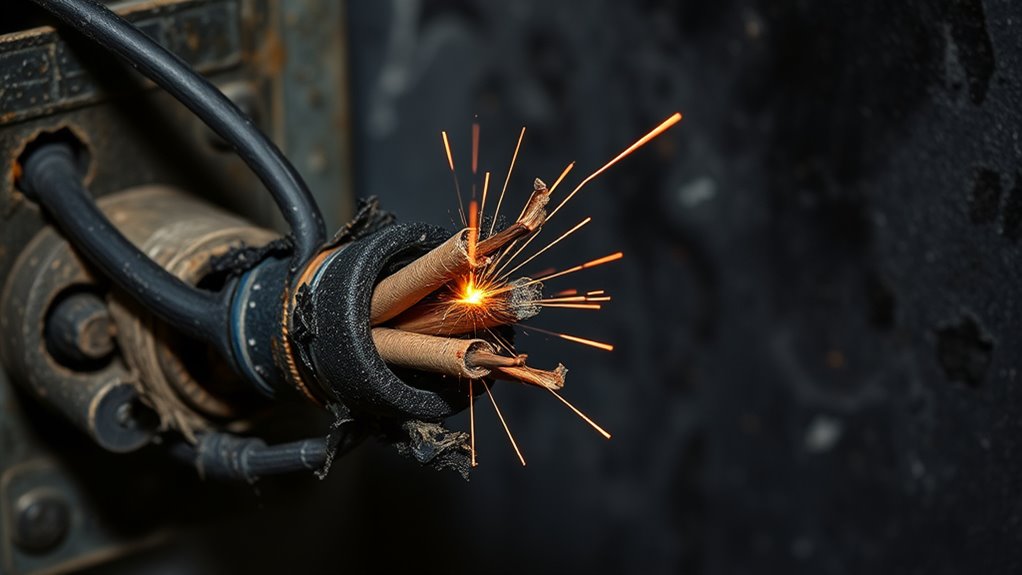

Improper wiring can pose serious fire hazards by causing ground faults, overheating circuits, and loose connections. When wires are damaged, outdated, or poorly installed, they increase the risk of sparks, melting insulation, and short circuits that can ignite fires. Overloading circuits or neglecting signs like flickering lights can also lead to dangerous hotspots. Staying aware of these issues and taking proactive steps can help you prevent potential fires—keep going to learn more about safeguarding your home.

Get backup power and energy gear delivered free with Prime
- Fast, free delivery on millions of items
- Prime Video, Amazon Music and more included
- Member-only deals all year
Key Takeaways
- Improper wiring can cause ground faults, leading to sparks and overheating that increase fire risk.
- Overloaded circuits due to faulty wiring can generate excessive heat, melting insulation and igniting fires.
- Damaged or outdated wiring creates hotspots and intermittent faults, elevating the chance of electrical fires.
- Loose connections and improper grounding can cause sparks, arcs, and persistent faults that may ignite fires later.
- Lack of regular inspections and maintenance allows hidden wiring issues to persist, significantly raising fire hazards.
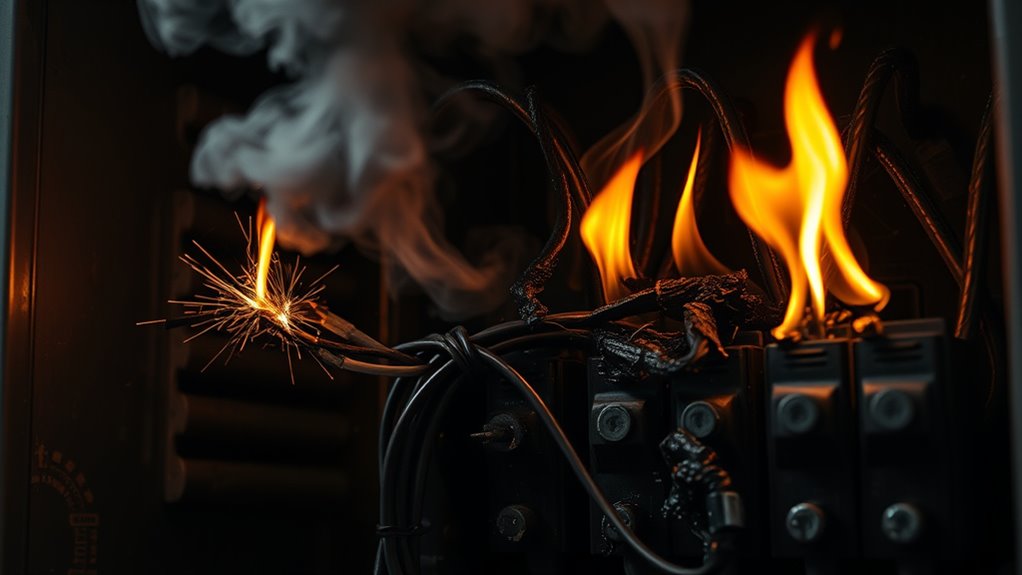
Improper wiring is a leading cause of electrical fires, putting your home and loved ones at risk. Many homeowners overlook the importance of proper wiring, but neglecting it can lead to dangerous situations. One common issue is the presence of ground faults, which occur when electrical current finds an unintended path to the ground. This can happen if wires are damaged, connections are loose, or if appliances are improperly grounded. Ground faults not only increase the risk of electrical shock but can also ignite fires if the fault causes overheating or sparks. When a ground fault occurs, your circuit breaker should trip to cut off power, but if the breaker is faulty or not functioning properly, the risk of fire escalates.
Improper wiring can cause ground faults, increasing the risk of electrical fires and shocks in your home.
Another vital hazard linked to improper wiring is overloaded circuits. When multiple devices draw power from a single circuit beyond its capacity, it causes the wires to overheat. Overloaded circuits are common in homes where too many appliances are plugged into one outlet or power strip. This strain on the wiring can melt insulation, damage the circuit, and lead to sparks or fires. Overloading is especially dangerous because it often goes unnoticed until it’s too late. You might feel the outlets or switches warm to the touch, or notice flickering lights—both signs that your circuits are struggling. If you ignore these signs, you increase the likelihood of a fire starting from overheated wiring.
If your wiring isn’t up to code, or if you’ve experienced previous electrical issues, the risk of ground faults and overloaded circuits rises sharply. Faulty wiring can cause intermittent power problems or persistent sparks, which may not be immediately obvious but can smolder quietly and ignite later. Additionally, improper wiring connections, such as loose or poorly secured wires, create hotspots that can deteriorate over time. This deterioration increases the chance of a ground fault or an overload, leading to potential fires. Regular inspections can help identify hidden hazards and prevent dangerous failures before they happen.
To protect yourself, it’s essential to have your electrical system inspected regularly by a qualified electrician. They can identify signs of improper wiring, such as exposed wires, loose connections, or outdated panels. Upgrading your wiring, installing circuit breakers suited to your load, and avoiding daisy-chaining multiple devices onto one outlet are simple steps that greatly reduce fire hazards. Remember, addressing these issues proactively could be the difference between a safe home and a devastating fire caused by avoidable electrical faults.
electrical circuit breaker tester
As an affiliate, we earn on qualifying purchases.
As an affiliate, we earn on qualifying purchases.
Frequently Asked Questions
How Can I Tell if My Wiring Is Improperly Installed?
You can tell if your wiring is improperly installed by watching for signs like frequent circuit overloads, which cause breakers to trip often, or worn insulation that appears frayed or cracked. Flickering or dimming lights, burning smells, and warm outlets also indicate wiring issues. Regularly inspect your wiring, and if you notice these problems, it’s best to call a licensed electrician to prevent fire hazards and guarantee safety.
What Are the Signs of Faulty Electrical Wiring?
You might notice flickering lights, frequent circuit overloads, or warm outlets, which are subtle hints your wiring could be faulty. Short circuit detection devices can alert you to wiring issues, preventing bigger problems. If switches or outlets feel hot or emit a burning smell, it’s time to call an electrician. Addressing these signs promptly keeps your home safe and avoids potential fire hazards caused by hidden electrical flaws.
How Often Should I Have My Electrical System Inspected?
You should have your electrical system inspected every 3 to 5 years to prevent issues like circuit overloads and identify wiring upgrades needed. Regular inspections help catch potential fire hazards early, especially if you notice flickering lights, tripped circuits, or warm outlets. A professional check guarantees your wiring is up to code and safe, reducing the risk of fire caused by faulty wiring or outdated systems.
Can DIY Wiring Repairs Prevent Fire Hazards?
DIY wiring repairs can help prevent fire hazards if you follow proper DIY safety and adhere to wiring standards. However, improper repairs might do more harm than good, increasing the risk of electrical fires. If you’re not trained, it’s best to consult a licensed electrician. They ensure repairs meet wiring standards, reduce hazards, and keep your home safe. Never compromise on safety when dealing with electrical systems.
What Safety Devices Help Mitigate Wiring Fire Risks?
You can reduce wiring fire risks by installing circuit breakers that cut off power during overloads or short circuits. Smoke detectors also play a vital role by alerting you early to potential fire hazards caused by wiring issues. Regularly testing and maintaining these safety devices guarantees they work effectively, giving you peace of mind and an added layer of protection against electrical fires.
ground fault circuit interrupter (GFCI) outlet
As an affiliate, we earn on qualifying purchases.
As an affiliate, we earn on qualifying purchases.
Conclusion
Ignoring proper wiring might seem like a quick fix, but it puts you at serious risk of fire. You might think it’s just a small shortcut, but small mistakes can lead to big disasters. Don’t wait until it’s too late—invest in quality wiring and regular checks. Protect your home and loved ones now; safety isn’t something to compromise on. Remember, a little prevention today can save you from a house fire tomorrow.
As an affiliate, we earn on qualifying purchases.
electrical wiring safety inspection
As an affiliate, we earn on qualifying purchases.
As an affiliate, we earn on qualifying purchases.
Halloween Picks
halloween
As an affiliate, we earn on qualifying purchases.