
When encountering electrical shock or burns, your first priority is ensuring personal safety, turning off the power source before helping the victim. For electrical shocks, do not touch the person if they are still in contact with electricity; instead, disconnect power first. For burns, cool the area with running water for at least 10 minutes and cover it loosely with sterile dressing. Stay calm, monitor their breathing, and seek emergency help quickly. Keep these steps in mind to effectively respond when it matters most.
Key Takeaways
- Ensure personal safety by disconnecting the electrical source before approaching the victim.
- Do not touch the victim if they are still in contact with electricity; use insulated tools if needed.
- For minor burns, cool the area with running water for at least 10 minutes and cover with sterile dressings.
- Call emergency services immediately if the victim is unresponsive, not breathing, or has severe burns.
- Monitor the victim closely for signs of shock, seizures, and maintain their airway and breathing until help arrives.
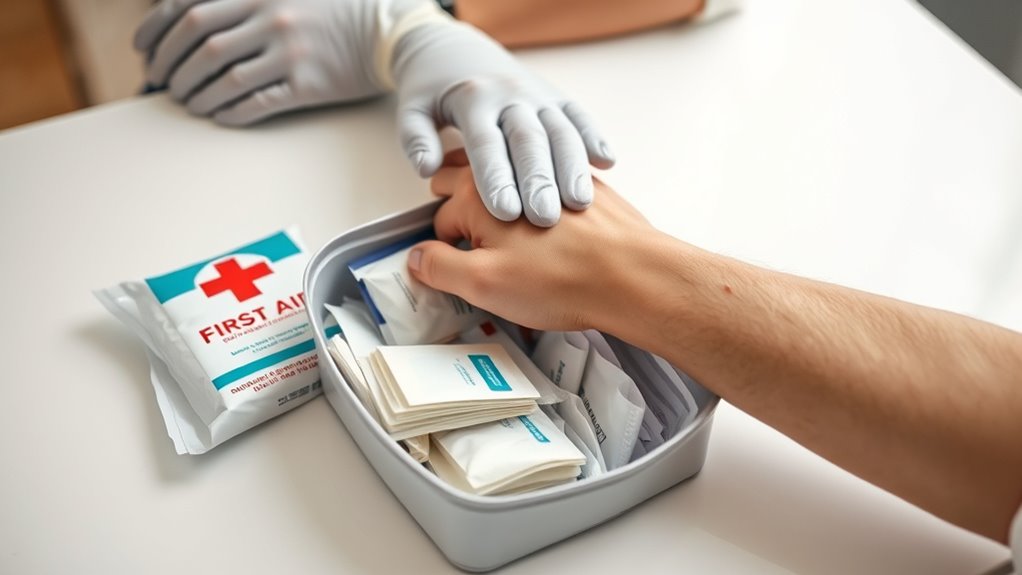
Have you ever wondered what to do when someone suddenly gets injured or feels unwell? When it comes to electrical injuries or burns, quick, correct action can make a critical difference in the person’s recovery. Knowing basic first aid for electrical shock and burns is essential, especially since these injuries can escalate rapidly if not handled properly. One key aspect of managing electrical injuries is electrical injury prevention. You should be aware that preventing electrical accidents starts with safety measures—inspecting cords, avoiding overloading outlets, and staying away from exposed wiring. If you’re working around electricity, always use insulated tools and wear protective gear. These precautions considerably reduce the risk of electrical shock, which can cause severe internal injuries or cardiac arrest.
Prevent electrical injuries by inspecting cords, avoiding overloads, and using insulated tools and protective gear.
When someone experiences an electrical shock, your first step is to guarantee your safety. Never touch the victim if they’re still in contact with the source of electricity. Turn off the power supply or disconnect the source if possible. Once it’s safe, check their responsiveness and breathing. If they’re unresponsive but breathing, place them in a comfortable position and call emergency services immediately. If they’re not breathing, begin CPR if you’re trained, and continue until professional help arrives. Remember, electrical injuries can cause internal burns that aren’t immediately visible, so monitor the person closely for signs of shock or seizures. It’s also important to recognize that patterns of behavior may repeat in relationship contexts, which can be crucial if considering underlying causes or emotional responses.
In the case of burns—whether caused by electrical sparks or other sources—your burn treatment techniques come into play. For minor burns, cool the affected area with running water for at least 10 minutes to reduce pain and prevent further tissue damage. Cover the burn with a sterile, non-stick bandage or cloth to protect it from infection. For more severe burns, avoid applying ointments, breaking blisters, or using ice, as these actions can worsen the injury. Instead, cover the burn loosely and seek emergency medical help immediately. It’s essential to keep the person calm and still to prevent shock, and reassess their breathing and responsiveness regularly. Understanding both electrical injury prevention and proper burn treatment techniques ensures you can respond effectively when accidents happen. Acting swiftly and correctly can reduce complications and help the injured person recover more comfortably. Keep in mind that even seemingly minor injuries can have serious underlying effects, so when in doubt, always seek professional medical assistance. Being prepared with this knowledge empowers you to handle emergency situations confidently, potentially saving someone’s life or preventing long-term damage.
Frequently Asked Questions
How Can I Tell if Someone Has Internal Injuries From an Electrical Shock?
You can tell if someone has internal injuries from an electrical shock by watching for shock symptoms like confusion, weakness, or fainting. Look for signs of internal injury such as severe pain, swelling, or bruising, especially around the chest or abdomen. If they have trouble breathing, exhibit burns, or show unusual behavior, these are warning signs. Seek emergency help immediately and keep them calm and still until professional help arrives.
What Are the Long-Term Effects of Electrical Burns?
Electrical burns can cause long-term effects like scarring and nerve damage. You might notice persistent pain, numbness, or changes in skin texture where the burn occurred. Scarring risks increase if the burn is deep, possibly requiring medical treatments like skin grafts. Nerve damage can lead to loss of sensation or movement issues. It is crucial to seek ongoing medical care to manage these effects and prevent further complications.
Can Electrical Burns Cause Cardiac Arrest?
Yes, electrical burns can cause cardiac arrest due to electrical burn complications that affect the heart’s rhythm. When a high voltage or current passes through your body, it can disrupt your heart’s electrical signals, increasing cardiac arrest risks. If you see someone with an electrical burn, seek emergency help immediately. Prompt action may help prevent severe complications like cardiac arrest and other serious electrical burn complications.
When Should I Seek Professional Medical Help Immediately?
You should seek professional medical help immediately if someone experiences an electrical burn that causes severe pain, loss of consciousness, difficulty breathing, or signs of shock. Prioritize electrical safety and burn prevention by keeping electrical devices away from water and using proper protective gear. Prompt medical attention guarantees proper diagnosis and treatment, reducing the risk of complications. Don’t delay if the injury seems serious—quick action can make all the difference.
Are There Any Home Remedies to Treat Electrical Burns?
Imagine treating electrical burns with a magic potion—sounds tempting, right? But home remedies and natural treatments aren’t your best bets here. Instead, you should gently cool the burn with cool water, keep it covered, and seek medical help immediately. Avoid ointments or creams unless advised by a professional. Remember, electrical burns can be serious, so relying solely on home remedies could do more harm than good.
Conclusion
In the dance between danger and safety, your quick response is the guiding light that can turn chaos into calm. By knowing these first aid basics, you become a steady hand amidst the storm, a shield against unseen flames and sparks. Remember, your actions are the gentle threads weaving hope and healing into the fabric of someone’s recovery. Stay prepared, stay vigilant—your calm presence is the spark that ignites the path back to safety.

RVINGPRO 30 Amp Generator Cord 25FT and Pre-Drilled Power Inlet Box
- Heavy Duty Copper Cord: 100% copper, flame retardant, 25FT
- High Wattage Capacity: 7500 Watts, 125V/250V
- Twist Locking Connectors: NEMA 14-30P and L14-30R
As an affiliate, we earn on qualifying purchases.