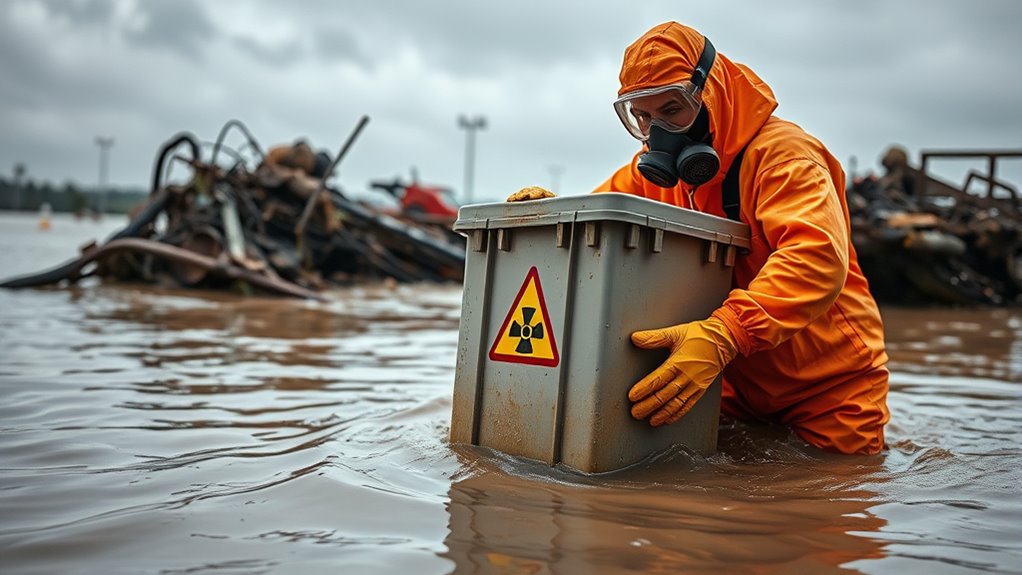

During flood cleanup, it’s crucial to recognize and handle hazardous materials carefully to protect yourself and the environment. Avoid direct contact with unknown substances, and always use appropriate personal protective equipment like gloves, goggles, and respirators. Contain spills immediately with absorbent materials and dispose of waste properly in labeled containers. For safe and effective cleanup, understanding these procedures is vital—continue to explore how to manage hazardous materials safely during floods.

Get backup power and energy gear delivered free with Prime
- Fast, free delivery on millions of items
- Prime Video, Amazon Music and more included
- Member-only deals all year
Key Takeaways
- Identify and label hazardous materials carefully before handling or disposal.
- Use appropriate PPE such as gloves, goggles, and respirators during cleanup.
- Contain spills immediately with absorbent materials to prevent environmental spread.
- Segregate hazardous waste in labeled, leak-proof containers until proper disposal.
- Contact trained professionals and environmental agencies for assistance with complex or unknown hazards.
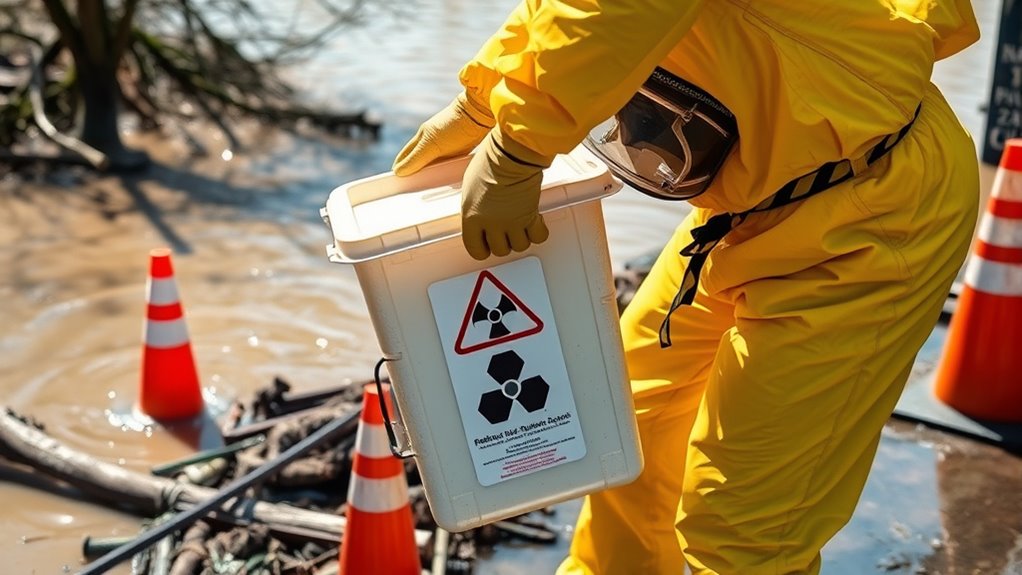
Flood cleanup can expose you to hazardous materials that pose serious health risks if not handled properly. When working in flood-affected areas, you might encounter chemicals from damaged containers, contaminated water, or debris that contain hazardous substances. To protect yourself and others, understanding chemical safety is crucial. Proper handling involves recognizing the types of chemicals present, using appropriate personal protective equipment, and following safety protocols to prevent exposure. You need to be aware that some substances can be corrosive, toxic, flammable, or carcinogenic, making it critical to treat all unknown materials with caution.
One of the key steps in managing hazardous materials during flood cleanup is spill containment. When you identify a spill, your first priority should be to contain it immediately to prevent it from spreading further. Use spill containment materials such as absorbent pads, booms, or neutralizing agents designed for the specific chemical involved. Ensure that spill containment is performed carefully to avoid splashing or spreading contaminants into the environment or onto yourself. Proper containment not only minimizes health risks but also simplifies cleanup efforts and reduces environmental impact.
Handling hazardous materials safely also means following established procedures for disposal. Never pour chemicals down drains or onto the ground, as this can lead to groundwater contamination or harm to wildlife. Instead, segregate hazardous waste and store it in clearly labeled, leak-proof containers until it can be disposed of according to local regulations. Always wear personal protective equipment, including gloves, goggles, and respirators when dealing with chemicals, especially during spill containment and cleanup. This gear helps prevent skin contact, inhalation of fumes, and eye injuries.
Additionally, training and preparedness are essential. If you aren’t trained in chemical safety or spill response, don’t attempt to manage hazardous materials alone. Contact trained professionals or environmental agencies who are equipped to handle such situations safely. Keep emergency contact numbers and spill response kits readily accessible on-site. Remember, safety is paramount—missteps in handling hazardous materials can have long-term health consequences and legal repercussions. Being aware of chemical safety protocols can significantly reduce risks and ensure a safer cleanup process.
hazardous materials spill containment kit
As an affiliate, we earn on qualifying purchases.
As an affiliate, we earn on qualifying purchases.
Frequently Asked Questions
How Can I Identify Hidden Hazardous Materials Under Flood Debris?
You can identify hidden hazardous materials by conducting thorough debris inspections and using chemical detection tools. Look for unusual odors, discoloration, or residue that might indicate chemicals. Use appropriate detection devices, like portable chemical analyzers, to scan debris. Always wear protective gear and proceed carefully. If you suspect hazardous materials, contact professionals for proper assessment and disposal. Don’t take risks—prioritize safety during flood cleanup.
What Personal Protective Equipment Is Most Effective for Chemical Spills?
You might think standard gear suffices, but for chemical spills, using chemical resistant gloves and respiratory protection is essential. These provide a barrier against hazardous substances and help you avoid inhaling toxic fumes. Always inspect your PPE for damage before use, and make certain it fits properly. Remember, wearing the right PPE not only protects you but also ensures you can work safely and effectively during flood cleanup.
Are There Specific Disposal Methods for Contaminated Water?
You should treat contaminated water with chemical treatment methods to neutralize hazardous substances before disposal. Once treated, store the water in appropriate, clearly labeled containers designed for contaminated liquids. When full, dispose of these containers following local regulations, ensuring proper container disposal procedures. Always wear protective gear and adhere to safety guidelines during this process to prevent exposure and environmental contamination. Proper disposal safeguards your health and the environment.
How Do I Handle Electrical Hazards Related to Floodwaters?
To handle electrical hazards during floodwaters, you should turn off the main power supply before entering affected areas. Avoid contact with standing water, as it can conduct electrical shocks. Always use insulated tools and wear rubber boots and gloves for added safety. Maintain power safety by keeping electrical equipment and outlets dry, and never attempt repairs in flooded conditions. If unsure, call a professional electrician to assess and address electrical hazards properly.
What Are Legal Requirements for Reporting Hazardous Material Exposure?
You need to act quickly when hazardous material exposure occurs. Legally, you’re required to follow specific reporting procedures, which often involve notifying local authorities and your liability insurance provider promptly. Failing to report could lead to serious consequences. Stay vigilant—know your responsibilities, document everything, and guarantee you’re compliant with regulations. Don’t wait—timely reporting protects you and others from potential harm and legal repercussions.
personal protective equipment for flood cleanup
As an affiliate, we earn on qualifying purchases.
As an affiliate, we earn on qualifying purchases.
Conclusion
In flood cleanup, safety should always be your top priority. Stay vigilant, avoid contact with hazardous materials, and follow proper procedures. Protect yourself and your community by practicing preparedness, patience, and caution. Remember, handling harmful substances responsibly reduces risks and restores safety swiftly. Stay smart, stay safe, and take decisive action to effectively manage and mitigate hazards. Your carefulness can make a significant difference in turning chaos into cleanup.
As an affiliate, we earn on qualifying purchases.
hazardous waste disposal containers
As an affiliate, we earn on qualifying purchases.
As an affiliate, we earn on qualifying purchases.
Fall Picks
fall essentials
As an affiliate, we earn on qualifying purchases.