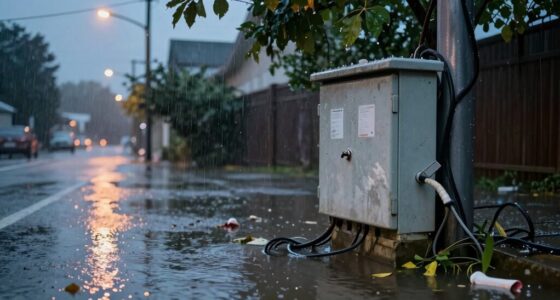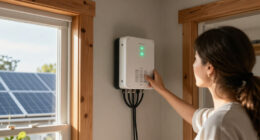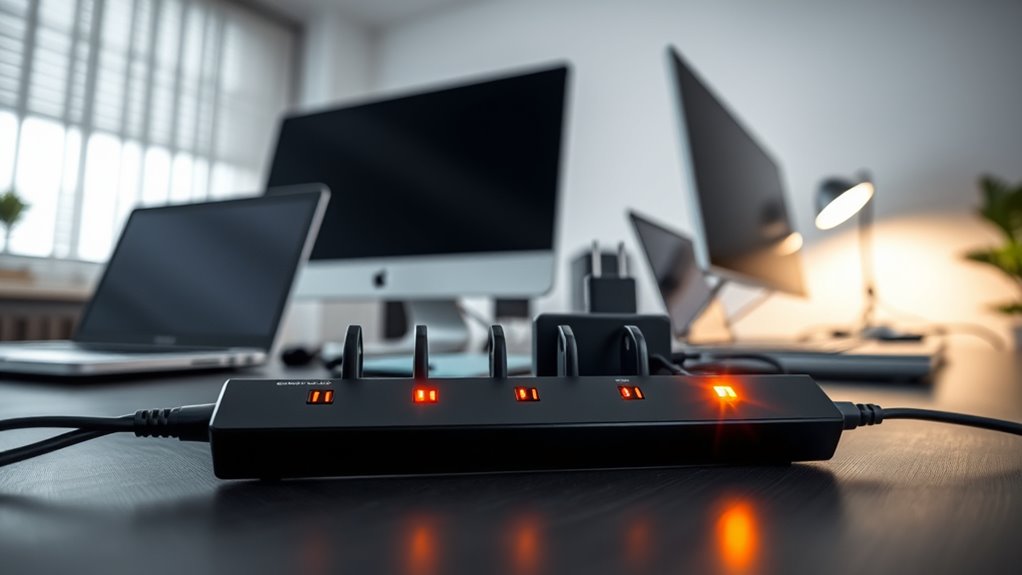

To properly use surge protectors during power fluctuations, ensure they have a high joule rating to absorb surges effectively. Always verify proper grounding of outlets and avoid daisy-chaining multiple units, as this reduces protection. Turn off and unplug devices not in use, and inspect your surge protectors regularly for damage. Using the right ratings and grounding provides the best defense; keep these tips in mind to enhance your setup and learn more about safeguarding your electronics.

Get backup power and energy gear delivered free with Prime
- Fast, free delivery on millions of items
- Prime Video, Amazon Music and more included
- Member-only deals all year
Key Takeaways
- Turn off and unplug devices during power fluctuations to prevent damage.
- Use surge protectors with adequate joule ratings suited for your devices’ needs.
- Ensure surge protectors are properly grounded and connected to correctly wired outlets.
- Regularly inspect surge protectors for damage or wear, replacing them as needed.
- Avoid daisy-chaining multiple surge protectors to prevent overload and maintain effectiveness.

Power fluctuations can happen unexpectedly and pose a risk to your electronic devices. When the electrical supply becomes unstable, your devices are vulnerable to damage from sudden surges or dips. To protect your valuable electronics, understanding how to properly use surge protectors is vital. One of the most effective ways to do this is by guaranteeing your surge protector has appropriate ratings. Surge protector ratings, such as joule ratings, indicate how much energy they can absorb before failing. Higher ratings generally mean better protection, especially during severe power fluctuations. Always check these ratings before purchasing or using a surge protector, and avoid those with minimal joule capacity, which may offer only minimal protection during intense surges.
Choose surge protectors with high joule ratings for better protection during power fluctuations.
In addition to selecting a surge protector with suitable ratings, employing proper grounding techniques is essential. Grounding ensures that excess electrical energy has a safe path to dissipate into the earth rather than passing through your devices. When your surge protector is properly grounded, it reduces the risk of electrical shock and limits potential damage caused by power surges. To verify grounding, check that your outlet is correctly wired and grounded according to local electrical standards. If you’re unsure, consider consulting a qualified electrician to assess your electrical system. Correct grounding not only enhances the surge protector’s effectiveness but also provides peace of mind during unpredictable power fluctuations.
Using surge protectors correctly involves more than just plugging in your devices and hoping for the best. For maximum protection, avoid daisy-chaining multiple surge protectors, as this can overload the system and reduce effectiveness. Instead, use one high-quality surge protector per outlet, especially for sensitive electronics like computers, televisions, and home office equipment. Make sure the surge protector’s indicator light, if it has one, shows that it’s functioning properly. Regularly inspect your surge protector for wear, damage, or broken parts, and replace it if necessary. Remember, even the best surge protector with high ratings won’t protect your devices if it’s not properly grounded.
Finally, during power fluctuations, turn off and unplug devices that aren’t in use or aren’t connected to surge protectors. This simple step minimizes exposure to unpredictable surges and protects your equipment from potential damage. Combining the right surge protector ratings with proper grounding techniques offers a dependable defense against electrical surprises. By taking these precautions, you can keep your electronics safe, extend their lifespan, and avoid costly repairs caused by sudden power irregularities. Proper use of surge protectors isn’t just about plugging them in—it’s about understanding their ratings, guaranteeing your system is grounded correctly, and maintaining good electrical habits. Incorporating proper camping gear into your setup can further enhance safety and comfort during power outages or fluctuations, especially in remote or outdoor environments.
Products Worth Considering

Philips Hue Large Smart Light Tube, Black – White and Color Ambiance LED Color-Changing Light – 1 Pack

Philips Hue Bridge Pro Smart Lighting Hub
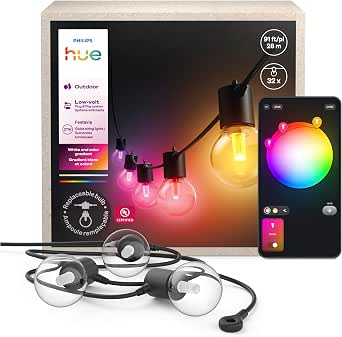
Philips Hue Festavia Globe Outdoor String Lights, 32 Bulbs, 91 ft
As an affiliate, we earn on qualifying purchases.
Frequently Asked Questions
Can Surge Protectors Prevent Damage From Lightning Strikes?
Surge protectors can’t fully prevent damage from lightning strikes, as lightning protection requires specialized systems. While they do help guard against power surges caused by nearby strikes, their limitations mean a very strong lightning strike can still cause damage. To better protect your electronics, combine surge protectors with dedicated lightning protection systems and unplug devices during storms. Remember, surge protectors are helpful but not foolproof against all lightning-related damage.
How Often Should I Replace My Surge Protector?
Think of your surge protector as a shield that wears down over time. You should replace it every 3 to 5 years, or sooner if it shows signs of damage like frayed cords or tripped outlets. This replacement frequency guarantees your device’s lifespan remains protected, maintaining its ability to absorb power surges. Regularly check for wear and tear to keep your electronics safe and functioning at their best.
Are There Specific Surge Protectors for Sensitive Electronics?
Yes, there are specialized surge protectors designed specifically for sensitive electronics. You should look for surge protectors with higher joule ratings and additional filtering features to shield delicate devices like computers and audio equipment. These specialized surge protectors help prevent damage from power fluctuations and surges, ensuring your electronics stay safe. Always check the specifications to make sure the surge protector meets the needs of your sensitive electronics for maximum protection.
What Signs Indicate a Surge Protector Is No Longer Effective?
Like your trusty flip phone, your surge protector shows signs of wear and tear. If the indicator lights flicker or turn off, it likely means the device isn’t protecting your electronics anymore. You might also notice physical damage or a burning smell. Don’t ignore these signs; replace it promptly. A failing surge protector risks letting power surges reach your sensitive devices, risking damage and costly repairs.
Do Surge Protectors Work During a Blackout or Power Outage?
Surge protectors don’t work during a blackout or power outage because they rely on electrical power to function. When the power goes out, your surge protector can’t do its job, as it needs live electricity to divert surges. Keep in mind that surge protectors have limitations—they can’t protect against all types of power issues, especially during outages. To safeguard your devices, consider using uninterruptible power supplies (UPS) during outages.
Conclusion
By using surge protectors correctly during power fluctuations, you can safeguard your valuable devices from damage. Remember, a study shows that power surges cause over $3 billion in property damage annually. So, investing in quality surge protectors isn’t just smart—it’s essential. Stay vigilant, unplug sensitive electronics during storms, and regularly check your protectors’ status. Doing so guarantees your equipment stays safe, saving you money and hassle in the long run.