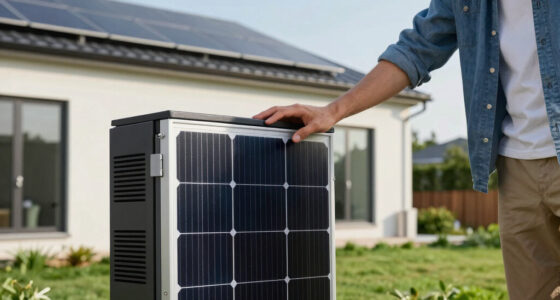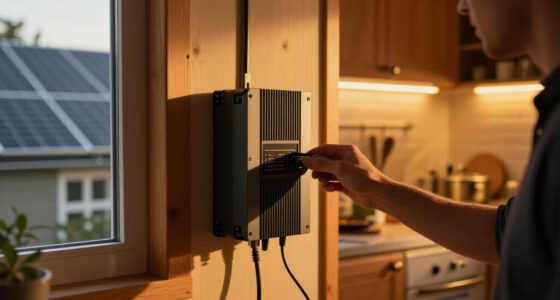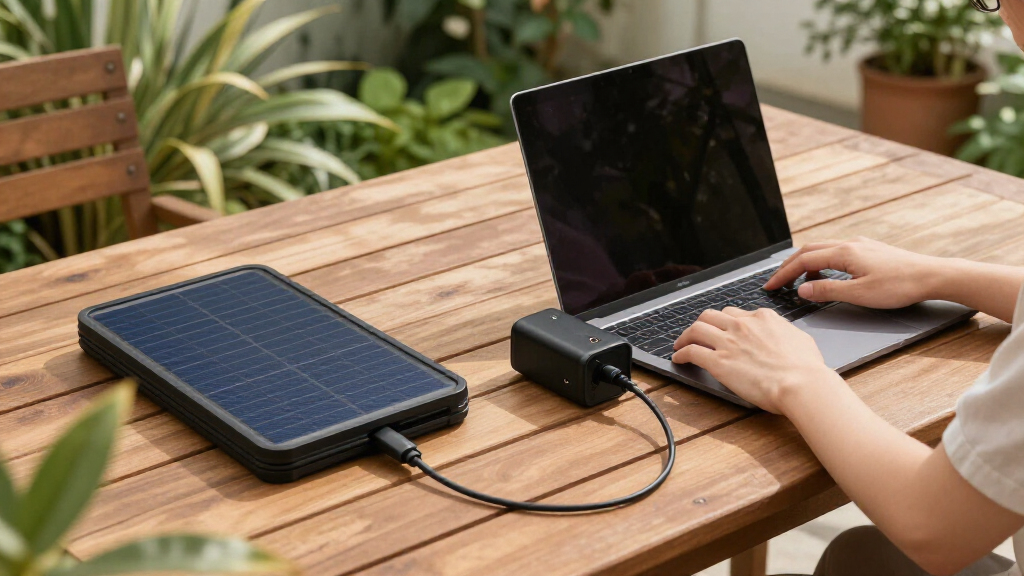

The Anker SOLIX C200 with 60W Solar Panel earns my best overall pick among solar-powered laptop chargers because it pairs a trusted panel with enough battery capacity to run a laptop through a full workday off-grid. For travelers who want something that fits in a backpack, the Preppi Foldable Solar Charger offers a lighter, more compact alternative, while the MARBERO 200W station is the stronger choice if you also need to power lights, phones, and small appliances at a campsite. The core tradeoff in this category is simple: solar panels small enough to carry rarely charge a laptop quickly, so most buyers pair a panel with a battery station rather than charging directly from sunlight. Panel wattage, battery chemistry, and AC inverter size are what separate a useful charger from an expensive paperweight. Keep reading for the full breakdown of all 11 options, including which ones are worth the money and which cut corners.

Get backup power and energy gear delivered free with Prime
- Fast, free delivery on millions of items
- Prime Video, Amazon Music and more included
- Member-only deals all year
Key Takeaways
- The Anker SOLIX C200 and 60W panel combination won on overall balance: 60W of solar input is enough to meaningfully recharge the battery during daylight hours, something the 21W and 40W kits in this lineup cannot realistically do for laptop-level loads.
- Battery capacity was the clearest dividing line in the comparison — units in the 85–90Wh range (Takki, Daran) can top up a laptop once or twice, while the 146–150Wh class (MARBERO, Anker, the 300W kit) handles a full remote workday.
- Small solar power banks like the 20000mAh and 24000mAh models simply cannot replace a dedicated power station for laptops; they work best as phone chargers with emergency laptop top-ups, and ranking them lower reflected that ceiling.
- LiFePO4 battery chemistry (the Daran) is starting to appear at budget prices, offering roughly triple the cycle life of standard lithium-ion units — a meaningful long-term value even at lower capacity.
- Every bundled panel under 25W, including the Takki’s 21W panel, functions more as a trickle maintainer than a real charging source; buyers should budget for a larger panel if solar input actually matters to their use case.
| Preppi Solar Laptop & Phone Charger with Dual USB Ports |  | Best Panel-Only Pick | Ports: USB-A and USB-C | Material: ETFE | Light Spectrum Capture: 90% (350-1100 NM) | VIEW LATEST PRICE | See Our Full Breakdown |
| Anker SOLIX C200 DC Portable Power Station and 60W Solar Panel |  | Best Overall | Battery Capacity: 192Wh LiFePO4 | Power Output: 200W | USB-C Ports: 3 (100W, 140W, 15W) | VIEW LATEST PRICE | See Our Full Breakdown |
| MARBERO 200W Portable Power Station with AC Outlet |  | Best Value Power Station | Capacity: 148Wh (40,000mAh / 3.7V) | Power Output: 200W (270W peak) | AC Outlets: 2 (110V, 200W) | VIEW LATEST PRICE | See Our Full Breakdown |
| Takki Solar Generator 120W Peak with 21W Solar Panel |  | Best Starter Kit | Battery Capacity: 88.8Wh | Peak Power: 120W | Continuous Device Limit: 80W | VIEW LATEST PRICE | See Our Full Breakdown |
| SinKeu 24000mAh Portable Power Bank with AC Outlet |  | Best for Travel Days | Capacity: 24000mAh / 88.8Wh | AC Output: 110V / 65W | USB Outputs: QC3.0 9V/2A, 5V/3A | VIEW LATEST PRICE | See Our Full Breakdown |
| Daran Portable Power Station 89.6Wh LiFePO4 Battery with 100W Output and Fast Charging |  | Best Battery Longevity | Battery Capacity: 89.6Wh | Battery Type: LiFePO4 (3500+ cycles) | Output Power: 100W (200W peak) | VIEW LATEST PRICE | See Our Full Breakdown |
| Portable Solar Generator 300W with 60W Solar Panel |  | Best Complete Solar Kit | Power Capacity: 300W | Solar Panel: 60W monocrystalline foldable | Conversion Efficiency: 20.5% | VIEW LATEST PRICE | See Our Full Breakdown |
| Portable Charger 20000mAh with Solar Panel and Fast Charging USB-C Power Bank |  | Best Budget Emergency Backup | Capacity: 20,000mAh | Solar Panel: Built-in | Outputs: USB-C, USB-A (dual output) | VIEW LATEST PRICE | See Our Full Breakdown |
| Portable Power Station, 146Wh 100W Solar Powered Power Bank with AC Outlet |  | Best Capacity-to-Weight Balance | Capacity: 146Wh / 39,600mAh | AC Output: 2 x 110V (100W max) | USB Ports: 2x 5V/3.1A, 1x USB QC3.0, 1x USB-C QC3.0 | VIEW LATEST PRICE | See Our Full Breakdown |
| Portable Solar Power Bank with AC Outlet 65W 110V |  | Best Slim Laptop-Ready Hybrid | Battery Capacity: 24,000mAh | AC Output: 65W, 110V | Solar Panel Power: 30W foldable | VIEW LATEST PRICE | See Our Full Breakdown |
| Portable Power Station with 40W Solar Panel, 100W Solar Powered Generator |  | Best Solar Bundle on a Budget | Output Wattage: 100W | Solar Panel Output: 40W foldable panel included | Battery Type: Lithium-ion | VIEW LATEST PRICE | See Our Full Breakdown |
More Details on Our Top Picks
Preppi Solar Laptop & Phone Charger with Dual USB Ports
Most entries in this roundup pair a solar panel with a battery, which is what laptops usually need. The Preppi panel goes the other direction: no storage at all, just direct sunlight-to-USB conversion. That tradeoff is worth understanding. With 90% light spectrum capture and an ETFE shell that shrugs off weather better than the fabric panels Takki bundles, this option can keep a laptop’s battery topped off indefinitely on a bright day — something the 88.8Wh units from Takki and SinKeu simply cannot do once drained. The catch is that output is entirely hostage to conditions; overcast skies mean no charging, and a laptop under heavy load may pull more than the panel delivers. This pick makes the most sense for someone who works outdoors in consistently sunny climates and wants gear that never runs out of juice.
Pros:- No battery capacity to deplete — charges as long as the sun is out
- ETFE material is more weather-resistant than typical fabric panels
- Foldable, flat design slips into a backpack without bulk
- Dual USB-A and USB-C ports charge a laptop and phone simultaneously
Cons:- Zero storage — useless at night or in cloudy conditions
- Direct solar output may not keep pace with power-hungry laptops under load
Best for: Outdoor workers and campers in sunny regions who want unlimited same-day charging without carrying battery weight
Not ideal for: Anyone in cloudy climates or needing power after dark — there is no battery, so sunset means shutdown
- Ports:USB-A and USB-C
- Material:ETFE
- Light Spectrum Capture:90% (350-1100 NM)
- Battery:None (direct solar only)
- Design:Foldable, compact
Our verdict“Buy this only if reliable sunshine is part of your routine and you value endless daylight charging over stored energy.”
Anker SOLIX C200 DC Portable Power Station and 60W Solar Panel
This pairing wins the top spot because it solves the two problems that plague every other kit here: slow solar recharging and weak laptop output. The 60W panel refills the 192Wh battery in roughly four hours, while the MARBERO — its closest budget rival — needs seven to nine hours and doesn’t even include a panel. Meanwhile the 140W USB-C port will drive nearly any modern laptop at full speed, something the 65W SinKeu and 80W Takki simply cannot claim. The LiFePO4 chemistry and 3-year warranty also mean this battery should outlast the standard lithium units in the cheaper picks by years of charge cycles. The honest downside: at 192Wh, this is still a small station, and USB-C panel compatibility is restricted. Compared with the MARBERO’s lower price, you’re paying a premium for speed and longevity rather than raw capacity.
Pros:- 140W USB-C port charges power-hungry laptops at full speed
- Solar recharge in about 4 hours is the fastest in this lineup
- LiFePO4 battery chemistry offers far more charge cycles than standard lithium
- Wall recharge hits 80% in 50 minutes
Cons:- 192Wh capacity limits multi-day off-grid use
- Not compatible with certain USB-C solar panels like the Anker SOLIX PS30
- Shoulder strap sold separately despite the travel-friendly pitch
Best for: Remote workers and campers who want fast solar recharging and full-speed laptop charging from a trusted brand
Not ideal for: Buyers needing to run appliances over 200W or store multi-day power — capacity is modest for the price
- Battery Capacity:192Wh LiFePO4
- Power Output:200W
- USB-C Ports:3 (100W, 140W, 15W)
- USB-A Ports:2 (12W each)
- Solar Panel:60W (included)
- Recharge Time (wall):80% in 50 minutes
- Recharge Time (solar):about 4 hours
- Warranty:3 years
Our verdict“If laptop charging is the priority and budget allows, this is the most complete and future-proof kit in the roundup.”
MARBERO 200W Portable Power Station with AC Outlet
The MARBERO earns its place by delivering the most storage per dollar among the battery-based picks, with 148Wh, dual AC outlets, and four USB ports — a broader output spread than the smaller SinKeu offers. For a laptop, a phone, and a set of string lights at camp, it covers the basics without the premium the Anker SOLIX C200 commands. But the value math only works if you read the fine print: no solar panel is included, so pairing it with even a modest 40W panel adds real cost, and once connected, recharging drags on for seven to nine hours — roughly double the Anker’s solar time with its bundled 60W panel. Compared with the Takki, you get more capacity and AC outlets, but you’re assembling your own solar setup rather than opening a complete kit. This model is better suited to buyers who already own a panel or plan to charge mostly from the wall or car.
Pros:- 148Wh capacity and dual AC outlets for the price of smaller units
- Four USB ports including QC3.0 and PD USB-C cover mixed device loads
- At 3.3 lbs and under 8 inches long, it packs easily
- Built-in dual LED flashlights add emergency utility
Cons:- Solar panel not included — real cost rises once you add one
- Recharging takes a lengthy 7-9 hours
- 200W output ceiling rules out most kitchen appliances
Best for: Budget-minded campers and emergency preppers who already own a solar panel or mostly recharge from wall or car
Not ideal for: Anyone wanting a ready-to-go solar kit out of the box — the panel is a separate purchase
- Capacity:148Wh (40,000mAh / 3.7V)
- Power Output:200W (270W peak)
- AC Outlets:2 (110V, 200W)
- USB Ports:4 (including QC3.0 and PD USB-C)
- DC Port:1 (5.5mm)
- Weight:3.3 lbs
- Dimensions:7.5 x 5.3 x 3.6 inches
- Recharging:Wall, car, or solar (panel not included)
Our verdict“The smart pick if you want maximum stored watt-hours on a budget and don’t mind sourcing your own panel.”
Takki Solar Generator 120W Peak with 21W Solar Panel
This is the cheapest complete solar-to-laptop package in the batch — battery, panel, and cables in one box, which neither the MARBERO nor the Anker can claim at this price. That completeness is the whole argument: for a first foray into off-grid power, the Takki removes the guesswork of matching panel wattage to battery input. The compromises show up quickly, though. The 21W panel is roughly a third the output of Anker’s 60W unit, so a full solar refill takes five to seven hours even for a small 88.8Wh battery, and the 80W device ceiling means some gaming or workstation laptops won’t charge at all. It also can’t charge devices while the station itself is recharging — a limitation none of the bigger units share. Compared with the SinKeu’s identical 88.8Wh capacity, you sacrifice AC wattage and pocketability but gain the solar panel and an SOS-capable flashlight for genuinely self-sufficient weekends.
Pros:- Everything included in one purchase — panel, battery, and charging options
- At 2.29 lbs total, it’s the lightest battery-based kit here
- AC wall recharge to 80% in just 2 hours
- Built-in LED flashlight with SOS mode for emergencies
Cons:- 80W device limit excludes many larger laptops and appliances
- Cannot charge devices while the station itself is recharging
- 21W panel makes full solar recharges slow
Best for: First-time campers and day-trippers wanting an all-in-one solar kit without research or big spending
Not ideal for: Owners of power-hungry laptops — the 80W ceiling and small battery will disappoint on long trips
- Battery Capacity:88.8Wh
- Peak Power:120W
- Continuous Device Limit:80W
- Solar Panel:21W (included)
- Charging Time (AC):2 hours to 80%
- Charging Time (Solar):5-7 hours to 80%
- Weight:2.29 lbs
- Dimensions:5.7 x 4.13 x 3 inches
Our verdict“The right first purchase for casual off-grid use — just don’t expect it to run demanding laptops.”
SinKeu 24000mAh Portable Power Bank with AC Outlet
The SinKeu occupies a different niche than the camping-focused picks: it behaves like a giant power bank rather than a power station. At 88.8Wh it matches the Takki’s capacity, but there’s no solar panel, no camping flashlight, and no boxy form factor — instead you get an OLED display, a 4-hour recharge, and an AC outlet shaped for airport-adjacent life. That said, the 65W AC ceiling is the lowest in this roundup, so it suits ultrabooks and MacBooks fine while gaming laptops may refuse to charge. It also falls just under the 100Wh airline limit, which is precisely why travelers should prefer it over the 148Wh MARBERO or 192Wh Anker — both of which are fine checked-gear companions but awkward carry-ons. The tradeoff is weight: for its size it’s chunky, and draining the AC outlet alongside USB ports empties the battery fast.
Pros:- 88.8Wh capacity stays under the 100Wh airline carry-on limit
- OLED display shows exact remaining charge and output
- Full recharge in 4 hours beats the MARBERO’s pace
- AC outlet plus QC3.0 USB covers laptop, phone, and tablet at once
Cons:- 65W AC output won’t support high-power laptops
- Heavier and bulkier than typical power banks
- Battery drains quickly when multiple devices draw at once
Best for: Frequent flyers and commuters with ultrabooks who need laptop power between outlets
Not ideal for: Off-grid campers and owners of high-wattage laptops — no solar input and a 65W AC cap
- Capacity:24000mAh / 88.8Wh
- AC Output:110V / 65W
- USB Outputs:QC3.0 9V/2A, 5V/3A
- Additional Outputs:DC 9-12.6V / 10A
- Recharging Time:4 hours
- Display:OLED
- Solar Input:None
Our verdict“The pick for carry-on laptop power on travel days — not for camping or power-hungry machines.”
Daran Portable Power Station 89.6Wh LiFePO4 Battery with 100W Output and Fast Charging
What separates the Daran 89.6Wh from most budget units in this roundup is its LiFePO4 chemistry, rated for 3500+ cycles where the Daran’s competitors like the 146Wh unit below typically use standard lithium cells rated for a fraction of that lifespan. For a laptop user charging a 60W machine, this translates to years of dependable use rather than a season or two. The 0-80% recharge in 1.5 hours also beats the 300W generator’s slower refill, which matters if you rotate between wall and solar power. At just 2.54 pounds, it’s the lightest true power station here.
The tradeoff is raw capacity: 89.6Wh is enough for roughly one to two laptop recharges, and the 100W ceiling rules out anything hungrier. It also lacks a bundled solar panel, so you’ll need to add one — the Anker SOLIX C200 bundle covers that gap if panels-in-the-box is a priority.
Pros:- LiFePO4 battery rated for 3500+ cycles, far outlasting typical lithium cells
- Fast 0-80% recharge in about 1.5 hours via wall or USB-C PD
- Featherweight 2.54-pound build with six output ports plus AC
- Silent operation with a 12-protection BMS and built-in flashlight
Cons:- 89.6Wh capacity only covers one to two laptop recharges
- No solar panel included, adding cost to a complete solar setup
Best for: Laptop users who want a power station that survives years of near-daily charge cycles and travels light in a backpack
Not ideal for: Anyone expecting a complete solar kit out of the box — the panel is sold separately
- Battery Capacity:89.6Wh
- Battery Type:LiFePO4 (3500+ cycles)
- Output Power:100W (200W peak)
- Ports:2 AC, 2 USB-C, 2 USB-A, DC5521
- Charging Methods:AC, USB-C PD, car, solar panel
- Weight:2.54 lbs
- Dimensions:6.5 x 3.3 x 4 inches
Our verdict“This pick makes the most sense for buyers who prioritize long-term battery health and portability over maximum capacity.”
Portable Solar Generator 300W with 60W Solar Panel
This is one of the few entries in this lineup that arrives as a true solar package: a 300W generator paired with a 60W monocrystalline foldable panel. That panel size matters — compared with the Takki’s 21W panel or the 65W unit’s 30W panel, 60W of input means meaningfully faster solar recovery for a laptop-heavy workflow. With 20.5% conversion efficiency and three recharge paths (AC, car, solar), this option stands out for off-grid trips lasting more than a weekend. The included accessory bundle, from a cigarette lighter adapter to the full solar kit, removes the piecemeal shopping the Daran and 146Wh units require.
Tradeoffs are real, though. The generator should be topped up regularly or performance sags, the 300W ceiling still excludes anything like a kettle or heater, and the junction box is not waterproof — a genuine weakness the Anker SOLIX bundle handles better in damp climates.
Pros:- Bundled 60W monocrystalline panel with 20.5% conversion efficiency
- 300W output runs a laptop plus peripherals simultaneously
- Three recharge methods with full accessory kit included
- Multi-layer protection with cooling system built in
Cons:- Solar panel junction box is not waterproof
- Performance declines if the unit sits uncharged for long periods
Best for: Campers and remote workers who want a matched generator-plus-panel kit without buying components separately
Not ideal for: Wet-weather or coastal campers — the solar junction box isn’t sealed against moisture
- Power Capacity:300W
- Solar Panel:60W monocrystalline foldable
- Conversion Efficiency:20.5%
- AC Outlets:2 x 300W max
- USB Ports:3 x 5V/3A, 1 x Quick Charge
- Charging Methods:AC, solar, car
- Protection:Short circuit, over-current, over-voltage, overload, overheating
Our verdict“Compared with panel-less rivals, this kit wins for buyers who want everything in one box for extended off-grid laptop use.”
Portable Charger 20000mAh with Solar Panel and Fast Charging USB-C Power Bank
At 230 grams and 0.65 inches thick, this is the pocket-sized option in a roundup otherwise filled with briefcase-scale power stations. Its built-in solar panel is best understood as an emergency trickle charger, not a primary power source — unlike the 300W kit’s 60W panel, this small cell collects just enough sun to keep the bank alive during an outage or a long trail day. Compared with the SinKeu 24000mAh, you give up the AC outlet entirely, so it only works for laptops that charge over USB-C at modest wattage. The 15W USB-C output handles phones and tablets comfortably but will slow-charge most modern laptops.
For the price, the dual outputs, rugged ABS+PC shell, multi-mode flashlight, and 12-month warranty make this a sensible glovebox or go-bag item. Heavy laptop users should skip it — one partial laptop charge drains the bank fast.
Pros:- Featherlight 230g design that fits in a jacket pocket
- Built-in solar panel provides genuine emergency trickle charging
- Dual outputs charge a phone and tablet at once
- Rugged ABS+PC housing with multi-mode LED flashlight
Cons:- Solar charging is slow and entirely weather-dependent
- 20,000mAh drains quickly when feeding a laptop over USB-C
Best for: Budget-minded hikers and emergency preppers who mainly need phone and tablet top-ups with occasional solar trickle
Not ideal for: Laptop-dependent remote workers — 15W USB-C and no AC outlet can’t keep a work machine running
- Capacity:20,000mAh
- Solar Panel:Built-in
- Outputs:USB-C, USB-A (dual output)
- Fast Charging:15W USB-C
- Weight:230g (0.65 in thick)
- Material:ABS + PC
- Warranty:12 months
Our verdict“This model is better suited to emergency phone backup than real laptop charging — buy it for the go-bag, not the office-in-a-van.”
Portable Power Station, 146Wh 100W Solar Powered Power Bank with AC Outlet
The 146Wh unit occupies a smart middle ground: nearly double the capacity of the Daran 89.6Wh while adding only 0.76 pounds, and offering two 110V AC outlets instead of one path to power. That’s enough for roughly two to three laptop recharges, and the seven-port array — dual AC, four USB variants including Quick Charge 3.0 on both USB-A and USB-C, plus a 12V DC barrel — covers awkward older devices the USB-C-only banks can’t touch. Like the MARBERO 148Wh unit it competes with, the dual LED flashlights with multiple modes give it real emergency-kit credibility.
The compromises mirror its rivals, though: solar recharging is supported but the panel is not included, so the ‘solar powered’ label only tells half the story, and the 100W AC ceiling limits you to efficient laptops and small electronics. Compared with the 300W kit, you get less headroom but a lighter, cheaper core unit.
Pros:- 146Wh capacity delivers two to three laptop recharges at just 3.3 lbs
- Seven outputs including dual 110V AC and dual Quick Charge 3.0 ports
- Three recharge paths: AC, car, and solar (panel optional)
- Dual LED flashlights with multiple emergency modes
Cons:- Solar panel not included despite solar-ready design
- 100W AC output caps what appliances it can run
Best for: Weekend campers and students who want AC outlets and multi-day laptop power without hauling a heavy station
Not ideal for: Buyers who want solar capability on day one — the panel is a separate purchase
- Capacity:146Wh / 39,600mAh
- AC Output:2 x 110V (100W max)
- USB Ports:2x 5V/3.1A, 1x USB QC3.0, 1x USB-C QC3.0
- DC Output:12V/10A
- Recharging:AC adapter, car, solar panel (not included)
- Weight:3.3 lbs
- Safety:Built-in Battery Management System
Our verdict“For capacity per pound, this option stands out as the balanced pick between the tiny Daran and the heavier 300W kit.”
Portable Solar Power Bank with AC Outlet 65W 110V
This hybrid splits the difference between a power bank and a power station: a 24,000mAh battery in a 1.89-inch-thick slab, paired with a separate 30W folding panel. The 65W AC outlet is sized specifically for ultrabooks and compact laptops — it will happily run a 45W or 65W machine but shuts down anything like a gaming laptop. Compared with the SinKeu 24000mAh, which offers similar capacity in a pure power-bank form, this one adds the 30W panel and a faster Quick Charge path, making it more useful off-grid. And unlike the 20,000mAh budget bank, it can actually feed a laptop’s native charger.
The quirks matter: the AC outlet requires manual activation, which catches forgetful users off guard mid-work-session, and the same non-waterproof junction box issue found on the 300W kit applies here. Capacity is also tight for all-day work — plan on one full laptop recharge plus phone top-ups.
Pros:- Genuine 65W AC outlet sized for ultrabooks and compact laptops
- Included 30W foldable solar panel extends off-grid runtime
- Slim 6.89-inch body fits a laptop sleeve or daypack
- Built-in BMS protects against overcharge and short circuits
Cons:- AC outlet requires manual activation each use
- Solar panel junction box is not waterproof
- 24,000mAh covers roughly one full laptop recharge
Best for: Ultrabook and 65W-laptop owners who want a slim AC-capable bank with a real folding solar panel
Not ideal for: Owners of gaming or workstation laptops — the 65W AC limit will trip on higher draws
- Battery Capacity:24,000mAh
- AC Output:65W, 110V
- Solar Panel Power:30W foldable
- USB Ports:5V/2.4A max, Quick Charge 5V/3A / 9V/2A
- DC Output:9V-12.6V/10A max
- Dimensions:6.89 x 3.98 x 1.89 in (bank); 12.7 x 8.4 x 0.3 in (panel)
Our verdict“This pick makes the most sense for efficient-laptop travelers who want AC power and a bundled panel without a power station’s bulk.”
Portable Power Station with 40W Solar Panel, 100W Solar Powered Generator
Most budget solar bundles force you to buy the panel and battery separately, which is where this 100W station with a matching 40W foldable panel earns its spot. Compared with the Takki Solar Generator, which pairs an 88.8Wh battery with only a 21W panel, this setup captures nearly double the sunlight, meaning faster solar recharge times when you are off-grid for multiple days. The triple recharge options — wall outlet, solar, and carport — also give it more flexibility than the MARBERO 200W, which leans on AC and panel input alone.
The tradeoff is capacity and ceiling. At 100W output it cannot run anything demanding, so the Anker SOLIX C200 or the 300W Portable Solar Generator are safer picks if you need to power a projector or mini-fridge. The panel’s non-waterproof junction box also demands attention in wet weather, and the battery needs regular top-ups during storage.
Pros:- Complete kit includes both the power station and a 40W solar panel, so no separate panel purchase is needed
- 40W panel recharges noticeably faster than smaller bundled panels like the Takki’s 21W unit
- Three recharge methods (wall, solar, carport) cover home, off-grid, and vehicle scenarios
- Built-in BMS protection guards against overcharging and overheating during unattended solar charging
Cons:- 100W output ceiling rules out power-hungry laptops, mini-fridges, or other high-draw devices
- Solar panel junction box is not waterproof, requiring takedown or covering in rain
- Battery must be recharged regularly during storage or it will degrade faster than expected
Best for: Campers and emergency preppers who want a complete solar generator kit under one purchase without paying premium brand prices
Not ideal for: Anyone hoping to run appliances over 100W — a gaming laptop charger or CPAP machine at night will push this past its limits
- Output Wattage:100W
- Solar Panel Output:40W foldable panel included
- Battery Type:Lithium-ion
- Output Ports:AC, USB, DC
- Recharge Methods:Wall outlet, solar panel, carport
- Voltage:120V
- Safety Features:Built-in BMS protection, smart device identification
- Best Use:Camping, emergencies, home backup for small electronics
Our verdict“This is the pick for buyers who want a ready-to-go solar laptop charging kit in a single box, as long as their laptop stays under the 100W ceiling.”
How We Picked
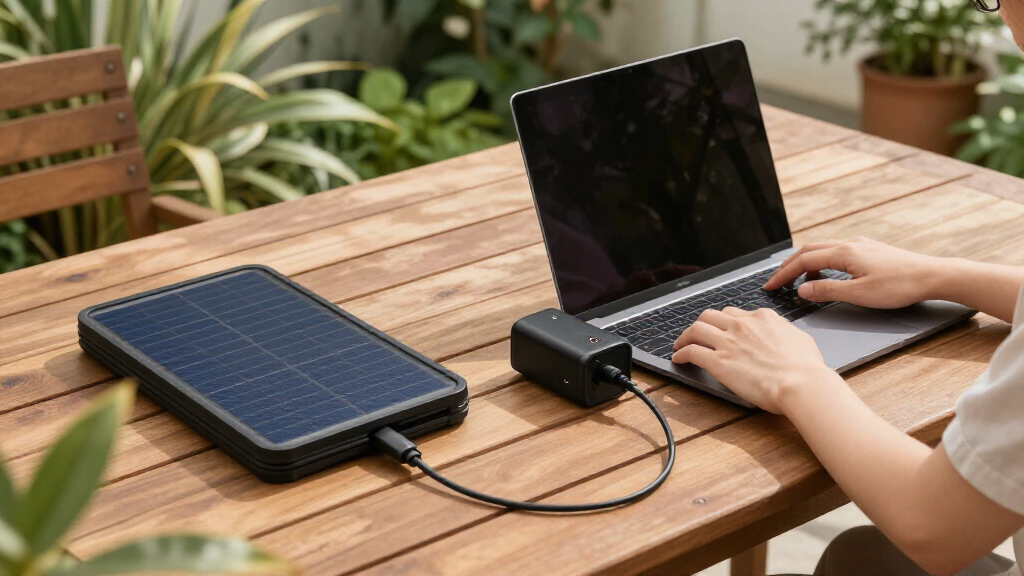
My ranking logic starts with one question: can this product actually keep a laptop running on solar power? That meant evaluating real solar input wattage, battery capacity in watt-hours, and whether the AC inverter or USB-C output delivers enough continuous power for a typical 45–65W laptop charger. A 20000mAh power bank with a tiny fold-out panel scores poorly on this lens no matter how convenient it is, while a modest power station paired with a genuine 60W panel scores well.
From there, I weighed portability versus capacity, since these products split into backpack-friendly chargers and campsite-oriented stations. Build quality, battery chemistry (LiFePO4 versus lithium-ion), output versatility, and price per watt-hour rounded out the comparison. I also factored in brand reputation for warranty support, because budget solar gear is a category where failures are common and customer service varies widely. The final order favors products that deliver dependable laptop charging per dollar over those with long spec sheets and weak real-world performance.
Factors to Consider When Choosing Solar-powered Laptop Chargers
Before choosing from the lineup above, it helps to understand what actually determines whether a solar laptop charger works for your situation. These are the factors that shaped my rankings — and the mistakes that catch buyers off guard.Solar Panel Wattage: The Number That Matters Most
The most common mistake in this category is assuming any product with the word “solar” can meaningfully charge a laptop. A 21W panel in real conditions delivers maybe 12–15W, which takes an entire sunny day to add even a partial laptop charge. To run a laptop primarily on solar, you want 40W minimum and ideally 60W or more, which is why the Anker 60W setup ranks at the top. Also remember that panel ratings assume direct perpendicular sunlight; clouds, angle, and heat all reduce output. If a bundled panel seems undersized, many buyers are better off buying the power station alone and adding a quality third-party panel later. Treat sub-25W panels as battery maintainers, not charging sources.
Battery Capacity and What Watt-Hours Really Mean
A typical laptop battery holds 50–70Wh, so a station with 100Wh or more can fully recharge a laptop at least once, with losses from the inverter eating 10–15% of that. Units in the 85–90Wh range are enough for emergency top-ups but will run dry during a full workday. The 100Wh airline limit is also worth knowing: anything larger cannot fly in carry-on luggage, which matters for digital nomads. Capacity also drives weight, since lithium batteries run roughly 4–5Wh per 100 grams. Match capacity to your actual runtime needs rather than buying the biggest number — a 300Wh station is wasted money and shoulder strain if you only need three extra hours.
Output Power and Port Selection
Check the continuous wattage rating of the AC inverter, not the peak rating that manufacturers love to advertise. A “300W peak” unit may only sustain 200W, and gaming laptops or MacBook Pro fast chargers can pull 90–140W on their own. Also check whether the USB-C port supports Power Delivery at 60W or higher — charging via USB-C is roughly 15% more efficient than going through the inverter, stretching your battery further. A good station offers AC, USB-C PD, USB-A, and DC outputs so you are not wasting adapter dongles. Skimping here is a false economy; underpowered inverters either charge slowly or shut down mid-session.
Battery Chemistry and Lifespan
Most budget stations use standard lithium-ion cells rated for 300–500 charge cycles before capacity drops noticeably. LiFePO4 (lithium iron phosphate) chemistry, like the Daran uses, is rated for 2,000+ cycles, holds up better in heat, and is less prone to thermal issues. If you use your charger weekly, lithium-ion may only last two or three years before needing replacement, which changes the value math on cheap units. Occasional campers can safely save money with lithium-ion; daily or emergency-preparedness users should prioritize LiFePO4 even at lower capacity. Ask yourself whether the cheapest option is really cheaper if it needs replacing twice as often.
Weight, Size, and How You Actually Travel
There is a big gap between “portable” claims and reality: a 150Wh station with a 60W panel can weigh 10 pounds combined, while a foldable 24000mAh power bank slips into a laptop sleeve. Be honest about how far you carry gear — a 15-minute walk to a campsite changes the equation versus a five-mile hike. If you mostly work from a vehicle or camper, weight barely matters and capacity should drive your choice. Frequent flyers should stay under the 100Wh limit and skip AC outlets they cannot use in transit. The right pick is the one you will actually bring along, not the most powerful one that stays home.
Common Mistakes and When to Pay More
The biggest trap in this category is all-in-one solar power banks with tiny panels — they market laptop charging but the solar input is a gimmick that would take days of sun to refill the battery. The second mistake is buying a cheap bundled kit where both the panel and station are mediocre; you often get better results buying a reputable station and a quality 60–100W panel separately. Pay more when you need higher solar input, LiFePO4 chemistry, or a brand with real warranty support — the Anker commands a premium precisely because replacement parts and service exist. Save money when you charge from the wall most of the time and only use solar as a backup. Never buy based on peak wattage claims alone; sustained output and capacity tell you far more.
Frequently Asked Questions
Can a solar panel charge a laptop directly, without a battery?
In theory yes, but in practice it rarely works well. Laptop chargers expect a steady, uninterrupted power source, and solar output fluctuates constantly with clouds, shading, and panel angle — most laptops will simply stop charging or cycle on and off. That is why every serious pick in this roundup pairs a panel with a battery station: the battery smooths out the solar input and delivers consistent power to your laptop. Direct solar-to-laptop charging only works reliably with panels of 60W or more in full, stable sunlight, and even then a battery intermediary is safer for your hardware.
How big a solar panel do I need to actually run a laptop on sunshine?
For realistic laptop charging, plan on 40W minimum and 60W for dependable daily use. A typical laptop draws 45–65W while charging, and panels lose 20–30% of their rated output in real-world conditions due to heat, angle, and atmosphere. A 21W panel like the one bundled with the Takki will struggle to add meaningful charge in a full day of sun. If solar is your primary power source rather than a backup, the 60W panel on the Anker SOLIX C200 or the 300W kit is the practical floor. Anything smaller should be viewed as a battery top-off tool for multi-day trips.
Is a solar power bank like the SinKeu 24000mAh good enough for a laptop?
It depends entirely on your expectations. At 88.8Wh, the SinKeu can add roughly one full charge to most 13–14 inch laptops, which is genuinely useful for a long flight or a day at a café without outlets. Where it falls short is solar recovery: even with good sun, refilling that battery takes many hours, so it functions as a power bank you occasionally trickle-charge rather than a true solar generator. If your laptop is a 16-inch model or a gaming machine drawing 100W+, the AC output will likely be too limited. It is a fine secondary charger, but anyone relying on solar as their main source should step up to a dedicated station.
What capacity do I need for a full remote workday off-grid?
For an 8-hour workday, assume your laptop consumes 40–60Wh if you are doing normal office work with screen brightness managed, so a 146–150Wh station like the MARBERO or Anker covers a full day with margin for a phone and headphones. An 85–90Wh unit will get you roughly half a day before needing solar input. Heavy workloads — video calls, photo editing, external monitors — can double consumption, so size up if that describes you. Also account for inverter losses of 10–15% when powering through the AC outlet, and remember the 100Wh airline cap if you fly. A useful rule: buy about 1.5 times what you think you need, because battery capacity fades over the first two years of use.
Are cheap solar generator kits under $150 worth buying?
Some are, if you go in with clear expectations. The Takki and MARBERO units show that budget kits can deliver genuine value as occasional-use power sources, provided you accept slower charging, lighter build quality, and weaker warranty support than premium brands. The risk with the cheapest kits is twofold: undersized panels that barely contribute charge, and battery cells from unknown manufacturers that degrade quickly. If your use case is a few camping trips per year, budget kits make sense. If you depend on the unit for work or emergencies, spending more on a known brand with LiFePO4 chemistry and real customer service usually pays for itself within a few years.
Conclusion
For most buyers, the Anker SOLIX C200 with 60W Solar Panel is the best overall choice — it is the only kit in this lineup where the panel can genuinely keep pace with laptop-level power demands. If budget leads your decision, the MARBERO 200W station delivers the most usable capacity per dollar, while the Takki kit is the friendliest entry point for beginners who want to try solar charging without a big commitment. On the premium-versus-value spectrum, the Daran’s LiFePO4 battery makes it the smart long-term buy for anyone charging weekly, since its cycle life outlasts cheaper lithium-ion rivals by years. For specific needs: choose the Preppi foldable charger or SinKeu power bank if packability beats capacity, and step up to the 300W kit with 60W panel if you are powering a campsite rather than a single laptop. Whatever you pick, match the panel wattage and battery capacity to how you actually work — that pairing, not the spec sheet, determines whether solar keeps you productive or leaves you hunting for an outlet.
Halloween Picks
halloween
As an affiliate, we earn on qualifying purchases.