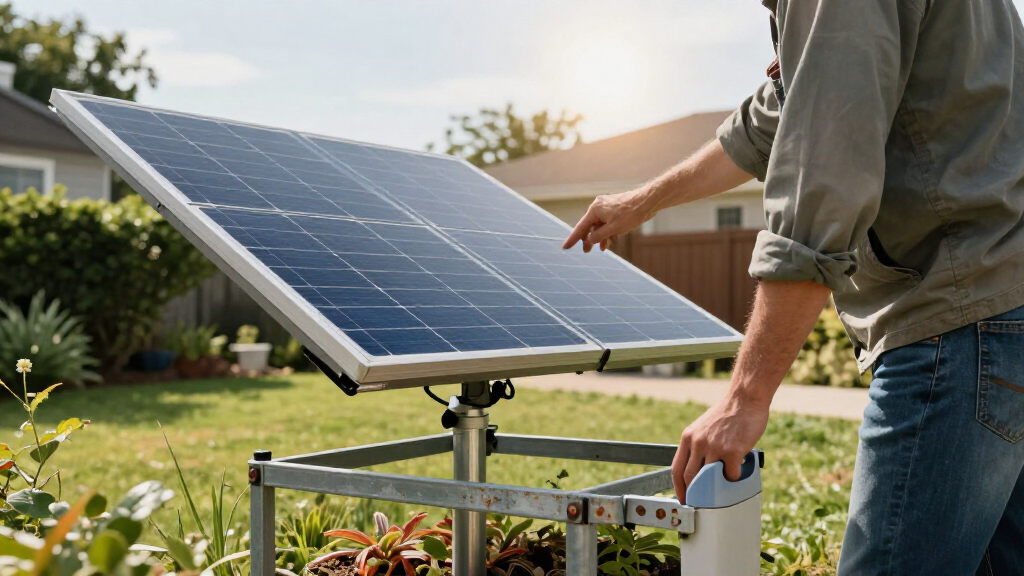

For a strong all-around balance of tracking control and system flexibility, I rank the Dual-Axis Solar Tracker Controller Kit with Sunlight and Wind Sensors as the best overall pick. The GridX-Maverick 2 kW Dual-Axis Tracker stands out for larger panel arrays, while the REDIGOO 160W Portable Panel suits buyers who want a complete portable setup rather than a controller for a custom build. The main tradeoff is between simpler, lower-cost single-axis control and the extra movement, setup, and compatibility demands of dual-axis systems. A tracker can help panels follow the sun, but it cannot make up for poor placement, shading, or an unsuitable mount. Read on for the full comparison and advice on matching a tracker to your panels, motor, and installation.

Get backup power and energy gear delivered free with Prime
- Fast, free delivery on millions of items
- Prime Video, Amazon Music and more included
- Member-only deals all year
Key Takeaways
- Two-axis movement is not automatically the best fit: the roundup’s dual-axis controllers offer more directional adjustment, but single-axis models can be a simpler match for a build that only needs east-to-west tracking.
- Motor compatibility separates controller picks: the 200W DC motor controller and the 200W AC motor controller are not interchangeable choices; confirm the motor type and electrical requirements before choosing.
- Sensor and control features matter most when they solve a real need: sunlight and wind sensing, an LCD, and a remote can add useful oversight or protection, but also add setup and system complexity.
- Complete portable products serve a different buyer from controller kits: REDIGOO combines a 160W panel with tracking, while the iDili 20W platform targets smaller, compact applications rather than a larger array.
- Scale changes the decision: the GridX-Maverick is specified for 2 kW and 60–72 cell panels, making it a different class of solution from small platforms and general-purpose controller kits.
| SBE Solar Tech 12V High-Power Analog Solar Tracker |  | Best for Dependable Single-Axis Control | Maximum voltage: 12V | Amperage capacity: 10A | Maximum power: 3W | VIEW ON AMAZON | See Our Full Breakdown |
| iDili Solar Tracker Controller, Single Axis |  | Best for Automatic and Manual Operation | Axis configuration: Single axis | Power supply: 12–24V or customized 220V | Tracking interval: 1 minute 20 seconds | VIEW ON AMAZON | See Our Full Breakdown |
| 12V Solar Tracking Controller for 200W DC Motors |  | Best for Flexible Axis Configurations | Input voltage: 12V | Maximum motor capacity: 200W | Maximum output current: 10A | VIEW ON AMAZON | See Our Full Breakdown |
| 12V Solar Tracking Controller, 200W, Single-Axis, AC Motor | | Best for a Fixed Single-Motor Build | Input voltage: 12V | Maximum motor capacity: 200W | Maximum output current: 10A | VIEW ON AMAZON | See Our Full Breakdown |
| Dual-Axis Solar Tracker Controller Kit with Sunlight and Wind Sensors |  | Best for Sensor-Rich Dual-Axis Control | Input voltage: DC 10–28V | Motor current: Less than 15A | Display: LCD | VIEW ON AMAZON | See Our Full Breakdown |
| Single-Axis Solar Sun Tracking Controller |  | Best for Straightforward Single-Axis Builds | Axis support: Single- or dual-axis | Power supply: 12–24 V | Tracking interval: About 1 minute 20 seconds | VIEW ON AMAZON | See Our Full Breakdown |
| BINGOX Dual-Axis Solar Tracker Controller Kit with LCD, Wind Sensor, and Remote |  | Best for Wind-Aware Dual-Axis Setups | Voltage: 24 volts | Tracking: Dual-axis | Display: LCD | VIEW ON AMAZON | See Our Full Breakdown |
| LeTkingok Dual-Axis Solar Tracking Controller |  | Best for Adjustable Real-Time Tracking | Model: TK26-0701 | Maximum voltage: 24 volts | Output voltage: 24 volts DC | VIEW ON AMAZON | See Our Full Breakdown |
| REDIGOO 160W Portable Solar Panel with Dual-Axis Solar Tracker |  | Best Portable All-in-One Tracker | Maximum power: 160 W | Output: 20 V DC, 8 A | Cell conversion efficiency: Up to 23% | VIEW ON AMAZON | See Our Full Breakdown |
| Dual-Axis Solar Tracker Controller, White |  | Best for a Basic Dual-Axis Controller Replacement | Tracking: Automatic dual-axis | Color: White | Material: Plastic | VIEW ON AMAZON | See Our Full Breakdown |
| GridX-Maverick 2 kW Dual-Axis Solar Tracker for 60–72 Cell Panels |  | Best for Expandable Panel Arrays | Maximum power: 2 kW | Tracking: Dual-axis | Panel capacity: 4 × 335-watt panels; upgradeable to 8 panels | VIEW ON AMAZON | See Our Full Breakdown |
| iDili 20W Dual-Axis Solar Tracking Platform |  | Best for Lightweight Custom Builds | Power supply: DC 12V | Maximum load: 8 kg | Standby power consumption: Less than 0.5 W | VIEW ON AMAZON | See Our Full Breakdown |
More Details on Our Top Picks
SBE Solar Tech 12V High-Power Analog Solar Tracker
The SBE Solar Tech ST1210-R2 is a straightforward pick for a 12V array that needs reliable left-right sun tracking without a feature-heavy controller. Its differential sensors keep the array aligned within 5 degrees, while the solid-state design avoids relays that can wear from repeated movement. The stated 10A capacity suits compatible motor setups, and indicator LEDs plus a replaceable fuse make basic troubleshooting more accessible. Compared with the iDili Solar Tracker Controller, this model has clearer current and tracking-accuracy specifications, but it lacks that controller’s stated automatic/manual modes and night positioning. It also needs good airflow near its power limit, and limit switches are recommended but not included. Choose it for a simple sunlight-driven setup, not indoor-light testing or a build that needs extra motion controls out of the box.
Pros:- Tracks within 5 degrees using differential sensors
- Solid-state design has no relays to wear out
- Supports up to 10A at 12V
- Replaceable fuse and sensor indicator LEDs aid troubleshooting
Cons:- Limit switches are recommended but not included
- Needs adequate airflow when operated near its power limit
- Designed for sunlight and may not respond reliably to indoor lighting
Best for: Owners of 12V, single-axis arrays who want a clearly specified controller with a replaceable fuse and basic diagnostic LEDs.
Not ideal for: Builders who need included limit switches, night positioning, or reliable operation under indoor lighting.
- Maximum voltage:12V
- Amperage capacity:10A
- Maximum power:3W
- Output:12V DC
- Tracking accuracy:Within 5 degrees
- Tracking axes:Single axis
- Motor control:Drives motor in either direction
- Fuse:User-replaceable
Our verdict“Choose the SBE for a well-specified 12V single-axis setup where simple, sunlight-based tracking matters more than night or manual modes.”
iDili Solar Tracker Controller, Single Axis
The iDili Single-Axis Controller suits a tracker owner who wants to switch between automatic sun-following and manual operation. Its four-quadrant sensor reads light direction, and the stated interval of 1 minute 20 seconds gives the platform a measured tracking rhythm rather than constant movement. The IP65 enclosure and covered sensor are useful for exposed installations where dust and rain are concerns. Compared with the SBE Solar Tech controller, iDili offers manual control and stated night positioning, while SBE provides more explicit tracking-accuracy and current-capacity figures. The tradeoff is that iDili’s compatibility depends on the platform and power supply; the 2m sensor cable may also constrain placement. Its single axis cannot offer the two-direction positioning available from dual-axis kits such as the WQV controller.
Pros:- Offers both automatic and manual operation
- Four-quadrant sensor follows the direction of sunlight
- IP65 controller enclosure and covered sensor suit outdoor installations
Cons:- Compatibility depends on the tracking platform and power supply
- Single-axis control provides fewer movement directions than dual-axis systems
- The 2m sensor cable can limit sensor placement
Best for: Owners of a compatible single-axis platform who want automatic tracking with the option to operate the system manually.
Not ideal for: Buyers seeking a stand-alone, clearly rated motor controller or two-axis movement without checking platform and supply compatibility.
- Axis configuration:Single axis
- Power supply:12–24V or customized 220V
- Tracking interval:1 minute 20 seconds
- Sensor:Four-quadrant, glass-covered light sensor
- Sensor cable length:2m
- Controller enclosure:IP65 waterproof box
- Model:22-99
Our verdict“Pick iDili if your platform is compatible and manual override matters more than dual-axis movement or detailed motor-capacity specifications.”
12V Solar Tracking Controller for 200W DC Motors
This 12V T-200W controller stands out for buyers choosing between single- and dual-axis builds: the listed options cover both, while the controller adds night homing, manual control, and anti-jitter. Night homing can return the array to a consistent starting position, and anti-jitter helps avoid needless motor corrections when sensor readings fluctuate. Its stated 200W motor capacity and 10A maximum output give it a defined place among these controllers. Compared with the single-axis 12V 200W AC Motor Controller, this listing offers an axis choice rather than a fixed one-motor left-right setup. That flexibility comes with a compatibility check: it requires a suitable 12V motor, and the selected configuration and accessories may vary. Buyers should confirm which axis option they are ordering before planning the mounting and wiring.
Pros:- Available in single- or dual-axis configurations
- Night homing and manual control add positioning flexibility
- Anti-jitter function limits unnecessary motor corrections
- Waterproof, dustproof housing is suited to outdoor installation
Cons:- Requires a compatible 12V motor
- Configuration and included accessories may vary by option
Best for: DIY solar tracker builders who want to choose a single- or dual-axis configuration and need manual control plus night homing.
Not ideal for: Buyers who do not have a compatible 12V motor or who need certainty about included accessories without confirming the selected configuration.
- Input voltage:12V
- Maximum motor capacity:200W
- Maximum output current:10A
- Tracking frequency:20 seconds per minute
- Axis options:Single axis or dual axis
- Mounting hole spacing:58mm left to right; 32mm upper to lower
- Aperture:4mm
- Model:T-200W
Our verdict“Choose the T-200W when you want axis flexibility and practical control functions, provided you verify the configuration and motor match first.”
12V Solar Tracking Controller, 200W, Single-Axis, AC Motor
The 12V 200W Single-Axis Controller is the more defined choice when your platform uses one motor for left-right rotation and you have no need for a second axis. It includes night homing, manual mode, and anti-jitter, giving it more operating options than the SBE Solar Tech controller’s simpler sensor-driven design. Its waterproof, dustproof housing and terminal wiring are practical for a fixed outdoor installation, while the 200W motor limit sets a clear ceiling for the build. Compared with the T-200W controller listed here, this model is specifically described as a single-axis, one-motor setup, so there is less ambiguity if that matches your hardware. The tradeoff is limited movement: it cannot adjust a second axis, and the maximum motor capacity means higher-load systems need another controller.
Pros:- Includes night homing and manual operation
- Anti-jitter function helps reduce unnecessary motor movement
- Waterproof and dustproof housing suits outdoor mounting
- Specified for one motor with left-right rotation
Cons:- Single-axis control cannot reposition the panel on a second axis
- Motor capacity is limited to 200W
Best for: Owners of a 12V tracker with one compatible motor that turns a panel platform left and right.
Not ideal for: Builders planning dual-axis movement or using a motor system above the stated 200W capacity.
- Input voltage:12V
- Maximum motor capacity:200W
- Maximum output current:10A
- Tracking frequency:20 seconds per minute
- Axis configuration:Single axis
- Motor control:One motor, left-and-right rotation
- Mounting hole spacing:58mm left-to-right; 32mm upper-to-lower
- Aperture:4mm
Our verdict“This is a practical match for a fixed 12V, one-motor tracker, but not for a dual-axis or higher-capacity array.”
Dual-Axis Solar Tracker Controller Kit with Sunlight and Wind Sensors
The WQV dual-axis kit is the most sensor-rich option in this group, combining sunlight tracking with a wind-speed sensor, limit sensors, an LCD, and remote control. That package can help a platform adjust to changing conditions and return to a chosen position at night or on cloudy days, rather than only following the sun’s direction. It also accepts DC 10–28V and is designed for compatible 12V or 24V brushless motors. Compared with the iDili single-axis controller, WQV offers movement on two axes and more included controls; compared with the simpler T-200W controller, it brings wind sensing and a display. The added capability requires more setup: limit switches are needed in all four directions, remote batteries are not included, and southern-hemisphere instructions may need adjustment.
Pros:- Sunlight and wind sensors support responsive positioning
- LCD and remote control provide local status and operation
- Can level in wind and return to position on cloudy days or at night
- Input range of DC 10–28V supports compatible 12V and 24V systems
Cons:- Requires limit switches in all four directions
- Remote requires two AAA batteries, which are not included
- Instructions may need adjustment for southern-hemisphere use
Best for: Experienced solar tracker builders seeking dual-axis control with wind sensing, remote operation, and a display.
Not ideal for: First-time installers who want minimal wiring, or buyers unable to fit limit switches in all four directions.
- Input voltage:DC 10–28V
- Motor current:Less than 15A
- Display:LCD
- Motor compatibility:12V or 24V DC brushless motor
- Included sensors:Sunlight and wind speed
- Included limit sensors:2
- Installation hole diameter:4mm
- Mounting hole spacing:174mm left-right; 60mm upper-lower
Our verdict“Choose the WQV kit for a feature-rich dual-axis build if you are prepared to wire all limit switches and configure its sensors.”
Single-Axis Solar Sun Tracking Controller
For a DIY tracker that already has a compatible motor platform, this controller offers a relatively simple way to aim panels toward changing sunlight. Its four-quadrant light sensor detects sun direction, while automatic and manual modes let owners choose between hands-off movement and direct adjustments. Nighttime positioning and limit controls add useful movement management that the basic feature list for the Dual-Axis Solar Tracker Controller, White does not spell out. The tradeoff is that this unit is a controller, not a complete tracking platform: buyers must supply compatible hardware, and the included sensor cable is just 2 m. Its tracking interval is about 1 minute and 20 seconds, so it is better suited to gradual sun-following than frequent repositioning. I’d choose it for a simpler build, not for turnkey portability like the REDIGOO panel.
Pros:- Four-quadrant sensor detects the direction of sunlight
- Automatic and manual operating modes provide flexible control
- Nighttime positioning and limit controls help manage tracker movement
- IP65 controller enclosure and 12–24 V support suit a range of installations
Cons:- Requires a compatible motor platform, which is not included
- The supplied 2 m sensor cable can limit sensor placement
- Its approximately 1-minute-20-second tracking interval is not continuous
Best for: DIY solar owners with a compatible single- or dual-axis motor platform who want automatic sun sensing plus manual control.
Not ideal for: Buyers seeking a ready-to-use panel and tracker, or builders whose sensor must be mounted more than 2 m from the controller without extending the cable.
- Axis support:Single- or dual-axis
- Power supply:12–24 V
- Tracking interval:About 1 minute 20 seconds
- Controller enclosure:IP65 waterproof
- Sensor design:Four-quadrant light sensor
- Sensor cable length:2 m
- Dimensions:4.5 x 3.5 x 2 inches
- Weight:1 pound
Our verdict“Choose this controller for a compatible DIY tracker when you want straightforward light sensing and manual override without buying a portable panel system.”
BINGOX Dual-Axis Solar Tracker Controller Kit with LCD, Wind Sensor, and Remote
The BINGOX kit makes sense for builders who want two-axis tracking with more operating feedback and wind response than a bare controller provides. It follows the sun east to west and north to south, while the wind sensor can adjust or lock panel position when conditions call for protection. An LCD and wireless remote also make it easier to change settings than the button-and-remote arrangement on the LeTkingok controller, though neither replaces careful installation. The kit supports either hemisphere, a useful distinction for projects outside the Northern Hemisphere. It remains a controller package rather than a solar generator: no panel is listed, and setup requires wiring and a compatible tracker. Compared with the portable REDIGOO, it offers more installation flexibility but asks the buyer to build and configure the moving system.
Pros:- Tracks sunlight on both east-west and north-south axes
- Wind sensor can adjust or lock the panel position
- LCD menu and wireless remote provide multiple control options
- Supports Northern and Southern Hemisphere orientation
Cons:- Requires setup, wiring, and a compatible tracking platform
- A solar panel is not listed among the included components
- The 2.2-pound controller kit is less convenient than an integrated portable panel
Best for: Off-grid, RV, or farm system builders who are comfortable wiring a dual-axis platform and want wind response, remote control, and hemisphere support.
Not ideal for: Campers or first-time buyers who want a complete portable panel, or anyone unwilling to handle tracker wiring and setup.
- Voltage:24 volts
- Tracking:Dual-axis
- Display:LCD
- Wind protection:Wind sensor can adjust or lock panel position
- Hemisphere compatibility:Northern or Southern
- Dimensions:9 x 8.2 x 5.3 inches
- Weight:2.2 pounds
- Included components:Controller, wireless remote control, instruction manual
Our verdict“Pick the BINGOX kit for a wired dual-axis installation where wind response and remote adjustments matter more than plug-and-play portability.”
LeTkingok Dual-Axis Solar Tracking Controller
LeTkingok suits a builder who wants fine control over a dual-axis platform rather than a preassembled portable panel. Its real-time sun tracking, adjustable parameters, and LCD give more scope to tune movement than the Single-Axis Solar Sun Tracking Controller, whose listed movement interval is about 1 minute and 20 seconds. Button and infrared remote controls offer two ways to operate the system, while platform leveling for windy conditions and cloudy nights adds a practical positioning option. Those benefits depend on having the right hardware: the controller requires two brushed DC motors and limit functionality, neither of which is included. Southern Hemisphere use also calls for reversing east-west and north-south directions. Compared with BINGOX, this is more focused on adjustable tracking and leveling, while BINGOX explicitly adds a wind sensor.
Pros:- Real-time tracking operates on two axes
- Adjustable parameters and LCD allow configuration from the controller
- Button and infrared remote control provide two operating methods
- Can level the platform in windy conditions and on cloudy nights
Cons:- Requires two brushed DC motors and limit functionality
- The controller is supplied without a complete tracking platform
- Southern Hemisphere installations need east-west and north-south direction adjustments
Best for: Solar DIY builders with a two-motor platform and limit controls who want adjustable dual-axis tracking and remote operation.
Not ideal for: Buyers without an existing compatible platform, or Southern Hemisphere users seeking a setup that needs no direction changes.
- Model:TK26-0701
- Maximum voltage:24 volts
- Output voltage:24 volts DC
- Tracking:Real-time dual-axis
- Controls:Buttons and infrared wireless remote
- Platform requirements:Two brushed DC motors and limit functionality
- Hemisphere compatibility:Northern and Southern, with direction changes for Southern Hemisphere use
- Maximum temperature:80 °C
Our verdict“Choose LeTkingok if you already have a compatible dual-motor platform and value adjustable tracking more than an included wind sensor.”
REDIGOO 160W Portable Solar Panel with Dual-Axis Solar Tracker
Unlike the controller-only picks in this group, the REDIGOO combines a 160 W monocrystalline panel with an automatic dual-axis tracker, so buyers do not need to source a separate moving platform. Its foldable 16-pound format, tool-free setup, cable, adapters, and two carrying bags suit portable power users who move camp or reposition equipment during the day. The tracker follows the sun on both axes, while cells rated up to 23% conversion efficiency describe the panel design rather than a guaranteed real-world output. The major compromise is weather tolerance: the tracker and ports must stay dry, and the product is specified for clear, dry conditions. Compared with BINGOX or LeTkingok, it is much easier to deploy but offers less flexibility for custom installations and should not be treated as an all-weather fixed tracker.
Pros:- Integrated automatic dual-axis tracking follows the sun through the day
- Foldable design supports portable use and tool-free setup
- Includes a 4-in-1 cable, DC 10-in-1 adapter set, and two carrying bags
- Monocrystalline cells have a stated conversion efficiency of up to 23%
Cons:- Tracker and ports must be kept dry; use is limited to clear, dry weather
- At 16 pounds, it is heavier than a simple foldable panel
- Actual output varies with sunlight, shading, and temperature
Best for: Campers and portable-power users who want a foldable panel with integrated automatic tracking and included connection accessories.
Not ideal for: Buyers needing a rain-ready outdoor installation, a lightweight carry panel, or a custom tracker controller for an existing array.
- Maximum power:160 W
- Output:20 V DC, 8 A
- Cell conversion efficiency:Up to 23%
- Tracking:Automatic dual-axis
- Dimensions:31 × 5.2 × 24 inches
- Folded dimensions:80 × 60 cm
- Weight:16 lb
- Materials:ETFE coating and monocrystalline solar cells
- Warranty:12-month limited warranty
Our verdict“Choose REDIGOO for portable, dry-weather use when an integrated panel and tracker matter more than all-weather operation or custom system integration.”
Dual-Axis Solar Tracker Controller, White
This white plastic controller is the bare-bones choice for a buyer who needs an automatic dual-axis control unit and already knows what the rest of the tracker requires. Its role is narrower than the BINGOX kit: the listed package contains one controller only, with no remote, wind sensor, panel, or stated motor platform. The product data also leaves important operating details unclear, including whether the display is LCD or LED and what the 15 °C operating-temperature figure means for use outside that point. Compared with the Single-Axis Solar Sun Tracking Controller, it is specified for dual-axis tracking but provides less detail about sensing, nighttime positioning, and enclosure protection. I’d treat it as a replacement or project component only after confirming compatibility, rather than a dependable first tracker purchase.
Pros:- Designed for automatic dual-axis solar tracking
- Simple controller-only package may suit an existing build
- Plastic construction keeps the unit’s stated weight to 837 g
Cons:- Package includes only one controller, with no listed sensors, remote, or platform
- Display is described as LCD or LED without identifying which type
- Operating-temperature specification is limited to a listed 15 °C figure
Best for: Experienced DIY owners replacing or sourcing a basic dual-axis controller who can verify compatibility with their existing hardware.
Not ideal for: First-time tracker buyers or outdoor installers who need clear environmental ratings, included sensors, remote controls, or a complete platform.
- Tracking:Automatic dual-axis
- Color:White
- Material:Plastic
- Display type:LCD or LED, not specified
- Operating temperature:15 °C
- Weight:837 g
- Package contents:1 solar tracker controller
Our verdict“Consider this controller only if you can confirm it matches an existing dual-axis build and do not need the added sensors or controls included with BINGOX.”
GridX-Maverick 2 kW Dual-Axis Solar Tracker for 60–72 Cell Panels
The GridX-Maverick is the lineup’s large-array choice: its mount starts with capacity for four 335-watt panels and can be expanded to eight, giving buyers a way to add tracking capacity without replacing the whole structure. Its dual-axis movement follows the sun across two directions, unlike the single-axis iDili Solar Tracker Controller, though the claimed gain over fixed panels is not a guaranteed output for every site. Steel-and-aluminum construction and a stated 90 mph wind-load limit suit a substantial outdoor installation, while the 10-year all-parts warranty adds long-term coverage. The tradeoff is that this is a 150-pound mounting system, not a simple plug-in tracker: it needs set posts, and its automated system is optional. Buyers should confirm what automation components are included before planning a working setup.
Pros:- Expandable layout supports four 335-watt panels initially and up to eight panels.
- Dual-axis tracking follows both horizontal and vertical sun movement.
- Steel-and-aluminum structure has a stated wind-load capacity of 90 mph.
- Includes a 10-year all-parts warranty.
Cons:- Automated tracking equipment is optional, so the included mounting system may not provide a complete automated setup.
- Requires installation on set posts and weighs 150 pounds.
- Compatible only with 60–72 cell panels, limiting panel choice.
Best for: Property owners planning a ground-mounted array of 60–72 cell panels who want dual-axis tracking and room to expand from four panels to eight.
Not ideal for: Buyers seeking a ready-to-run tracker, a roof-mounted solution, or a compact setup that does not require set posts and substantial installation work.
- Maximum power:2 kW
- Tracking:Dual-axis
- Panel capacity:4 × 335-watt panels; upgradeable to 8 panels
- Compatible panels:60–72 cell panels
- Maximum wind load:90 mph
- Weight:150 pounds
- Materials:Steel and aluminum
- Warranty:10-year all-parts warranty
Our verdict“Choose the GridX-Maverick if you are building a post-mounted, expandable panel array and can source or configure the optional automation separately.”
iDili 20W Dual-Axis Solar Tracking Platform
For a smaller custom installation, the iDili 20W platform offers dual-axis motion in a compact base rather than the large, post-mounted format of the GridX-Maverick. It accepts up to 8 kg and turns through 350 degrees horizontally, with a vertical range of ±35 degrees; those limits make it better suited to a lightweight panel or purpose-built assembly than a full-size array. Built-in limit switching and an adjustable horizontal stop give a builder some control over travel, while standby use is listed at less than 0.5 W. The main catch is how much of the finished setup is left to the buyer: neither the solar panel nor its mounting bracket is included. Its vertical movement is also much slower than its horizontal rotation, so it favors modest loads and patient tracking over fast repositioning.
Pros:- Tracks on both horizontal and vertical axes.
- Supports loads up to 8 kg for lightweight custom builds.
- Built-in limit switch includes an adjustable horizontal limit.
- Standby power consumption is listed at less than 0.5 W.
Cons:- Solar panel and mounting bracket are not included.
- Vertical rotation speed is only 1°/s, much slower than horizontal rotation.
- The 8 kg maximum load rules out many larger panel assemblies.
Best for: DIY builders fitting a lightweight panel or custom solar assembly under 8 kg who can supply their own bracket and panel.
Not ideal for: Buyers mounting several full-size panels or wanting a complete tracker kit; the 8 kg load cap and excluded panel and bracket make it a poor fit.
- Power supply:DC 12V
- Maximum load:8 kg
- Standby power consumption:Less than 0.5 W
- Horizontal rotation:350° at 9°/s
- Vertical movement:±35° at 1°/s
- Overall height:255 mm
- Base diameter:200 mm
- Included:Solar tracking system; solar panel and mounting bracket not included
Our verdict“Pick the iDili platform for a lightweight DIY tracker when you already have a compatible panel and bracket and do not need rapid vertical movement.”

How We Picked
I ranked these options by how clearly their stated design fits a real tracking job: panel and system scale, single- versus dual-axis movement, motor type and stated power, control features, and whether the product is a controller, a platform, or a complete portable panel. I gave more weight to listings with a defined use case, such as the GridX-Maverick’s stated 2 kW capacity or the REDIGOO’s integrated panel, than to products whose names provide fewer compatibility details.
The order also reflects practical tradeoffs. Sensor and remote features can help buyers manage tracking, but they do not outweigh unclear fit or unnecessary complexity. I placed flexible, more clearly differentiated options ahead of narrowly specified or less descriptive alternatives, while keeping compact and single-axis models available for buyers whose systems do not need a large dual-axis rig. The product names alone do not establish compatibility with every panel, motor, or mounting structure, so buyers should verify those details with the seller before purchase.
Factors to Consider When Choosing 12 Best Solar Panel Trackers For More Sunlight
Choose a tracker as part of a whole mounting and control system, not as a standalone promise of more output. The right option depends on panel size, motor type, available mounting space, local wind exposure, and how much setup you are willing to manage. These checks can prevent a mismatch that extra sensors or a second axis cannot fix.
Match the tracker to your motor before comparing features
Start by identifying whether your actuator or drive motor is AC or DC, then compare that with the controller’s stated motor support. A controller marked for a 200W DC motor should not be treated as equivalent to one marked for a 200W AC motor. Check voltage, current limits, wiring, and the motor’s startup requirements in the product documentation, since a broad wattage label may not answer those questions. A common mistake is choosing by panel wattage alone; the controller is operating the movement hardware, not simply connecting to the panel. If the motor specification is missing or unclear, confirm it before ordering rather than assuming an adapter will solve the mismatch.
Choose one axis or two based on the movement you need
A single-axis tracker moves in one direction, often following the sun’s daily path, while a dual-axis unit also adjusts for changing solar height. That added movement can be useful where seasonal sun angles matter, but it brings more mechanical parts, alignment work, and potential maintenance. For a fixed installation with a simple tracking goal, a single-axis controller may be the more manageable choice. Buyers sometimes select dual-axis simply because it sounds more advanced, without checking whether their mount and location can make use of the extra adjustment. Match the axis count to the movement your installation can support, not to a feature checklist.
Size the structure for the panels and the site
Panel dimensions and total array weight affect the tracker, mounting frame, and motor load. The GridX-Maverick’s stated 2 kW capacity and 60–72 cell panel range make it more relevant to larger arrays than small platforms, but those specifications still need to match the actual panel layout and structure. Leave room for the array to move through its full tracking range without striking a roof edge, wall, tree, or nearby panel. Wind exposure also changes the demands on the mount, so a sunny but exposed site may call for a sturdier structure and a careful review of wind handling. Do not treat controller capacity as proof that the complete installation is structurally suitable.
Decide whether sensors and remote controls earn their complexity
Sunlight sensors can guide tracking based on light direction, while wind sensors and remote controls address different tasks: response to conditions and user operation. Features such as an LCD can make status easier to read, but they do not remove the need to configure the system correctly. For a small or sheltered setup, a simpler controller may be easier to install and maintain than a feature-heavy kit. In an exposed location, wind-related functionality may matter more than a convenient display, though buyers should verify exactly what the sensor triggers and how the system behaves during faults. Compare the practical job each feature performs rather than counting features as a measure of quality.
Account for installation, access, and maintenance
A tracker needs a stable mount, clear movement space, reliable wiring, and occasional checks of its moving parts. Before choosing, decide whether you can safely reach the structure to inspect fasteners, cables, sensors, and the drive mechanism. A portable panel with an integrated tracker, such as the REDIGOO, avoids some custom-build decisions but may not suit a buyer who needs to control a larger fixed array. A controller kit offers more freedom to build around existing hardware, at the cost of added compatibility work. The least complicated setup that meets your tracking needs can be the better long-term choice if access or repair options are limited.
Compare complete products with controller-only kits fairly
These listings do not all provide the same kind of purchase: some are controllers, one is a portable panel with a tracker, and others describe a tracking platform or a larger tracker assembly. A controller-only product may require a separate motor, mount, sensors, and wiring, so its apparent simplicity can hide a longer parts list. An integrated product can reduce assembly decisions but limits how much of the system you can tailor. The iDili 20W platform is aimed at compact applications, while the GridX-Maverick is specified for a much larger panel class; comparing them as direct substitutes would be misleading. Before deciding, list what you already own and what the chosen product actually includes.
Frequently Asked Questions
Can I use a 200W DC solar tracker controller with an AC motor?
Do not assume that you can. A controller labeled for a 200W DC motor is intended for a different motor type from a controller explicitly marked for an AC motor, even when the wattage appears similar. Check the motor’s voltage, current, control method, and the controller’s supported wiring before connecting anything. If those details are not clearly stated, ask the manufacturer or seller for confirmation. Choosing the wrong controller can leave the drive incompatible and may damage system components.
Is a dual-axis tracker worth choosing over a single-axis model?
It depends on whether your installation benefits from movement in two directions and can support the added hardware. Dual-axis tracking offers adjustment for both the sun’s daily path and changing elevation, but it generally adds mechanical complexity and setup demands. A single-axis unit may be a better fit when the main goal is daily east-to-west movement or when ease of maintenance matters more than extra adjustment. Check your mounting space, local conditions, and system design before paying for a second axis. More movement does not automatically mean a better fit for every site.
Does a solar tracker include everything needed to mount and run my panels?
Not necessarily. Several options in this roundup are described as controllers, which may require a separate motor, structure, wiring, or sensors, while the REDIGOO listing combines a portable panel and tracker. Product titles alone do not confirm which parts, cables, or mounting hardware are included. Make a parts checklist against your existing setup and check the seller’s included-items list before buying. This avoids treating a controller as a complete tracker assembly or ordering a complete portable product when you need a controller for existing panels.
How do I know whether a tracker is large enough for my panel array?
Compare the tracker’s stated panel capacity and supported panel format with the total size and weight of your array, then check the motor and structure specifications as well. The GridX-Maverick is identified for 2 kW and 60–72 cell panels, while compact platforms such as the iDili 20W serve a very different scale. Do not rely on wattage alone: dimensions, mounting points, wind exposure, and movement clearance also affect fit. If the listing does not state a load limit or compatible panel range, get written confirmation before installation. A controller’s rating does not by itself certify that the frame or mount can safely carry the panels.
Should I choose a sensor-equipped tracker if my installation is exposed to strong wind?
A wind sensor can be a useful feature, but its presence is not enough to judge how a tracker will respond to strong wind. Check what action the sensor triggers, whether thresholds can be set, what happens if power or the sensor fails, and whether the manufacturer specifies operating limits. The mount and frame still need to suit local exposure; a sensor cannot compensate for an undersized structure. If the product details do not explain its wind response, ask for the control behavior before relying on it. Buyers in exposed locations should give structural suitability and safe access as much attention as tracking features.
Conclusion
For the strongest all-around balance of tracking control and added sensing, I’d start with the Dual-Axis Solar Tracker Controller Kit with Sunlight and Wind Sensors, provided its motor and mounting requirements match your build. For a value-oriented, straightforward setup, compare the single-axis options and choose the controller that explicitly fits your motor rather than paying for movement you will not use. The best premium-scale pick is the GridX-Maverick for buyers whose panels fit its stated 2 kW and 60–72 cell range. Beginners who want a more self-contained route may prefer the REDIGOO portable panel, while compact-project buyers can look at the iDili 20W platform. If you already own panels and a motor, choose a controller by compatibility first; that check matters more than a longer feature list.