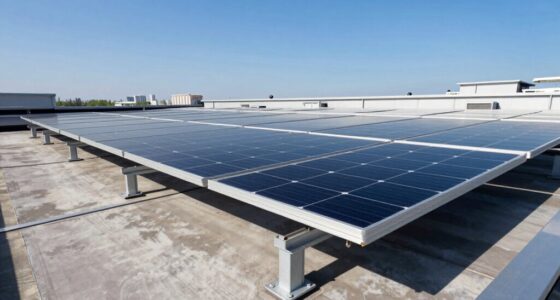

Choosing among the best plug-in solar panels comes down to more than the largest wattage figure: I would weigh clear specifications, usable monitoring, outlet compatibility and the practical demands of placing several full-size panels. The PLUGGEDSOLAR 800W kit with APsystems is my best overall pick because its four-panel package has a clearly stated configuration and built-in Wi-Fi monitoring. For more capacity, the PLUGGEDSOLAR 1200W kit adds two panels and a second microinverter, while the PluggedSolar 1.8 kW grid-tie kit offers larger panels but has a discrepancy between its panel capacity and stated maximum power.

Get backup power and energy gear delivered free with Prime
- Fast, free delivery on millions of items
- Prime Video, Amazon Music and more included
- Member-only deals all year
These are grid-tied systems, not battery kits: they are intended to feed solar power into a compatible household circuit, and they should not be treated as backup power during an outage. I would also verify local rules, electrical suitability and mounting requirements before buying. Output depends on sun, orientation and shading, so estimates are not a promise of household savings. My ranking favors specification clarity and practical fit over a high headline number alone.
Key Takeaways
- The PLUGGEDSOLAR 800W APsystems kit is my best overall choice because its four 200-watt panels, 50-foot cord and monitoring are clearly described.
- The 1200W kit makes sense for buyers who have room for six panels and want more rated capacity, but its full-size layout needs a suitable sunny site.
- I would pause before ordering the 1600W kit: its listing gives conflicting panel counts, making the delivered configuration unclear.
- The 1.8 kW kit has the largest stated panel capacity, but its 1800-watt panel total and 1500-watt maximum power figure need clarification, and racks are separate.
- The older-style 800W PluggedSolar kit offers a straightforward four-panel alternative, though its separately shipped panels and inverter call for delivery coordination.
| PLUGGEDSOLAR 800W Plug-In Balcony Solar Kit with Four Panels, APsystems Microinverter, Wi-Fi Monitoring, and UL 3700 Certification |  | Best Overall | Panel configuration: 4 × 200-watt monocrystalline panels | Panel dimensions: 4.5 ft × 2.2 ft each | Inverter: APsystems grid-tie microinverter with Wi-Fi monitoring | VIEW LATEST PRICE | See Our Full Breakdown |
| PLUGGEDSOLAR 1200W Plug-In Balcony Solar Kit with 6 Panels |  | Best Higher-Capacity Pick | Total panel power: 1,200 watts | Panel configuration: 6 × 200-watt monocrystalline panels | Panel dimensions: 4.5 ft × 2.2 ft each | VIEW LATEST PRICE | See Our Full Breakdown |
| PLUGGEDSOLAR 1600W Plug-In Balcony Solar Kit with APsystems Microinverter and Wi-Fi Monitoring | | Best for Buyers Willing to Verify the Configuration | Stated system power: 1,600 watts | Panel count: Conflicting listing: 8 in title and overview; 6 in detailed description | Panel wattage: 200 watts each | VIEW LATEST PRICE | See Our Full Breakdown |
| PluggedSolar 1.8 kW Solar Grid-Tie Kit with Five 360 W Panels |  | Best for Larger Panels and Buyers Who Can Source Mounting Racks | Panel configuration: 5 × 360-watt panels | Total panel capacity: 1,800 watts | Maximum power listed: 1,500 watts | VIEW LATEST PRICE | See Our Full Breakdown |
| PluggedSolar 800W Plug-and-Play Solar Panel System with Micro-Inverter |  | Best Simple Four-Panel Alternative | Total panel power: 800 watts | Panel configuration: 4 × 200-watt monocrystalline panels | Panel dimensions: 4.5 ft × 2.2 ft each | VIEW LATEST PRICE | See Our Full Breakdown |
| plug-in solar panel | Panel configuration | Panel dimensions | Inverter | Certifications stated |
|---|---|---|---|---|
| PLUGGEDSOLAR 800W Plug-In Balc | 4 × 200-watt monocrystalline panels | 4.5 ft × 2.2 ft each | APsystems grid-tie microinverter with Wi-Fi monitoring | UL 3700; inverter complies with UL 1741 |
| PLUGGEDSOLAR 1200W Plug-In Bal | 6 × 200-watt monocrystalline panels | 4.5 ft × 2.2 ft each | — | UL 3700; inverters comply with UL 1741 |
| PLUGGEDSOLAR 1600W Plug-In Bal | — | — | APsystems microinverter(s); count and exact model not clearly established | UL 3700; UL 1741 anti-islanding protection stated for inverter |
| PluggedSolar 1.8 kW Solar Grid | 5 × 360-watt panels | — | — | — |
| PluggedSolar 800W Plug-and-Pla | 4 × 200-watt monocrystalline panels | 4.5 ft × 2.2 ft each | Grid-tie micro-inverter; exact model not stated in supplied details | — |
More Details on Our Top Picks
PLUGGEDSOLAR 800W Plug-In Balcony Solar Kit with Four Panels, APsystems Microinverter, Wi-Fi Monitoring, and UL 3700 Certification
This is my lead recommendation because it offers a clear, balanced four-panel package without the specification uncertainty found in some of the higher-capacity options. Four 200-watt monocrystalline panels provide 800 watts of stated panel power, and the included APsystems grid-tie microinverter and Wi-Fi monitoring give buyers a way to see system output. The 50-foot cord also leaves more placement flexibility than a short lead would, though it does not remove the need to place the panels where they receive useful sun.
Compared with the 1200W PLUGGEDSOLAR kit, this model needs less panel area and has a simpler stated configuration, but it also has less rated capacity. Its 4.5-by-2.2-foot panels are substantial pieces of equipment, so four still call for a suitable balcony, yard or other approved mounting arrangement. The listing says as many as three systems can be stacked on one dedicated plug; I would verify circuit capacity and local requirements before relying on that claim or adding another system.
The main practical drawback is logistics: panels and other parts may arrive in three separate shipments, so I would not schedule an installation around one delivery date. Its annual generation figure is an estimate, not a guarantee. The no-battery design also means this kit is for grid-connected energy contribution, not keeping appliances powered during a blackout. For buyers who want a moderate system with an identifiable inverter and monitoring, it is a more confidence-inspiring choice than the 1600W listing, where even the panel count is unclear.
Pros:- Four clearly specified 200-watt monocrystalline panels
- APsystems microinverter with built-in Wi-Fi monitoring
- Includes a 50-foot cord for a 110/120V outlet
- No battery is needed for its intended grid-tied use
Cons:- Panels and components may arrive in separate shipments
- Production estimates vary with sunlight and site conditions
- Four large panels still require meaningful mounting space
Best for: Buyers who want a clearly specified, mid-sized grid-tied kit with Wi-Fi monitoring and a long cord.
Not ideal for: Shoppers needing outage backup, limited to a very small mounting area, or unwilling to confirm local outlet and circuit requirements.
- Panel configuration:4 × 200-watt monocrystalline panels
- Panel dimensions:4.5 ft × 2.2 ft each
- Inverter:APsystems grid-tie microinverter with Wi-Fi monitoring
- Cord:50 ft; intended for a 110/120V outlet
- Certifications stated:UL 3700; inverter complies with UL 1741
- Estimated annual generation:1,500 kWh; site-dependent estimate
- Battery:Not included
Our verdict“I recommend this as the most balanced choice for buyers who value a clear configuration and monitoring more than maximum rated capacity.”
PLUGGEDSOLAR 1200W Plug-In Balcony Solar Kit with 6 Panels
For buyers with the space and sun to make use of more panels, this 1200W kit is the straightforward step up from the 800W models. It includes six 200-watt monocrystalline panels, two microinverters, Wi-Fi monitoring and a 50-foot cord for a 110/120V outlet. The two-inverter arrangement distinguishes it from the 800W APsystems package, while the six-panel count is more explicit than the conflicting configuration on the 1600W model.
The extra panel capacity is useful only if the installation site can accommodate six panels in an effective orientation. Each panel measures 4.5 by 2.2 feet, so the array demands substantial space and may be unsuitable for a narrow balcony or a shaded location. Its stated annual generation and bill-savings figures should be read as estimates rather than expected results for every home; local sun exposure, household consumption, utility rules and system configuration all affect the outcome.
This is not my best choice for every buyer. The 800W model is a more manageable fit where available space is limited, and its named APsystems microinverter makes the component description more specific. Here, the listing identifies two microinverters but does not name their make in the supplied specifications. Like the other kits, it has no battery storage, so it will not provide backup power in a grid outage. Separate shipments may also make delivery planning less convenient. Choose this one for a larger, clearly counted array—not just because the wattage label is higher.
Pros:- Six 200-watt monocrystalline panels are listed
- Includes two microinverters and Wi-Fi monitoring
- 50-foot cord is supplied for a 110/120V outlet
- Battery-free grid-tie setup avoids adding storage equipment
Cons:- Six panels require considerable clear mounting area
- Parts may arrive in three separate shipments
- Generation and savings estimates depend on site and household factors
Best for: Households with a sunny, roomy installation site that want six panels and more stated capacity than an 800W kit.
Not ideal for: Buyers with tight balcony space, shaded conditions, backup-power needs, or expectations of guaranteed bill reductions.
- Total panel power:1,200 watts
- Panel configuration:6 × 200-watt monocrystalline panels
- Panel dimensions:4.5 ft × 2.2 ft each
- Inverters:2 microinverters
- Monitoring:Built-in Wi-Fi power monitor
- Cord and connection:50 ft; 120V AC output
- Certifications stated:UL 3700; inverters comply with UL 1741
- Estimated annual generation:2,200 kWh; listing estimate
Our verdict“I would choose this over an 800W kit only when the site can usefully fit six panels and the buyer wants the additional rated capacity.”
PLUGGEDSOLAR 1600W Plug-In Balcony Solar Kit with APsystems Microinverter and Wi-Fi Monitoring
The headline makes this kit appear to be the capacity leader among the balcony-style PLUGGEDSOLAR options, and the listing describes APsystems microinverter equipment, Wi-Fi monitoring and a 50-foot cord. Those features resemble the 800W APsystems pick, while the stated 1600W rating suggests a substantially larger system. But I would not order this one until the seller confirms what is actually included: the title and overview say eight panels, while the detailed description says six.
That mismatch is more than a minor wording issue. At 200 watts per panel, six panels and eight panels imply different panel totals, space needs and system configurations. A 1600W figure paired with a six-panel detailed description is not self-explanatory. The listing also gives limited detail on inverter count in the supplied information. By comparison, the 1200W kit clearly specifies six panels and two microinverters, making it easier to estimate the footprint and understand the package.
There are still useful elements here: Wi-Fi monitoring, a long cord, stated UL 3700 and UL 1741 references, and a battery-free grid-tie design. Yet the configuration ambiguity outweighs the larger headline until resolved. The kit is also listed at 150 pounds and ships in separate packages, which adds handling and delivery coordination. I would treat it as a conditional option rather than a default recommendation: ask for written confirmation of panel count, total panel wattage, inverter model and contents before comparing it with the better-documented 1200W or 1.8 kW systems.
Pros:- Listing describes APsystems microinverter equipment
- Wi-Fi power monitoring is included
- 50-foot plug-in cord is specified
- Designed for grid-tied use without batteries
Cons:- Panel count conflicts: six in details versus eight in title and overview
- Supplied specifications do not clearly state inverter count
- Separate shipments and listed 150-pound weight complicate planning
Best for: A buyer attracted to the 1600W rating who can obtain written confirmation of panel count and included inverter configuration before ordering.
Not ideal for: Anyone who needs a predictable delivered configuration, wants to plan mounting space now, or prefers a kit whose specifications agree across the listing.
- Stated system power:1,600 watts
- Panel count:Conflicting listing: 8 in title and overview; 6 in detailed description
- Panel wattage:200 watts each
- Inverter:APsystems microinverter(s); count and exact model not clearly established
- Cord and output:50 ft; 120V AC
- Monitoring:Built-in Wi-Fi monitoring
- Weight:150 pounds stated
- Certifications stated:UL 3700; UL 1741 anti-islanding protection stated for inverter
Our verdict“I would consider this only after written clarification resolves the panel-count conflict and confirms the complete system configuration.”
PluggedSolar 1.8 kW Solar Grid-Tie Kit with Five 360 W Panels
This kit takes a different approach from the four- and six-panel balcony kits: it uses five 360-watt panels, three microinverters, a 50-foot plug-in cord, a power monitor and panel mounting hardware. Its stated 1800W panel capacity gives it the largest panel total in this lineup. The product information also states 97% inverter efficiency and a 25-year panel warranty, details that may appeal to a buyer planning a longer-term installation.
There is an important specification conflict to settle before purchase. The listing pairs 1800W of panel capacity with a 1500W maximum power figure. Those numbers describe different limits, but the supplied details do not explain how the system is expected to operate at those ratings. I would ask the seller to clarify the AC output limit, inverter arrangement and the meaning of the maximum-power figure rather than assume the kit will deliver 1800 watts to the outlet. This uncertainty makes the 1200W kit easier to compare on its stated system configuration.
Mounting is another meaningful tradeoff: racks are sold separately, so included panel mounting hardware should not be mistaken for a complete rack solution. The listed 240V maximum voltage also sits alongside a 120V AC output description; buyers should confirm the relevant electrical specifications and local rules with a qualified professional. Unlike the compact narrative suggested by “plug-in,” five larger panels still need a suitable installation area. This is my specialist pick for shoppers seeking larger panels and prepared to resolve the ratings and mounting plan—not my recommendation for someone seeking the clearest ready-to-plan package.
Pros:- Five 360-watt crystalline silicon panels
- Three microinverters and a power monitor are listed
- Includes a 50-foot cord and panel mounting hardware
- Panel warranty is stated as 25 years
Cons:- 1800W panel capacity and 1500W maximum power figures need clarification
- Mounting racks are sold separately
- Voltage details and output description should be checked before installation
Best for: Buyers seeking five higher-wattage panels who can arrange compatible mounting racks and confirm the output specifications before purchase.
Not ideal for: First-time buyers who want an unambiguous plug-in configuration, a complete rack solution, or a system with clearly reconciled power ratings.
- Panel configuration:5 × 360-watt panels
- Total panel capacity:1,800 watts
- Maximum power listed:1,500 watts
- Microinverters:3; stated efficiency 97%
- Output and voltage:120V AC output; maximum voltage listed as 240V
- Cord and monitor:50-foot cord and power monitor included
- Mounting:Panel mounting hardware included; racks sold separately
- Panel warranty:25 years stated
Our verdict“I would shortlist this for a larger-panel installation only after confirming its power limits and arranging compatible racks.”
PluggedSolar 800W Plug-and-Play Solar Panel System with Micro-Inverter
This PluggedSolar kit is a basic, clearly counted 800W four-panel option: four 200-watt monocrystalline panels, a grid-tie micro-inverter, Wi-Fi power monitoring and a 50-foot cord for a 110/120V outlet. Its central appeal is straightforwardness. Buyers get the same broad panel count and cord length as the newer PLUGGEDSOLAR 800W APsystems model, without a higher capacity claim that would call for additional roof, balcony or yard space.
The newer APsystems 800W pick is my stronger overall recommendation because its inverter is named and the listing gives certification details, including UL 3700 and UL 1741 compliance for the inverter. The supplied information for this product does not identify those certification details or give a separate inverter brand, so I would verify its exact equipment and local suitability before committing. This is not a claim that the kit is unsuitable; it is a reason the more fully specified alternative ranks ahead.
Both 800W systems avoid batteries and rely on grid-tied operation. That keeps the package focused, but it rules out using it as backup power during a utility outage. The product listing also says the panels and inverter ship separately, so delivery timing may require coordination. As with any plug-in solar setup, actual production depends on exposure, orientation and shade. This model is most appealing when a buyer wants a four-panel format and confirms the inverter details; buyers who prioritize the clearest component documentation should lean toward the APsystems version instead.
Pros:- Four 200-watt monocrystalline panels are specified
- Includes a micro-inverter, Wi-Fi monitoring and 50-foot cord
- Designed for a 110/120V outlet connection
- No battery is required for its stated grid-tied setup
Cons:- Panels and inverter ship separately
- Supplied listing information does not name the inverter model
- Production varies with sun exposure and installation conditions
Best for: Buyers looking for a four-panel, 800W grid-tie kit with a long cord and Wi-Fi monitoring who are comfortable confirming inverter details.
Not ideal for: Shoppers who want named inverter and certification details in the supplied specifications, or anyone needing battery backup.
- Total panel power:800 watts
- Panel configuration:4 × 200-watt monocrystalline panels
- Panel dimensions:4.5 ft × 2.2 ft each
- Inverter:Grid-tie micro-inverter; exact model not stated in supplied details
- Cord and connection:50 ft; for a 110/120V outlet
- Monitoring:Wi-Fi power monitor
- Battery:Not included
- Shipping:Panels and inverter ship separately
Our verdict“I would choose it as a simple 800W alternative only after confirming the inverter details; the APsystems 800W kit is the clearer documented pick.”

How We Picked
I ranked these options for the specific job implied by plug-in solar panels: a grid-tied kit designed to connect to a compatible 110/120V outlet, rather than a portable battery generator or an off-grid system. I compared rated panel capacity, inverter information, cord length, monitoring, stated certifications, and how clearly each listing describes what arrives. Each of those details changes how confidently a buyer can match the kit to a site and plan an installation.
Clarity matters as much as capacity. The 800W APsystems package ranks above the larger 1200W model for overall fit because the supplied configuration is explicit and it includes monitoring and a 50-foot cord. I rank the 1600W kit lower despite its larger label because its product information conflicts on whether it includes six or eight panels. The 1.8 kW option earns a distinct role for buyers seeking larger panels, but the 1800W panel total and 1500W maximum-power figure are not the same claim and should be reconciled before purchase.
I have not treated estimated production or bill reductions as guaranteed outcomes. The listings provide figures that depend on local sunlight, shade, orientation, equipment setup and household use; they do not establish what a particular home will generate. I also give credit for stated UL-related certifications without treating them as a substitute for checking local electrical codes or confirming that a specific outlet and circuit are appropriate. No kit here includes batteries, and mounting requirements differ. My recommendations reflect the supplied product information, with tradeoffs made visible rather than hidden behind a wattage ranking.
| plug-in solar panel | Inverter | Certifications stated | Monitoring |
|---|---|---|---|
| PLUGGEDSOLAR 800W Plug-In Balc | APsystems grid-tie microinverter with Wi-Fi monitoring | UL 3700; inverter complies with UL 1741 | — |
| PLUGGEDSOLAR 1200W Plug-In Bal | — | UL 3700; inverters comply with UL 1741 | Built-in Wi-Fi power monitor |
| PLUGGEDSOLAR 1600W Plug-In Bal | APsystems microinverter(s); count and exact model not clearly established | UL 3700; UL 1741 anti-islanding protection stated for inverter | Built-in Wi-Fi monitoring |
| PluggedSolar 1.8 kW Solar Grid | — | — | — |
| PluggedSolar 800W Plug-and-Pla | Grid-tie micro-inverter; exact model not stated in supplied details | — | Wi-Fi power monitor |
Factors to Consider When Choosing Best Plug-in Solar Panels
I would start by matching a kit to the site and electrical setup, then compare wattage. Plug-in grid-tied solar is not a universal plug-and-play appliance: the outlet, circuit, mounting location and local rules matter. The checks below help separate a plausible fit from a headline number that looks attractive but does not answer practical questions.
Treat panel wattage and delivered output as different things
Panel wattage is a rated capacity, not a promise of steady power at the outlet. Sun angle, season, shade, temperature, panel direction and inverter limits all affect actual production. In this lineup, the 800W and 1200W kits state panel totals and package configurations relatively clearly, while the 1.8 kW kit lists 1800 watts of panel capacity alongside 1500 watts of maximum power. I would ask the seller to explain that distinction before comparing it directly with a kit whose rating is presented differently.
Annual generation figures can help set expectations, but they are estimates tied to assumptions about sunlight and installation. A quoted number such as 1,500 or 2,200 kWh should not be read as a household-specific forecast. If you need a realistic projection, use your location, shade conditions and intended panel orientation, and confirm how the product’s inverter limits affect output.
Measure the whole array, not just one panel
Every panel in the 800W and 1200W PLUGGEDSOLAR kits is listed at 4.5 by 2.2 feet. Four panels already require a meaningful footprint; six need substantially more room. I would measure the actual mounting area and account for access, safe attachment, wind exposure and any balcony or property restrictions before ordering. A panel that technically fits may still be poorly positioned if a railing, neighboring building or roof feature casts shade.
The 1.8 kW kit uses five 360W panels, but its listing gives overall dimensions that do not explain the layout well enough to plan a site on their own. It also says racks are sold separately. Ask what mounting hardware is included and what additional structure is needed. “Plug-in” describes an electrical connection style, not a guarantee that the panels can be safely placed without proper mounting.
Check outlet, circuit and local requirements
These products describe 110/120V or 120V AC connections, but an outlet being physically compatible does not by itself prove that a circuit is suitable. Check the system documentation, household electrical conditions and local rules before connecting a grid-tied inverter. Requirements can vary by location, building type and utility. Where the instructions or local rules call for it, have a qualified electrician review the setup.
Do not assume that multiple systems can be added to one plug simply because a listing describes stacking. The 800W APsystems kit says up to three systems can be stacked on one dedicated plug; I would still verify the dedicated circuit’s capacity, manufacturer instructions and applicable code. The 1.8 kW kit also lists a 240V maximum voltage next to a 120V AC output description, so I would request a written explanation of the relevant limits before buying or connecting it.
Understand grid-tie behavior and battery limits
All five options are described as grid-tied and none includes a battery. That can suit a buyer who wants solar generation to complement utility service, but it does not make a system an outage backup. Grid-tied inverters generally stop feeding power when utility service is interrupted, for safety. If your priority is running lights, a refrigerator or communications during a blackout, compare battery-based systems designed for backup rather than assuming a plug-in grid-tie kit will continue operating.
Wi-Fi monitoring can help show system production, but it does not store energy or guarantee that a particular appliance is being powered directly by the panels at every moment. Think of monitoring as a visibility feature. For this group, the APsystems 800W kit has the clearest named inverter information, and several listings mention built-in Wi-Fi monitoring; I would check app compatibility, network requirements and what data the monitor actually reports.
Read package details and certification claims carefully
A kit can include panels, inverter equipment, a cord and monitoring while leaving other parts to the buyer. Confirm the panel count, inverter count and model, mounting components, cables, connectors and any required electrical accessories. This matters most for the 1600W model, whose listing conflicts on six versus eight panels, and for the 1.8 kW option, where mounting racks are not included. Get an answer in writing when package information affects how much space or installation work you need.
The listings refer to UL 3700 and UL 1741 for some products. Those claims are useful starting points, but I would verify the exact equipment, certification scope and current documentation rather than assuming that a listing statement answers every local compliance question. The 800W APsystems product and 1200W product provide more specific certification wording in the supplied details than the simpler 800W alternative. Certification information should support—not replace—checking installation instructions and local requirements.
Plan for delivery and realistic expectations
Several kits may arrive in separate shipments. The APsystems 800W model and the 1200W and 1600W listings mention components arriving separately, and the older-style 800W kit says its panels and inverter ship separately. Count on checking each package against the order before arranging installation. Large panels also need a safe place for delivery and handling; the listed weights range from 50 pounds for the 1.8 kW kit to 150 pounds for the 1600W option, though the precise way weight is measured should be verified with the seller.
Finally, ignore any temptation to choose by projected savings alone. Consumption timing, utility compensation rules, shade and weather change the value of a system. A smaller, clearly configured array may be a better fit than a bigger kit that cannot use its capacity or whose contents remain uncertain. I would choose the product whose documented package, mounting plan and electrical specifications suit the home—not the one with the most impressive figure in its title.
Frequently Asked Questions
What is a plug-in solar panel system?
A plug-in solar system is generally a grid-tied solar kit with an inverter and a cord intended to connect to a compatible household outlet. The panels generate DC electricity and the inverter converts it to AC for grid-connected use. It still needs a suitable installation location, safe mounting and compliance with local electrical rules; the phrase “plug-in” does not mean every outlet or circuit is appropriate.
Can these plug-in solar kits power my home during an outage?
No battery is included with the five kits in this roundup, and the products are described as grid-tied systems. Grid-tied equipment generally stops producing usable output when utility power is interrupted, partly for electrical safety. If you need outage backup, look for a system designed around battery storage and backup operation rather than relying on a standard grid-tie plug-in kit.
How much electricity will an 800W or 1200W kit produce?
Rated wattage alone cannot predict a home’s actual generation. Production changes with location, season, panel direction, shade, temperature, inverter limits and mounting quality. The listings give annual estimates for some kits, but I would use those as rough product claims rather than guaranteed results. A site-specific estimate and clear details about the inverter’s output limits provide a more useful basis for comparison.
Do I need an electrician or permission to install one?
Rules vary by location, property type, utility and system design, so there is no single answer for every buyer. Check local building and electrical requirements, utility interconnection rules and the manufacturer’s instructions before installation. A compatible-looking outlet is not proof that a circuit is suitable. If the documentation or local rules are unclear, ask a qualified electrician or the relevant authority before connecting the system.
Which kit should I choose if I want the most capacity?
The 1.8 kW kit lists the largest panel total at 1800 watts, but its stated maximum power is 1500 watts and its mounting racks are sold separately, so I would ask the seller to reconcile those details first. The 1200W PLUGGEDSOLAR kit is a clearer higher-capacity choice, with six 200-watt panels and two microinverters specified. I would not choose the 1600W kit until its conflicting six- versus eight-panel descriptions are resolved.
Conclusion
My recommendation depends on what your installation can genuinely support. For most buyers who want a well-described mid-sized system, I would start with the PLUGGEDSOLAR 800W APsystems kit: its four panels, named inverter, Wi-Fi monitoring and 50-foot cord make the package easier to evaluate than the unclear alternatives. If you have a larger sunny mounting area, the 1200W kit gives you six specified panels and more rated capacity, with the tradeoff of a bigger footprint.
For shoppers seeking higher-wattage panels, the 1.8 kW kit may fit, but only after the seller explains its 1800W panel total versus 1500W maximum-power specification and you account for racks sold separately. I would put the 1600W kit on hold until its panel count is confirmed in writing. The other 800W kit suits someone who wants a straightforward four-panel format and is willing to verify the inverter details; if documentation clarity is the priority, I would pick the APsystems version instead. In every case, confirm mounting, circuit suitability and local rules before ordering, and choose battery equipment separately if outage power is part of your plan.
Columbus Day / Indigenous Peoples' Day Picks
long weekend sales
As an affiliate, we earn on qualifying purchases.