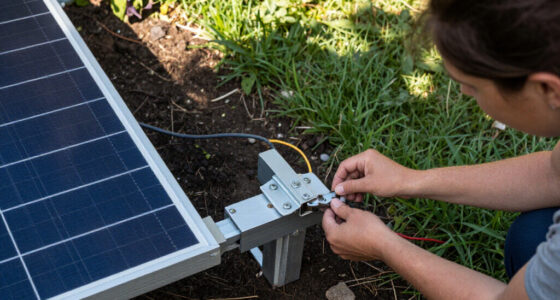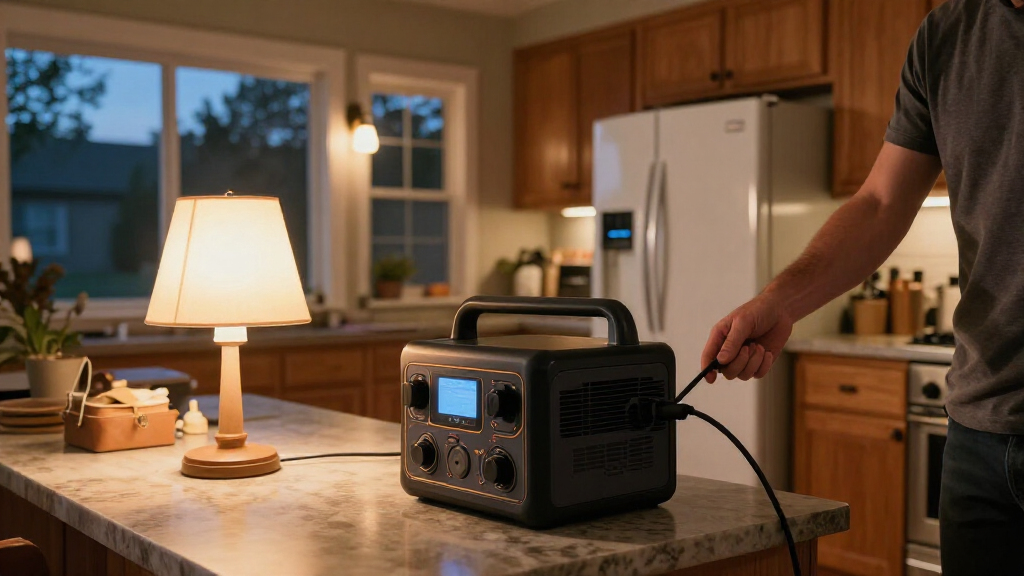

For most households seeking portable power stations for home backup, I would start with the Anker SOLIX C2000 Gen 2 for its 2,048Wh capacity and 2,400W output, then compare it with the much larger Jackery HomePower 3600 Plus for longer runtimes and the BLUETTI AC180 for a less demanding backup setup. The main tradeoff is straightforward: compact stations are easier to move and store, while larger batteries can run more appliances for longer but take up more space. Output also matters; a station may have enough stored energy yet still lack the power to start or run a particular appliance. This roundup compares capacity, output, portability, and solar-bundle options to match different outage plans. Read on for the full breakdown and buying advice.

Get backup power and energy gear delivered free with Prime
- Fast, free delivery on millions of items
- Prime Video, Amazon Music and more included
- Member-only deals all year
Complete the kit


Key Takeaways
The Anker SOLIX C2000 Gen 2 leads the middle ground: its 2,048Wh capacity and 2,400W output give it a stronger home-backup profile than the smaller 1,024Wh and 1,152Wh models without reaching the footprint of a 3,584Wh station.
The Jackery HomePower 3600 Plus is the capacity choice: its 3,584Wh battery makes it the most suitable listed option for longer runtimes, while its size and weight are likely less convenient for frequent moving.
Capacity and output solve different problems: the LIBRIDS 640Wh and 600W model may cover modest loads, but it is a weaker fit for appliances with high running or startup demands than the 1,800W and higher options.
Small stations are better for selective backup than whole-home expectations: the Jackery Explorer 300 and BLUETTI Elite 30 V2 are compact choices for small electronics, not substitutes for a large-capacity outage setup.
Solar bundles change the buying decision: the Jackery Explorer 300 bundle pairs a small station with a 40W panel, while the HomePower 3600 Plus bundle includes two 200W panels; neither panel setup should be assumed to recharge a battery quickly without checking real-world conditions and input limits.
| EBL Acc2400 Portable Power Station, 1843.2Wh LiFePO4 Battery, 2400W Output |  | Best Mid-Range Home Backup | Battery capacity: 1,843.2Wh | Battery chemistry: LiFePO4 | Output: 2,400W | VIEW LATEST PRICE | See Our Full Breakdown |
| BLUETTI AC180 Portable Power Station, 1152Wh LiFePO4 Battery, 1800W Output |  | Best for Fast Recharging | Battery capacity: 1,152Wh | Battery chemistry: LiFePO4 | Running output: 1,800W | VIEW LATEST PRICE | See Our Full Breakdown |
| LIBRIDS Portable Power Station, 640Wh, 600W Output |  | Best Compact UPS Backup | Battery capacity: 640Wh | Battery chemistry: LiFePO4 | Running output: 600W | VIEW LATEST PRICE | See Our Full Breakdown |
| Jackery HomePower 3600 Plus Portable Power Station, 3584Wh, 3600W |  | Best for Extended Outages | Battery capacity: 3,584Wh | Output: 3,600W | Output voltage: 120V; 240V with units connected in parallel | VIEW LATEST PRICE | See Our Full Breakdown |
| Jackery Explorer 300 Portable Power Station, 292Wh |  | Best Lightweight Essentials Backup | Battery capacity: 292Wh | Battery chemistry: LiFePO4 | Peak output: 600W | VIEW LATEST PRICE | See Our Full Breakdown |
| Jackery Explorer 1000 v2 Portable Power Station |  | Best Portable Balance | Battery capacity: 1,070Wh | Battery type: LFP | AC output: 1,500W | VIEW LATEST PRICE | See Our Full Breakdown |
| Anker SOLIX C1000 Gen 2 Portable Power Station |  | Best for Fast Recharging | Capacity: 1,024Wh | Battery type: LiFePO4 | Continuous output: 2,000W | VIEW LATEST PRICE | See Our Full Breakdown |
| EF ECOFLOW DELTA 3 Classic Portable Power Station, 1024Wh, 1800W |  | Best for Sensitive Electronics | Battery capacity: 1,024Wh | Battery type: LiFePO4 | Output wattage: 1,800W | VIEW LATEST PRICE | See Our Full Breakdown |
| BLUETTI Elite 30 V2 Portable Power Station, 288Wh, 600W |  | Best Compact Backup | Capacity: 288Wh | Continuous output: 600W | Power Lifting Mode: Up to 1,500W for compatible loads | VIEW LATEST PRICE | See Our Full Breakdown |
| Anker SOLIX C2000 Gen 2 Portable Power Station, 2,048 Wh, 2,400 W |  | Best for Longer Outages | Battery capacity: 2,048Wh | Battery type: LiFePO4 | Peak output: 4,000W | VIEW LATEST PRICE | See Our Full Breakdown |
| Anker SOLIX S2000 Portable Power Station, 2,010Wh, 1,500W |  | Best for Fast-Switching Home Backup | Battery capacity: 2,010Wh | Battery type: LiFePO4 | Continuous output: 1,500W | VIEW LATEST PRICE | See Our Full Breakdown |
| Jackery Explorer 300 Portable Power Station with 40W Solar Panel |  | Best Compact Backup Kit | Battery capacity: 292Wh | Battery chemistry: LiFePO4 | Peak surge output: 600W | VIEW LATEST PRICE | See Our Full Breakdown |
| Jackery HomePower 3600 Plus Portable Power Station with 2x200W Solar Panels |  | Best Premium Whole-Home Essentials Backup | Battery capacity: 3,584Wh | Battery type: LFP | AC output: 3,600W; 7,200W in parallel | VIEW LATEST PRICE | See Our Full Breakdown |
| portable power stations for home backup | Weight | Battery capacity |
|---|---|---|
| EBL Acc2400 Portable Power Sta | Approximately 54–55 pounds; listing figures differ | 1,843.2Wh |
| BLUETTI AC180 Portable Power S | 37.4 pounds | 1,152Wh |
| LIBRIDS Portable Power Station | — | 640Wh |
| Jackery HomePower 3600 Plus Po | 77.2 pounds | 3,584Wh |
| Jackery Explorer 300 Portable | 7.1 pounds | 292Wh |
| Jackery Explorer 1000 v2 Porta | 23.8 lb | 1,070Wh |
| Anker SOLIX C1000 Gen 2 Portab | 11.3kg | — |
| EF ECOFLOW DELTA 3 Classic Por | 26.7 lb | 1,024Wh |
| BLUETTI Elite 30 V2 Portable P | 9.5 lb | — |
| Anker SOLIX C2000 Gen 2 Portab | 41.7 lb (18.9kg) | 2,048Wh |
| Anker SOLIX S2000 Portable Pow | 35.7 lbs | 2,010Wh |
| Jackery Explorer 300 Portable | 12.9 lbs | 292Wh |
| Jackery HomePower 3600 Plus Po | 77.2 lbs | 3,584Wh |
More Details on Our Top Picks
EBL Acc2400 Portable Power Station, 1843.2Wh LiFePO4 Battery, 2400W Output
The EBL Acc2400 balances meaningful home-backup capacity with a smaller footprint than the Jackery HomePower 3600 Plus. Its 1,843.2Wh battery and 2,400W output can cover a broader mix of household essentials than compact stations, while the 0.1-second backup mode is intended to keep connected equipment running through a brief outage. Four AC outlets and varied USB, DC, car, and wireless charging options also make it useful when several people need power at once. The LiFePO4 battery is rated for over 3,500 cycles, and built-in protections add a layer of battery safety. The tradeoff is portability: at roughly 54–55 pounds, it is cumbersome to carry, and its capacity is well below the Jackery’s 3,584Wh. I’d choose it for essentials, not long whole-home backup.
Pros:- 1,843.2Wh capacity and 2,400W output support more than small electronics alone.
- 0.1-second emergency backup mode is suited to connected devices that should not lose power during a brief interruption.
- Multiple AC, USB, DC, car, and wireless charging options support a household’s mix of devices.
- LiFePO4 battery rated for over 3,500 charge cycles, with built-in electrical and temperature protections.
Cons:- At roughly 54–55 pounds, it is difficult to move regularly or carry up stairs.
- Its 1,843.2Wh capacity is lower than the Jackery HomePower 3600 Plus, limiting runtime during a long outage.
- The listed weight differs between product details and description.
Best for: Households seeking backup for several essential devices and moderate-load appliances, with a fast transfer mode and varied charging ports.
Not ideal for: Buyers who need extended outage coverage for high-energy appliances or frequently need to carry a station up stairs; its capacity is limited beside the Jackery HomePower 3600 Plus, and it weighs about 54–55 pounds.
- Battery capacity:1,843.2Wh
- Battery chemistry:LiFePO4
- Output:2,400W
- AC outlets:4
- Other ports:2 USB-A, 2 USB-C, 2 DC, 1 car port, 1 wireless charging panel
- Emergency backup transfer time:0.1 seconds
- Battery cycle life:Over 3,500 cycles
- Weight:Approximately 54–55 pounds; listing figures differ
Our verdict“Choose the EBL Acc2400 for a useful balance of output, capacity, and quick backup switching, but pick the Jackery HomePower 3600 Plus for longer runtimes.”
BLUETTI AC180 Portable Power Station, 1152Wh LiFePO4 Battery, 1800W Output
The BLUETTI AC180 is a practical middle ground for buyers who want more home-backup headroom than the LIBRIDS H1008 provides, without stepping up to the bulkier, higher-capacity Jackery HomePower 3600 Plus. Its 1,152Wh battery and 1,800W running output suit a selection of essential devices and moderate loads, while the 20ms UPS response supports connected equipment during a power interruption. Recharging is a strong point: the stated AC charge time is about one hour, and solar input is supported for replenishing away from the wall. At 37.4 pounds, it is easier to relocate than the EBL Acc2400, though not light enough to treat as a casual carry. Its capacity still limits extended outage runtime, and the listing gives conflicting outlet counts, so I would verify the exact configuration before planning a multi-device setup.
Pros:- 1,152Wh LiFePO4 battery offers more reserve than compact backup stations such as the LIBRIDS H1008.
- 1,800W running output and 2,700W peak output provide headroom for a range of devices.
- Stated AC charging time of about one hour supports quick replenishment.
- 20ms UPS response and five-year warranty are useful for a home backup setup.
Cons:- At 37.4 pounds, it is less convenient to carry than compact options.
- Capacity is modest for long outages or sustained use of high-energy appliances.
- Product information lists different outlet counts: eight in the description and 11 total in the specifications.
Best for: Homeowners who want a mid-capacity station for essential devices and value fast AC replenishment between outages.
Not ideal for: Households planning long outages or running several power-hungry appliances; its 1,152Wh capacity is far below the Jackery HomePower 3600 Plus, and the outlet-count details conflict.
- Battery capacity:1,152Wh
- Battery chemistry:LiFePO4
- Running output:1,800W
- Peak output:2,700W
- AC charging time:About 1 hour
- Solar input:500W
- UPS response time:20ms
- Weight:37.4 pounds
- Warranty:5 years
Our verdict“Choose the AC180 if fast recharging and moderate home-backup capacity matter more than long runtimes or low carry weight.”
LIBRIDS Portable Power Station, 640Wh, 600W Output
The LIBRIDS H1008 is a focused choice for keeping a few low-draw essentials online, rather than trying to power a household through a long outage. Its 640Wh capacity and 600W running output suit routers, communications gear, lights, and smaller electronics; the 10ms UPS switching makes it more purpose-built for connected equipment than the Jackery Explorer 300. It also recharges from AC in a stated 1.5 hours, which helps when outages are brief or power returns intermittently. The metal enclosure and pure sine wave output add practical appeal for sensitive electronics. The main limitation is the modest output: it cannot match the BLUETTI AC180’s 1,800W running capacity for larger loads. It must also stay dry, so this is an indoor backup unit, not a station to leave exposed in a damp garage or outdoors.
Pros:- 10ms UPS switching supports backup for connected electronics.
- 640Wh LiFePO4 battery and 600W output suit low-draw household essentials.
- Stated 1.5-hour AC charging time helps restore power quickly.
- Eight output ports, pure sine wave output, and a metal enclosure.
Cons:- 600W running output rules out many larger household appliances.
- Must be kept dry and protected from moisture.
- Its 640Wh capacity provides less outage runtime than the BLUETTI AC180.
Best for: People who want short-duration backup for a router, communications equipment, lights, and other low-wattage essentials kept in a dry indoor space.
Not ideal for: Buyers who need to run refrigerators, larger appliances, or several high-draw devices; its 600W output and 640Wh capacity fall well short of the BLUETTI AC180.
- Battery capacity:640Wh
- Battery chemistry:LiFePO4
- Running output:600W
- Surge output:1,200W
- Output ports:8 total, including 4 AC outlets
- UPS switching time:10ms
- AC charging time:1.5 hours
- Dimensions:8.3 × 6.9 × 8.2 inches
- Warranty:5 years
Our verdict“Pick the LIBRIDS H1008 for fast-switching backup of indoor electronics, not for powering substantial household loads.”
Jackery HomePower 3600 Plus Portable Power Station, 3584Wh, 3600W
For buyers who prioritize reserve capacity over easy lifting, the Jackery HomePower 3600 Plus is the strongest fit here for extended home backup. Its 3,584Wh battery and 3,600W output offer substantially more capacity and load headroom than the EBL Acc2400, while expandable storage gives a path to a larger backup setup. Charging flexibility is another distinction: it accepts hybrid AC and DC, AC, solar, or a gas generator, which can help restore the battery when one source is unavailable. Wheels and a telescopic handle make moving it across a level floor more manageable, but 77.2 pounds remains a serious lifting burden. The listed configuration has only two outlets, so it may need power strips for several devices. Its 240V output also requires units connected in parallel, not this unit alone.
Pros:- 3,584Wh capacity and 3,600W output provide more backup headroom than the EBL Acc2400.
- Expandable capacity supports larger backup plans.
- AC, solar, gas generator, and hybrid charging give several ways to replenish the battery.
- Wheels and a telescopic handle make floor-level movement easier.
Cons:- At 77.2 pounds, it is difficult to lift and move between floors.
- The listed configuration has only two outlets, which can limit direct connections.
- 240V output requires units connected in parallel.
Best for: Households preparing for longer outages that want high capacity, multiple charging methods, and the option to expand their backup system.
Not ideal for: Buyers who need a light, simple station with many built-in outlets or standalone 240V output; it weighs 77.2 pounds, has two listed outlets, and requires parallel units for 240V.
- Battery capacity:3,584Wh
- Output:3,600W
- Output voltage:120V; 240V with units connected in parallel
- Expandable capacity:Up to 21kWh per unit or 43kWh with multiple units
- Charging options:Hybrid AC+DC, AC, solar, gas generator
- Charging time:2 hours hybrid AC+DC; 2.5 hours AC or gas generator; 4 hours solar
- Battery cycle life:Up to 6,000 cycles
- Weight:77.2 pounds
- Outlets:2
Our verdict“Choose the HomePower 3600 Plus for longer outage coverage and expansion options, provided its weight and two-outlet setup fit your home.”
Jackery Explorer 300 Portable Power Station, 292Wh
The Jackery Explorer 300 is the easiest option here to carry, but its 292Wh capacity makes it a small-scale emergency reserve rather than a substitute for a larger home backup station. At 7.1 pounds, it is much more manageable than the BLUETTI AC180 or EBL Acc2400 when you need to move power between rooms or take it along during an evacuation. Its 300W rated output and ports for up to six devices are best suited to phones, small electronics, and other modest loads; the 600W peak output should not be mistaken for sustained appliance capacity. Solar charging is supported, but the panel is sold separately. For a router and broader household essentials, the LIBRIDS H1008 offers twice the stated capacity and a UPS function, making this Jackery a better fit for portability than continuous home backup.
Pros:- At 7.1 pounds, it is far easier to carry than the larger stations in this roundup.
- 300W rated output and ports for up to six devices suit small electronics and modest loads.
- LiFePO4 battery is rated for over 4,000 charge cycles.
- Supports solar charging and includes an AC adapter and car charger cable.
Cons:- 292Wh capacity limits runtime during a home outage.
- Solar panel is sold separately.
- Product information gives conflicting dimensions.
Best for: Buyers who want a light emergency reserve for phones, small electronics, and modest loads, or need a station they can carry during an evacuation.
Not ideal for: Households seeking backup for a refrigerator, multiple essential appliances, or long runtimes; its 292Wh capacity is much smaller than the LIBRIDS H1008’s.
- Battery capacity:292Wh
- Battery chemistry:LiFePO4
- Peak output:600W
- AC outlets:2
- Other ports:100W USB-C PD, 2 USB-A, 120W car port
- Weight:7.1 pounds
- Solar charging:About 80% in 2.8 hours with a 100W panel
- Listed dimensions:Conflicting figures: 15.43 × 9.92 × 11.89 inches and 9.1 × 5.2 × 7.8 inches
Our verdict“Choose the Explorer 300 for portable power for small devices, not as your main station for extended home backup.”
Jackery Explorer 1000 v2 Portable Power Station
The Jackery Explorer 1000 v2 balances useful home-backup capacity with a 23.8-pound carry weight. Its 1,070Wh LFP battery and 1,500W output can cover smaller essentials and several devices, while the 3,000W surge peak gives some appliances extra startup headroom. Compared with the heavier EF ECOFLOW DELTA 3 Classic, it is easier to move between rooms or load into a vehicle, but it supplies less continuous power and has fewer AC outlets. The app-enabled one-hour charge can help when an outage is approaching, though that speed requires emergency charging to be enabled; the default charge time is 1.7 hours. Solar is another tradeoff: panels are sold separately, and only Jackery panels are supported. I’d choose it for portability, not for expanding a whole-home backup setup.
Pros:- 1,070Wh LFP battery with a rating of over 4,000 charge cycles
- 23.8-pound weight and foldable handle make it easier to reposition than larger backup units
- Three AC outlets plus USB and DC ports support several devices at once
- Optional app-enabled emergency charging can reach a full charge in one hour
Cons:- Solar charging is limited to Jackery panels, which are not included
- Emergency charging must be enabled in the app to reach the stated one-hour charge
- 1,500W continuous output and 1,070Wh capacity limit longer or heavier appliance backup
Best for: Households that want a movable station for phones, networking gear, lights, and modest appliance backup
Not ideal for: Buyers who need more than 1,500W of continuous output, expandable capacity, or freedom to use third-party solar panels
- Battery capacity:1,070Wh
- Battery type:LFP
- AC output:1,500W
- Surge peak:3,000W
- Weight:23.8 lb
- Dimensions:12.87 × 8.82 × 9.72 in
- Charging time:1 hour with emergency charging enabled; 1.7 hours by default
- Ports:3 AC, 2 USB-C, 1 USB-A, 1 DC car port
- Solar compatibility:Jackery solar panels only; panel not included
Our verdict“Choose the Explorer 1000 v2 if you want a relatively light, mid-capacity station for essential devices rather than extended high-load backup.”
Anker SOLIX C1000 Gen 2 Portable Power Station
For backup planning, the Anker SOLIX C1000 Gen 2 stands out because it can refill from AC in a stated 49 minutes, reducing the wait before the next outage or between uses. Its 2,000W continuous output also exceeds the Jackery Explorer 1000 v2 at 1,500W, giving it more room for demanding appliances while retaining a 1,024Wh capacity. The tradeoff is that this capacity still suits short-duration backup better than a long outage; the Anker SOLIX C2000 Gen 2 offers twice as much stored energy and expansion to 4kWh, but weighs substantially more. At 11.3kg, this C1000 is portable by power-station standards, not effortless to carry. Its 10ms UPS switchover can help protect connected electronics, while fast solar recharge depends on suitable high-wattage panels.
Pros:- 2,000W continuous output offers more appliance headroom than the Jackery Explorer 1000 v2
- Stated 49-minute AC recharge helps restore capacity quickly
- LiFePO4 battery is rated for 4,000+ charge cycles
- 10ms UPS switchover supports backup for sensitive electronics
Cons:- 1,024Wh capacity is limited for prolonged outages or several high-draw appliances
- 11.3kg weight may be cumbersome for frequent carrying
- Fast solar charging depends on high-wattage panels
Best for: People who need a roughly 1kWh backup unit with higher appliance output and quick AC recharging between outages
Not ideal for: Households seeking overnight or multi-day appliance backup without recharging, or buyers who need a very light carry unit
- Capacity:1,024Wh
- Battery type:LiFePO4
- Continuous output:2,000W
- Peak output:3,000W
- AC recharge time:49 minutes
- Solar recharge time:1.8 hours
- Weight:11.3kg
- Ports:10
- Warranty:5 years
Our verdict“Pick the C1000 Gen 2 for fast turnaround and stronger output in a mid-capacity unit, but choose the C2000 Gen 2 for longer backup.”
EF ECOFLOW DELTA 3 Classic Portable Power Station, 1024Wh, 1800W
The EF ECOFLOW DELTA 3 Classic is a strong fit when backup continuity matters as much as battery capacity. Its under-10ms UPS transfer is designed to switch connected devices quickly during a power loss, making it a more targeted choice for computers and networking gear than the Jackery Explorer 1000 v2, which has no transfer time listed in the supplied specs. The 1,800W output and 3,600W surge rating also give it more appliance headroom than Jackery’s 1,500W unit. Its 1,024Wh battery, however, is close in capacity to both competitors, so the higher output does not mean longer runtime. Fast AC charging reaches 80% in 45 minutes, but solar requires a separate panel. I’d also check expansion plans carefully: this model is not compatible with the specified DELTA 2 or DELTA 3 Series Smart Extra Batteries.
Pros:- Under-10ms UPS transfer helps maintain power to connected sensitive electronics
- 1,800W output and 3,600W surge rating provide more headroom than the Jackery Explorer 1000 v2
- AC charging reaches 80% in a stated 45 minutes
- 100W USB-C port and six AC outlets support a varied device mix
Cons:- Optional solar panel adds a separate purchase and setup requirement
- Not compatible with DELTA 2 Smart Extra Battery or DELTA 3 Series Smart Extra Battery
- At 26.7 pounds, it is heavier than the Jackery Explorer 1000 v2
Best for: Remote workers and households backing up computers, routers, and other electronics that benefit from quick UPS switching
Not ideal for: Buyers who want expandable battery capacity or longer runtime than a roughly 1kWh station can provide
- Battery capacity:1,024Wh
- Battery type:LiFePO4
- Output wattage:1,800W
- Surge output:3,600W
- AC charging:0–80% in 45 minutes
- UPS transfer time:Under 10ms
- AC outlets:6
- Weight:26.7 lb
- Warranty:5 years
Our verdict“Choose the DELTA 3 Classic when fast UPS switching and higher output matter more than low weight or battery expansion.”
BLUETTI Elite 30 V2 Portable Power Station, 288Wh, 600W
The BLUETTI Elite 30 V2 makes sense as a small, grab-and-go backup for essential electronics, not as a substitute for the 1kWh stations elsewhere in this roundup. At 9.5 pounds, it is far easier to move than the Jackery Explorer 1000 v2, but its 288Wh capacity will run out much sooner when powering several devices or anything with a substantial draw. The 600W continuous output suits modest loads; Power Lifting Mode can support up to 1,500W only with compatible loads, so I would not treat it as equivalent to a 1,500W station for every appliance. Wall charging reaches 80% in 45 minutes, and the listed UPS switch time is up to 10ms. Multiple charging sources add flexibility, though limited stored energy remains the central compromise for home backup.
Pros:- 9.5-pound body is much easier to move than the roughly 1kWh units in this lineup
- AC, solar, car, lead-acid, and generator charging options offer several ways to replenish it
- Stated wall charging reaches 80% in 45 minutes
- Up-to-10ms UPS switching can support connected electronics
Cons:- 288Wh capacity provides limited runtime for home appliances
- 600W continuous output restricts the loads it can power
- Power Lifting Mode’s 1,500W figure applies only to compatible loads
Best for: Apartment dwellers or renters who want a lightweight reserve for phones, a router, lights, and other low-draw essentials
Not ideal for: Households needing extended fridge backup or reliable power for appliances above its 600W continuous output
- Capacity:288Wh
- Continuous output:600W
- Power Lifting Mode:Up to 1,500W for compatible loads
- Weight:9.5 lb
- Dimensions:9.8 × 7 × 6.6 in
- Wall charging:0–80% in 45 minutes; 0–100% in 70 minutes
- UPS switch time:Up to 10ms
- Power outlets:9
- Charging sources:Solar, AC, car, lead-acid, generator
Our verdict“Choose the Elite 30 V2 for lightweight backup of small electronics, not for keeping major appliances running through an outage.”
Anker SOLIX C2000 Gen 2 Portable Power Station, 2,048 Wh, 2,400 W
When outage duration matters more than easy carrying, the Anker SOLIX C2000 Gen 2 is the clearest step up from the 1kWh choices. Its 2,048Wh battery stores about twice the energy of the Anker SOLIX C1000 Gen 2, while 2,400W rated output and a 4,000W peak give it more room for higher-demand appliances. An expansion battery can raise capacity to 4kWh, a meaningful option for households planning beyond short interruptions. The tradeoff is physical: at 41.7 pounds, it is much less convenient to move than the C1000 or Jackery Explorer 1000 v2. AC and solar charging can reach a full recharge in a stated 58 minutes, and alternator charging offers another route, though solar setup and the expansion battery are separate needs. I’d favor it for backup duration, not portability.
Pros:- 2,048Wh capacity provides about twice the stored energy of the Anker SOLIX C1000 Gen 2
- 2,400W rated output and 4,000W peak support a broader range of appliance loads
- Expandable to 4kWh with an additional battery
- Supports AC, solar, and 800W alternator charging
Cons:- 41.7-pound weight makes frequent carrying less practical than with mid-capacity units
- Reaching 4kWh requires a separate expansion battery
- The stated 58-minute full recharge uses AC and solar together
Best for: Households that want longer essential-appliance runtime and may add an expansion battery for extended outages
Not ideal for: Buyers who need a station they can carry frequently or who only need backup for a few small electronics
- Battery capacity:2,048Wh
- Battery type:LiFePO4
- Peak output:4,000W
- Expandable capacity:Up to 4kWh with an expansion battery
- Recharge time:58 minutes with AC and solar
- Alternator charging:800W; full charge in 3 hours
- Weight:41.7 lb (18.9kg)
- Dimensions:18.1 × 9.8 × 10.1 in
Our verdict“Pick the C2000 Gen 2 if you need more stored energy and expansion potential for outages, and can accept a heavier unit.”
Anker SOLIX S2000 Portable Power Station, 2,010Wh, 1,500W
The Anker SOLIX S2000 pairs a 2,010Wh LiFePO4 battery with a UPS switchover under 10 milliseconds, making it a strong fit for keeping sensitive devices powered through brief outages. Its eight outlets offer more connection flexibility than the small Jackery Explorer 300, while its 1,500W continuous output suits many everyday essentials rather than high-draw appliances. The 35.7-pound weight is manageable for a battery of this capacity, though it is not a grab-and-go unit for everyone. Solar input tops out at 400W, so replenishing it from panels can be slower than on systems built for larger solar arrays. I’d choose it over a compact station when outage runtime and quick backup switching matter more than minimal size or maximum appliance power.
Pros:- 2,010Wh LiFePO4 capacity gives essentials more runtime than compact stations such as the Jackery Explorer 300.
- UPS switchover under 10 milliseconds helps maintain power to connected devices during an outage.
- Eight outlets allow several devices to connect at once.
- Multiple charging methods include AC, solar, generator, alternator charger, and car outlet.
Cons:- 1,500W continuous output is below the 3,600W offered by the Jackery HomePower 3600 Plus.
- Solar input is limited to 400W, restricting the pace of solar recharging.
- No 12V DC port for equipment that requires a direct DC connection.
Best for: Households that want a mid-capacity battery to support a router, lights, and other essentials with quick UPS switchover.
Not ideal for: Buyers who need a 12V DC port, faster solar replenishment, or enough output for demanding appliances.
- Battery capacity:2,010Wh
- Battery type:LiFePO4
- Continuous output:1,500W
- Peak output:3,000W
- Solar input:Up to 400W
- Outlets:8
- UPS switchover:Under 10 ms
- Weight:35.7 lbs
- Warranty:5 years
Our verdict“Choose the SOLIX S2000 for quick-switched backup and useful midrange capacity, but pick a higher-output station for heavy appliances.”
Jackery Explorer 300 Portable Power Station with 40W Solar Panel
The Jackery Explorer 300 is best treated as a small backup kit for phones, a laptop, or a few low-draw essentials—not as a household outage hub. Its 292Wh LiFePO4 battery and 300W rated output are far below the Anker SOLIX S2000’s capacity and power, so it cannot provide comparable runtime or support for larger loads. The included 40W solar panel adds an off-grid charging option, but the stated charge time to 80% is about 7.5 hours, making it a slow recovery path during an extended outage. At 12.9 pounds, it is easier to move than the larger stations in this roundup. I’d pick it for targeted device charging and portability, while skipping it for backup that needs to run appliances for long periods.
Pros:- LiFePO4 chemistry is rated for over 4,000 charge cycles to 70% capacity.
- Includes a 40W solar panel for charging away from a wall outlet.
- USB-C PD, USB-A, AC, and car ports support a range of small devices.
- At 12.9 pounds, it is easier to carry than the larger home-backup models here.
Cons:- 292Wh capacity is a fraction of the Anker SOLIX S2000’s 2,010Wh, limiting outage runtime.
- 300W rated output rules out many household appliances.
- The included 40W panel takes about 7.5 hours to charge the station to 80%.
Best for: Apartment dwellers, remote workers, or campers who want a portable source for phones, laptops, and a few small devices.
Not ideal for: Households seeking multi-hour backup for appliances, heating equipment, or several high-draw devices.
- Battery capacity:292Wh
- Battery chemistry:LiFePO4
- Peak surge output:600W
- AC outlets:2
- USB-C:100W PD
- Included solar panel:40W
- Weight:12.9 lbs
- Charge cycles:Over 4,000 cycles to 70% capacity
Our verdict“Pick the Explorer 300 for portable charging of small devices, not for keeping major household loads running during an outage.”
Jackery HomePower 3600 Plus Portable Power Station with 2x200W Solar Panels
For buyers who need more than a few hours of basic device charging, the Jackery HomePower 3600 Plus brings a 3,584Wh battery and 3,600W AC output to the top end of this group. Its 120V/240V support and expansion potential up to 21kWh give it a broader home-backup role than the Anker SOLIX S2000, which has less capacity and output. Two 200W solar panels are included, and the listed charging times are fast when AC and DC charging are combined. The tradeoff is physical: 77.2 pounds is heavy to lift, even with wheels and a telescopic handle, and the panels may arrive separately. I’d favor this model for essential appliances and longer outages, but not when compact storage or easy lifting is the priority.
Pros:- 3,584Wh capacity and 3,600W AC output support more demanding backup loads than the Anker SOLIX S2000.
- 120V/240V support broadens its usefulness for home equipment.
- Expandable capacity up to 21kWh can support longer backup needs.
- Includes two 200W solar panels and supports hybrid charging.
Cons:- At 77.2 pounds, it is difficult to lift and reposition without using its wheels.
- The station and solar panels may ship separately and arrive at different times.
- Its size and capacity are excessive for buyers who only need to charge small devices.
Best for: Homeowners seeking high output, 120V/240V capability, and expandable capacity for essential appliances during longer outages.
Not ideal for: Buyers with limited storage space, difficulty moving heavy equipment, or backup needs limited to phones and small electronics.
- Battery capacity:3,584Wh
- Battery type:LFP
- AC output:3,600W; 7,200W in parallel
- Voltage:120V / 240V
- Expandable capacity:Up to 21kWh
- Included solar panels:2 × 200W
- Weight:77.2 lbs
- Charging time:2 hours hybrid AC+DC; 2.5 hours AC; 4 hours solar
- Warranty:5 years
Our verdict“Choose the HomePower 3600 Plus when high output and expandable home backup matter more than easy lifting or compact storage.”
How We Picked
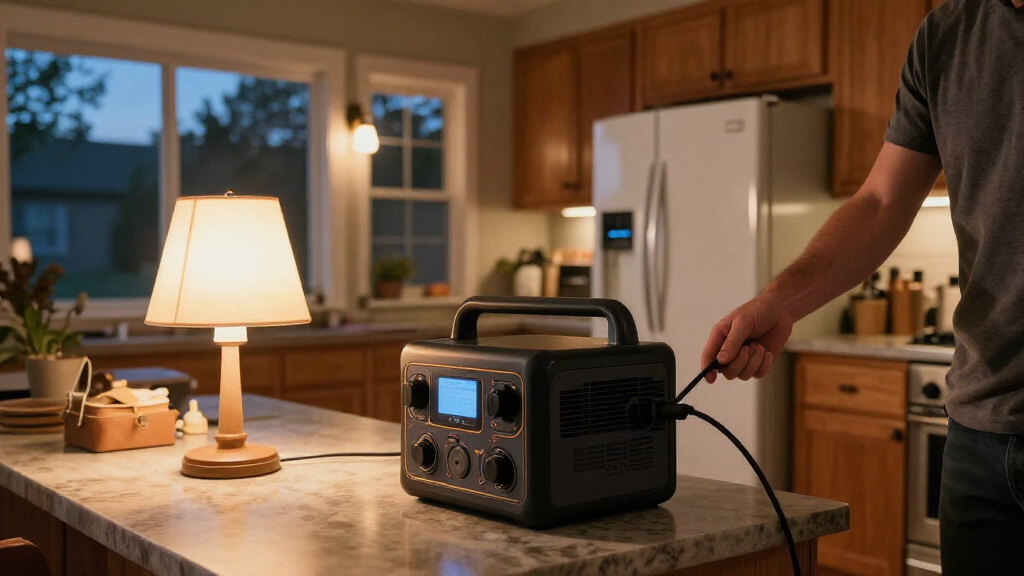
I ranked these stations for selective home backup, not for camping appeal alone. The main criteria were stated battery capacity and AC output, since capacity shapes runtime and output determines which loads a station can handle. I also weighed practical portability, the usefulness of bundled solar panels, and how well each model’s scale fits common outage plans, from keeping phones and a router running to supporting more demanding appliances.
The ranking favors products that balance usable capacity and output for a household backup role. The Anker SOLIX C2000 Gen 2 earns the lead position for its combination of 2,048Wh and 2,400W; the larger Jackery HomePower 3600 Plus ranks as the capacity-focused alternative, while mid-size choices suit lighter or more selective loads. Compact models rank lower for home backup because their smaller batteries limit runtime, even when their portability or solar bundle is appealing. Product names and listed specs alone do not establish transfer-switch compatibility, charging speed, surge performance, or whole-home readiness, so buyers should verify those details with the manufacturer before purchase.
Factors to Consider When Choosing Portable Power Stations For Home Backup
Choosing a station for an outage starts with the loads you intend to keep running, not the largest capacity number on a product page. I would map out a short list of appliances, estimate their power draw and likely runtime, then check that both the station’s output and battery capacity suit the plan.
1. Define Which Loads Need Backup
List the devices you would actually keep powered during an outage: perhaps a phone, router, medical device, refrigerator, or a few lights. Add their wattage and decide whether they need to run at the same time, because simultaneous loads count against the station’s output limit. Some appliances also draw extra power when starting, so their startup demand can exceed the number printed as typical running wattage. Check the appliance label or manual and compare both running and surge requirements with the station’s documented limits. A common mistake is buying for a broad idea like “home backup” without separating essential loads from nice-to-have ones. A short, realistic load plan can point you toward a compact unit or show why a higher-output model is needed.
2. Estimate Runtime From Usable Energy
Battery capacity in watt-hours is a starting point for runtime, not a promise that every listed watt-hour reaches your devices. Conversion losses, operating conditions, and the station’s own power use reduce available energy. For a rough estimate, divide usable capacity by the load in watts, then treat the result as an upper-bound planning figure rather than a guaranteed duration. A 2,000Wh-class battery can support a moderate load longer than a 1,000Wh-class one, but a high-draw appliance can drain either much sooner than expected. Avoid choosing capacity from appliance count alone; a router and refrigerator have very different energy needs over a day. If you need overnight or multi-day coverage, plan for lower consumption, additional charging, or a larger storage system.
3. Check Output, Surge, and Connection Limits
Output wattage tells you how much power the station can supply at once, while surge ratings describe short bursts some motors need to start. These figures matter independently of battery capacity: a large battery may still fail to run a load that exceeds its output limit. Read the specifications for continuous AC output, surge output, and the number and type of outlets you plan to use. Also check whether the station supports the charging method or connection your backup plan requires. Do not assume that a high wattage figure means a unit can power a home panel or every household circuit. For hardwired circuits, confirm compatible equipment and installation requirements with the manufacturer and a qualified electrician.
4. Decide How You Will Recharge During an Outage
A station’s value changes if an outage lasts beyond its initial charge. Check its supported AC and solar input, recharge time under stated conditions, and whether it can accept power while supplying loads. Solar panels can help extend use, but panel wattage is not the same as guaranteed daily energy; sunlight, shade, angle, weather, and input limits all affect production. Bundled panels simplify compatibility, yet a small panel may replenish a large battery slowly. If you expect cloudy weather or need reliable overnight recovery, think through a backup charging plan rather than relying on solar alone. Compare total charging options against the length and season of outages in your area.
5. Match Size and Weight to Where It Will Sit
Home backup often means moving a station from storage to the room where it is needed, so portability still matters even if the unit rarely leaves the house. Larger capacity generally means a bigger, heavier product, which can make stairs, tight storage, and frequent repositioning inconvenient. Measure the storage space and consider who will move the unit before choosing a high-capacity model. A compact station can be easier to keep accessible, but that convenience comes with shorter runtimes and fewer demanding loads. Avoid treating “portable” as a guarantee that one person can comfortably carry every model. A unit that is difficult to retrieve during an outage may be less useful than its capacity suggests.
6. Pay More Only for Backup You Can Use
Higher capacity and output are worthwhile when they match a defined need, such as longer refrigerator runtime or supporting more loads at once. They add less value if your outage plan only covers phones, a router, and small lighting. Before paying for a larger system, check battery chemistry, stated cycle life, warranty terms, operating limits, and the manufacturer’s maintenance guidance. Also verify whether the features you expect, such as app controls, expansion batteries, or home-circuit integration, are supported by that exact model. Bundle panels only when their output and connection type fit your charging plan. The best fit is the smallest station that can handle your priority loads for the duration you need, with a credible way to recharge it.
Frequently Asked Questions
Can a portable power station run my refrigerator during an outage?
Possibly, but confirm both the refrigerator’s running wattage and its startup surge before choosing a station. The unit needs enough continuous output to operate the fridge and enough surge capacity to handle the compressor starting. Battery capacity then determines how long it can run, with actual runtime affected by cycling, room temperature, and other loads connected at the same time. A smaller station may power a refrigerator briefly but leave little energy for other essentials. Check the appliance manual and the station’s full output specifications rather than relying on a general appliance estimate.
Is a 2,000Wh power station enough for a full day of home backup?
It depends on what “home backup” includes. A 2,000Wh-class station may cover selected low-power devices for a substantial part of a day, but it can run down quickly with a refrigerator, heating appliance, or several loads operating together. Usable energy is also lower than the headline capacity because power conversion and operating conditions affect delivery. Make a load list and estimate each device’s hours of use to judge whether that capacity fits your plan. For longer outages, reduce consumption or plan a suitable recharge source.
Can I connect a portable power station to my home’s electrical panel?
Do not connect a station directly to household wiring through a wall outlet or improvised cable. Panel backup requires equipment designed for that purpose, such as a compatible transfer switch or other manufacturer-approved system, installed according to local electrical requirements. Many portable stations are intended to power appliances through their own outlets and may not support panel integration. Check the exact model’s documentation and ask a qualified electrician about your home’s setup. If panel connection is a priority, treat compatibility and installation as buying requirements, not assumptions.
Are the included solar panels enough to recharge a station during an outage?
They may contribute useful energy, but a bundle does not guarantee a full recharge each day. Actual production varies with sunlight, shade, panel placement, weather, season, and the station’s solar input limits. The Jackery Explorer 300 bundle’s 40W panel is a modest match for a compact battery, while the HomePower 3600 Plus bundle’s two 200W panels provide more panel capacity but still need suitable conditions. Compare panel output with battery size and your expected daily consumption. Keep another charging option in mind if cloudy weather or sustained high loads are likely.
Should I choose a compact station or a larger one for occasional outages?
Choose based on the devices you need to keep running and how long you expect to use them. Compact models such as the Jackery Explorer 300 or BLUETTI Elite 30 V2 are easier to store and move, but their smaller capacities make them better suited to electronics and modest loads. Larger models provide more energy and output for demanding backup plans, with added bulk and less convenient handling. If outages are rare and your priority is a phone, router, and light, compact may be the practical choice. If you need longer refrigerator runtime or several loads at once, prioritize capacity and output over easy carrying.
Conclusion
For a balanced household backup setup, I would choose the Anker SOLIX C2000 Gen 2 as best overall: its 2,048Wh capacity and 2,400W output place it between compact electronics-focused stations and the largest option here. The best premium, capacity-first pick is the Jackery HomePower 3600 Plus, especially for buyers who need more stored energy and can manage a larger unit. For best value in a lighter-duty plan, compare the BLUETTI AC180 and EF ECOFLOW DELTA 3 Classic against your load list; their 1,152Wh and 1,024Wh capacities are better matched to selective backup than extended, high-demand use. Beginners with simple needs can start with the Jackery Explorer 300, while the version bundled with a 40W panel suits buyers who want a small solar-assisted kit. For specific needs, choose the LIBRIDS 640Wh for modest loads, or move to a 3,584Wh Jackery bundle if longer runtimes and included solar panels matter more than portability. Before deciding, verify appliance startup demands, charging limits, and any home-circuit connection requirements for the exact model.
Halloween Picks

Govee Outdoor Halloween Projector Light

10ft Halloween Inflatable Archway – Pumpkin Skeleton Yard Décor

10 ft Halloween Inflatable Archway with Built-in LEDs
As an affiliate, we earn on qualifying purchases.