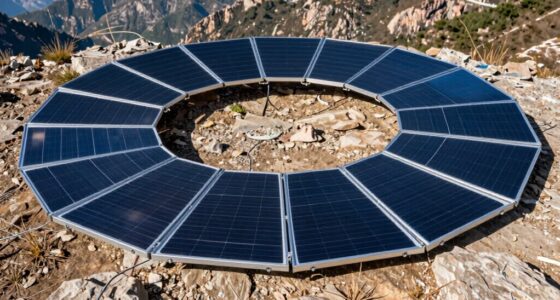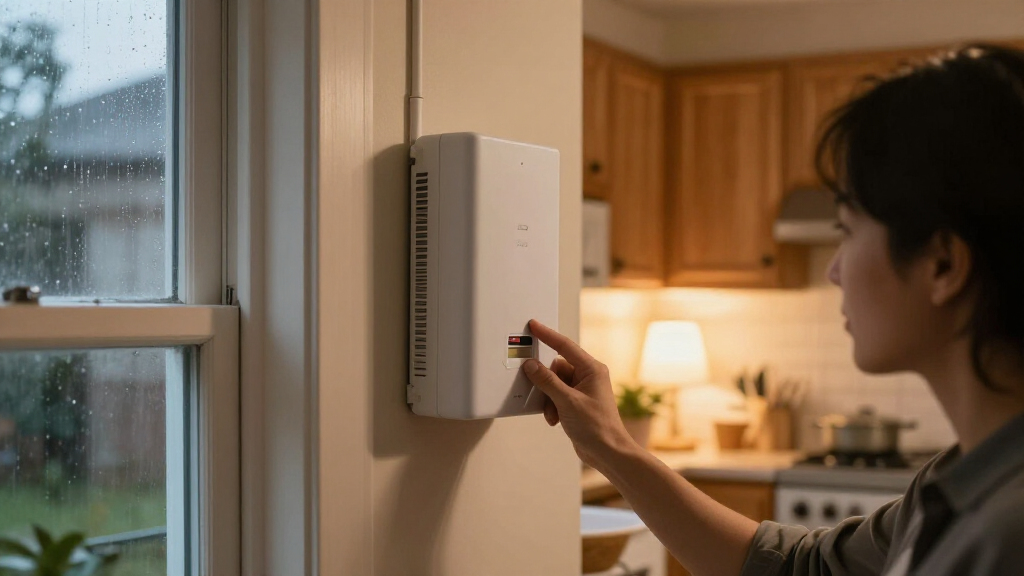

Home battery backup systems range from compact power stations for essential devices to expandable systems designed to support larger household loads. My best overall pick is the EF ECOFLOW DELTA Pro Ultra for its substantial storage and backup-focused design; the Jackery Solar Generator 5000 Plus stands out for high output and expansion potential, while the ECO-WORTHY Powermega 48V battery suits buyers building around a compatible inverter. The main tradeoff is between portable convenience and the capacity, integration, and installation needs of a larger system. Solar bundles can simplify component matching, but they do not automatically provide enough generation to refill a battery quickly. Read on for how the 11 options differ and which type of backup each one fits.

Get backup power and energy gear delivered free — and shop member deals
- Fast, free delivery on millions of items
- Access to Prime Big Deal Days deals on October 6–7
- Prime Video, Amazon Music and more included
Key Takeaways
- The roundup spans two different kinds of backup: power stations are comparatively portable and self-contained, while the ECO-WORTHY 48V battery is a component for a compatible system rather than a complete backup solution.
- The DELTA Pro Ultra leads for substantial home backup: its 12 kWh package with an extra battery is more suited to larger loads than the smaller, single-unit power stations.
- The Jackery Solar Generator 5000 Plus offers the clearest expansion path: its 5,040 Wh capacity, 120V/240V output, and stated expansion to 60 kWh target buyers planning for broader backup.
- Solar bundles trade flexibility for a simpler starting point: the Growatt and Jackery panel kits pair storage with panels, but panel wattage and local sun conditions still shape recharge expectations.
- Capacity alone does not settle the choice: buyers also need to match output, voltage, transfer or installation arrangements, portability, and intended loads to their home.
| ECO-WORTHY Powermega 48V 314Ah LiFePO4 Battery, 16.07kWh |  | Best Single-Battery Capacity | Chemistry: LiFePO4 | Voltage: 51.2V (48V nominal) | Capacity: 314Ah | VIEW LATEST PRICE | See Our Full Breakdown |
| ECO-WORTHY Solar Panel Kit LiFePO4 Energy Storage System for Home Backup |  | Best Complete Solar-Ready Backup Package | Solar panels: 6 × 590W N-type monocrystalline | Inverter: 10kW hybrid inverter | Battery configuration: 2 × 48V 314Ah LiFePO4 batteries | VIEW LATEST PRICE | See Our Full Breakdown |
| Growatt HELIOS 3600 Portable Power Station with 400W Solar Panels |  | Best Expandable Portable Backup | Battery capacity: 3,600Wh | Continuous output: 3,600W | Included solar panels: 2 × 200W | VIEW LATEST PRICE | See Our Full Breakdown |
| Jackery HomePower 3000 Portable Power Station with Two 200W Solar Panels |  | Best for Household Essentials | Capacity: 3,072Wh | AC output: 3,600W | Surge output: 7,200W | VIEW LATEST PRICE | See Our Full Breakdown |
| Jackery HomePower 3600 Plus Portable Power Station, 3584Wh, 3600W |  | Best Portable Unit for Long-Term Expansion | Capacity: 3,584Wh | AC output: 3,600W | Parallel output: Up to 7,200W | VIEW LATEST PRICE | See Our Full Breakdown |
| Jackery HomePower 3600 Plus Portable Power Station with Two 200W Solar Panels |  | Best Expandable Mid-Size Home Backup | Capacity: 3,584Wh | AC output: 3,600W | Parallel output: 7,200W | VIEW LATEST PRICE | See Our Full Breakdown |
| EF ECOFLOW DELTA Pro Ultra 12 kWh Power Station with Extra Battery |  | Best for Whole-Home Expansion | Output: 7,200W | Voltage: 120V and 240V | Base battery capacity: 6,144Wh | VIEW LATEST PRICE | See Our Full Breakdown |
| Jackery Explorer 2000 v2 Portable Power Station | 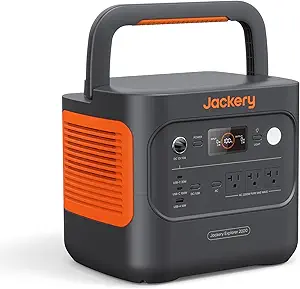 | Best Portable Backup for Quiet Operation | Battery capacity: 2,042Wh | Output power: 2,200W | AC ports: 3 | VIEW LATEST PRICE | See Our Full Breakdown |
| Anker SOLIX S2000 Portable Power Station 2010Wh 1500W |  | Best for Long-Lasting Essential Loads | Capacity: 2,010Wh | Continuous output: 1,500W | Peak output: 3,000W | VIEW LATEST PRICE | See Our Full Breakdown |
| EF ECOFLOW DELTA 3 Classic Portable Power Station, 1024Wh, 1800W |  | Best Compact Backup for Sensitive Electronics | Capacity: 1,024Wh | Output wattage: 1,800W | Surge output: 3,600W | VIEW LATEST PRICE | See Our Full Breakdown |
| Jackery Solar Generator 5000 Plus Portable Power Station |  | Best for High-Power, Expandable Backup | Battery capacity: 5,040Wh | Expandable capacity: Up to 60kWh | Continuous AC output: 7,200W | VIEW LATEST PRICE | See Our Full Breakdown |
More Details on Our Top Picks
ECO-WORTHY Powermega 48V 314Ah LiFePO4 Battery, 16.07kWh
For a home backup setup built around a 48V inverter, the 16.07kWh capacity here offers more stored energy in one battery than the portable Jackery HomePower 3600 Plus. That can mean fewer battery enclosures and longer runtime between charges for compatible household loads. The 200A smart BMS, active cell balancing, UL 1973 certification, and aerosol fire suppression address monitoring and protection, while touchscreen, WiFi, Bluetooth, RS485, and CAN give buyers several ways to track or integrate the system. It can also expand in parallel to 15 units, making it a foundation for a larger fixed installation. The tradeoff is that this is a large, heavy battery, not a plug-and-play power station; truck delivery and a suitable inverter and installation plan are part of the purchase.
Pros:- 16.07kWh of storage in a single battery
- Parallel expansion supports up to 15 units
- UL 1973 certification, active cell balancing, and aerosol fire suppression
- Touchscreen and wireless monitoring plus RS485 and CAN connectivity
Cons:- Large, heavy format is difficult to place or move
- Truck delivery requires an address that can accept pallet freight
- Requires a compatible inverter and system installation, unlike portable power stations
Best for: Homeowners building a compatible 48V solar or inverter system who want substantial storage in one battery and room to expand.
Not ideal for: Renters or buyers seeking a portable, ready-to-use backup unit; it is heavy, ships by truck, and needs compatible system equipment.
- Chemistry:LiFePO4
- Voltage:51.2V (48V nominal)
- Capacity:314Ah
- Energy:16.07kWh
- BMS:200A smart BMS with active cell balancing
- Safety certification:UL 1973
- Parallel expansion:Up to 15 units
- Monitoring and communications:7-inch HD touchscreen, WiFi, Bluetooth, RS485, and CAN
- Warranty:10 years
Our verdict“Choose this battery for a fixed 48V backup system when high capacity and expansion matter more than portability or plug-and-play setup.”
ECO-WORTHY Solar Panel Kit LiFePO4 Energy Storage System for Home Backup
This package pairs 30kWh+ of usable storage with a 10kW hybrid inverter and six 590W panels, so buyers get a more integrated solar-and-battery starting point than they would with the standalone ECO-WORTHY Powermega battery. Its 120V/240V split-phase output and substantial storage suit homes planning to run more than a few small devices during an outage. The battery rack’s wheels can help with positioning, though they do not make this a lightweight system. App monitoring, active balancing, and fire-suppression features add useful oversight and protection. The main compromise is installation: this is a large, high-capacity system, not a simple portable station like the Jackery HomePower 3000. Buyers should plan for space, truck delivery, and qualified electrical help if they lack system-installation experience.
Pros:- 30kWh+ usable battery energy for longer backup runtimes
- Includes a 10kW hybrid inverter and six 590W solar panels
- 120V/240V split-phase output suits broader household backup needs
- Battery rack has wheels and monitoring is available through WiFi and Bluetooth
Cons:- Large system needs substantial space and truck delivery
- Installation can be complex for buyers without electrical experience
- The inverter’s appearance varies, limiting control over the system’s look
Best for: Homeowners planning a substantial solar-backed backup installation who want batteries, panels, and a hybrid inverter in one package.
Not ideal for: Apartment dwellers, renters, or DIY beginners who need a compact plug-in backup unit or cannot arrange installation and freight delivery.
- Solar panels:6 × 590W N-type monocrystalline
- Inverter:10kW hybrid inverter
- Battery configuration:2 × 48V 314Ah LiFePO4 batteries
- Usable energy:30kWh+
- Output voltage:120V / 240V
- Monitoring:WiFi and Bluetooth
- Battery protection:Active-balancing BMS and fire-suppression features
- Rack mobility:Wheeled battery rack
Our verdict“Pick this package when you want a high-capacity solar-and-storage system assembled as a set and have the space and expertise to install it.”
Growatt HELIOS 3600 Portable Power Station with 400W Solar Panels
The Growatt HELIOS 3600 occupies a useful middle ground between a small emergency station and a fixed battery installation: it starts with 3.6kWh of LFP storage, but can scale to 36kWh with compatible equipment. Its 3,600W continuous output and 15ms EPS switching make it more suited to household backup than a low-output compact unit such as the Anker SOLIX S2000, while the included two 200W panels offer a modest solar starting point. The gap between those panels’ 400W combined rating and the station’s 2,000W maximum solar input matters: reaching that charging rate requires additional solar capacity. Parallel operation can also provide 240V output, but that takes extra units. I’d choose it for buyers who want portability now and a path to expansion, not for someone expecting the included panels alone to refill a large battery quickly.
Pros:- 3,600W continuous output from a portable station
- Expandable capacity up to 36kWh with compatible units
- 15ms EPS switching supports backup for connected equipment
- Includes two 200W solar panels and supports cold-weather operation down to -22°F
Cons:- Included 400W of panels falls well below the 2,000W maximum solar input
- Maximum capacity and 240V parallel output require additional compatible units
- A 3.6kWh starting capacity is more limited than the ECO-WORTHY 30kWh+ kit
Best for: Homeowners or RV users who want a portable 3.6kWh backup station with a clear path to higher capacity and 240V operation.
Not ideal for: Buyers who need a complete high-capacity home system out of the box or expect the included panels to reach the maximum solar charging rate.
- Battery capacity:3,600Wh
- Continuous output:3,600W
- Included solar panels:2 × 200W
- Maximum solar input:2,000W
- Expandable capacity:Up to 36kWh
- Parallel output:Up to 7,200W at 240V
- EPS switching time:15ms
- Battery chemistry and cycle life:LFP; rated to retain 80% capacity after 4,000 cycles
- Minimum operating temperature:-22°F
Our verdict“Choose the HELIOS 3600 if portability and future expansion matter more than getting a large, complete home system in one purchase.”
Jackery HomePower 3000 Portable Power Station with Two 200W Solar Panels
The HomePower 3000 is a straightforward portable option for keeping essential devices and appliances running, with 3,072Wh of capacity, 3,600W AC output, and a UPS switching time of 20ms or less. Its varied ports, including a TT-30 RV outlet, make it more versatile across household and recreational use than the ECO-WORTHY Powermega, which is a fixed 48V battery requiring separate system components. Against the Growatt HELIOS 3600, the Jackery offers slightly less storage and a slower stated switching ceiling, but it includes AC, solar, car, and hybrid charging options. The two included 200W panels can help recharge it, though reaching 80% with them takes nine hours. Buyers should also expect the station and panels to ship separately, and its 4,000-cycle rating is to 70% capacity, not the Growatt’s 80% figure.
Pros:- 3,600W AC output and 7,200W surge output
- UPS switching of 20ms or less for connected equipment
- Supports AC, hybrid, solar, car, and generator charging
- Includes two 200W solar panels and a TT-30 RV port
Cons:- Included panels take about nine hours to charge the station to 80%
- Power station and panels may arrive in separate packages
- Rated for 70% capacity after 4,000 cycles, a lower retained-capacity figure than the Growatt HELIOS 3600’s stated 80%
Best for: Households wanting a portable station for essential loads, with multiple charging methods and ports for home or RV use.
Not ideal for: Buyers seeking whole-home-scale storage, faster solar replenishment from the included panels, or a fixed battery system with greater capacity.
- Capacity:3,072Wh
- AC output:3,600W
- Surge output:7,200W
- UPS switching time:20ms or less
- Battery chemistry:LiFePO4
- Cycle life:4,000 cycles to 70% capacity
- Included solar panels:2 × 200W
- Recharge time:1.7 hours via hybrid AC/DC; 2.2 hours via AC
- Ports:AC, USB-C, USB-A, DC, and TT-30 RV
Our verdict“Choose the HomePower 3000 for portable backup of household essentials when its broad charging and port selection matter more than large-system capacity.”
Jackery HomePower 3600 Plus Portable Power Station, 3584Wh, 3600W
Among the portable stations here, the HomePower 3600 Plus pairs 3,584Wh of capacity with 3,600W output and a stated 6,000-cycle battery rating, giving it a stronger longevity claim than the HomePower 3000’s 4,000-cycle rating. Its wheels and telescopic handle make repositioning easier than moving the ECO-WORTHY Powermega battery, though the unit remains bulky and is not a substitute for a fixed, high-capacity system. Expansion can raise storage to 21kWh per unit or 43kWh across multiple units; parallel operation also enables 240V output. That flexibility comes with a system-level tradeoff: 240V is not available from one unit, and added batteries or stations are needed to reach the larger figures. Unlike the Growatt HELIOS 3600 bundle, this configuration does not include solar panels.
Pros:- 3,584Wh capacity with 3,600W AC output
- Expandable to 21kWh per unit or 43kWh with multiple units
- Supports AC, solar, gas generator, and hybrid charging
- Wheels and telescopic handle simplify movement
Cons:- 240V output requires parallel operation with another unit
- Additional batteries or stations are needed to reach expanded capacity
- Large capacity makes it bulky despite its wheeled design
Best for: Homeowners who want a portable backup station now, may add compatible storage later, and value easier movement and multiple charging options.
Not ideal for: Buyers who need 240V output from one unit, included solar panels, or a compact device that is easy to carry by hand.
- Capacity:3,584Wh
- AC output:3,600W
- Parallel output:Up to 7,200W
- Voltage:120V; 240V in parallel
- Expandable capacity:Up to 21kWh per unit or 43kWh with multiple units
- Charging options:Hybrid AC+DC, AC, solar, and gas generator
- Recharge time:2 hours hybrid AC+DC; 2.5 hours AC or gas generator; 4 hours solar
- Battery cycle life:Rated for 6,000 cycles
- Design and operating temperature:Wheels and telescopic handle; operates down to -4°F
Our verdict“Pick the HomePower 3600 Plus if you want a movable 3.6kWh backup base with strong expansion options and do not need standalone 240V output.”
Jackery HomePower 3600 Plus Portable Power Station with Two 200W Solar Panels
The HomePower 3600 Plus pairs a 3,584Wh battery with 3,600W output, giving it more headroom for household appliances than the smaller Jackery Explorer 2000 v2. Its expandable design can grow to 21kWh per unit, while parallel units can provide 240V power for larger backup needs. That makes it a more adaptable choice than a fixed-capacity portable station, though a full home setup requires added equipment and planning. Charging can draw on AC, solar, a gas generator, or hybrid AC-plus-DC input; the listed hybrid recharge time is two hours. The included two 200W panels offer a solar option, but solar charging takes about four hours, and the power station and panels ship separately. Wheels and a telescopic handle help with repositioning, although the system is still substantial equipment to move.
Pros:- 3,600W output provides more appliance headroom than the Explorer 2000 v2.
- Expandable capacity supports longer backup needs as the system grows.
- AC, solar, generator, and hybrid charging give households several recharge paths.
- Wheels and a telescopic handle make repositioning easier.
Cons:- The power station and included solar panels ship separately.
- Solar charging takes about four hours under the listed conditions.
- Reaching the larger capacity and 240V configurations calls for additional equipment.
Best for: Households that want a portable 3.6kWh-class backup system with room to expand and more than one way to recharge it.
Not ideal for: Buyers who need a compact, ready-to-carry unit or a complete solar setup delivered together; the power station and panels ship separately.
- Capacity:3,584Wh
- AC output:3,600W
- Parallel output:7,200W
- Voltage:120V; 240V in parallel
- Expandable capacity:Up to 21kWh per unit or 43kWh with multiple units
- Battery cycle life:6,000 cycles
- Charging options:Hybrid AC+DC, AC, solar, gas generator
- Hybrid charging time:2 hours
- Included solar panels:Two 200W panels
Our verdict“Choose this Jackery if you want portable household backup with a clear expansion path and can accommodate a larger system.”
EF ECOFLOW DELTA Pro Ultra 12 kWh Power Station with Extra Battery
For buyers planning backup around household circuits rather than a few portable appliances, the DELTA Pro Ultra offers the broadest growth path in this group: capacity can scale from 6,144Wh to 90kWh, and three inverters can deliver up to 21.6kW AC output. Its 7,200W output at 120V or 240V also gives it a different job from the portable Jackery Explorer 2000 v2, which is better suited to selected essentials than extensive home coverage. App-based circuit prioritization helps direct available power to chosen loads, and the 0 ms UPS mode is designed to avoid an interruption for connected sensitive devices. This capability comes with a modular setup: the inverter and battery arrive separately, and the maximum capacity requires additional batteries. It suits buyers prepared to build a larger system, not those seeking a simple grab-and-go station.
Pros:- 7,200W output supports heavier household loads than the smaller portable stations here.
- Capacity can scale up to 90kWh for extended backup plans.
- 120V and 240V output supports a wider range of home equipment.
- App-based circuit prioritization and 0 ms UPS mode add control and continuity.
Cons:- The inverter and battery arrive in separate packages.
- The 90kWh maximum requires purchasing and setting up additional batteries.
- Its modular, high-capacity design is less suited to buyers seeking a simple portable unit.
Best for: Homeowners who want to prioritize household circuits and may expand backup capacity substantially over time.
Not ideal for: Renters or buyers seeking one compact, ready-to-use portable station; the inverter and battery ship separately, and expansion takes additional batteries.
- Output:7,200W
- Voltage:120V and 240V
- Base battery capacity:6,144Wh
- Maximum expandable capacity:90kWh
- Maximum AC output with three inverters:21.6kW
- Charging options:Solar, wall outlets, EV charging stations, outdoor generators
- UPS transfer time:0 ms
Our verdict“Pick the DELTA Pro Ultra if you want a modular system built for substantial household backup rather than a single portable power source.”
Jackery Explorer 2000 v2 Portable Power Station
The Explorer 2000 v2 is a more manageable choice for households that need backup for selected essentials, not a scalable home system. Its 2,042Wh capacity and 2,200W output exceed the EF ECOFLOW DELTA 3 Classic in both stored energy and output, making the Jackery better suited to longer runs or higher-draw appliances within its limits. The tradeoff is portability: at 39.5 pounds, it is heavier than the DELTA 3 Classic, despite its compact listed dimensions. A LiFePO4 battery, three AC ports, and 100W USB-C output cover common devices, while 20ms UPS switching can help maintain power to connected equipment but is slower than the DELTA 3 Classic’s under-10ms switching. Silent Charging Mode stays below 30dB; solar charging requires compatible panels, which may not be included.
Pros:- 2,042Wh capacity and 2,200W output provide more backup headroom than the DELTA 3 Classic.
- LiFePO4 battery chemistry is suited to repeated charging and discharging.
- Silent Charging Mode operates below 30dB.
- Three AC ports and 100W USB-C support several common household devices.
Cons:- At 39.5 pounds, it can be cumbersome to carry frequently.
- Solar charging needs compatible panels, which may not be included.
- Its 20ms UPS switching is slower than the DELTA 3 Classic’s under-10ms switching.
Best for: Households that want a portable station for a refrigerator, electronics, and other essentials, with quiet charging for indoor use.
Not ideal for: Buyers who need a lightweight carry-on backup or the fastest UPS switching; it weighs 39.5 pounds and switches in 20ms.
- Battery capacity:2,042Wh
- Output power:2,200W
- AC ports:3
- USB-C output:100W PD
- Battery type:LiFePO4
- Weight:39.5 lb
- UPS switching time:20ms
- Operating noise:Less than 30dB in Silent Charging Mode
- Solar charging time:As few as 6 hours with 400W panels
Our verdict“Choose the Explorer 2000 v2 if you want higher capacity than a compact entry-level station and value quiet charging over easy carrying.”
Anker SOLIX S2000 Portable Power Station 2010Wh 1500W
The Anker SOLIX S2000 favors endurance and a compact footprint over high appliance output. Its 2,010Wh capacity is close to the Jackery Explorer 2000 v2’s 2,042Wh, but the Anker’s 1,500W continuous output is lower than the Jackery’s 2,200W. That makes it a stronger fit for a refrigerator and other moderate loads than for appliances with demanding power needs. Anker cites up to 35 hours of refrigerator runtime, while its 6W idle draw helps limit energy used while the station is on. The LFP cells are rated for 10,000 cycles, and six recharge methods—including up to 400W solar input—offer flexibility when grid power is unavailable. At 35.7 pounds it is lighter than the Explorer, though still a sizable load to carry; it also lacks a dedicated 12V DC port.
Pros:- Near-2kWh capacity and low idle draw support extended essential-load backup.
- LFP battery is rated for 10,000 cycles and a 15-year lifespan.
- Six recharge methods include solar, generator, alternator charger, and car outlet.
- At 35.7 pounds, it is lighter than the Explorer 2000 v2.
Cons:- 1,500W continuous output is lower than the Explorer 2000 v2’s 2,200W.
- No dedicated 12V DC port for automotive accessories.
- At 35.7 pounds, it is still heavy for frequent carrying.
Best for: Households prioritizing long backup for a refrigerator and essential electronics, with flexible recharging and a relatively compact 2kWh-class unit.
Not ideal for: Buyers who need to run higher-draw appliances or power automotive accessories directly; continuous output is 1,500W and there is no dedicated 12V DC port.
- Capacity:2,010Wh
- Continuous output:1,500W
- Peak output:3,000W
- Battery type:314Ah LFP cells
- Cycle life:10,000 cycles (15-year lifespan)
- Weight:35.7 lb
- Idle power draw:6W
- Maximum solar input:400W
- Number of outlets:8 (front and rear)
Our verdict“Choose the S2000 if long essential-load runtime and multiple recharge options matter more than high output or a direct 12V accessory port.”
EF ECOFLOW DELTA 3 Classic Portable Power Station, 1024Wh, 1800W
With 1,024Wh of capacity, the DELTA 3 Classic stores less energy than either 2kWh-class option here, so it is better suited to shorter outages or a carefully chosen set of essential devices. Its 1,800W output and 3,600W surge capacity offer more appliance headroom than the Anker SOLIX S2000’s 1,500W continuous output, but the Anker holds nearly twice the energy for longer backup. Where the EcoFlow separates itself is speed and device protection: AC charging reaches 80% in 45 minutes, and under-10ms UPS switching makes it a more compelling fit for sensitive electronics than the Jackery Explorer 2000 v2’s 20ms switching. App controls add monitoring and charging schedules. Solar charging requires an optional panel, and this model cannot use extra batteries from the DELTA 2 or DELTA 3 series.
Pros:- Under-10ms UPS switching suits sensitive electronics better than the Explorer 2000 v2’s 20ms switching.
- AC charging reaches 80% in 45 minutes.
- 1,800W output and 3,600W surge provide useful power in a smaller station.
- App controls support monitoring and charging schedules.
Cons:- 1,024Wh capacity offers less runtime than the Anker SOLIX S2000 or Explorer 2000 v2.
- Solar panel is optional.
- DELTA 2 and DELTA 3 series extra batteries are not compatible.
Best for: People who need a compact backup for a modem, computer, and other sensitive electronics, with rapid AC recharging between outages.
Not ideal for: Households seeking overnight or extended backup for several appliances; its 1,024Wh capacity is well below the two 2kWh-class stations.
- Capacity:1,024Wh
- Output wattage:1,800W
- Surge output:3,600W
- X-Boost output:Up to 2,600W
- Battery chemistry:LiFePO4
- AC charging:0–80% in 45 minutes
- Solar recharging:2.5 hours with an optional 500W solar panel
- UPS switching time:Under 10ms
- Weight:26.7 lb
Our verdict“Choose the DELTA 3 Classic for fast-recharging, short-duration backup for sensitive electronics rather than extended household coverage.”
Jackery Solar Generator 5000 Plus Portable Power Station
The Jackery Solar Generator 5000 Plus is the strongest fit here for households that need to run demanding 120V or 240V appliances during an outage. Its 7,200W continuous output and 14,400W surge rating give it more headroom for heavy startup loads than the smaller Jackery HomePower 3600 Plus. The 5,040Wh LiFePO4 battery can serve as a substantial starting capacity, while expansion up to 60kWh lets buyers build toward longer backup periods instead of replacing the system outright.
That capability comes with real compromises: this is a large, heavy system, not a convenient grab-and-go power station, and reaching its fastest solar recharge rate requires up to 4,000W of solar input. Solar panels are separate, so the advertised charging potential may call for a sizable additional setup. I’d choose it for scalable home backup, not for buyers seeking a simple, compact outage unit.
Pros:- 7,200W continuous output and 14,400W surge support demanding appliances and startup loads.
- 5,040Wh LiFePO4 capacity can expand to 60kWh for longer backup needs.
- Up to 4,000W solar input supports fast recharging when paired with a sufficiently large panel setup.
- LiFePO4 chemistry with ChargeShield 2.0 is designed for long-cycle operation.
Cons:- Large, heavy construction limits portability around the home or on RV trips.
- Solar panels are separate, adding equipment and setup needs for solar charging.
- Reaching the maximum solar input calls for a substantial panel array.
Best for: Homeowners who need strong 120V/240V output for large appliances and want the option to expand storage for longer outages.
Not ideal for: Apartment residents or buyers who need a lightweight, ready-to-carry backup unit; its size and separate solar-panel requirement make it less convenient.
- Battery capacity:5,040Wh
- Expandable capacity:Up to 60kWh
- Continuous AC output:7,200W
- Surge power:14,400W
- Output voltage:120V / 240V AC
- Maximum solar input:4,000W
- Battery type:LiFePO4 with ChargeShield 2.0
- Frequency:60Hz
Our verdict“Choose the Jackery 5000 Plus if high appliance output and expandable backup capacity matter more than portability and a minimal solar setup.”
How We Picked
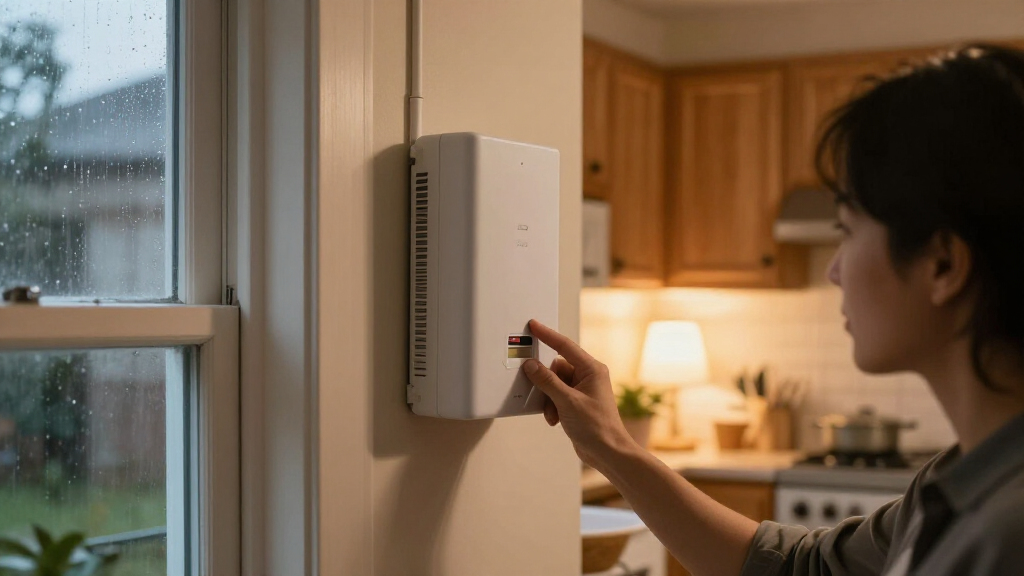
I ranked these options by how directly they can serve as home backup, weighing usable storage and output alongside the kind of loads each system can support. I also looked at whether a product is a complete power station, a solar bundle, or a battery component that depends on additional compatible equipment. Those distinctions affect setup effort and how easily a buyer can move from a single device to a larger backup plan.
The top positions go to systems with a stronger combination of home-scale capacity, output, and expansion potential, rather than to products with one standout number alone. Smaller portable units rank lower for whole-home ambitions, but can make better sense for a few appliances, communications, and charging needs. Solar panels, portability, and beginner-friendly packaging count as advantages when they address a clear use case; limitations such as modest capacity, lower output, or added system requirements count against a product when judged for broad household backup.
Factors to Consider When Choosing Home Battery Backup Systems
Before choosing a unit, I would start with the outage plan rather than the product category. Decide what must stay on, how long it needs to run, and whether you expect to recharge from solar, household power, or both. The answers determine whether a portable station is enough or whether a larger, expandable setup is worth its added complexity.
List Essential Loads Before Comparing Capacity
Write down the appliances and devices you want powered during an outage, then check each device’s running wattage and any startup surge. A refrigerator, router, lights, and medical equipment create a different demand from heating, cooking, or central air conditioning. Battery capacity, usually stated in watt-hours, estimates stored energy; output in watts describes how much power the system can deliver at once. Buyers often focus on capacity and miss that an appliance may exceed the inverter’s output limit. Leave room for conversion losses and changing usage rather than planning around every listed watt-hour as available energy.
Separate Runtime From Peak Power
A system can have ample stored energy but still be unable to start a high-surge appliance. Check both continuous output and surge capability, and compare those figures with the appliance’s startup demand. If your priority is a few low-wattage essentials, a smaller power station may offer a sensible balance; larger motors or multiple appliances call for more headroom. Avoid assuming that a higher AC output means longer runtime, since runtime depends on stored energy and the loads connected. I would plan for the largest combination of devices you expect to run at the same time, not just the highest single appliance rating.
Decide Whether Portable or Home-Integrated Backup Fits
Portable power stations are easier to place where needed and can serve multiple uses, but they may require manual connection or appliance-by-appliance setup during an outage. A home-oriented installation can support a more deliberate backup circuit plan, though it may require compatible equipment, electrical work, and a suitable transfer arrangement. A standalone battery such as the ECO-WORTHY 48V unit is not interchangeable with a finished power station; buyers must verify inverter and system compatibility. Do not assume a product can feed household wiring simply because it has AC outlets. Confirm the intended connection method with the manufacturer and a qualified electrician where fixed wiring is involved.
Treat Solar Charging as a System, Not a Panel Count
Solar charging speed depends on panel wattage, sunlight, orientation, shading, season, and the power station’s input limits. A bundled panel kit can reduce guesswork about connector compatibility, but it does not guarantee that the panels will replenish a large battery in one day. Compare the system’s solar input ceiling with the panels included and check whether more panels can be added. Buyers sometimes choose storage for several days of backup without enough charging capacity to recover between outages. If dependable recharging is the goal, check local conditions and estimate daily energy generation as well as battery size.
Check Expansion, Voltage, and Installation Limits
Expansion claims are useful only if the added batteries, cables, inverter, and operating limits fit the plan you have in mind. Verify whether the stated capacity refers to the supplied configuration or a maximum expanded setup. For larger household loads, 120V/240V capability can matter, but it does not by itself confirm compatibility with every home circuit or appliance. Some systems are designed to grow over time; others are better treated as standalone units. Before buying, confirm supported accessories, circuit connection options, warranty terms, and any installation requirements so that future upgrades do not depend on unavailable or incompatible parts.
Balance Convenience Against Backup Duration
Compact units are easier to move and store, while larger batteries can keep essential loads running longer but bring more weight, space needs, and setup planning. A portable model can be a good fit for renters or buyers who want to power select devices without committing to installed equipment. For longer outages, prioritize a clear recharge plan and the ability to add storage or generation if needed. Buying far more capacity than your loads require can add bulk without improving the way you use backup power. Match the system to likely outage length and the practical space available, then decide whether portability or longer runtime deserves priority.
Frequently Asked Questions
Can a portable power station run my whole house during an outage?
Usually, a portable power station is better suited to selected appliances than every circuit in a home. Its AC outlets and output limit determine what can run, while whole-home use may require an appropriate transfer setup and electrical installation. Check the loads you want to support at the same time, including startup surges from motors. Systems with 120V/240V output or expansion options may suit broader plans, but confirm the connection method and compatibility before purchase. A qualified electrician can help determine what can be safely connected.
How much battery capacity do I need for an overnight outage?
Estimate the energy use of the specific loads you plan to keep on for the night rather than choosing by household size. Multiply each device’s wattage by the hours it will run, add the results, then allow for conversion losses and changing duty cycles. Refrigerators cycle on and off, while a heater or cooking appliance can draw power continuously and consume stored energy quickly. Also check that the inverter can supply the highest simultaneous load and any startup surge. This calculation gives a more useful starting point than assuming a listed capacity equals usable runtime.
Is a solar bundle a better buy than a battery-only system?
A bundle can be convenient when its panels, cables, and power station are designed to work together, especially for a first solar-backup setup. A battery-only option can make more sense if you already own compatible panels or want to choose a larger array separately. Compare the included panel wattage with the station’s solar input limit and your expected sunlight; a small array may recharge a large battery slowly. Also check whether the panels are portable or intended for fixed placement. The better choice depends on compatibility and recharge needs, not simply whether panels are included.
Can I add batteries later if my backup needs grow?
Some products support expansion, while others are meant to remain standalone, so check the manufacturer’s supported battery list before buying. Confirm the maximum capacity, required cables or control hardware, and whether an added battery changes available output or only runtime. Expansion can protect an initial purchase from becoming undersized, but it works only when the parts are compatible and available. For a system built from separate components, verify inverter and battery compatibility as well as voltage requirements. A written expansion plan is more dependable than relying on a general claim that a system is expandable.
Do I need an electrician to use a home battery backup system?
Using a portable power station through its standard outlets may not require fixed installation, provided it is operated according to the instructions. Connecting a battery system to household wiring, a transfer switch, or a dedicated backup circuit is a different matter and may require a qualified electrician and local permits. Never feed power into a wall outlet or improvise a connection to house wiring. Ask the manufacturer which configurations are supported and have an electrician review the planned loads and connection method. This step helps avoid unsafe wiring and surprises during an outage.
Conclusion
For a broad home-backup plan, I would start with the EF ECOFLOW DELTA Pro Ultra as the best overall choice for its 12 kWh package and home-scale focus. The Jackery Solar Generator 5000 Plus is my best premium pick for buyers who value 120V/240V output and a stated path to much greater storage. For a component-based setup, the ECO-WORTHY Powermega 48V battery may offer strong value, but only for buyers ready to pair it with compatible equipment; it is not the simplest beginner choice. Beginners who want a bundled starting point can compare the Growatt HELIOS 3600 with panels and the Jackery solar bundles, while buyers focused on a few essentials can favor a smaller portable station such as the Jackery Explorer 2000 v2 or EF ECOFLOW DELTA 3 Classic. Choose by matching your must-run loads, recharge plan, and connection needs—not by capacity alone.
Fall Picks
fall essentials
As an affiliate, we earn on qualifying purchases.