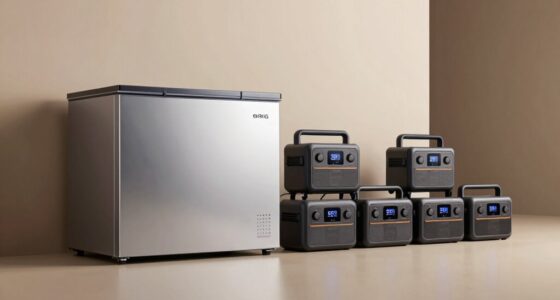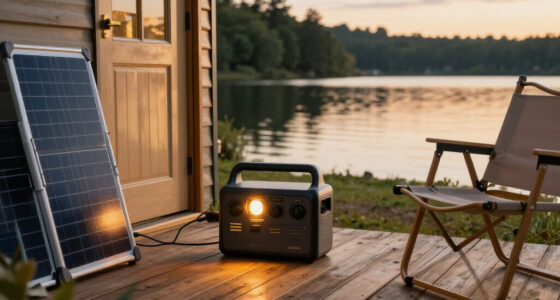

Choosing the right energy solution among the best portable power stations depends entirely on whether you need emergency backup, off-grid camping capability, or heavy-duty construction site power. My top overall pick is the EcoFlow DELTA 3 because it balances rapid charging speeds with a robust 1800W output suitable for most household appliances. For those needing maximum capacity, the EcoFlow DELTA Pro offers an impressive 3600Wh reserve, while the Jackery Explorer 300 remains the go-to for lightweight, short-duration trips. The main tradeoff you will face is between weight and capacity; larger units provide more runtime but become difficult to transport. Read on to see how these models stack up against each other in terms of battery chemistry, output versatility, and long-term durability.

Get backup power and energy gear delivered free with Prime
- Fast, free delivery on millions of items
- Prime Video, Amazon Music and more included
- Member-only deals all year
Complete the kit

Key Takeaways
- LiFePO4 battery chemistry has become the standard for mid-to-high-tier units, offering significantly longer lifespans compared to older NMC models.
- Rapid recharging capabilities, often under 60 minutes, are now a primary differentiator between premium and budget models.
- Higher wattage output does not always equal better efficiency; many high-capacity units suffer from high standby power drain.
- Expandability via additional battery modules is a critical feature for users who may need to scale their backup power later.
- Compact units under 300Wh often lack pure sine wave inverters or sufficient AC outlets for modern electronics with active PFC.
| EcoFlow DELTA 3 Portable Power Station, 1024Wh, 1800W |  | Best Overall for Fast Recharging | Capacity: 1,024Wh | AC output: 1,800W | Surge output: 3,600W | VIEW LATEST PRICE | See Our Full Breakdown |
| BLUETTI Elite 30 V2 Portable Power Station, 288Wh, 600W |  | Best Compact Pick | Capacity: 288Wh | Continuous output: 600W | Power Lifting Mode output: Up to 1,500W | VIEW LATEST PRICE | See Our Full Breakdown |
| Anker SOLIX C2000 Gen 2 Portable Power Station, 2,048Wh |  | Best for High-Draw Loads | Battery capacity: 2,048Wh | Peak output: 4,000W | Battery type: LiFePO4 | VIEW LATEST PRICE | See Our Full Breakdown |
| Jackery Explorer 2000 v2 Portable Power Station, 2042Wh, 2200W |  | Best for Quiet Backup | Battery capacity: 2,042Wh | AC output: 2,200W | Battery chemistry: LiFePO4 | VIEW LATEST PRICE | See Our Full Breakdown |
| EcoFlow DELTA Pro Portable Power Station, 3600Wh, 3600W AC Output | 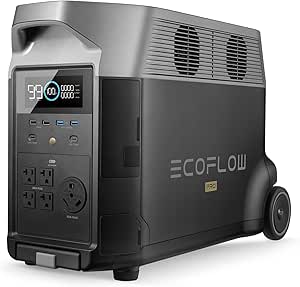 | Best for Expandable Home Backup | Battery capacity: 3,600Wh | Battery type: LFP | Running wattage: 3,600W | VIEW LATEST PRICE | See Our Full Breakdown |
| EF EcoFlow DELTA 3 Max Portable Power Station |  | Best for High-Demand Home Backup | Battery Capacity: 2048Wh | Continuous Output: 2400W | X-Boost Output: 3400W | VIEW LATEST PRICE | See Our Full Breakdown |
| Anker 521 Portable Power Station |  | Best Entry-Level Compact Unit | Battery Capacity: 256Wh | AC Output: 300W | Peak Output: 600W | VIEW LATEST PRICE | See Our Full Breakdown |
| Jackery HomePower 3600 Plus Portable Power Station |  | Best for Whole-Home Backup & Expansion | Battery Capacity: 3584Wh | AC Output: 3600W | Max Expandable Capacity: 21kWh | VIEW LATEST PRICE | See Our Full Breakdown |
| BLUETTI Elite 200 V2 Portable Power Station | 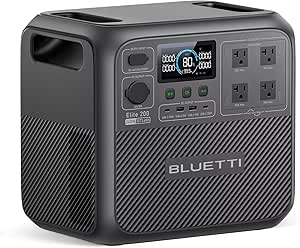 | Best Versatile Mid-Range Option | Battery Capacity: 2073.6Wh | Continuous Output: 2600W | Power Lifting Output: 3900W | VIEW LATEST PRICE | See Our Full Breakdown |
| Jackery Explorer 1000 V2 Portable Power Station |  | Best Balance of Portability and Power | Battery Capacity: 1070Wh | AC Output: 1500W | Surge Peak: 3000W | VIEW LATEST PRICE | See Our Full Breakdown |
| Anker SOLIX C1000 Gen 2 Portable Power Station |  | Best High-Performance Mid-Range | Battery Capacity: 1,024Wh | Continuous Output: 2,000W | Peak Output: 3,000W | VIEW LATEST PRICE | See Our Full Breakdown |
| Jackery Explorer 300 Portable Power Station, 292Wh |  | Best Ultra-Compact Entry Level | Battery Capacity: 292Wh | Continuous Output: 300W | Peak Surge: 600W | VIEW LATEST PRICE | See Our Full Breakdown |
| Anker SOLIX S2000 Portable Power Station, 2,010Wh, 1,500W |  | Best Large Capacity Value | Battery Capacity: 2,010Wh | Continuous Output: 1,500W | Peak Output: 3,000W | VIEW LATEST PRICE | See Our Full Breakdown |
| BLUETTI Elite 100 V2 Portable Power Station, 1024Wh, 1800W |  | Best Smart Connectivity | Battery Capacity: 1,024Wh | Continuous Output: 1,800W | Surge Power: 3,600W | VIEW LATEST PRICE | See Our Full Breakdown |
| EBL Acc2400 Portable Power Station, 1843.2Wh LiFePO4 Battery, 2400W |  | Best High-Wattage Workhorse | Battery Capacity: 1,843.2Wh | Continuous Output: 2,400W | Starting Wattage: 4,800W | VIEW LATEST PRICE | See Our Full Breakdown |
| portable power station | Battery capacity | Weight | Continuous output |
|---|---|---|---|
| EcoFlow DELTA 3 Portable Power | — | 12.5kg | — |
| BLUETTI Elite 30 V2 Portable P | — | 9.5lb | 600W |
| Anker SOLIX C2000 Gen 2 Portab | 2,048Wh | 41.7lb | — |
| Jackery Explorer 2000 v2 Porta | 2,042Wh | 39.5lb | — |
| EcoFlow DELTA Pro Portable Pow | 3,600Wh | 99lb | — |
| EF EcoFlow DELTA 3 Max Portabl | 2048Wh | — | 2400W |
| Anker 521 Portable Power Stati | 256Wh | — | — |
| Jackery HomePower 3600 Plus Po | 3584Wh | 77.2 lbs | — |
| BLUETTI Elite 200 V2 Portable | 2073.6Wh | — | 2600W |
| Jackery Explorer 1000 V2 Porta | 1070Wh | 23.8 lbs | — |
| Anker SOLIX C1000 Gen 2 Portab | 1,024Wh | 11.3 kg (24.9 lbs) | 2,000W |
| Jackery Explorer 300 Portable | 292Wh | 7.5 lbs | 300W |
| Anker SOLIX S2000 Portable Pow | 2,010Wh | 35.7 lbs | 1,500W |
| BLUETTI Elite 100 V2 Portable | 1,024Wh | 25 lbs | 1,800W |
| EBL Acc2400 Portable Power Sta | 1,843.2Wh | 54 lbs | 2,400W |
More Details on Our Top Picks
EcoFlow DELTA 3 Portable Power Station, 1024Wh, 1800W
The EcoFlow DELTA 3 balances useful capacity, substantial output, and unusually quick recharging better than the smaller BLUETTI Elite 30 V2. Its 1,024Wh battery and 1,800W AC output can handle a wider range of everyday appliances, while combined AC and solar input can refill it in 56 minutes when compatible charging sources are available. That speed suits outage plans where the station may need to recover between uses, and its 4,000-cycle LiFePO4 battery is built for repeated charging. It can also expand to 5kWh, giving buyers room to add capacity later. The tradeoff is that expansion requires compatible extra batteries, and at 12.5kg it is less convenient to carry than compact models. Compared with the larger Anker SOLIX C2000 Gen 2, it is easier to move but stores less energy.
Pros:- Combined AC and solar charging can fully recharge the station in 56 minutes
- LiFePO4 battery rated for 4,000 cycles to 80% capacity
- 1,800W AC output and support for up to 13 devices
- Expandable to 5kWh with compatible EcoFlow batteries
Cons:- Expansion depends on buying compatible extra batteries
- 12.5kg weight is less convenient for carrying than compact power stations
Best for: Campers and households seeking a mid-capacity station with quick recharging, durable battery chemistry, and the option to add compatible capacity later.
Not ideal for: Buyers who need long runtimes for several high-draw appliances or want a lightweight station for frequent long-distance carrying.
- Capacity:1,024Wh
- AC output:1,800W
- Surge output:3,600W
- USB-C output:100W
- Maximum solar input:500W
- Recharge time:56 minutes with combined AC and solar input
- Battery:LiFePO4; rated for 4,000 cycles to 80% capacity
- Weight:12.5kg
- Expandable capacity:Up to 5kWh with compatible extra batteries
Our verdict“Choose the DELTA 3 for a versatile mid-capacity station that recharges quickly and can grow with a changing backup-power plan.”
BLUETTI Elite 30 V2 Portable Power Station, 288Wh, 600W
The BLUETTI Elite 30 V2 is the carry-first choice in this group: at 9.5 pounds, it is far easier to bring along than the EcoFlow DELTA 3 or the much larger Anker SOLIX C2000 Gen 2. Its 288Wh capacity is better suited to phones, laptops, lights, and brief backup than to running household appliances for hours. Standard output is 600W; Power Lifting Mode can support certain higher-wattage loads up to 1,500W, but that figure is not the continuous rating. Fast wall charging reaches 80% in 45 minutes, and a UPS switch time of up to 10ms suits some home backup setups. Multiple charging options add flexibility for travel. The clear compromise is runtime: its small battery fills a different role from the DELTA 3’s 1,024Wh pack, so it is a poor substitute for extended outage power.
Pros:- 9.5-pound weight and compact dimensions are easy to pack and carry
- Reaches 80% charge in 45 minutes using AC wall charging
- Supports AC, solar, car, lead-acid, and generator charging
- UPS switching takes up to 10ms
Cons:- 288Wh capacity limits runtime for appliances and other high-energy loads
- 1,500W Power Lifting Mode is not the same as 600W continuous output
Best for: Travelers, day campers, and laptop users who want a light station for electronics, lights, and short-duration backup.
Not ideal for: Households seeking extended outage coverage or anyone planning to run high-draw appliances for sustained periods.
- Capacity:288Wh
- Continuous output:600W
- Power Lifting Mode output:Up to 1,500W
- Weight:9.5lb
- Dimensions:9.8 × 7 × 6.6in
- AC charging:380W, adjustable to 200W
- AC charging time:0–80% in 45 minutes; 0–100% in 70 minutes
- UPS switch time:Up to 10ms
- Charging methods:AC, solar, car, lead-acid, and generator
Our verdict“Pick the Elite 30 V2 when portability and quick charging matter more than the longer runtimes offered by larger stations.”
Anker SOLIX C2000 Gen 2 Portable Power Station, 2,048Wh
With 2,048Wh of capacity, 2,400W rated output, and 4,000W peak output, the Anker SOLIX C2000 Gen 2 is the strongest fit here for buyers balancing substantial appliance power with a still-portable design. It holds twice the energy of the EcoFlow DELTA 3 and can handle higher-output demands, while weighing 41.7 pounds—far less than the 99-pound EcoFlow DELTA Pro. That weight is manageable for loading into a vehicle, though not appealing for frequent long carries. Six charging methods give it flexibility for road trips and backup plans; combined AC and solar can provide a full recharge in 58 minutes. Its 9W standby power is a useful detail for buyers leaving it ready for backup. Expansion to 4kWh requires an additional battery, so the included capacity is not the full expandable figure.
Pros:- 2,400W rated output with 4,000W peak output
- 2,048Wh battery provides substantially more stored energy than the EcoFlow DELTA 3
- Six charging methods, including 800W alternator charging
- Combined AC and solar charging can fully recharge it in 58 minutes
Cons:- At 41.7lb, it is cumbersome for carrying over long distances
- Reaching 4kWh capacity requires an additional battery
Best for: Road-trip and home-backup buyers who need more capacity and output than a mid-size station offers but still want a unit that can be loaded into a vehicle.
Not ideal for: Buyers who need a station for frequent carrying over distance or want 4kWh capacity without purchasing an extra battery.
- Battery capacity:2,048Wh
- Peak output:4,000W
- Battery type:LiFePO4
- Full recharge time:58 minutes with AC and solar
- Charging methods:Six
- Alternator charging:800W; full charge in 3 hours
- Weight:41.7lb
- Expandable capacity:Up to 4kWh with an additional battery
Our verdict“Choose the C2000 Gen 2 for high-output camping and backup use when you can accept a 41.7-pound carry and may add a battery later.”
Jackery Explorer 2000 v2 Portable Power Station, 2042Wh, 2200W
The Jackery Explorer 2000 v2 gives buyers a 2,042Wh battery and 2,200W AC output in a more restrained backup package than the EcoFlow DELTA Pro. Its silent charging mode is the key distinction: the stated full charge takes five hours at less than 30dB, useful when charging noise would disrupt a campsite or living space. For faster preparation, AC charging reaches 80% in 66 minutes, while solar charging can take as few as six hours with 400W panels. Three AC outlets and 100W USB-C cover a practical mix of devices, and 20ms UPS switching can help keep essential equipment supplied during an outage. Compared with the Anker SOLIX C2000 Gen 2, it offers slightly less capacity and output, but it is lighter at 39.5 pounds. Solar panels are optional, and the listed runtime should not be treated as a guarantee for every load.
Pros:- Silent charging mode completes a full charge in five hours at less than 30dB
- 2,042Wh capacity and 2,200W AC output suit substantial backup loads
- 20ms UPS switching supports backup for essential connected devices
- 39.5lb weight is lower than the Anker SOLIX C2000 Gen 2
Cons:- Solar panels are optional, so solar charging requires separate equipment
- Three AC outlets may limit how many wall-powered devices can connect directly
Best for: Campers and outage-conscious households who value quiet charging, a large battery, and UPS support for essential devices.
Not ideal for: Buyers who need more than three AC outlets, want panels included, or prioritize maximum output over quieter charging.
- Battery capacity:2,042Wh
- AC output:2,200W
- Battery chemistry:LiFePO4
- AC outlets:3
- USB-C PD output:100W
- Weight:39.5lb
- Solar charging time:As few as 6 hours with 400W panels
- UPS switching time:20ms
- Silent charging:Full charge in 5 hours at less than 30dB
Our verdict“Choose the Explorer 2000 v2 if quiet charging and UPS support matter more than the C2000 Gen 2’s higher output.”
EcoFlow DELTA Pro Portable Power Station, 3600Wh, 3600W AC Output
The EcoFlow DELTA Pro is the capacity-first choice in this group, with a 3,600Wh battery, 3,600W running output, and expansion up to 25kWh with compatible batteries or generators. That makes it a better fit for a home backup plan than the Jackery Explorer 2000 v2, whose 2,042Wh capacity is less suited to longer or broader power needs. Fifteen output ports also let more devices connect at once, while app control over Wi-Fi and Bluetooth makes remote monitoring and settings access possible. It accepts charging from wall outlets, solar, car outlets, EV stations, and a smart generator. The tradeoff is literal: at 99 pounds and 25 inches long, this is not a station to carry casually. Its stated 4,500W maximum depends on X-Boost, so buyers should distinguish that from the 3,600W running rating.
Pros:- 3,600Wh battery offers more stored energy than the 2,042Wh Jackery Explorer 2000 v2
- Expandable to 25kWh with compatible batteries or generators
- Fifteen output ports accommodate multiple connected devices
- Wi-Fi and Bluetooth app connectivity supports remote monitoring and settings control
Cons:- 99lb weight and large dimensions make it difficult to move frequently
- 4,500W maximum output uses X-Boost and is not the 3,600W running rating
Best for: Homeowners building an expandable backup system who need substantial stored energy, many connection options, and app-based monitoring.
Not ideal for: Campers or travelers who need a station they can regularly lift and carry without help.
- Battery capacity:3,600Wh
- Battery type:LFP
- Running wattage:3,600W
- Maximum output:4,500W with X-Boost
- Expandable capacity:Up to 25kWh
- Output ports:15
- Charging methods:EV station, solar, wall outlet, smart generator, and car outlet
- Weight:99lb
- App connectivity:Wi-Fi and Bluetooth
Our verdict“Pick the DELTA Pro for a home-centered backup setup that prioritizes capacity and expansion over easy portability.”
EF EcoFlow DELTA 3 Max Portable Power Station
This unit stands out for its exceptional charging speed, reaching 80% capacity in just 1.13 hours. While the Jackery HomePower 3600 Plus offers more raw capacity, the DELTA 3 Max provides a better balance of power and portability for users who need to recharge quickly between outages or heavy usage sessions. Its 2400W continuous output handles most household appliances, and the 3400W X-Boost mode allows it to run high-draw devices like space heaters or power tools that would trip other units. The 10ms transfer time makes it a viable option for keeping sensitive electronics running during brief grid interruptions.
However, this performance comes at the cost of weight and size. It is not as compact as the Jackery Explorer 1000 V2, making it less ideal for frequent travel. If you need maximum capacity for days-long outages, look elsewhere; this is a high-speed bridge, not a long-term reservoir.
Pros:- Recharges from 0 to 80% in roughly one hour
- X-Boost feature handles high-draw appliances up to 3400W
- 10ms transfer time supports UPS-like backup for computers
- LiFePO4 battery ensures long-term durability and safety
Cons:- Heavier and bulkier than mid-range competitors
- Solar panel for optimal charging is sold separately
- Price point is higher than basic 1000Wh units
Best for: Homeowners needing reliable backup for sensitive electronics and high-wattage appliances who prioritize fast recharge times.
Not ideal for: Campers or digital nomads who need a lightweight unit for frequent travel, as this model is bulky and heavy.
- Battery Capacity:2048Wh
- Continuous Output:2400W
- X-Boost Output:3400W
- Charge Time (0-80%):1.13 hours
- Transfer Time:10ms
- Battery Type:LiFePO4
- Weight/Dimensions:9.4 x 12 x 19.44 inches
- Warranty:5 Years
Our verdict“Choose this if you need rapid recharge capability and high-wattage support for home backup rather than long-duration off-grid living.”
Anker 521 Portable Power Station
This model is the clear winner for beginners and light users who need more than a power bank but less than a full station. Compared to the BLUETTI Elite 200 V2, which offers double the capacity and higher output, the Anker 521 is significantly smaller and more affordable. It provides 256Wh of capacity and 300W output, sufficient for laptops, cameras, drones, and small fans. The inclusion of USB-C PD 60W is a standout feature, allowing fast charging for modern laptops without needing separate bricks.
The tradeoff is clear: you cannot run high-wattage appliances like microwaves or coffee makers. It is strictly for electronics and small gadgets. If you need to power a CPAP machine overnight or run a mini-fridge, this unit will drain too quickly or fail to start the compressor. It is a stepping stone, not a workhorse.
Pros:- Lightweight and highly portable for daily carry
- 60W USB-C PD allows fast laptop charging
- LiFePO4 battery offers long lifespan despite small size
- Includes car charging cable for on-the-go top-ups
Cons:- Low 300W output prevents use of most kitchen appliances
- 256Wh capacity drains quickly under moderate loads
- Only two AC outlets limit simultaneous device use
Best for: Students, travelers, and first-time buyers who primarily charge laptops, phones, and small electronics.
Not ideal for: Users needing to run high-wattage appliances or power a home during extended outages due to low capacity.
- Battery Capacity:256Wh
- AC Output:300W
- Peak Output:600W
- USB-C Output:60W PD
- Ports:2 AC, 2 USB-A, 1 USB-C, 1 Car
- Battery Type:LiFePO4
- Charge Time:2.5 hours
- Warranty:5 Years
Our verdict“This is the ideal starting point for anyone who needs reliable power for electronics but has no need for heavy-duty appliance support.”
Jackery HomePower 3600 Plus Portable Power Station
This unit redefines the upper limit of portable power with 3584Wh capacity and 3600W output. Unlike the BLUETTI Elite 200 V2, which is limited to about 2kWh, the HomePower 3600 Plus can sustain a household for days and expand up to 21kWh with additional batteries. This scalability is its primary advantage, allowing users to start with one unit and grow their system as needs change. The wheeled design is essential here, as the 77.2-pound weight makes it impossible to carry for long distances.
The complexity of setup and the sheer bulk are significant downsides. It is not a unit you pack in a car trunk for a weekend trip; it is a stationary backup solution. While the hybrid charging options (AC + Solar) are impressive, the initial cost and physical footprint mean this is overkill for casual campers. It is built for resilience, not convenience.
Pros:- Massive 3584Wh capacity expandable to 21kWh
- 3600W output handles almost all standard household appliances
- Hybrid charging supports AC, solar, and gas generators
- Wheels and telescopic handle facilitate movement
Cons:- Extremely heavy at 77.2 pounds
- Large footprint requires dedicated storage space
- Solar panels and expansion batteries are sold separately
Best for: Homeowners preparing for long-term grid outages who need expandable capacity and high-wattage support.
Not ideal for: Campers or RVers with limited storage space or weight capacity, given its massive size and weight.
- Battery Capacity:3584Wh
- AC Output:3600W
- Max Expandable Capacity:21kWh
- Battery Cycle Life:6,000 cycles
- Weight:77.2 lbs
- Charging Options:AC, Solar, Gas, Hybrid
- Battery Type:LFP
- Dimensions:15.2 x 12.2 x 19.3 inches
Our verdict“Select this for serious emergency preparedness where capacity and expandability matter more than portability.”
BLUETTI Elite 200 V2 Portable Power Station
The Elite 200 V2 hits a sweet spot between power and portability, offering 2600W continuous output with a 2073.6Wh capacity. It competes directly with the EcoFlow DELTA 3 Max, but stands out for its power lifting mode that reaches 3900W, allowing it to start heavy-duty motors like compressors and pumps. This versatility makes it suitable for both home backup and serious off-grid projects. The UPS backup mode ensures critical devices stay online during brief power flickers.
However, the charging experience can be inconsistent. While it supports multiple input methods, the Silent mode reduces fan noise by slowing charging speeds significantly, potentially taking over three hours for a full charge. Compared to the Jackery Explorer 1000 V2, it offers more headroom for high-draw devices but lacks the same intuitive app ecosystem for some users. It is a robust tool for those who need flexibility in power sources and high surge capacity.
Pros:- 3900W power lifting mode for high-startup appliances
- Supports up to nine devices simultaneously
- Over 6,000 battery cycles ensure long-term value
- Flexible charging via AC, solar, car, and generator
Cons:- Silent charging mode is extremely slow
- Output and charging speeds vary widely by mode
- Heavier than 1000Wh class competitors
Best for: DIY enthusiasts and homeowners who need to run power tools, compressors, or multiple devices simultaneously.
Not ideal for: Users who prioritize silent operation during charging, as Silent mode drastically slows down recharge times.
- Battery Capacity:2073.6Wh
- Continuous Output:2600W
- Power Lifting Output:3900W
- Battery Cycle Life:>6,000 cycles
- UPS Transfer Time:≤15ms
- Max Solar Input:1000W
- Battery Type:LiFePO4
- Total Outlets:4 AC + USB
Our verdict“This model is the best choice for users who need high surge capacity for tools and appliances without stepping up to massive home batteries.”
Jackery Explorer 1000 V2 Portable Power Station
This unit is the go-to recommendation for campers and van lifers who need a manageable power source. With 1070Wh capacity and a weight of just 23.8 pounds, it is far easier to transport than the Jackery HomePower 3600 Plus or the EcoFlow DELTA 3 Max. The 1500W AC output is sufficient for most camping essentials, including coffee makers and electric blankets. The emergency charging mode allows a full recharge in one hour, a critical feature for frequent travelers who may only have access to power for short periods.
The limitation is clear: it cannot handle high-wattage home appliances like air conditioners or large heaters. While the app integration is user-friendly, the reliance on enabling emergency charging for fast speeds adds a layer of complexity. For those needing more than 1500W continuous power, the BLUETTI Elite 200 V2 is a better fit, but for pure portability and reliable mid-range power, this remains a top choice.
Pros:- Lightweight 23.8 lb design ideal for transport
- 100W USB-C output supports fast laptop charging
- Emergency charging mode enables 1-hour full recharge
- LFP battery rated for 4,000+ cycles
Cons:- 1500W output limits high-draw appliance use
- Fast charging requires enabling specific app settings
- Solar panel sold separately
Best for: Campers, RV owners, and travelers who need a lightweight, high-capacity unit for electronics and small appliances.
Not ideal for: Homeowners needing to run high-wattage HVAC systems or power tools continuously during outages.
- Battery Capacity:1070Wh
- AC Output:1500W
- Surge Peak:3000W
- Weight:23.8 lbs
- USB-C Output:100W
- Battery Type:LFP
- Charge Time:1 hour (Emergency Mode)
- Battery Lifespan:4,000 cycles
Our verdict“This is the most practical choice for mobile users who need significant capacity without the bulk of home-backup units.”
Anker SOLIX C1000 Gen 2 Portable Power Station
The Anker SOLIX C1000 Gen 2 stands out for its exceptional balance of power density and recharge speed. With a 1,024Wh capacity and 2,000W continuous output, it handles heavy-duty appliances that smaller units like the Jackery Explorer 300 simply cannot. The standout feature is the 49-minute AC recharge time, which is significantly faster than many competitors in this class, making it ideal for users who need rapid turnaround between uses. However, the 600W solar input limit is a tradeoff; while sufficient for most, it lags behind units like the Anker SOLIX S2000 which offer higher solar flexibility. The sub-10ms UPS switchover ensures your computer or router stays online during brief outages, a feature that adds real value for home office users. If you prioritize fast charging and compact power over maximum solar throughput, this model delivers.
Pros:- Extremely fast AC recharge time (49 minutes)
- High 2,000W continuous output with 3,000W peak
- Reliable UPS function with under 10ms switchover
- Long-lasting LiFePO4 battery rated for 4,000 cycles
Cons:- Solar input is capped at 600W, limiting charging speed with large panels
- Outlet count (9) is slightly lower than some competitors with similar capacity
- Heavier than small-capacity units, though lighter than large 2kWh stations
Best for: Home office users and RVers who need fast recharging and reliable UPS backup for sensitive electronics.
Not ideal for: Off-grid enthusiasts relying heavily on large solar arrays, as the 600W solar input may be a bottleneck.
- Battery Capacity:1,024Wh
- Continuous Output:2,000W
- Peak Output:3,000W
- AC Recharge Time:49 minutes
- Solar Input:600W max
- Weight:11.3 kg (24.9 lbs)
- Battery Chemistry:LiFePO4
Our verdict“This is the best choice for users who value rapid recharging and stable power for electronics over maximum solar expansion.”
Jackery Explorer 300 Portable Power Station, 292Wh
The Jackery Explorer 300 is the lightweight champion of this lineup, weighing just 7.5 lbs. It is designed for portability rather than heavy-duty power, offering 292Wh capacity and 300W continuous output. Compared to the BLUETTI Elite 100 V2, which offers over three times the capacity, the Explorer 300 is strictly for light tasks like charging laptops, phones, and small fans. Its LiFePO4 battery is a significant upgrade over older lithium-ion models, promising over 4,000 charge cycles. However, the 600W surge limit means it cannot power small microwaves or high-draw tools. The solar panel is sold separately, which adds to the total cost if you plan on off-grid charging. This unit is best suited for those who need a grab-and-go solution for day trips, not for powering appliances.
Pros:- Extremely lightweight and portable (7.5 lbs)
- Durable LiFePO4 battery with long lifespan
- Multiple ports including 100W USB-C PD
- Compact form factor fits easily in a backpack
Cons:- Low 300W continuous output limits appliance compatibility
- Solar panel must be purchased separately
- Limited capacity for extended off-grid use
Best for: Hikers, photographers, and commuters who need a lightweight backup for small electronics and USB devices.
Not ideal for: Users needing to run kitchen appliances, power tools, or any device drawing more than 300W continuously.
- Battery Capacity:292Wh
- Continuous Output:300W
- Peak Surge:600W
- Weight:7.5 lbs
- Battery Chemistry:LiFePO4
- Charge Cycles:4,000+ to 70%
- AC Outlets:2
Our verdict“Choose this if you prioritize minimal weight and compact size over power capacity or runtime.”
Anker SOLIX S2000 Portable Power Station, 2,010Wh, 1,500W
The Anker SOLIX S2000 offers a massive 2,010Wh capacity in a surprisingly manageable package. While its 1,500W continuous output is lower than the Anker SOLIX C1000 Gen 2’s 2,000W, it compensates with significantly more stored energy, making it better for long-duration tasks like running a refrigerator for days. The six recharge methods provide flexibility that simpler units lack. However, the absence of a 12V DC port is a notable omission for car campers who rely on 12V accessories. Compared to the Jackery Explorer 2000 v2, the S2000 offers similar capacity but with a different output profile. It is ideal for users who need to run low-wattage appliances for extended periods rather than high-wattage tools for short bursts.
Pros:- Huge 2,010Wh capacity for extended runtime
- Six different recharge methods for flexibility
- Compact footprint for a 2kWh-class station
- UPS function with <10ms switchover
Cons:- No 12V DC output port for car accessories
- 1,500W output is lower than other 2kWh competitors
- Refrigerator runtime varies significantly with ambient temperature
Best for: Users who need long runtime for low-wattage appliances like refrigerators, CPAP machines, or fans.
Not ideal for: People needing to power high-draw tools like circular saws or electric kettles due to the 1,500W limit.
- Battery Capacity:2,010Wh
- Continuous Output:1,500W
- Peak Output:3,000W
- Solar Input:400W
- Weight:35.7 lbs
- Recharge Methods:6
- Battery Chemistry:LiFePO4
Our verdict“This is the best choice if you need maximum battery life for low-power devices and don’t require high-wattage bursts.”
BLUETTI Elite 100 V2 Portable Power Station, 1024Wh, 1800W
The BLUETTI Elite 100 V2 distinguishes itself with robust Wi-Fi and Bluetooth app control, allowing for remote monitoring and firmware updates that many competitors lack. It features a 1,024Wh capacity and 1,800W output, placing it in direct competition with the Anker SOLIX C1000 Gen 2. While the Anker has higher continuous output, the BLUETTI offers a 3600W surge power, which is higher than Anker’s 3,000W peak, making it slightly more tolerant of startup spikes from certain appliances. The 30dB silent mode is a quiet operation feature valuable for indoor use. However, fast vehicle charging requires a separate adapter, which adds cost and clutter. This unit is for tech-savvy users who want granular control over their power station via smartphone.
Pros:- Wi-Fi and Bluetooth app control for remote management
- High 3,600W surge power for appliance startup
- Quiet operation with 30dB silent mode
- Fast AC charging to 80% in ~45 minutes
Cons:- Vehicle fast charging requires a separate BLUETTI Charger 1
- Output ports configuration can be confusing compared to simpler units
- App dependency may frustrate users who prefer physical controls
Best for: Tech-oriented users who want app-based control, monitoring, and quiet operation for home backup.
Not ideal for: Users who want plug-and-play simplicity without needing to pair devices or buy extra adapters.
- Battery Capacity:1,024Wh
- Continuous Output:1,800W
- Surge Power:3,600W
- Connectivity:Wi-Fi, Bluetooth
- Noise Level:30dB (Silent Mode)
- Weight:25 lbs
- Battery Chemistry:LiFePO4
Our verdict“Select this if you value smart connectivity and quiet operation over raw maximum output wattage.”
EBL Acc2400 Portable Power Station, 1843.2Wh LiFePO4 Battery, 2400W
The EBL Acc2400 is built for heavy-duty applications, offering 2,400W continuous output and a massive 4,800W starting wattage. This makes it capable of running power tools and high-draw appliances that would trip the BLUETTI Elite 100 V2 or the Anker SOLIX S2000. With 1,843.2Wh capacity, it sits between the 1kWh and 2kWh classes, providing a versatile middle ground for job sites. The 12 charging options, including wireless charging, are unique conveniences. However, its 54 lb weight makes it difficult to transport without a rolling cart, unlike the more portable Jackery Explorer 300. The 2-year warranty is also shorter than the 5-year coverage offered by Anker and BLUETTI, which is a significant consideration for long-term value.
Pros:- High 2,400W continuous output for power tools
- Massive 4,800W surge power for difficult startups
- 12 diverse charging ports including wireless
- 0.1-second emergency backup switchover
Cons:- Very heavy at 54 lbs, limiting portability
- Shorter 2-year warranty compared to premium competitors
- Large footprint takes up significant storage space
Best for: Contractors and homeowners needing high wattage for power tools and heavy appliances.
Not ideal for: Users with limited storage space or mobility issues, as it is extremely heavy at 54 lbs.
- Battery Capacity:1,843.2Wh
- Continuous Output:2,400W
- Starting Wattage:4,800W
- Weight:54 lbs
- Battery Chemistry:LiFePO4
- Charge Cycles:3,500+
- Warranty:2 Years
Our verdict“This is the best option if you need raw power for tools and can tolerate the heavy weight and shorter warranty.”
How We Picked
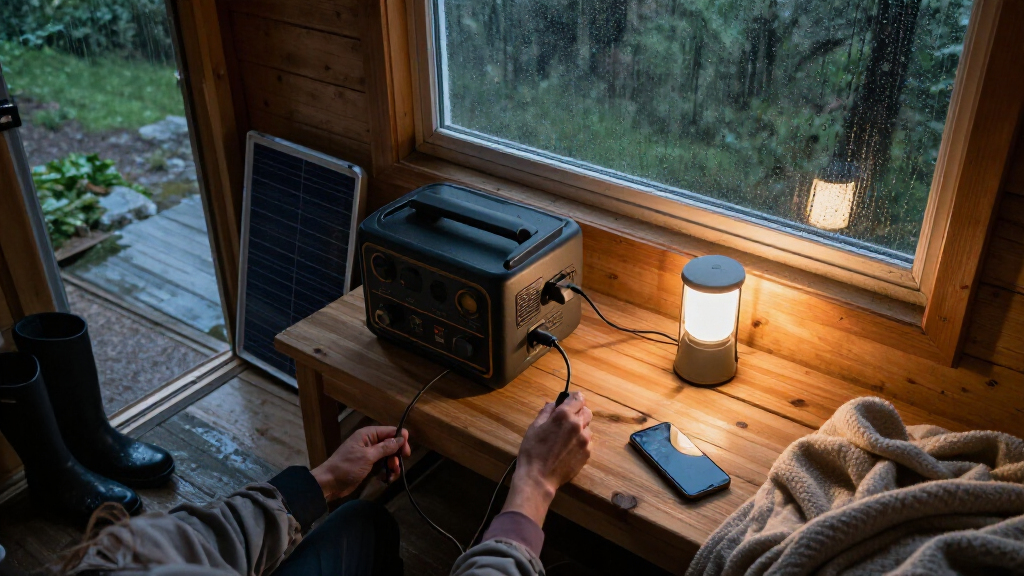
I evaluated these units based on three core pillars: energy density, output versatility, and recharge efficiency. Energy density determined how much usable power is packed into a portable form factor, which directly impacts portability for camping or tailgating. I prioritized models with LiFePO4 batteries because they offer over 3000 charge cycles, ensuring longevity for daily users. Output versatility was assessed by examining the variety of ports, including AC, DC, and USB-C PD, to see if a single unit could replace multiple chargers. Recharge efficiency was measured by how quickly the unit could refill from a wall outlet, a factor that becomes critical during frequent use or emergency scenarios.
Ranking logic favored models that offered the best balance of these factors for their price tier. Premium picks were judged on raw capacity and expandability, while value picks were assessed on how well they handled essential loads without unnecessary bloat. I also considered build quality and thermal management, as overheating can degrade battery life and reduce performance during sustained high-draw applications.
Factors to Consider When Choosing Best Portable Power Stations
Selecting a power station is not just about picking the biggest number. You must match the unit’s capabilities to your actual consumption patterns to avoid paying for unused capacity or struggling with insufficient power.Understanding Battery Chemistry: LiFePO4 vs. NMC
Battery chemistry dictates the lifespan and weight of your power station. LiFePO4 (Lithium Iron Phosphate) batteries are heavier but offer 3000+ charge cycles, making them ideal for daily use and long-term ownership. In contrast, NMC (Nickel Manganese Cobalt) batteries are lighter and denser but typically degrade after 500-800 cycles. If you plan to use the station regularly for work or home backup, LiFePO4 is the smarter investment despite the higher upfront cost. For occasional weekend camping, NMC might save you weight in your car trunk, but check the warranty terms carefully.
Matching Wattage Output to Your Appliances
Don’t just look at the peak wattage; check the continuous output rating. A station rated for 1800W continuous output can run a standard space heater or microwave, whereas a 600W unit will shut down under the same load. Many users make the mistake of buying a low-wattage unit expecting it to run high-draw appliances, leading to frustration. Always calculate the total wattage of the devices you intend to run simultaneously. If you need to run a refrigerator and a laptop, ensure the continuous output exceeds the combined startup wattage of the compressor and the running wattage of the computer.
The Importance of Recharging Speed and Methods
A power station is only as good as its ability to recharge. Look for models that support solar input and AC fast charging. Premium units now offer full recharges in under an hour from a wall outlet, which is vital during emergency outages where every minute counts. Budget models may take 6-8 hours to recharge, limiting their utility in rapid-cycling scenarios. Consider where you will be when the battery dies. If you are off-grid, solar compatibility and input wattage limits determine how quickly you can replenish power from the sun.
Portability and Ergonomic Design
Weight and handle placement matter more than specs when you are carrying the unit up stairs or across a campsite. A 2000Wh unit can weigh over 40 pounds, which is manageable for one person but exhausting for repeated moves. Look for ergonomic handles and a balanced center of gravity. Some units are designed to be stacked or daisy-chained, which adds flexibility for home backup but increases the footprint. If you plan to move the station frequently, prioritize models under 30 pounds or those with integrated wheels.
Expandability and Future-Proofing
Some power stations allow you to add expansion batteries to increase capacity without buying a new unit. This feature is valuable if your energy needs might grow, such as adding a new appliance to your backup circuit. Check if the manufacturer sells dedicated expansion packs and whether they maintain the same output wattage when connected. Not all systems support daisy-chaining, and those that do often require specific proprietary connections. Buying a scalable system now can save you from replacing your entire setup in two years.
Inverter Type: Pure Sine Wave vs. Modified Sine Wave
Most modern portable power stations use pure sine wave inverters, which are necessary for sensitive electronics like laptops, medical devices, and motors with variable speeds. Modified sine wave inverters are cheaper but can cause humming, overheating, or damage to sensitive equipment. Always verify that a unit specifies ‘pure sine wave’ in its technical specifications. If you are charging simple devices like LED lights or basic phones, modified sine wave might suffice, but for versatility, pure sine wave is the only safe choice for a general-purpose station.
Frequently Asked Questions
How long will a portable power station last on a full charge?
The runtime depends entirely on the load you are drawing. To estimate, divide the battery capacity (in watt-hours) by the device’s power consumption (in watts). For example, a 1000Wh station powering a 100W laptop will last approximately 10 hours, though you should account for an 85-90% efficiency loss due to the inverter. Smaller loads like phones will run for days, while high-draw appliances like coffee makers will deplete the battery in under an hour. Always check the manufacturer’s estimated runtime charts for realistic expectations.Can I run a refrigerator on a portable power station?
Yes, but you need a unit with sufficient capacity and a high enough continuous output. Most modern refrigerators require 800-1200 watts of startup power and 150-300 watts of running power. A 1000Wh unit with a 1500W+ inverter can typically run a standard fridge for 12-24 hours, depending on the ambient temperature and how often the door is opened. For longer off-grid periods, look for units with 2000Wh+ capacity or those that support solar recharging to maintain the charge during the day.Is it safe to leave a portable power station plugged in all the time?
Most modern units with LiFePO4 batteries and smart battery management systems (BMS) are designed to handle continuous grid connection. However, leaving any lithium battery at 100% charge for extended periods can accelerate degradation. Many newer models offer a ‘storage mode’ that caps the charge at 80-90% to preserve battery health. If you plan to use it for home backup, check if the unit allows you to set a charge limit. If not, try to cycle it occasionally rather than keeping it perpetually plugged in.What is the difference between 300W and 1800W output?
The difference is the type of appliances you can run. A 300W output is suitable for electronics like laptops, drones, cameras, and small fans. An 1800W output allows you to run high-draw appliances such as microwaves, coffee makers, power tools, and air compressors. If you only need to charge devices, a 300W unit is lighter and cheaper. If you want to run kitchen appliances or power tools, you must choose a unit with at least 1800W continuous output to avoid tripping the inverter.Do portable power stations work with solar panels?
Most mid-range and premium portable power stations include built-in MPPT solar controllers, allowing them to connect directly to compatible solar panels. However, budget models may require an external controller or may not support solar input at all. Check the maximum solar input wattage; a higher input allows for faster recharging with larger panels. Ensure the solar panel’s voltage and connector type match the power station’s input specifications to avoid compatibility issues.Conclusion
Choosing the best portable power stations comes down to matching capacity with your specific lifestyle needs. For most users seeking a balance of power and portability, the EcoFlow DELTA 3 is the strongest overall choice due to its fast charging and versatile output. If you need maximum backup power for your home, the EcoFlow DELTA Pro or Jackery HomePower 3600 Plus provide the capacity to keep essential circuits running for days. For beginners or casual campers, the Jackery Explorer 300 or BLUETTI Elite 30 V2 offer sufficient power for devices without the bulk. Value seekers should look at the Anker SOLIX C1000 Gen 2 for a solid mix of LiFePO4 durability and mid-range capacity. Evaluate your typical daily loads and choose the tier that fits your usage pattern to avoid overspending or underpowering.