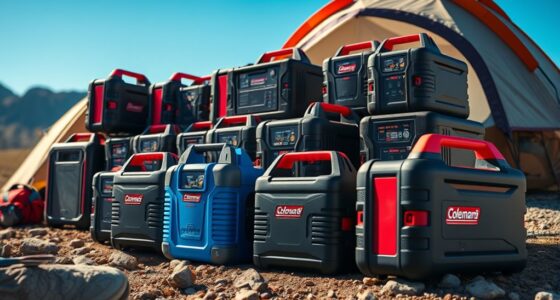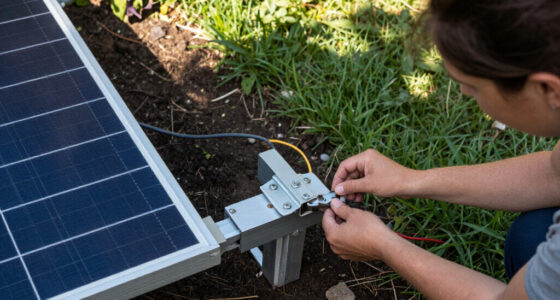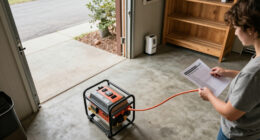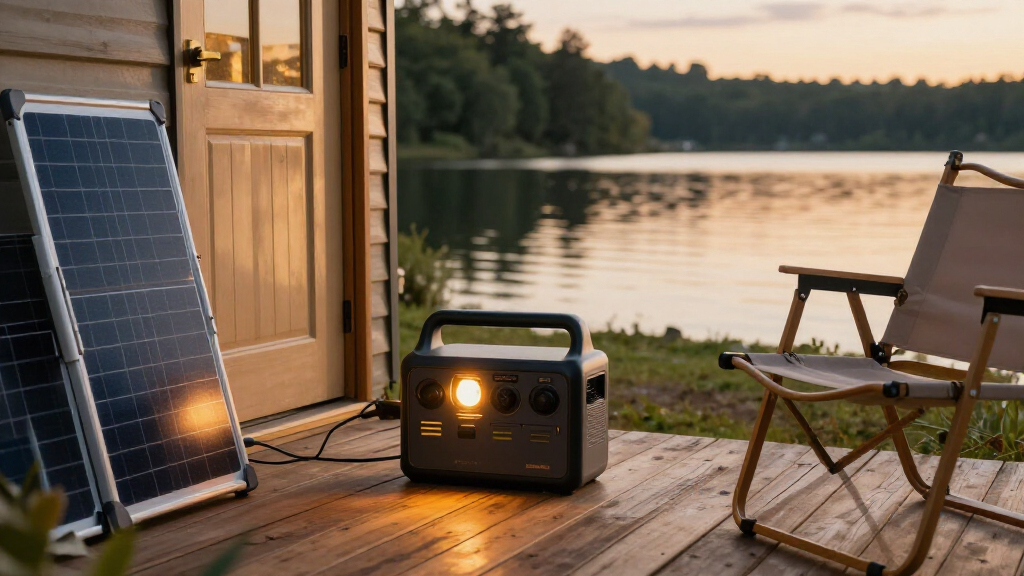
Portable power stations with solar panels pair a rechargeable battery with panels that can replenish it when grid power is unavailable. My best overall pick is the EcoFlow DELTA 3 Max with 220W Solar Panel, which balances a 2,048Wh capacity with a substantial included panel. The Jackery Explorer 300 with 40W Solar Panel is a simpler fit for light trips, while the Jackery Solar Generator 5000 Plus with Two 200W Panels targets larger backup needs. The main tradeoffs are capacity versus portability, solar input versus panel size, and a complete kit versus a power station sold on its own. Read on for a full comparison of all 15 options and guidance on choosing the right setup for your loads.

Get backup power and energy gear delivered free with Prime
- Fast, free delivery on millions of items
- Prime Video, Amazon Music and more included
- Member-only deals all year
Complete the kit


Key Takeaways
- The EcoFlow DELTA 3 Max kit stands out for balanced capacity: its 2,048Wh battery and included 220W panel make it a more versatile starting point than small camping kits, though it is less portable.
- Jackery’s lineup spans very different jobs: the Explorer 300 kits suit light electronics, while HomePower and 5000 Plus systems target longer outages and larger loads.
- Solar panel wattage varies more than battery capacity alone suggests: a large battery paired with only two 200W panels can take longer to refill than buyers expect, especially in weak sun.
- Some listings are not complete solar kits: the Explorer 300 292Wh and Explorer 1000 v2 1070Wh entries are power stations without a panel in the product name, so buyers should verify included equipment.
- Built-in solar favors convenience over flexibility: the BROWEY‘s integrated panel avoids packing a separate module, while separate-panel kits offer easier placement and more freedom to expand or reposition.
| Jackery Solar Generator 5000 Plus with Two 200W Solar Panels |  | Best for Whole-Home and RV Backup | Battery capacity: 5,040Wh | Battery chemistry: LiFePO₄ | Surge output: 14,400W | VIEW LATEST PRICE | See Our Full Breakdown |
| Jackery Explorer 300 Portable Power Station with 40W Solar Panel |  | Best Small Solar Starter Kit | Battery capacity: 292Wh | Battery chemistry: LiFePO₄ | Peak surge output: 600W | VIEW LATEST PRICE | See Our Full Breakdown |
| Jackery Solar Generator 1000 V2 with 200W Solar Panel |  | Best Balanced Choice for Camping and Backup | Battery capacity: 1,070Wh | Battery type: LFP | AC output: 1,500W | VIEW LATEST PRICE | See Our Full Breakdown |
| Jackery Solar Generator 1000 v2 with Two 100W Solar Panels |  | Best Included Solar Panel Setup | Battery capacity: 1,070Wh | Battery chemistry: LiFePO₄ | AC output: 1,500W | VIEW LATEST PRICE | See Our Full Breakdown |
| Jackery Explorer 300 Portable Power Station, 292Wh |  | Best Compact Solar-Ready Station | Battery capacity: 292Wh | Battery chemistry: LiFePO₄ | Peak output: 600W | VIEW LATEST PRICE | See Our Full Breakdown |
| BROWEY 1600W Portable Power Station with Built-In Solar Panel |  | Best for Built-In Solar Convenience | Battery capacity: 1,024Wh | Battery type: LiFePO4 | AC output: 1,600W (3,200W peak) | VIEW LATEST PRICE | See Our Full Breakdown |
| Jackery HomePower 3600 Plus Portable Power Station with 2 × 200W Solar Panels |  | Best for High-Capacity Home Backup | Battery capacity: 3,584Wh | AC output: 3,600W | Parallel output: 7,200W; 240V in parallel | VIEW LATEST PRICE | See Our Full Breakdown |
| BLUETTI Elite 100 V2 Solar Generator with 200W Solar Panel, 1024Wh |  | Best for Quiet Backup and UPS Use | Battery capacity: 1,024Wh | AC output: 1,800W | Power Lifting output: 2,700W | VIEW LATEST PRICE | See Our Full Breakdown |
| Anker SOLIX C1000 Gen 2 Portable Power Station with 200W Solar Panel |  | Best for Fast Solar Recharging | Battery capacity: 1,024Wh | Battery type: LiFePO4 | Output power: 2,000W | VIEW LATEST PRICE | See Our Full Breakdown |
| EcoFlow DELTA 3 Max Portable Power Station with 220W Solar Panel, 2,048Wh |  | Best Mid-Size Upgrade for Longer Runtime | Battery capacity: 2,048Wh | Battery type: LiFePO4 | Continuous output: 2,400W | VIEW LATEST PRICE | See Our Full Breakdown |
| ZeroKor 300W Portable Power Station with 60W Solar Panel |  | Best for Basic Solar-Powered Outings | Power station output: 300W | Solar panel: 60W monocrystalline | Panel conversion efficiency: 20.5% | VIEW LATEST PRICE | See Our Full Breakdown |
| Jackery Explorer 2000 v2 Solar Generator with Two 200W Solar Panels |  | Best for Home Backup in a Mid-Size Solar Bundle | Battery capacity: 2,042Wh | Battery type: LiFePO4 | AC output: 2,200W | VIEW LATEST PRICE | See Our Full Breakdown |
| Jackery HomePower 3000 Portable Power Station with 2x200W Solar Panels |  | Best for Extended Home Backup | Battery capacity: 3,072Wh | AC output: 3,600W | Surge output: 7,200W | VIEW LATEST PRICE | See Our Full Breakdown |
| Jackery Explorer 1000 v2 Portable Power Station 1070Wh 1500W |  | Best Portable Station for Buyers Adding Solar Later | Battery capacity: 1,070Wh | Battery type: LiFePO4 | Continuous AC output: 1,500W | VIEW LATEST PRICE | See Our Full Breakdown |
| MARBERO M82MAX 111Wh Portable Power Station with 30W Solar Panel |  | Best Lightweight Solar Kit | Battery capacity: 111Wh (30,000mAh) | Battery type: Lithium-ion | Included solar panel: 30W folding panel | VIEW LATEST PRICE | See Our Full Breakdown |
| portable power stations with solar panel | Battery capacity | Weight | Battery type |
|---|---|---|---|
| Jackery Solar Generator 5000 P | 5,040Wh | 134.5 lb | — |
| Jackery Explorer 300 Portable | 292Wh | — | — |
| Jackery Solar Generator 1000 V | 1,070Wh | 23.8 lb | LFP |
| Jackery Solar Generator 1000 v | 1,070Wh | 23.8 lb | — |
| Jackery Explorer 300 Portable | 292Wh | 7.1 lb | — |
| BROWEY 1600W Portable Power St | 1,024Wh | — | LiFePO4 |
| Jackery HomePower 3600 Plus Po | 3,584Wh | 77.2 pounds | LFP |
| BLUETTI Elite 100 V2 Solar Gen | 1,024Wh | — | — |
| Anker SOLIX C1000 Gen 2 Portab | 1,024Wh | — | LiFePO4 |
| EcoFlow DELTA 3 Max Portable P | 2,048Wh | — | LiFePO4 |
| ZeroKor 300W Portable Power St | — | — | — |
| Jackery Explorer 2000 v2 Solar | 2,042Wh | 66.8 lbs | LiFePO4 |
| Jackery HomePower 3000 Portabl | 3,072Wh | 59.5 lbs | — |
| Jackery Explorer 1000 v2 Porta | 1,070Wh | 23.8 lbs | LiFePO4 |
| MARBERO M82MAX 111Wh Portable | 111Wh (30,000mAh) | — | Lithium-ion |
More Details on Our Top Picks
Jackery Solar Generator 5000 Plus with Two 200W Solar Panels
I’d rank this first for buyers who need serious backup capacity, not a lightweight camping setup. Its 5,040Wh LiFePO₄ battery, 7,200W rated output, and 120V/240V support give it a wider appliance range than the Jackery Solar Generator 1000 V2, while expansion to 60kWh makes longer outages or larger backup needs more achievable. The package includes two 200W panels, but the station can accept up to 4,000W of solar input, leaving room to scale beyond the included array.
The tradeoff is portability: at 134.5 lb, this is a movable backup unit rather than something I’d plan to carry between campsites. The generator and panels also ship separately, which can complicate delivery and setup. I’d choose it over smaller Jackery kits for home or RV loads, but skip it if compact transport matters more than capacity.
Pros:- 5,040Wh LiFePO₄ battery provides substantially more stored energy than the 1,070Wh Jackery Solar Generator 1000 V2.
- 7,200W rated output and 120V/240V support cover larger loads and more appliance types.
- Expandable capacity up to 60kWh supports longer backup needs.
- Includes two 200W solar panels and accepts up to 4,000W of solar input.
Cons:- At 134.5 lb, it is difficult to move without treating it as a mostly stationary backup unit.
- The generator and panels ship separately, so the complete solar setup may not arrive together.
- Its scale is excessive for buyers who only need to recharge phones, laptops, or small camping devices.
Best for: Homeowners or RV users who need high-output 120V/240V backup and may expand storage for longer outages.
Not ideal for: Campers and buyers who regularly carry their power station by hand; its 134.5 lb weight makes frequent relocation difficult.
- Battery capacity:5,040Wh
- Battery chemistry:LiFePO₄
- Surge output:14,400W
- Voltage:120V and 240V
- Included solar panels:Two 200W panels
- Maximum solar input:4,000W
- Expandable capacity:Up to 60kWh
- Weight:134.5 lb
Our verdict“Choose this Jackery when expandable, high-output home or RV backup matters more than easy portability.”
Jackery Explorer 300 Portable Power Station with 40W Solar Panel
I’d put this kit ahead of the solar-ready Jackery Explorer 300 B082TMBYR6 for someone who wants a panel included from the start. Its 292Wh capacity and 300W output suit phones, cameras, lights, and some small appliances, while the 100W USB-C PD port gives compatible laptops a direct charging option. The included 40W panel makes it a self-contained entry point to solar charging, rather than requiring a separate panel purchase.
That convenience comes with a slow recharge: the listed estimate is about 7.5 hours to reach 80% with the included panel. The Jackery Solar Generator 1000 V2 with its 200W panel is a better fit for appliances or longer trips, but it is much larger and heavier. One listing gives conflicting weights—12.9 lb item weight and a 7.5 lb product claim—so I would verify the delivered configuration before prioritizing weight. The station and panel may also ship separately.
Pros:- Includes a 40W solar panel, unlike the panel-free Jackery Explorer 300 B082TMBYR6.
- 292Wh capacity and several port types cover common personal electronics.
- 100W USB-C PD output can charge compatible laptops without relying on an AC adapter.
- LiFePO₄ battery is rated for over 4,000 charge cycles.
Cons:- The included 40W panel takes about 7.5 hours to charge the station to 80% under the stated estimate.
- At 300W rated output, it is not suited to many high-power appliances.
- Provided weight information conflicts between 12.9 lb and 7.5 lb, and the station and panel may ship separately.
Best for: First-time solar-kit buyers who want a compact setup for charging personal electronics on short camping trips.
Not ideal for: Travelers who need fast solar replenishment or want to run higher-draw appliances; the 40W panel and 300W output limit those uses.
- Battery capacity:292Wh
- Battery chemistry:LiFePO₄
- Peak surge output:600W
- Included solar panel:40W
- Solar charging estimate:About 7.5 hours to 80% with the included panel
- Ports:2 AC, 1 USB-C PD, 2 USB-A, 1 car port
- USB-C output:100W
- Warranty:3+2 years
Our verdict“Pick this bundle for basic camping electronics and an included starter panel, but choose the 1000 V2 for larger loads or more solar capacity.”
Jackery Solar Generator 1000 V2 with 200W Solar Panel
This is my balanced pick for buyers who want more than a small electronics bank but don’t need a home-scale system. The 1,070Wh battery and 1,500W AC output give it a practical middle ground: it can handle a wider range of campsite and emergency loads than either Explorer 300, while its 23.8 lb weight is far easier to manage than the 5,000 Plus. The included 200W panel also offers a stronger solar setup than the 40W panel bundled with the Explorer 300 kit.
Three AC outlets and two USB-C ports help several devices share the station, and app controls add flexibility. However, the supplied details say one-hour charging requires emergency charging to be enabled in the app, so that speed is not a simple default mode. The panel and station may ship separately. I’d choose the two-panel 1000 V2 bundle if included solar collection is the priority, but this version keeps the package simpler while retaining the same listed battery and output.
Pros:- 1,070Wh capacity and 1,500W AC output suit more loads than either 292Wh Explorer 300.
- Includes a 200W panel, five times the panel wattage of the 40W Explorer 300 bundle.
- At 23.8 lb, it is more manageable for trips than the 5000 Plus.
- Three AC outlets, two USB-C ports, and app-controlled charging modes support flexible use.
Cons:- The station and solar panel may ship separately.
- One-hour charging requires enabling emergency charging in the app, rather than using a straightforward default setting.
- Its single included 200W panel provides less total solar wattage than the two-panel 1000 V2 bundle.
Best for: Campers and households seeking a mid-capacity station for electronics, lights, and selected appliances, with a 200W solar panel included.
Not ideal for: Buyers planning extended high-load backup or those who want the largest included solar array; the 5000 Plus has far more capacity, and the two-panel 1000 V2 bundle has more panel wattage.
- Battery capacity:1,070Wh
- Battery type:LFP
- AC output:1,500W
- Surge peak:3,000W
- Included solar panel:200W
- Ports:3 AC, 2 USB-C, 1 USB-A, 1 DC car port
- USB-C output:100W
- Weight:23.8 lb
- Warranty:5 years
Our verdict“Choose this version for a capable, still-portable 1,070Wh station with one 200W panel for camping and modest backup needs.”
Jackery Solar Generator 1000 v2 with Two 100W Solar Panels
I’d favor this bundle over the single-panel Jackery Solar Generator 1000 V2 when the included solar collection area is the deciding factor. Both have a 1,070Wh LiFePO₄ battery and 1,500W AC output, but this package supplies two 100W panels instead of one 200W panel. Matching the other bundle’s stated total panel wattage gives buyers two separate panels to position, which can be useful when a single placement spot has limited direct sunlight. The 23.8 lb station remains portable for car camping, though the panels add gear to pack and set up.
Fast AC charging and app control make it adaptable for trips and outages, while the LED light adds a useful camp feature. Solar performance still depends on direct, unobstructed sunlight, and the station and panels may arrive separately. Compared with the Explorer 300 kits, this has much more capacity and appliance output; compared with the 5000 Plus, it is far easier to move but cannot match its backup scale.
Pros:- Includes two 100W foldable panels for a combined 200W of solar panel wattage.
- 1,070Wh LiFePO₄ battery and 1,500W output handle more than the Explorer 300 models.
- The station is listed at 23.8 lb, making it more portable than the 5000 Plus.
- App control, multiple outlets, and an LED light add useful trip and backup functions.
Cons:- Solar collection depends on direct, unobstructed sunlight.
- Two panels take more packing and setup space than the single 200W panel bundle.
- The generator and solar panels may ship separately.
Best for: Car campers and emergency-prepared households who want a 1,070Wh station packaged with two panels for flexible placement.
Not ideal for: Buyers who need high-capacity, multi-day home backup or who want the smallest possible solar kit; the 5000 Plus holds far more energy, and two panels take more room to carry.
- Battery capacity:1,070Wh
- Battery chemistry:LiFePO₄
- AC output:1,500W
- Surge peak:3,000W
- Included solar panels:Two 100W foldable panels
- Ports:3 AC, 2 USB-C, 1 USB-A, 1 DC car port
- USB-C output:100W
- Charging time:About 1 hour
- Weight:23.8 lb
Our verdict“Choose this bundle over the single-panel 1000 V2 when two separately positionable 100W panels suit your campsite or backup setup.”
Jackery Explorer 300 Portable Power Station, 292Wh
This is my compact pick for buyers who already own a compatible solar panel or want to choose one separately. At 7.1 lb and 292Wh, it is much easier to pack than the 23.8 lb Jackery Solar Generator 1000 V2, though its 300W rated output narrows the range of appliances it can run. Two AC outlets, USB-C, USB-A, and a car port cover common charging needs on short trips, and the LiFePO₄ battery is listed for over 4,000 cycles to 70% capacity.
The main solar tradeoff is that no panel is included; unlike the Explorer 300 bundle B0G429L5B4, this model requires a separate panel purchase. With a 100W panel, the supplied estimate is about 2.8 hours to reach 80%, but panel choice and sunlight affect the setup. I’d pick it for lightweight device charging, not appliance-heavy camping or outage backup.
Pros:- At 7.1 lb, it is much easier to carry than the Jackery 1000 V2 models.
- 292Wh capacity and multiple output types cover phones, cameras, and other personal electronics.
- LiFePO₄ battery is rated for over 4,000 cycles to 70% capacity.
- With a 100W panel, the listed solar estimate reaches 80% in about 2.8 hours.
Cons:- Solar panel is not included, unlike the Explorer 300 bundle B0G429L5B4.
- 300W rated output limits use with higher-power appliances.
- Its 292Wh capacity is suited to shorter trips and smaller loads, not extended backup.
Best for: Backpackers, solo campers, and travelers who prioritize low weight for device charging and already have—or plan to select—a compatible solar panel.
Not ideal for: Buyers seeking a ready-to-use solar bundle or power for higher-draw appliances; it includes no panel and is limited to 300W rated output.
- Battery capacity:292Wh
- Battery chemistry:LiFePO₄
- Peak output:600W
- Solar panel:Not included; solar charging supported
- Solar charging estimate:About 2.8 hours to 80% with a 100W panel
- Ports:2 AC, 1 USB-C PD, 2 USB-A, 1 car port
- Weight:7.1 lb
- Dimensions:9.1 × 5.2 × 7.8 in
Our verdict“Choose this Explorer 300 if low carry weight matters most and you’re comfortable sourcing a solar panel separately.”
BROWEY 1600W Portable Power Station with Built-In Solar Panel
The BROWEY 1600W stands apart from the bundled-panel options here because its solar panel is built into the unit, so there is no separate panel to set up or pack. That convenience has a clear limit: its 40W solar input is far slower than the portable 200W panel bundled with the BLUETTI Elite 100 V2. Its 1,024Wh LiFePO4 battery and 1,600W output offer a useful middle ground for camping or backup tasks, including running some refrigerators and CPAP machines. The 100W USB-C port also suits laptop charging. I would choose it for simple, integrated solar access, not for fast off-grid refills. The stated three-hour AC recharge uses both the AC adapter and a 100W USB-C source at once, so that figure requires extra setup.
Pros:- Built-in 40W solar panel and MPPT controller avoid a separate panel setup.
- 1,024Wh LiFePO4 battery is rated for 3,000+ cycles to 80% capacity.
- 1,600W pure sine wave output can support a range of common appliances.
- Includes AC, USB-C PD, car, and solar charging options.
Cons:- 40W solar input is much slower than the 200W panels bundled with the BLUETTI and Anker options.
- The stated three-hour AC recharge time requires AC and 100W USB-C charging simultaneously.
- The included solar panel is built in, limiting the panel area and charging potential compared with a separate portable panel.
Best for: Campers and emergency-prep buyers who value an integrated solar panel and want to avoid carrying a separate panel.
Not ideal for: Off-grid users who need rapid solar charging or buyers who want a simple AC recharge without adding a 100W USB-C source.
- Battery capacity:1,024Wh
- Battery type:LiFePO4
- AC output:1,600W (3,200W peak)
- Solar panel:Built-in
- Solar charging:40W
- USB-C PD output:100W
- Battery life:3,000+ cycles to 80% capacity
- Ports:8
Our verdict“Choose the BROWEY if an all-in-one solar setup matters more than fast solar replenishment.”
Jackery HomePower 3600 Plus Portable Power Station with 2 × 200W Solar Panels
For buyers who need more than a 1,000Wh-class station can provide, the Jackery HomePower 3600 Plus leads this group in capacity and output. Its 3,584Wh battery and 3,600W AC output can cover larger loads and longer outages than the Anker SOLIX C1000 Gen 2, while expansion up to 21kWh per unit gives a path to longer backup. The included two 200W solar panels make this a more substantial solar bundle than the single-panel options, though the listed solar recharge time is still four hours under stated conditions. At 77.2 pounds, wheels and a telescopic handle help, but this is not a station I would pick for frequent hand-carrying. Parallel operation adds 240V output, though that requires additional equipment and setup.
Pros:- 3,584Wh capacity and 3,600W output support larger loads than the 1,024Wh-class stations in this group.
- Includes two 200W solar panels for a higher combined panel rating than the single-panel bundles.
- Expansion support allows up to 21kWh per unit.
- Wheels and a telescopic handle make it easier to move than its weight alone suggests.
Cons:- Weighs 77.2 pounds, making it cumbersome to lift or carry.
- 240V output requires parallel operation with another unit.
- The station and solar panels may ship separately, so the full solar setup may not arrive together.
Best for: Homeowners and RV users seeking substantial outage capacity, expandable storage, and a wheeled unit with bundled solar panels.
Not ideal for: Campers who need a lightweight station, or buyers who want a compact system that is easy to lift in and out of a vehicle.
- Battery capacity:3,584Wh
- AC output:3,600W
- Parallel output:7,200W; 240V in parallel
- Battery type:LFP
- Battery cycle life:6,000 cycles
- Expansion capacity:Up to 21kWh per unit
- Included solar panels:2 × 200W
- Weight:77.2 pounds
- Solar recharge time:4 hours
Our verdict“Pick the HomePower 3600 Plus when capacity and expansion matter more than easy lifting or compact storage.”
BLUETTI Elite 100 V2 Solar Generator with 200W Solar Panel, 1024Wh
The BLUETTI Elite 100 V2 is a strong match for buyers who want a solar-ready station that can also act as a fast-switching backup for sensitive electronics. Its 10ms UPS switchover makes it more specifically suited to keeping connected equipment running during a brief power interruption than the BROWEY, which has no UPS feature listed. The included 200W panel also gives it a much stronger solar starting point than the BROWEY’s built-in 40W panel. Still, the Anker SOLIX C1000 Gen 2 offers a faster stated full solar recharge, so I would not rank the BLUETTI as the quickest solar option here. Its 1,024Wh capacity and 1,800W output fit portable backup and camping needs, while app connectivity and a 30dB silent mode add convenience for indoor use.
Pros:- Includes a 200W solar panel and accepts up to 1,000W solar input.
- 10ms UPS switchover supports backup for connected electronics.
- LiFePO4 battery is rated for over 4,000 cycles to 80% capacity.
- Silent mode is rated at 30dB, with Wi-Fi and Bluetooth app connectivity.
Cons:- The listed full solar recharge time is up to seven hours, slower than the Anker C1000 Gen 2’s stated 1.8 hours.
- The 1,024Wh capacity is less suited to long outages than the Jackery HomePower 3600 Plus.
- Solar panel ships separately, so the bundle may arrive in more than one package.
Best for: Remote workers and home users who want a 1,024Wh solar station with UPS backup, app monitoring, and quiet operation.
Not ideal for: Buyers whose main priority is the fastest solar recharge or a larger battery for extended household outages.
- Battery capacity:1,024Wh
- AC output:1,800W
- Power Lifting output:2,700W
- Included solar panel:200W
- Maximum solar input:1,000W
- Solar recharge time:0–80% in 4 hours; full charge in 7 hours
- UPS switchover:10ms
- Battery life:Over 4,000 cycles to 80% capacity
- Silent mode noise level:30dB
Our verdict“Choose the Elite 100 V2 for quiet, app-connected backup and UPS functionality rather than the fastest solar refill.”
Anker SOLIX C1000 Gen 2 Portable Power Station with 200W Solar Panel
The Anker SOLIX C1000 Gen 2 is the most compelling choice here for buyers focused on restoring power quickly. Its stated 1.8-hour solar recharge is much shorter than the BLUETTI Elite 100 V2’s listed seven-hour full charge, and its 600W maximum solar input leaves room to add compatible panels beyond the included 200W bifacial panel. For a roughly 1,000Wh station, the 2,000W output also exceeds the BROWEY’s 1,600W rating, giving it more headroom for compatible appliances. Fast AC charging and an under-10ms UPS function make it useful at home as well as outdoors. The tradeoff is that solar performance depends on sunlight and suitable panels; the included 200W panel alone does not guarantee the advertised fastest recharge.
Pros:- Includes a 200W bifacial portable solar panel.
- Up to 600W solar input supports faster replenishment with compatible additional panels.
- 2,000W output is higher than the BROWEY’s 1,600W rating.
- Under-10ms UPS switchover and a 4,000-cycle battery rating support home backup use.
Cons:- The 1,024Wh capacity is smaller than the Jackery HomePower 3600 Plus for longer or heavier backup loads.
- The 1.8-hour solar recharge claim depends on compatible panels and sufficient sunlight.
- The power station and solar panel ship in separate packages.
Best for: Campers and backup-power buyers who want a 1,024Wh station with fast stated solar and AC recharge options and the ability to expand solar input.
Not ideal for: Buyers who need a much larger reserve for extended outages or expect the included 200W panel alone to deliver the maximum solar recharge rate.
- Battery capacity:1,024Wh
- Battery type:LiFePO4
- Output power:2,000W
- Peak output:3,000W
- Included solar panel:200W bifacial portable panel
- Maximum solar input:600W (60V max)
- AC recharge time:49 minutes
- Solar recharge time:1.8 hours
- UPS switchover:Under 10ms
Our verdict“Choose the Anker C1000 Gen 2 if quick recharging and expandable solar input matter more than maximum battery capacity.”
EcoFlow DELTA 3 Max Portable Power Station with 220W Solar Panel, 2,048Wh
The EcoFlow DELTA 3 Max takes the practical middle ground between the 1,024Wh stations and the much heavier Jackery HomePower 3600 Plus. Its 2,048Wh LiFePO4 battery provides twice the listed capacity of the Anker SOLIX C1000 Gen 2, giving compatible devices more runtime before a recharge. The included 220W bifacial panel is also the largest single panel bundle in this set, though the Anker supports up to 600W of solar input and may replenish faster with added panels. EcoFlow’s 2,400W continuous output suits many household and RV loads; the advertised 3,400W figure is X-Boost output, not the continuous rating. Fast AC charging and sub-10ms transfer make it a capable backup option, but only three outlets are listed.
Pros:- 2,048Wh battery offers twice the listed capacity of the Anker C1000 Gen 2.
- Includes a 220W bifacial solar panel.
- Recharges from 0% to 80% in about 1.13 hours under the stated charging conditions.
- Sub-10ms transfer time supports rapid switching for backup use.
Cons:- The 3,400W figure is X-Boost output; continuous output is 2,400W.
- Only three outlets are listed, fewer than the nine outlets on the Anker C1000 Gen 2.
- At 2,048Wh, it has less reserve than the Jackery HomePower 3600 Plus for extended high-load backup.
Best for: RV owners and households who want more runtime than a 1,024Wh station provides without stepping up to the 3,584Wh Jackery.
Not ideal for: Buyers who need many AC outlets, a light carry, or 3,400W of continuous output rather than X-Boost output.
- Battery capacity:2,048Wh
- Battery type:LiFePO4
- Continuous output:2,400W
- X-Boost output:Up to 3,400W
- Included solar panel:220W bifacial
- Recharge time:0–80% in about 1.13 hours
- Transfer time:Less than 10ms
- Outlets:3
- Dimensions:19.5 × 9.4 × 12 inches
Our verdict“Pick the DELTA 3 Max for a useful runtime upgrade and bundled solar panel, while treating 2,400W as its continuous output.”
ZeroKor 300W Portable Power Station with 60W Solar Panel
The ZeroKor is the straightforward pick for charging small electronics outdoors: its 60W monocrystalline panel is included, so you can start with solar without matching a separate panel to the station. Its 300W ceiling suits phones, tablets, cameras, and some laptops, but not higher-draw appliances. Compared with the MARBERO M82MAX, it offers more AC output and a larger included panel, while the MARBERO is much lighter and easier to pack. This bundle also has multiple charging routes and an SOS flashlight, useful for simple campsite or emergency setups. The main uncertainty is its unspecified battery capacity, which makes runtime hard to estimate. Keep the panel’s junction box dry, and skip this option if you need dependable power for larger equipment.
Pros:- Includes a 60W monocrystalline solar panel
- Offers AC, DC, and USB outputs plus AC, solar, and car charging
- Flashlight includes reading and SOS modes
- Built-in protections cover short circuits, overloads, and overheating
Cons:- Battery capacity is not specified, making runtime difficult to estimate
- 300W output rules out many higher-draw appliances
- Solar panel junction box is not waterproof
Best for: Campers and emergency-kit builders who want an included solar panel for phones, tablets, and other small devices.
Not ideal for: Buyers who need a stated battery capacity, predictable runtimes, or power for appliances drawing more than 300W.
- Power station output:300W
- Solar panel:60W monocrystalline
- Panel conversion efficiency:20.5%
- AC outlets:2, 300W maximum
- USB-A ports:3, up to 5V/3A
- DC output:9V–12.6V, 10A maximum
- Recharging methods:AC outlet, 13V–23V solar panel, or 12V car outlet
- Protection features:Short circuit, over-current, over-voltage, overload, and overheating protection
Our verdict“Choose the ZeroKor for basic small-device charging with a panel included, but not for appliance backup or clearly defined runtimes.”
Jackery Explorer 2000 v2 Solar Generator with Two 200W Solar Panels
This bundle pairs a 2,042Wh LiFePO4 station with two 200W panels, giving it a useful middle ground between compact camping units and the larger Jackery HomePower 3000. Its 2,200W AC output and three outlets can support more substantial backup needs than the Jackery Explorer 1000 v2, while the 66.8-pound station is still a sizable load to move. The 20ms UPS switch can help keep connected equipment powered through a brief outage, and AC charging reaches 80% in a stated 66 minutes. Solar replenishment is slower: the included 400W of panels takes about six hours under the stated conditions. Buyers should also account for the possibility that the station and panels arrive separately. I’d choose this over the HomePower 3000 when lower capacity is enough and a lighter overall station matters more than longer runtimes.
Pros:- Includes two 200W solar panels for a 400W solar setup
- 2,042Wh capacity and 2,200W AC output suit a range of backup loads
- LiFePO4 battery chemistry and stated 20ms UPS switching
- AC charging reaches 80% in a stated 66 minutes
Cons:- At 66.8 pounds, the station is cumbersome for frequent carrying
- Solar charging takes about six hours with the included panels under stated conditions
- Station and panels may ship separately
Best for: Households seeking a substantial solar-ready backup kit for essential devices and appliances, without stepping up to the HomePower 3000’s capacity.
Not ideal for: Buyers who need extended runtimes for several high-draw appliances or a lightweight station for frequent solo carrying.
- Battery capacity:2,042Wh
- Battery type:LiFePO4
- AC output:2,200W
- AC outlets:3
- Included solar panels:2 × 200W
- Solar charging time:About 6 hours with 400W of panels
- AC charging time:80% in 66 minutes
- Weight:66.8 lbs
- UPS switching time:20ms
Our verdict“Pick this bundle for substantial home or outdoor backup with panels included, unless you need the longer runtimes of the HomePower 3000.”
Jackery HomePower 3000 Portable Power Station with 2x200W Solar Panels
For buyers who put stored energy and appliance headroom first, the HomePower 3000 leads this group with a 3,072Wh battery, 3,600W AC output, and two included 200W panels. That is a clear step up from the Explorer 2000 v2’s 2,042Wh capacity, making this the stronger fit for longer backup windows or larger loads. Its TT-30 RV port also broadens its use beyond household outlets, while two 100W USB-C ports cover fast device charging. Solar charging is not instant: the stated time is nine hours to 80% with the included panels. Though comparatively compact for its capacity, the station still weighs 59.5 pounds, so “portable” means movable rather than easy to carry far. The bundle may also arrive in separate shipments. This is my capacity-first pick, not my choice for lightweight camping.
Pros:- 3,072Wh capacity and 3,600W AC output provide substantial backup capability
- Includes two 200W SolarSaga panels
- LiFePO4 battery is rated for 4,000 cycles to 70% capacity
- TT-30 RV port and UPS switching within 20ms add useful backup and RV options
Cons:- The 59.5-pound station is heavy for routine carrying
- Solar charging takes a stated nine hours to reach 80% with the included panels
- Power station and panels may arrive in separate packages
Best for: RV owners and households who want a high-capacity solar bundle for longer outages and larger essential loads.
Not ideal for: Campers who need a light, frequently carried station or buyers who can manage with a smaller battery and lower output.
- Battery capacity:3,072Wh
- AC output:3,600W
- Surge output:7,200W
- Battery type and cycle life:LiFePO4; 4,000 cycles to 70% capacity
- Included solar panels:2 × 200W
- Solar recharge time:About 9 hours to 80% with included panels
- Hybrid AC/DC recharge time:As little as 1.7 hours
- Weight:59.5 lbs
- UPS switching time:20ms or less
Our verdict“Choose the HomePower 3000 when capacity, high AC output, and included solar panels matter more than easy transport.”
Jackery Explorer 1000 v2 Portable Power Station 1070Wh 1500W
The Explorer 1000 v2 is the flexible middle-size option here: its 1,070Wh LiFePO4 battery and 1,500W continuous output offer more appliance capability than the ZeroKor or MARBERO, without the weight of the larger Jackery bundles. At 23.8 pounds, it is easier to move between a car, campsite, and home than the Explorer 2000 v2 or HomePower 3000. The key solar tradeoff is that no panel is included; the product data also says it works with Jackery panels, so buyers should plan around that compatibility. Its one-hour full-charge mode requires app activation, an extra step that the included-panel bundles avoid. I’d favor this model over those larger solar kits when portability and a useful battery size matter more than arriving ready to recharge from sunlight.
Pros:- 1,070Wh LiFePO4 battery with 1,500W continuous output
- 23.8-pound weight is easier to manage than the larger Jackery backup stations
- Three AC outlets and two USB-C ports support several devices at once
- One-hour full charge is available through the app’s fast-charge mode
Cons:- Solar panel is sold separately
- Solar compatibility is limited to Jackery panels according to the supplied product data
- One-hour emergency charging requires app activation
Best for: Campers and emergency planners who want a mid-capacity LiFePO4 station, expect to add a compatible Jackery solar panel, and value manageable weight.
Not ideal for: Buyers seeking a complete solar bundle in one purchase or a station that can be recharged with any panel without checking compatibility.
- Battery capacity:1,070Wh
- Battery type:LiFePO4
- Continuous AC output:1,500W
- Surge power:3,000W
- AC outlets:3 pure sine wave outlets
- USB-C ports:2
- Fast AC charge time:1 hour using app-enabled fast charging
- Weight:23.8 lbs
- Dimensions:12.87 × 8.82 × 9.72 in
Our verdict“Choose the Explorer 1000 v2 if you want a lighter mid-capacity station and are comfortable sourcing a compatible solar panel separately.”
MARBERO M82MAX 111Wh Portable Power Station with 30W Solar Panel
The M82MAX is the easiest kit here to carry: the station weighs 2.3 pounds, and its included folding panel adds another 1.8 pounds. That makes it a better fit for short trips and basic device charging than the heavier ZeroKor, though its 111Wh capacity and 80W continuous AC output leave little room for sustained appliance use. Its 30W panel is convenient for topping up in sunlight, but low-light charging may be slow. Compared with the Jackery Explorer 1000 v2, this is far less capable for backup power, yet much more packable and already supplied with a panel. Multiple USB-A ports, USB-C, AC, and DC outputs make it handy when several small devices need power. I’d skip it if you need long runtimes, high wattage, or a dependable source for larger equipment.
Pros:- Very light station at 2.3 pounds, with a 1.8-pound folding panel
- Includes a 30W solar panel
- USB-A, USB-C, AC, and DC outputs cover several small-device needs
- Four USB-A ports and one USB-C port allow multiple devices to connect
Cons:- 111Wh capacity limits how long it can run connected devices
- 80W continuous AC output cannot support many appliances
- The 30W panel may recharge slowly in low sunlight
Best for: Backpackers, day campers, and travelers who want a very light station with a small folding solar panel for phones and other modest loads.
Not ideal for: Households needing extended outage backup, buyers powering appliances above 80W continuously, or anyone relying on quick solar replenishment in weak sunlight.
- Battery capacity:111Wh (30,000mAh)
- Battery type:Lithium-ion
- Included solar panel:30W folding panel
- Solar conversion rate:21.5–23.5%
- Continuous AC output:80W
- Peak AC output:120W
- USB ports:4 USB-A and 1 USB-C
- Station weight:2.3 lbs
- Panel weight:1.8 lbs
Our verdict“Pick the M82MAX for lightweight trips and small-device charging with solar included, not for appliance backup or long runtimes.”

How We Picked
I compared the 15 listed options as complete solar-power choices, focusing on battery capacity, AC output, included panel wattage, charging flexibility, portability, and usability. A panel’s presence matters, but so does whether its output is proportionate to the battery: a large reserve can be useful during an outage yet frustrating to recharge if the included array is modest. I also separated kits from standalone power stations, since the latter may require a separate panel purchase before they meet the needs of someone searching for a solar-ready setup.
The ranking gives priority to useful balance and clear buyer fit, not just the biggest capacity or most panels. Larger Jackery HomePower and 5000 Plus bundles are placed for sustained backup needs, while compact 111Wh–300Wh options rank for short trips and small electronics rather than whole-home support. Where product names do not establish panel inclusion or key specifications, I avoid treating those details as confirmed and advise checking the exact listing. Each pick has a drawback: size, limited capacity, slower solar replenishment, or less clarity about what comes in the box.
| portable power stations with solar panel | Battery type |
|---|---|
| Jackery Solar Generator 5000 P | — |
| Jackery Explorer 300 Portable | — |
| Jackery Solar Generator 1000 V | LFP |
| Jackery Solar Generator 1000 v | — |
| Jackery Explorer 300 Portable | — |
| BROWEY 1600W Portable Power St | LiFePO4 |
| Jackery HomePower 3600 Plus Po | LFP |
| BLUETTI Elite 100 V2 Solar Gen | — |
| Anker SOLIX C1000 Gen 2 Portab | LiFePO4 |
| EcoFlow DELTA 3 Max Portable P | LiFePO4 |
| ZeroKor 300W Portable Power St | — |
| Jackery Explorer 2000 v2 Solar | LiFePO4 |
| Jackery HomePower 3000 Portabl | — |
| Jackery Explorer 1000 v2 Porta | LiFePO4 |
| MARBERO M82MAX 111Wh Portable | Lithium-ion |
Factors to Consider When Choosing Portable Power Stations With Solar Panels
Choosing a solar generator is less about finding the biggest number and more about matching the battery, inverter, and panel to the way you will use them. I would start with the loads you need to run, then check how quickly the included solar equipment can restore the energy you use.
Match Battery Capacity to the Job
Capacity, measured in watt-hours, estimates how much stored energy is available, but it does not tell you how long every device will run. Add up the watt-hours of the devices you expect to use between charges, then leave a buffer for conversion losses and changing conditions. Small units such as 111Wh or 300Wh models make sense for phones, lights, and short laptop sessions; they are not substitutes for multi-day outage support. For a refrigerator or several devices overnight, a much larger battery is usually the more practical starting point. A common mistake is buying extra capacity for hypothetical needs while overlooking whether the system can recharge it during the available daylight.
Check Inverter Output, Not Just Battery Size
The inverter’s continuous wattage determines which AC appliances a station can run at once, while surge capacity matters for motors that draw extra power when starting. A large battery can still be a poor match for a high-wattage appliance if the inverter cannot support its demand. Check the appliance label and its startup behavior rather than relying on an average-use estimate. For small electronics, inverter headroom may matter less than weight and usable ports. Avoid assuming that a high capacity rating means a station can power every household device; capacity and output answer different questions.
Size the Solar Array for Your Recharging Window
Panel wattage affects how quickly a station can gather energy in strong sunlight, but the rated figure is not a promise of constant real-world output. Clouds, shade, panel angle, season, and heat can all reduce production. Compare the included panel wattage with the battery size and ask how many hours of useful sun you typically have. A compact panel may be enough to top up a small camping unit, yet leave a large backup battery waiting through multiple sunny periods. If fast replenishment matters, check the station’s maximum solar input and whether it accepts additional compatible panels.
Confirm What the Solar Kit Actually Includes
Product names can blur the line between a power station and a complete solar generator bundle. Before buying, check the box contents for panels, cables, adapters, and any required connectors; a standalone station may need extra equipment to charge from the sun. Also confirm whether the listed panel wattage refers to one panel or a combined array. Bundles are convenient, but a separately chosen panel can be better if you need a longer cable, a different size, or more charging capacity. Do not assume a panel shown in a product photo is included unless the listing says so.
Balance Portability Against Backup Comfort
Weight and dimensions shape how often a power station will actually leave home. A large capacity model can support more demanding loads, but moving it between a car, campsite, and house may be inconvenient, and its panels also need storage space. Smaller units are easier to carry but call for stricter energy budgeting and more frequent recharging. Think about where the unit will sit during use, whether you can move the panels into direct sun, and how far you may need to carry the equipment. For vehicle camping, a heavier station can be acceptable; for a backpack or quick day trip, panel and station weight may outweigh extra capacity.
Plan for Expansion, Lifespan, and Backup Use
For occasional camping, a fixed-capacity unit may be all you need; for regular outages, battery expansion and long-term service support can matter more. Check the maker’s guidance on battery chemistry, cycle life, warranty, and compatible add-on batteries before treating a system as a long-term home backup plan. Solar input limits also determine whether adding panels will help or simply exceed what the station can accept. Backup users should test their intended loads and charging routine before an outage rather than discovering a connector or output limitation at the wrong time. Paying more makes sense when extra capacity, expansion options, or a stronger solar input solve a specific recurring problem.
Frequently Asked Questions
Can a portable power station with a solar panel run a refrigerator during an outage?
It can, but the answer depends on the refrigerator’s running energy use, startup surge, and how long you need backup. Check the station’s continuous AC output and surge rating against the appliance, then estimate daily energy use rather than relying only on the refrigerator’s rated watts. A larger battery can carry the load longer, while solar panels may extend runtime when sunlight is available. Cloud cover and nighttime use mean the panel should not be treated as a guaranteed replacement for stored capacity. For a full-day or longer outage, leave room for other essential devices and imperfect solar conditions.
Is a 200W solar panel enough for a 1,000Wh power station?
A 200W panel can recharge a 1,000Wh-class station, but the time required depends on sunlight, panel orientation, temperature, and the station’s solar input limits. Its rated output is a peak figure, so actual production is often lower and varies across the day. If you use substantial power each evening, one panel may not restore the battery by the next day in less-than-ideal conditions. Check the manufacturer’s recharge estimates and maximum supported solar input before adding panels. A panel that suits occasional top-ups may not suit daily off-grid use.
Should I buy a bundle with panels or choose a power station and panel separately?
A bundle is convenient when its panel wattage and connectors match your planned use, and it reduces the chance of choosing incompatible equipment. Buying separately can give you more control over panel size, cable length, portability, and future expansion. Compare the full kit contents rather than assuming a product listing includes every pictured accessory. Also verify the station’s maximum solar input, since a larger panel array cannot help if the power station cannot accept its output. For the standalone Explorer 300 and Explorer 1000 v2 listings in this roundup, confirm whether a panel is included before treating them as complete solar kits.
Can I leave a solar panel outside while the power station stays indoors?
Many setups allow the panel to sit in sunlight while a cable runs to the station indoors, but cable length and connector compatibility set practical limits. Use cables and panels rated for the intended outdoor conditions, and keep the station itself dry unless its manual permits exposure. Long cable runs can add resistance, so use the cable type and length recommended by the manufacturer. Place panels where they receive direct sun and avoid windows, which can reduce charging. Check the manual for safe operating temperatures and storage instructions for both components.
When is a compact 300Wh-class kit a better choice than a 1,000Wh or larger system?
A compact kit makes more sense when your main loads are phones, lights, cameras, and short laptop sessions, especially if you need to carry the equipment frequently. Its smaller battery is easier to transport and can be less cumbersome to set up at a campsite. It is a poor fit for sustained appliance use, long outages, or powering several high-draw devices at once. Think through the energy used between charging opportunities, not just the number of devices you plan to plug in. If your needs may grow, compare the cost and practicality of upgrading later with buying more capacity now.
Conclusion
For most buyers who want one useful starting point, I would choose the EcoFlow DELTA 3 Max with 220W panel as the best overall balance of substantial storage and an included panel. The best value for light use is the Jackery Explorer 300 kit with a 40W panel, while the best premium backup direction is the Jackery Solar Generator 5000 Plus bundle for buyers who need far more reserve and can accommodate its size. Beginners should start with a clearly bundled compact kit such as the Explorer 300, rather than a standalone station whose panel requirements need separate research. For larger household loads, compare the Jackery HomePower 3600 Plus and HomePower 3000 bundles; for a built-in-panel setup, the BROWEY is the distinct convenience pick. Choose by matching your essential loads and daily recharge window, then verify the exact panel and accessories included before ordering.
Halloween Picks
halloween
As an affiliate, we earn on qualifying purchases.