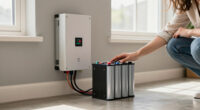
Portable power stations have become essential for outdoor enthusiasts, emergency preparedness, and mobile workers. The best options balance capacity, portability, and versatility, but tradeoffs often involve size, weight, and price. The Jackery Explorer 2000 v2 stands out for its balanced features and reliability, while the Anker SOLIX S2000 offers massive capacity for extended power needs. However, higher capacity models tend to be bulkier and more expensive, making it important to match your specific needs. Continue reading for a detailed breakdown of the top options and what sets them apart.

Get backup power and energy gear delivered free with Prime
- Fast, free delivery on millions of items
- Prime Video, Amazon Music and more included
- Member-only deals all year
Complete the kit


Key Takeaways
- The top models balance capacity and portability, with larger units suited for extended use and smaller ones for light, portable needs.
- Battery chemistry, such as LiFePO4, enhances longevity and safety, influencing long-term value.
- Prices vary significantly based on capacity, features, and build quality, requiring buyers to prioritize their most critical needs.
- Many high-capacity units include solar input options, making them ideal for off-grid use but adding to overall size and weight.
- The best value options offer a mix of performance and affordability, but higher-end models excel in durability and advanced features.
| Jackery Explorer 300 Portable Power Station, 292Wh |  | Best for Lightweight Day Trips | Battery capacity: 292Wh | Battery chemistry: LiFePO4 | Peak output: 600W | VIEW LATEST PRICE | See Our Full Breakdown |
| BLUETTI Elite 100 V2 Portable Power Station, 1024Wh, 1800W |  | Best for Compact Home Backup | Battery capacity: 1,024Wh | Battery type: LiFePO4 | Surge output: 3,600W | VIEW LATEST PRICE | See Our Full Breakdown |
| Anker SOLIX S2000 Portable Power Station, 2,010Wh |  | Best for Multi-Device Backup | Battery capacity: 2,010Wh | Battery type: LiFePO4 | Continuous output: 1,500W | VIEW LATEST PRICE | See Our Full Breakdown |
| Jackery Explorer 2000 v2 Portable Power Station, 2042Wh |  | Best for High-Wattage Portable Backup | Battery capacity: 2,042Wh | Battery chemistry: LiFePO4 | AC output: 2,200W | VIEW LATEST PRICE | See Our Full Breakdown |
| MARBERO M82 Portable Power Station, 88Wh |  | Best for Emergency Device Charging | Battery capacity: 88Wh | Running output: 80W | Surge output: 120W | VIEW LATEST PRICE | See Our Full Breakdown |
| Anker SOLIX C300 Portable Power Station, 288Wh |  | Best Compact Option | Capacity: 288Wh | Battery type: LiFePO4 | Running output: 300W | VIEW LATEST PRICE | See Our Full Breakdown |
| ALLWEI Portable Power Station, 300W, 256Wh, LiFePO4 Battery |  | Best for Flexible Recharging | Capacity: 256Wh | Battery chemistry: LiFePO4 | Continuous output: 300W | VIEW LATEST PRICE | See Our Full Breakdown |
| BLUETTI Elite 300 Portable Power Station, 3014Wh |  | Best for RV and Extended Backup | Battery capacity: 3,014Wh | Battery type: LiFePO4 | AC output: 2,400W | VIEW LATEST PRICE | See Our Full Breakdown |
| BLUETTI AC180 Portable Power Station, 1152Wh LiFePO4 Battery, 1800W Output |  | Best Balanced Mid-Capacity Pick | Battery capacity: 1,152Wh | Battery type: LiFePO4 | Running output: 1,800W | VIEW LATEST PRICE | See Our Full Breakdown |
| Anker SOLIX C1000 Gen 2 Portable Power Station |  | Best for Fast, High-Output Backup | Battery capacity: 1,024Wh | Battery chemistry: LiFePO4 | Output: 2,000W | VIEW LATEST PRICE | See Our Full Breakdown |
| EBL Acc2400 Portable Power Station |  | Best for Multi-Device Backup | Battery capacity: 1,843.2Wh | Output: 2,400W | Battery type: LiFePO4 | VIEW LATEST PRICE | See Our Full Breakdown |
| Jackery Explorer 1000 v2 Portable Power Station |  | Best Portable 1,000Wh Class Pick | Capacity: 1,070Wh | Output power: 1,500W | Surge power: 3,000W | VIEW LATEST PRICE | See Our Full Breakdown |
| Jackery Solar Generator 1000 V2 with 200W Solar Panel |  | Best Solar Starter Bundle | Battery capacity: 1,070Wh | Battery type: LFP | AC output: 1,500W | VIEW LATEST PRICE | See Our Full Breakdown |
| BLUETTI Elite 30 V2 Portable Power Station |  | Best Compact UPS Backup | Capacity: 288Wh | Continuous output: 600W | Surge output: 1,500W in Power Lifting Mode | VIEW LATEST PRICE | See Our Full Breakdown |
| 500W Portable Power Station, 519.48Wh |  | Best for Mixed Small Devices | Capacity: 519.48Wh | AC inverter: 500W pure sine wave | AC outlets: 2, 110V | VIEW LATEST PRICE | See Our Full Breakdown |
| portable power station | Weight | Battery capacity | Battery type |
|---|---|---|---|
| Jackery Explorer 300 Portable | About 7.5 lbs (product information also lists 7.1 lbs) | 292Wh | — |
| BLUETTI Elite 100 V2 Portable | 25 lbs | 1,024Wh | LiFePO4 |
| Anker SOLIX S2000 Portable Pow | 35.7 lbs | 2,010Wh | LiFePO4 |
| Jackery Explorer 2000 v2 Porta | 39.5 lbs | 2,042Wh | — |
| MARBERO M82 Portable Power Sta | 3.2 lbs (also listed as 1.04 kg) | 88Wh | — |
| Anker SOLIX C300 Portable Powe | 4.13 kg | — | LiFePO4 |
| ALLWEI Portable Power Station | 6.4 lbs | — | — |
| BLUETTI Elite 300 Portable Pow | 58 lbs | 3,014Wh | LiFePO4 |
| BLUETTI AC180 Portable Power S | 37.4 lbs | 1,152Wh | LiFePO4 |
| Anker SOLIX C1000 Gen 2 Portab | 11.3 kg | 1,024Wh | — |
| EBL Acc2400 Portable Power Sta | About 54–55 pounds (listing varies) | 1,843.2Wh | LiFePO4 |
| Jackery Explorer 1000 v2 Porta | 23.8 pounds | — | LFP |
| Jackery Solar Generator 1000 V | 23.8 pounds | 1,070Wh | LFP |
| BLUETTI Elite 30 V2 Portable P | 9.5 pounds | — | LFP |
| 500W Portable Power Station | 18 pounds | — | — |
More Details on Our Top Picks
Jackery Explorer 300 Portable Power Station, 292Wh
The Explorer 300 suits day trips where low carry weight matters more than running household appliances. At about 7.5 lbs, it is far easier to pack than the 25-pound BLUETTI Elite 100 V2, while its 292Wh battery and mix of AC, USB-C, USB-A, and car outputs cover phones, cameras, and smaller electronics. The 100W USB-C PD port gives compatible devices a useful direct charging option. Its 300W rated output, though, rules out many high-draw appliances, so it cannot match the larger stations for backup use. Solar charging adds flexibility, but the panel is sold separately. This is a compact device-charging companion, not a small substitute for a home backup unit.
Pros:- About 7.5 lbs, making it easier to carry than the larger stations in this lineup
- 292Wh capacity with AC, USB-C, USB-A, and car outputs for varied small devices
- 100W USB-C PD port supports compatible high-speed device charging
- Supports solar charging for trips away from wall outlets
Cons:- 300W rated output limits the appliances it can run
- Solar panel is sold separately
- Listed weight varies between 7.1 and 7.5 lbs across the product data
Best for: Campers and day hikers who want to recharge phones, cameras, and small electronics without carrying a heavier station
Not ideal for: Buyers who need to run high-wattage appliances or keep household devices powered through a long outage
- Battery capacity:292Wh
- Battery chemistry:LiFePO4
- Peak output:600W
- Ports:2 AC outlets, 1 USB-C PD (100W), 2 USB-A, 1 car port (120W)
- Weight:About 7.5 lbs (product information also lists 7.1 lbs)
- Dimensions:9.1 × 5.2 × 7.8 in
- Solar charging:About 80% in 2.8 hours with a 100W panel; panel not included
Our verdict“Choose the Explorer 300 for portable charging on short trips when light weight matters more than appliance-level power.”
BLUETTI Elite 100 V2 Portable Power Station, 1024Wh, 1800W
The Elite 100 V2 packs a useful middle ground into a 25-pound unit: its 1,024Wh capacity and 1,800W output can handle more than the Jackery Explorer 300’s device-charging role, without the roughly 36- to 40-pound carry weight of the larger Anker SOLIX S2000 and Jackery Explorer 2000 v2. Rapid AC charging can bring it to 80% in about 45 minutes, which helps when an outage is expected or a trip is coming up soon. UPS switching of up to 10ms and a quiet mode also suit desks and small rooms. Capacity still limits how long it can power demanding equipment, and 25 pounds may be awkward to carry far. Vehicle fast charging requires a separate BLUETTI Charger 1.
Pros:- 1,024Wh capacity and 1,800W rated output cover more than small-device charging
- Reaches about 80% charge in 45 minutes with 1,200W TurboBoost AC charging
- UPS switchover of up to 10ms supports connected electronics during outages
- Wi-Fi and Bluetooth app control plus a 30dB silent mode
Cons:- At 25 lbs, it is heavier to carry than compact options such as the Jackery Explorer 300
- Vehicle fast charging requires a separate BLUETTI Charger 1
- Its capacity is below the Anker SOLIX S2000 and Jackery Explorer 2000 v2
Best for: Apartment residents and remote workers who want quick-recharging backup for electronics and selected household devices
Not ideal for: Buyers who need multi-day high-load backup or a very light station for frequent long-distance carrying
- Battery capacity:1,024Wh
- Battery type:LiFePO4
- Surge output:3,600W
- Ports:11 total, including 4 AC outlets
- AC charging:About 45 minutes to 80% with 1,200W TurboBoost charging
- UPS switchover:Up to 10ms
- Weight:25 lbs
- Connectivity:Wi-Fi and Bluetooth
Our verdict“Pick the Elite 100 V2 for fast-charging, moderate-capacity backup that remains more manageable to move than the largest stations.”
Anker SOLIX S2000 Portable Power Station, 2,010Wh
The Anker SOLIX S2000 is built for buyers who need substantial stored energy and several connections at once. Its 2,010Wh capacity and eight outlets give it a larger reserve than the BLUETTI Elite 100 V2, while the 1,500W continuous output is lower than that BLUETTI’s 1,800W. That distinction matters: the S2000 offers more capacity for longer runtimes, but the Elite 100 V2 has more continuous output for compatible high-wattage loads. Anker lists fridge runtime of up to 35 hours, though actual time depends on the appliance and conditions. Solar input up to 400W and several other recharge methods add flexibility. At 35.7 lbs, it is portable between locations, but not an easy carry for frequent long walks; it also lacks a 12V DC port.
Pros:- 2,010Wh capacity provides more stored energy than the BLUETTI Elite 100 V2
- Eight outlets make it practical for powering several devices at once
- Supports up to 400W solar input and multiple listed recharge methods
- UPS switchover is listed as less than 10ms
Cons:- 1,500W continuous output is lower than the BLUETTI Elite 100 V2’s 1,800W
- No 12V DC port
- At 35.7 lbs, it is less convenient to carry than the smaller stations
Best for: Households and campers who need a large energy reserve for several devices or a compatible refrigerator
Not ideal for: People who need a 12V DC output or want a lightweight station to carry long distances
- Battery capacity:2,010Wh
- Battery type:LiFePO4
- Continuous output:1,500W
- Peak output:3,000W
- Outlets:8
- Solar input:Up to 400W
- Weight:35.7 lbs
- UPS switchover:Less than 10ms
- Dimensions:8.19 × 11.1 × 12.7 in
Our verdict“Choose the S2000 when stored energy and multiple outlets matter more than the higher continuous output of the Elite 100 V2.”
Jackery Explorer 2000 v2 Portable Power Station, 2042Wh
For a buyer prioritizing AC appliance support, the Explorer 2000 v2 pairs a 2,042Wh battery with 2,200W AC output. That output exceeds the Anker SOLIX S2000’s 1,500W continuous rating, giving the Jackery an advantage for compatible higher-wattage loads; the Anker instead has eight outlets and more listed recharge methods. The Jackery has three AC outlets and a 100W USB-C PD port, so its connection options are more limited than the Anker’s. AC charging reaches 80% in 66 minutes, and solar charging can take as few as six hours with 400W panels. Its 39.5-pound weight and 20ms backup switching make it a less nimble choice for frequent carrying or sensitive equipment that needs faster switchover. Solar panels are optional.
Pros:- 2,200W AC output is higher than the Anker SOLIX S2000’s 1,500W continuous output
- 2,042Wh capacity supports extended use for compatible devices
- AC charging reaches 80% in 66 minutes
- Quiet charging mode operates below 30dB
Cons:- At 39.5 lbs, it is heavier than the Anker SOLIX S2000
- Three AC outlets offer fewer connections than the Anker’s eight outlets
- 20ms backup switching is slower than the under-10ms figures listed for the Anker SOLIX S2000 and BLUETTI Elite 100 V2
Best for: Campers and homeowners who need strong AC output for compatible appliances and can move a 39.5-pound station
Not ideal for: Buyers who need a lighter carry, many simultaneous outlets, or sub-10ms backup switching
- Battery capacity:2,042Wh
- Battery chemistry:LiFePO4
- AC output:2,200W
- AC outlets:3
- USB-C output:100W PD
- Weight:39.5 lbs
- AC charging:0–80% in 66 minutes
- Solar charging:As few as 6 hours with 400W panels; panels optional
- Backup switching:20ms
Our verdict“Choose the Explorer 2000 v2 for higher AC output in a portable station, provided its weight and three-outlet layout fit your setup.”
MARBERO M82 Portable Power Station, 88Wh
The MARBERO M82 is the most limited station here, and its value is in being compact rather than replacing a larger backup unit. At 88Wh and 80W running output, it is suited to phones, small electronics, and its built-in light; it cannot match even the Jackery Explorer 300’s 292Wh reserve or 300W rated output. Eight output ports let it serve several small devices, but the number of ports does not change the modest power ceiling. An included adapter charges it to 80% in about two hours, and compatible MARBERO solar panels are another option. The 3.2-pound weight and SOS light may help in a small emergency kit. Skip it if you need to run larger appliances or sustain several devices for long periods.
Pros:- 3.2-pound design with a compact footprint is easy to store and carry
- Eight output ports accommodate several small devices
- Built-in LED light includes three brightness levels and SOS mode
- Included adapter charges it to 80% in about two hours
Cons:- 80W running output rules out most household appliances
- 88Wh capacity is far below the Jackery Explorer 300’s 292Wh
- Compatible solar panels are not listed as included
Best for: Drivers, campers, and emergency-kit planners who want a small reserve for phones, lights, and other low-power electronics
Not ideal for: Buyers who need to run appliances above 80W or keep multiple devices powered through an extended outage
- Battery capacity:88Wh
- Running output:80W
- Surge output:120W
- Output ports:8
- Weight:3.2 lbs (also listed as 1.04 kg)
- Dimensions:6.5 × 4.6 × 3.1 in
- Charging time:0–80% in 2 hours with included adapter
- Solar compatibility:MARBERO 30W or 60W panels
- Lighting:Three brightness levels and SOS mode
Our verdict“Pick the M82 for a lightweight emergency supply for small electronics, not for appliance backup.”
Anker SOLIX C300 Portable Power Station, 288Wh
The Anker SOLIX C300 is the most appealing pick here when low carry weight and device charging matter more than running household appliances. At 4.13 kg, it is lighter than the ALLWEI 300W, while its 288Wh capacity and eight ports give it a little more room for charging several phones, a laptop, and other small electronics. Its 140W USB-C output is also a stronger laptop-charging option than the ALLWEI’s 60W port. The tradeoff is modest capacity and 300W continuous output: this is for electronics and light loads, not high-wattage appliances or extended backup. Wall charging reaches 80% in a stated 50 minutes, and solar is supported, but compatible panels are sold separately. I’d choose it for compact versatility, not maximum runtime.
Pros:- Eight ports make it easier to charge several devices at once.
- 140W USB-C output suits compatible laptops better than the ALLWEI’s 60W USB-C port.
- LiFePO4 battery is rated for 3,000 cycles.
- Weighs 4.13 kg and operates at a stated 25dB.
Cons:- 300W continuous output rules out many larger appliances.
- Shoulder strap and compatible solar panel are sold separately.
- Some Anker solar panels are not compatible.
Best for: Campers and mobile workers who want a lightweight station for phones, laptops, cameras, and other small electronics.
Not ideal for: Buyers needing to run high-wattage appliances or power devices for long stretches; its 288Wh capacity and 300W output are limiting.
- Capacity:288Wh
- Battery type:LiFePO4
- Running output:300W
- Surge output:600W
- USB-C output:Up to 140W
- Charging ports:8
- Weight:4.13 kg
- Recharge to 80%:50 minutes via wall outlet
Our verdict“Choose the C300 for lightweight, multi-device charging; pick a larger station if appliance power or longer runtime matters more.”
ALLWEI Portable Power Station, 300W, 256Wh, LiFePO4 Battery
The ALLWEI 300W earns its place through charging flexibility in a small, straightforward package. It accepts AC, car, solar, or combined AC-and-solar input, a useful option for people who can recharge from more than one source. Its 256Wh capacity and 300W continuous output put it in the same light-duty class as the Anker SOLIX C300, but the C300 is lighter and offers a 140W USB-C port; ALLWEI’s USB-C output is 60W. In return, ALLWEI includes an SOS-capable LED light and a car port, practical touches for roadside or campsite use. The six listed output ports handle small electronics and modest loads, not demanding appliances. The solar panel is separate, so its charging flexibility does not mean a ready-to-use solar kit.
Pros:- Supports AC, car, solar, and combined AC-and-solar recharging.
- LiFePO4 battery is rated for 3,000 charge-discharge cycles.
- Six listed output ports include a car port and 60W USB-C PD.
- Three-level LED light includes an SOS mode.
Cons:- Solar panel is sold separately.
- 300W continuous output limits use with higher-wattage appliances.
- Its 60W USB-C output is lower than the Anker SOLIX C300’s 140W.
Best for: Car campers and road-trip travelers who want a compact station with multiple recharge routes and a built-in emergency light.
Not ideal for: Laptop users needing higher-wattage USB-C charging, or anyone who needs to operate appliances above its 300W continuous limit.
- Capacity:256Wh
- Battery chemistry:LiFePO4
- Continuous output:300W
- Peak surge output:600W
- Output ports:6
- USB-C PD:60W
- Weight:6.4 lbs
- Recharging methods:AC, 12V car, solar, AC + solar
Our verdict“Pick the ALLWEI for varied recharge options and an SOS light, but choose the Anker SOLIX C300 if stronger USB-C charging and lower weight are priorities.”
BLUETTI Elite 300 Portable Power Station, 3014Wh
The BLUETTI Elite 300 is the capacity leader in this group, built for RV setups and longer backup needs rather than casual carry. Its 3,014Wh battery, 2,400W output, and 4,800W surge rating give it a much wider load range and longer potential runtime than the BLUETTI AC180 or Anker SOLIX C1000 Gen 2. The TT-30 RV outlet and 12V/30A DC output make the difference especially relevant to RV owners, while the 10ms UPS switch is designed to keep critical devices supplied during an interruption. Those gains come with a 58-pound weight, so this is portable in the sense that it can be moved, not carried around easily. The data lists only two total power outlets, which may also limit how many AC devices can connect directly.
Pros:- 3,014Wh capacity offers substantially more stored energy than the AC180 and C1000 Gen 2.
- 2,400W output and 4,800W surge support a broader range of loads.
- TT-30 RV outlet and 12V/30A DC output suit RV power setups.
- 10ms UPS switch and a stated 6,000+ cycle battery life support backup use.
Cons:- At 58 lbs, it is difficult to carry frequently or over long distances.
- Only two total power outlets are listed.
- Its large capacity and RV-oriented features are excessive for basic phone and laptop charging.
Best for: RV owners and households seeking substantial portable backup capacity for longer outages or off-grid stays.
Not ideal for: Backpackers, frequent solo movers, or buyers who need many AC outlets in one compact station; it weighs 58 lbs and only two total power outlets are listed.
- Battery capacity:3,014Wh
- Battery type:LiFePO4
- AC output:2,400W
- Surge power:4,800W
- RV outlet:TT-30
- DC output:12V/30A
- UPS transfer time:10ms
- Weight:58 lbs
Our verdict“Choose the Elite 300 for RV power and extended backup capacity if you can manage its weight and limited listed outlet count.”
BLUETTI AC180 Portable Power Station, 1152Wh LiFePO4 Battery, 1800W Output
The BLUETTI AC180 strikes a middle ground for buyers who need meaningful appliance output without moving up to the Elite 300’s 58-pound, 3,014Wh format. Its 1,152Wh capacity and 1,800W running output are suited to a broader mix of equipment than the 300W Anker SOLIX C300 or ALLWEI, while the 2,700W boost is intended for compatible high-demand devices. AC charging is stated at one hour, and solar input reaches 500W; the included AC, car, and solar cables mean the charging connections are provided, unlike the separately sold solar panels for the smaller stations. Compared with the Anker SOLIX C1000 Gen 2, the AC180 has more listed capacity but lower output and slower stated solar charging. At 37.4 pounds, it is still a substantial lift.
Pros:- 1,152Wh LiFePO4 battery provides more stored energy than the compact 288Wh and 256Wh stations.
- 1,800W running output and 2,700W peak output broaden appliance compatibility.
- AC charging is stated to take one hour, with up to 500W solar input.
- AC, car, and solar charging cables are included.
Cons:- Weighs 37.4 pounds, making frequent carrying inconvenient.
- Stated solar charging time is 2.8–3.3 hours.
- The Anker SOLIX C1000 Gen 2 offers higher output and faster listed solar charging.
Best for: Campers and homeowners who need to run more demanding devices than a compact station can handle, but want less capacity and bulk than an RV-scale unit.
Not ideal for: People who need a lightweight carry-on station or the fastest solar charging; it weighs 37.4 pounds and stated solar charging takes 2.8–3.3 hours.
- Battery capacity:1,152Wh
- Battery type:LiFePO4
- Running output:1,800W
- Peak output:2,700W
- AC charging time:1 hour
- Solar input:500W
- UPS response time:20ms
- Weight:37.4 lbs
Our verdict“Pick the AC180 for substantial capacity and appliance-level output in a more moderate format than the Elite 300, accepting its weight and slower solar recharge.”
Anker SOLIX C1000 Gen 2 Portable Power Station
The Anker SOLIX C1000 Gen 2 is the strongest fit here for buyers who want high output and quick replenishment without stepping up to the much heavier BLUETTI Elite 300. Its 2,000W output and 3,000W peak rating exceed the BLUETTI AC180’s 1,800W running and 2,700W peak figures, while its 1,024Wh capacity is slightly below the AC180’s 1,152Wh. That makes the choice a balance between output and stored energy, not a simple upgrade. The stated 49-minute AC charge, 600W solar input, and under-10ms UPS switchover suit backup plans where recharge speed and device continuity matter. It weighs 11.3 kg—far easier to move than the Elite 300, though still not a featherweight. Solar charging is limited to 600W, and panels are not listed as included.
Pros:- 2,000W output and 3,000W peak exceed the BLUETTI AC180’s listed output ratings.
- AC charging is stated to take 49 minutes.
- 600W solar input and stated 1.8-hour solar charging support faster replenishment than the AC180’s listed solar time.
- Under-10ms UPS switchover and battery design rated for at least 80% capacity after 4,000 cycles.
Cons:- Its 1,024Wh capacity is lower than the BLUETTI AC180’s 1,152Wh.
- At 11.3 kg, it is heavier than the compact C300 and ALLWEI.
- Solar input is capped at 600W, and no solar panel is listed as included.
Best for: Homeowners and campers who need strong appliance output, fast recharging, and quick UPS switchover in a station they can still move between locations.
Not ideal for: Buyers prioritizing maximum stored energy or the lightest possible setup; its capacity is below the AC180’s and it weighs 11.3 kg.
- Battery capacity:1,024Wh
- Battery chemistry:LiFePO4
- Output:2,000W
- Peak output:3,000W
- AC charging time:49 minutes
- Solar input:600W, 60V max
- UPS switchover:Under 10ms
- Weight:11.3 kg
Our verdict“Choose the C1000 Gen 2 when output and fast recharging outweigh a small capacity advantage the AC180 provides.”
EBL Acc2400 Portable Power Station
The EBL Acc2400 pairs 1,843.2Wh of capacity with 2,400W output, giving it more headroom for demanding appliances than the Jackery Explorer 1000 v2. Its 12 connection points also make it a practical shared power source at a campsite or during an outage, when several people need to keep devices running. For backup use, the listed 0.1-second switching is a faster handoff than the BLUETTI Elite 30 V2’s 10ms UPS specification. The tradeoff is portability: at about 54–55 pounds, it is a substantial lift, while the Jackery weighs 23.8 pounds. I’d choose the EBL when capacity, output, and many connection options matter more than carrying comfort. The listed weight varies by one pound, so buyers should treat it as approximate.
Pros:- 1,843.2Wh capacity and 2,400W output offer substantial backup capability
- 12 device connections include AC, USB, DC, car, and wireless charging
- LiFePO4 battery is rated for over 3,500 charge cycles
- Emergency backup switching is listed at 0.1 seconds
Cons:- About 54–55 pounds makes it cumbersome to move frequently
- Product details give conflicting weights
- Two-year warranty is shorter than the five-year coverage listed for the Jackery Solar Generator 1000 V2
Best for: Households or campsite groups that need to run several devices and higher-draw appliances from one station
Not ideal for: Solo campers and travelers who need to carry their station often; at about 54–55 pounds, this is much heavier than the Jackery Explorer 1000 v2
- Battery capacity:1,843.2Wh
- Output:2,400W
- Battery type:LiFePO4
- AC ports:4
- Maximum device connections:12
- Emergency backup switching:0.1 seconds
- Battery cycle life:Over 3,500 charge-discharge cycles
- Weight:About 54–55 pounds (listing varies)
Our verdict“Choose the EBL Acc2400 if you want high output and many ports for group or home backup and can accommodate its heavy build.”
Jackery Explorer 1000 v2 Portable Power Station
At 23.8 pounds, the Jackery Explorer 1000 v2 makes roughly 1,000Wh of stored power easier to bring along than the EBL Acc2400, which weighs more than twice as much. Its 1,500W output and 3,000W surge rating cover a useful range of camping gear and household essentials, while three AC outlets and USB-C ports let different devices charge together. App controls add quiet overnight mode, and the LFP battery is rated to retain over 70% capacity after 4,000 cycles. The main limitation is its solar setup: panels are sold separately, and charging is listed as compatible only with Jackery panels. The one-hour full-charge option also requires enabling emergency charging in the app; default charging takes about 1.7 hours. I’d pick it for easier transport, not for maximum capacity.
Pros:- 1,070Wh capacity in a 23.8-pound unit
- 1,500W output with a 3,000W surge rating
- App includes charging controls and a quiet overnight mode
- LFP battery is rated to retain over 70% capacity after 4,000 cycles
Cons:- Solar panels are not included
- Solar charging is listed as compatible only with Jackery panels
- One-hour full charging requires enabling emergency charging in the app
Best for: Campers and road-trippers who want around 1,000Wh of capacity in a station light enough to move between stops
Not ideal for: Buyers building a brand-agnostic solar setup or seeking the highest capacity and output in this group
- Capacity:1,070Wh
- Output power:1,500W
- Surge power:3,000W
- Battery type:LFP
- Weight:23.8 pounds
- AC outlets:3 pure sine wave
- Charging time:About 1.7 hours by default; 1 hour with emergency charging enabled
- Battery lifespan:Over 70% capacity after 4,000 charge cycles
Our verdict“Pick the Explorer 1000 v2 if carrying a capable 1,000Wh-class station matters more to you than broad solar-panel compatibility.”
Jackery Solar Generator 1000 V2 with 200W Solar Panel
This bundle pairs the same 1,070Wh capacity and 1,500W output found in the Jackery Explorer 1000 v2 with a 200W solar panel. That makes it a more ready-made choice for campers who want a panel included, while the standalone Explorer leaves solar gear to the buyer. The station weighs 23.8 pounds and has three AC outlets plus USB-C, USB-A, and car outputs, so it can serve several everyday devices without moving up to a much heavier unit like the EBL Acc2400. Its LFP battery is rated to retain over 70% capacity after 4,000 cycles. Buyers should plan around the panel and station shipping separately, and the one-hour charge mode requires enabling emergency charging in the app. Solar input also remains within Jackery’s ecosystem.
Pros:- Includes a 200W solar panel
- 1,070Wh capacity and 1,500W AC output in a 23.8-pound station
- Three AC outlets plus USB and car outputs support mixed devices
- LFP battery is rated to retain over 70% capacity after 4,000 cycles
Cons:- Station and solar panel ship separately
- One-hour charging requires emergency charging to be enabled in the app
- Solar charging compatibility is limited to Jackery panels
Best for: Campers who want a portable 1,000Wh-class station and a compatible solar panel in one purchase
Not ideal for: Buyers who already own a different solar-panel setup or need the higher output of a larger station such as the EBL Acc2400
- Battery capacity:1,070Wh
- Battery type:LFP
- AC output:1,500W
- Surge peak:3,000W
- Weight:23.8 pounds
- Solar panel:200W included
- Ports:3 AC, 2 USB-C, 1 USB-A, 1 DC car port
- Charge cycle life:Over 70% capacity after 4,000 cycles
Our verdict“Choose this bundle if you want a portable Jackery station with its matching 200W panel included and can plan around separate shipments.”
BLUETTI Elite 30 V2 Portable Power Station
The BLUETTI Elite 30 V2 is the lightest option in this batch at 9.5 pounds, making it easier to stash in a car or carry to a desk than either Jackery 1000 V2. Its 288Wh capacity and 600W continuous output suit smaller electronics and modest loads; Power Lifting Mode can reach 1,500W for compatible devices, but it does not turn this into a substitute for a larger station such as the EBL Acc2400. The standout for outage protection is its ≤10ms UPS switching, paired with a compact footprint. Wall charging reaches 80% in 45 minutes. The tradeoff is limited energy and continuous output, so high-draw appliances or long backup sessions are outside its sweet spot. Solar charging is supported, though the supplied product data does not list a panel as included.
Pros:- Compact 9.5-pound design is easy to carry and store
- UPS switching is listed at 10ms or less
- Wall charging reaches 80% in 45 minutes
- Supports AC, solar, car, lead-acid, and generator charging
Cons:- 288Wh capacity limits runtime compared with the Jackery Explorer 1000 v2
- 600W continuous output will not support many higher-power appliances
- Solar panel is not listed among included items
Best for: Remote workers and travelers who want lightweight backup for a router, laptop, or other modest electronics
Not ideal for: Households needing long runtimes or sustained power for high-draw appliances; its capacity is far below the Jackery Explorer 1000 v2
- Capacity:288Wh
- Continuous output:600W
- Surge output:1,500W in Power Lifting Mode
- Battery type:LFP
- Weight:9.5 pounds
- Total power outlets:9
- Wall charging:380W; 0–80% in 45 minutes
- UPS switching time:10ms or less
Our verdict“Choose the Elite 30 V2 for compact, fast-switching backup for modest electronics, not for powering appliances through a long outage.”
500W Portable Power Station, 519.48Wh
This 519.48Wh station sits between the BLUETTI Elite 30 V2’s compact 288Wh capacity and the Jackery Explorer 1000 v2’s larger 1,070Wh supply. Its 500W pure sine wave inverter is aimed at smaller appliances and electronics, while ten output ports make it convenient when several modest devices need power at once. USB-C PD reaches 60W, and the listed recharge options include a wall outlet, car charger, or compatible 100W or 200W solar panel. That flexibility helps on road trips, though the panel is not included. At 18 pounds, it is heavier than the Elite 30 V2 despite having less capacity than either Jackery 1000 V2. Buyers should also check appliance wattage carefully: loads above 500W exceed its stated AC output.
Pros:- Ten output ports cover AC, USB-A, USB-C, DC, car, and wireless charging
- Pure sine wave AC output is suited to sensitive electronics
- Can recharge from wall, car, or compatible solar panels
- USB-C PD output supports charging at up to 60W
Cons:- 500W inverter limit excludes appliances with higher rated draw
- At 18 pounds, it is heavier than the 9.5-pound BLUETTI Elite 30 V2
- Solar panel is not included
Best for: Road-trippers or occasional campers charging phones, laptops, cameras, and other devices below the 500W limit
Not ideal for: Buyers who need to run higher-draw appliances or want a lighter station with similar small-device use, such as the BLUETTI Elite 30 V2
- Capacity:519.48Wh
- AC inverter:500W pure sine wave
- AC outlets:2, 110V
- USB-A outputs:3 QC3.0, up to 18W each
- USB-C output:PD, up to 60W
- Total output ports:10
- Recharge methods:Wall outlet, car charger, compatible 100W or 200W solar panel
- Weight:18 pounds
Our verdict“Pick this station for a varied mix of small electronics and modest appliances if you can work within its 500W output ceiling.”

How We Picked
These products were selected based on a combination of capacity, build quality, usability, versatility, and value. We prioritized units with reliable power output, diverse port options, and durable construction suitable for outdoor or emergency use. Battery chemistry, such as LiFePO4, was a key factor for longevity and safety. Size and weight considerations were also important, as the best models needed to strike a balance between portability and power. Our ranking reflects how well each station meets these criteria for different user needs and budgets.Factors to Consider When Choosing Portable Power Stations
Choosing the right portable power station involves more than just capacity. It’s essential to consider how you plan to use it — whether for camping, emergency backup, or mobile work — and how size, weight, and features align with those needs. Understanding key factors helps avoid common pitfalls, such as overpaying for unnecessary capacity or selecting a model that’s too bulky for portability. The following sections break down the main considerations to guide your decision making.Capacity and Power Output
Capacity, measured in watt-hours (Wh), determines how long your devices can run. High-capacity units like the Anker SOLIX S2000 offer enough energy for extended use, but they tend to be heavier and bulkier. Power output, rated in watts, affects what devices you can charge simultaneously and whether you can power appliances like refrigerators or power tools. Matching capacity and wattage to your typical use is key to avoiding underperformance or unnecessary expense.
Port Selection and Versatility
Look for stations with multiple ports—AC outlets, USB-C, USB-A, and DC outputs—to support a range of devices. Some models offer dedicated fast-charging ports or multiple AC outlets, which can be vital for simultaneous device use. Consider whether the station supports solar input if off-grid power is a priority. More ports and versatility often come at a higher price and increased size, so weigh your needs carefully.
Battery Chemistry and Longevity
Battery chemistry impacts durability and safety. LiFePO4 batteries tend to last longer and withstand more charge cycles than standard lithium-ion units, making them a better choice for long-term use. However, they can add to the initial cost and weight of the station. If you plan to use the station frequently or over many years, investing in a LiFePO4-based model might pay off in the long run.
Portability and Size
Portability is often the tradeoff with capacity. Smaller, lightweight stations like the MARBERO M82 are ideal for quick, light trips but may lack the power for extended use. Larger units like the Jackery Explorer 2000 v2 or Anker SOLIX S2000 provide more capacity but are less convenient to carry. Consider your carrying capacity, transport method, and storage space when choosing a model, especially if you’ll be moving it frequently.
Additional Features and Price
Features such as solar compatibility, display screens, and built-in handles can enhance usability but also add to cost. Evaluate whether these extras are necessary for your situation. Higher-priced models typically offer better build quality, more features, and longer lifespan, but there are also budget-friendly options that perform well for basic needs. Clarify your priorities to avoid paying for unnecessary bells and whistles.
Frequently Asked Questions
How do I know what capacity I need for my portable power station?
To determine the right capacity, list the devices you plan to power and their wattages, then estimate how long each will run. Add up the total energy consumption to get an approximate Wh requirement. For example, running a small fridge or laptop over several hours will require a higher capacity than just charging phones or tablets. It’s better to choose a station with some extra capacity to account for unexpected needs or longer usage times.
Is it better to get a larger capacity station for future-proofing?
Opting for a higher capacity station can be advantageous if you anticipate needing to power multiple devices or appliances for extended periods. However, larger units tend to be heavier, more expensive, and less portable. If portability is a priority or your usage is currently limited, choosing a more modest model might be more practical. Consider your typical power needs and future plans before investing in a larger capacity.
Should I prioritize solar input compatibility when buying?
Solar input compatibility is a significant feature if you plan to use the station off-grid or want to reduce reliance on grid power. It allows you to recharge using solar panels, which can be cost-effective and eco-friendly over time. However, not all stations support solar input, and those that do can be more expensive. Evaluate whether off-grid usage is a core requirement to decide if this feature justifies the extra cost.
How important is battery chemistry for the longevity of a portable power station?
Battery chemistry directly impacts how many charge cycles the station can endure and how safe it is during operation. LiFePO4 batteries typically last longer—often 2-3 times more charge cycles—than traditional lithium-ion batteries, making them a better investment for long-term use. They also tend to be more thermally stable, reducing safety concerns. If you plan to use your station frequently or over many years, prioritizing LiFePO4 technology can provide greater value.
What should I look for in terms of portability if I need to carry the station often?
Portability depends on weight, size, and handle design. Smaller stations like the MARBERO M82 are easier to carry and fit into backpacks, making them suitable for quick trips. Larger models with high capacity, like the Anker SOLIX S2000, may require wheels or additional carrying solutions. Assess how much weight you’re comfortable managing and whether the design includes ergonomic features like sturdy handles or wheels to facilitate transport.
Conclusion
For those seeking a reliable all-around option, the Jackery Explorer 2000 v2 offers a balanced mix of capacity, portability, and ease of use, making it the best overall choice. Budget-conscious buyers or light users will appreciate the MARBERO M82 for its compact size and affordability, while those with demanding power needs should consider the Anker SOLIX S2000 for its massive capacity. Beginners or casual users might find the smaller units sufficient, whereas professionals or outdoor enthusiasts requiring extended power will benefit from high-capacity, feature-rich options like the BLUETTI Elite 100 V2 or Anker SOLIX S2000. Ultimately, matching your specific use case with these criteria ensures you select the best portable power station for your needs.