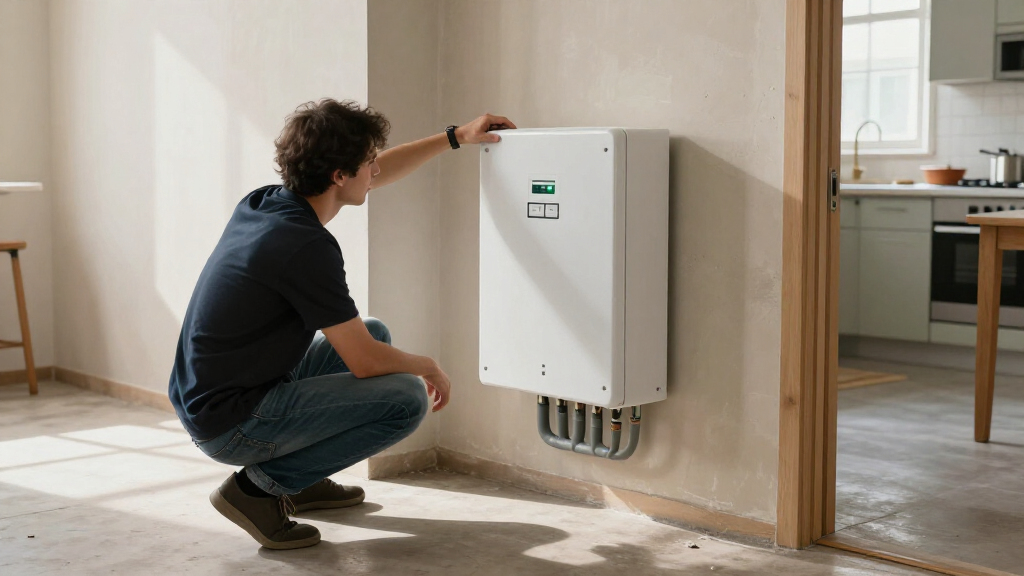
The best home battery energy storage systems balance usable capacity, system compatibility, and a practical path to installation. I rank the ECO-WORTHY 10kW Off-Grid Solar Kit as the best overall because it combines panels, inverter capacity, and a 16.1kWh battery in one package. For a battery-first setup, the AOUSK 16.07kWh unit stands out for its large single-battery capacity, while ECO-WORTHY’s Cubix100 range offers modular options for different storage needs. The main tradeoff is between buying an integrated kit and assembling compatible components, with installation requirements and expandability also shaping the choice. Read on for my full comparison and guidance on choosing a system that fits your home.

Get backup power and energy gear delivered free with Prime
- Fast, free delivery on millions of items
- Prime Video, Amazon Music and more included
- Member-only deals all year
Key Takeaways
- The 10kW ECO-WORTHY kit is the most complete starting point: it pairs solar panels and battery storage, while the other picks are primarily batteries or backup bundles.
- Battery capacity varies widely across the lineup: the Cubix100 100Ah is a smaller building block, while the AOUSK 314Ah and ECO-WORTHY 400Ah four-pack target larger storage needs.
- Modularity is a key difference: Cubix100 rack batteries can suit buyers who want to plan storage in increments, while multi-unit packs make more sense when higher capacity is already part of the plan.
- A large battery is not a complete home backup system by itself: buyers still need to verify inverter compatibility, charging sources, system voltage, and installation requirements.
- Beginner convenience and future flexibility can pull in different directions: an integrated solar kit reduces component matching, while standalone batteries offer more choice but require closer system planning.
| ECO-WORTHY 10kW Off-Grid Solar Kit with 2,950W Panels and 16.1kWh Battery |  | Best Complete Off-Grid Kit | Solar capacity: 2,950W | Solar panels: 5 × 590W monocrystalline | Inverter continuous output: 10,000W | VIEW LATEST PRICE | See Our Full Breakdown |
| ECO-WORTHY Cubix100 48V 200Ah LiFePO4 Server Rack Battery |  | Best Expandable Rack-Battery Starter Pack | Configuration: Two 51.2V 100Ah batteries | Total capacity: 200Ah | Battery chemistry: LiFePO₄ | VIEW LATEST PRICE | See Our Full Breakdown |
| ECO-WORTHY Solar Panel and LiFePO4 Home Backup System |  | Best for High-Capacity Home Backup | Solar panels: 6 × 590W N-type | Inverter: 10kW hybrid | Battery configuration: 2 × 48V 314Ah LiFePO₄ | VIEW LATEST PRICE | See Our Full Breakdown |
| ECO-WORTHY Cubix100 48V 100Ah LiFePO4 Server Rack Battery |  | Best Single-Battery Entry Point | Voltage: 51.2V | Capacity: 100Ah | Energy: 5,120Wh | VIEW LATEST PRICE | See Our Full Breakdown |
| AOUSK 48V 314Ah LiFePO4 Lithium Battery, 16.07 kWh |  | Best High-Capacity Standalone Battery | Nominal voltage: 51.2V | Capacity: 314Ah | Energy storage: 16.07kWh | VIEW LATEST PRICE | See Our Full Breakdown |
| ECO-WORTHY Cubix100 48V 400Ah LiFePO4 Server Rack Battery, 4-Pack |  | Best for Expandable Home Backup | Model: ECO-LFP4810002 | Battery chemistry: LiFePO4 | System voltage: 51.2V (48V nominal) | VIEW LATEST PRICE | See Our Full Breakdown |
| ECO-WORTHY Powermega 48V 314Ah LiFePO4 Battery, 2-Pack |  | Best for High-Capacity Battery Modules | Model: L03L314A-HLH400A-2 | Pack size: 2 batteries | Battery chemistry: LiFePO4 | VIEW LATEST PRICE | See Our Full Breakdown |
| home battery energy storage system | Battery chemistry | Communication | Warranty |
|---|---|---|---|
| ECO-WORTHY 10kW Off-Grid Solar | — | — | — |
| ECO-WORTHY Cubix100 48V 200Ah | LiFePO₄ | CAN, RS485, Bluetooth, and Wi-Fi | 10-year limited |
| ECO-WORTHY Solar Panel and LiF | — | — | — |
| ECO-WORTHY Cubix100 48V 100Ah | LiFePO₄ | CAN, RS485, Bluetooth, and Wi-Fi | 10-year limited |
| AOUSK 48V 314Ah LiFePO4 Lithiu | LiFePO₄ | RS485, CAN, and RS232 | 5 years |
| ECO-WORTHY Cubix100 48V 400Ah | LiFePO4 | CAN, RS485, Bluetooth, and Wi-Fi | Conflicting product information: three-year product warranty listed; description also mentions a ten-year limited warranty |
| ECO-WORTHY Powermega 48V 314Ah | LiFePO4 | — | — |
More Details on Our Top Picks
ECO-WORTHY 10kW Off-Grid Solar Kit with 2,950W Panels and 16.1kWh Battery
I’d put this kit near the top for buyers who want the panels, inverter, and battery bundled together rather than piecing a system together. Its 10kW split-phase inverter can supply 120V or 240V loads, while the 16.076kWh battery gives it more stored energy than the individual ECO-WORTHY Cubix100 100Ah rack battery. That makes it a more direct starting point for a standalone home system, though the included 2,950W of solar capacity may replenish the battery slowly after heavy use or several cloudy days.
Compared with the larger ECO-WORTHY Solar Panel and LiFePO4 Home Backup System, this kit has less battery storage and fewer panels, but it is a simpler-sized package for a smaller off-grid setup. I’d factor in professional installation and truck delivery: the components are substantial, and the panels are nearly 90 inches long. Parallel expansion adds flexibility, but this is not a plug-and-play appliance.
Pros:- Bundles five solar panels, a 10kW inverter, battery, and cables
- 16.076kWh LiFePO₄ battery offers substantial storage for an off-grid kit
- 120V/240V split-phase output supports a wider range of household loads
- Dual MPPT, Wi-Fi monitoring, and parallel expansion provide setup flexibility
Cons:- The 2,950W panel array may take time to recharge the battery after heavy use
- Professional installation is recommended for safe, effective setup
- Pallet delivery requires access for a truck and space for large components
Best for: Owners of cabins or smaller off-grid homes who want one bundled system with 240V output and a substantial battery.
Not ideal for: DIY buyers seeking a compact, simple installation, or households with high daily energy use that need more solar generation and stored energy out of the box.
- Solar capacity:2,950W
- Solar panels:5 × 590W monocrystalline
- Inverter continuous output:10,000W
- Inverter peak output:20,000W
- Output voltage:120V or 120V/240V split phase
- Battery:48V 314Ah LiFePO₄
- Battery energy:16.076kWh
- Charge controllers:Dual MPPT
Our verdict“Choose this bundled kit for a moderate-size off-grid home when you want split-phase power and battery storage without assembling the main components separately.”
ECO-WORTHY Cubix100 48V 200Ah LiFePO4 Server Rack Battery
This two-battery pack suits buyers building storage in stages: it supplies 200Ah at 51.2V and can scale by paralleling up to 32 units. Compared with the single ECO-WORTHY Cubix100 100Ah battery, the pack doubles the stated capacity in one purchase; it also avoids committing to a complete inverter-and-panel kit. CAN and RS485 links support integration with compatible equipment, while Bluetooth and Wi-Fi monitoring give owners a way to check battery status.
The tradeoff is that these are batteries, not a complete home backup system. You still need compatible inverter, charging equipment, wiring, and a suitable installation location. At 206 pounds for the pair, handling and placement take planning, and the two units may arrive in separate shipments. I’d favor this over the larger ECO-WORTHY Solar Panel and LiFePO4 Home Backup System when modular storage matters more than receiving panels and an inverter together.
Pros:- Two 51.2V 100Ah batteries provide 200Ah total capacity
- Can expand by paralleling up to 32 units
- CAN, RS485, Bluetooth, and Wi-Fi support communication and monitoring
- UL9540A and UL1973 certifications, CEC listing, and a 10-year limited warranty
Cons:- Does not include an inverter, solar panels, or a complete backup system
- The 206-pound pack requires careful handling and suitable placement
- The batteries may arrive in separate packages at different times
Best for: Solar or backup-system owners who already have compatible 48V equipment and want a scalable two-battery storage base.
Not ideal for: First-time buyers who need a complete solar-and-inverter package or anyone unable to manage heavy rack batteries and system integration.
- Configuration:Two 51.2V 100Ah batteries
- Total capacity:200Ah
- Battery chemistry:LiFePO₄
- Communication:CAN, RS485, Bluetooth, and Wi-Fi
- Maximum parallel units:32
- Certifications:UL9540A, UL1973, and CEC listed
- Weight:206 lb
- Warranty:10-year limited
Our verdict“Pick this pack if you already have compatible system equipment and want a certified, expandable battery foundation rather than a bundled solar solution.”
ECO-WORTHY Solar Panel and LiFePO4 Home Backup System
For buyers prioritizing stored energy and a bundled path to home backup, this ECO-WORTHY system is the strongest fit in this group. It pairs a 10kW hybrid inverter with two 48V 314Ah batteries, stated as 30kWh+ usable energy, plus six 590W N-type panels. That is substantially more battery storage than the 16.076kWh ECO-WORTHY 10kW Off-Grid Solar Kit, giving a household more reserve for extended outages or heavier loads. Its 120V and 240V output also covers a broader mix of household circuits.
That capacity comes with a larger footprint and a more demanding delivery and installation job: the panels and equipment ship on a pallet, and the exterior version of the inverter is selected randomly. The 9000+ cycle claim at 80% depth of discharge and multiple monitoring options are attractive on paper, but buyers still need to plan for installation and system compatibility. I’d choose this over the rack-battery products when a bundled home system matters more than modular components.
Pros:- Includes six 590W panels, a 10kW hybrid inverter, two batteries, and cables
- Stated usable energy of 30kWh+ exceeds the smaller bundled ECO-WORTHY kit
- 120V and 240V output supports a range of household backup loads
- RS485, CAN, RS232, Bluetooth, Wi-Fi, and LCD monitoring options
Cons:- Large components require space, careful installation, and pallet delivery access
- The inverter exterior version is selected randomly
- A large storage system may exceed the needs of smaller homes or modest backup plans
Best for: Households planning substantial backup or off-grid storage who want panels, a hybrid inverter, and two large batteries in one package.
Not ideal for: Buyers with limited installation space, restricted truck access, or a preference for choosing each system component independently.
- Solar panels:6 × 590W N-type
- Inverter:10kW hybrid
- Battery configuration:2 × 48V 314Ah LiFePO₄
- Usable energy:30kWh+
- Output voltage:120V and 240V
- Battery cycle life:9000+ cycles at 80% DoD
- Battery communication:RS485, CAN, and RS232
- Monitoring:Bluetooth, Wi-Fi, and LCD screen
Our verdict“Choose this package when you need more stored energy than the smaller ECO-WORTHY kit provides and want the inverter and solar array included.”
ECO-WORTHY Cubix100 48V 100Ah LiFePO4 Server Rack Battery
The single Cubix100 is the most measured way into a modular rack-battery setup here: 5.12kWh per unit lets buyers start with one battery and add parallel units later, up to 32. That makes it a more incremental choice than the ECO-WORTHY Cubix100 200Ah two-pack, which supplies twice the stated capacity at once. CAN and RS485 communication, along with Bluetooth and Wi-Fi monitoring, are useful for owners matching the battery to compatible inverter equipment and tracking system status.
Its main limitation is the same modularity that makes it appealing: this is not a turnkey backup system. You must supply compatible charging and inverter gear, and the 103-pound unit needs a rack or other suitable mounting arrangement. Certifications and included accessories add confidence for a planned installation, but they do not remove the need to check system compatibility. I’d pick this over the AOUSK 16.07kWh battery when smaller, rack-based increments matter more than getting greater capacity in one unit.
Pros:- 5.12kWh capacity provides a manageable starting unit for a modular system
- Supports parallel expansion up to 32 units
- CAN, RS485, Bluetooth, and Wi-Fi help with integration and monitoring
- UL9540, UL1973, and CEC certifications, with installation and communication accessories included
Cons:- Requires compatible inverter and charging equipment to operate in a home system
- Weighs 103 pounds, so installation and rack placement need planning
- One unit provides less stored energy than the 200Ah pack or AOUSK 16.07kWh battery
Best for: Solar owners who want to begin with one rack-mount battery and expand their compatible 48V system as needs grow.
Not ideal for: Households seeking substantial backup capacity from a single battery or buyers who need an all-in-one system with inverter and panels.
- Voltage:51.2V
- Capacity:100Ah
- Energy:5,120Wh
- Battery chemistry:LiFePO₄
- Communication:CAN, RS485, Bluetooth, and Wi-Fi
- Mounting:Server rack; supports vertical mounting
- Parallel expansion:Up to 32 units
- Warranty:10-year limited
Our verdict“Choose the Cubix100 100Ah if you want a certified, expandable rack battery and are comfortable supplying the rest of the system.”
AOUSK 48V 314Ah LiFePO4 Lithium Battery, 16.07 kWh
AOUSK’s battery is for buyers who need substantial storage but want to choose their inverter and solar equipment separately. Its 16.07kWh capacity is close to the ECO-WORTHY 10kW Off-Grid Solar Kit’s battery capacity, but this is a standalone battery rather than a complete package with panels and an inverter. Display, app, and PC monitoring give owners several ways to check status, while RS485 and CAN allow communication with compatible inverters. Built-in wheels and handles help with positioning, though they do not make a 291-pound battery easy to move.
The tradeoff versus the ECO-WORTHY Cubix100 200Ah pack is a much larger capacity in one battery, but less modular rack-style scaling: this model supports up to 15 units in parallel rather than 32. Its five-year warranty is also shorter than the 10-year limited warranty listed for the ECO-WORTHY rack batteries. I’d favor it when one large battery suits the installation, not when modular rack mounting or a bundled system is the priority.
Pros:- 16.07kWh capacity supplies far more energy per unit than the Cubix100 100Ah battery
- Display, app, Bluetooth, Wi-Fi, and PC connection support monitoring
- RS485 and CAN enable communication with compatible inverters
- Built-in handles and wheels aid positioning
Cons:- Weighs 291 pounds despite its movement aids
- Requires compatible inverter equipment and system setup
- Five-year warranty is shorter than the 10-year limited warranty on the ECO-WORTHY Cubix100 batteries
Best for: Home backup and off-grid buyers with compatible inverter equipment who want around 16kWh of storage in a single battery.
Not ideal for: Buyers who need panels and an inverter included, prefer modular rack batteries, or cannot accommodate a 291-pound unit.
- Nominal voltage:51.2V
- Capacity:314Ah
- Energy storage:16.07kWh
- Battery chemistry:LiFePO₄
- BMS:200A
- Cycle life:Up to 6,000 cycles at 80% state of health
- Communication:RS485, CAN, and RS232
- Parallel connection:Up to 15 units
- Warranty:5 years
Our verdict“Choose AOUSK when you want a large standalone battery and already have compatible equipment, but skip it if modular rack storage or a bundled system is your priority.”
ECO-WORTHY Cubix100 48V 400Ah LiFePO4 Server Rack Battery, 4-Pack
I’d choose the Cubix100 4-pack for a home or off-grid setup that needs substantial storage now, with room to grow later. Its 20.48 kWh total capacity comes from four 100Ah batteries, and the system can expand by paralleling up to 32 units. That makes it a more scalable starting point than the Cubix100 48V 200Ah, though the larger installation also needs more rack space and planning. CAN and RS485 connections support inverter communication, while Bluetooth and Wi-Fi monitoring offer convenient status checks. The listed UL9540, UL1973, and CEC standards add useful documentation for buyers checking system compatibility. I’d weigh two uncertainties: the batteries may arrive in separate shipments, and the warranty details conflict, listing both three years and ten years. Confirm the applicable term before buying.
Pros:- 20.48 kWh total storage across four batteries
- Expandable by paralleling up to 32 units
- CAN and RS485 inverter communication plus Bluetooth and Wi-Fi monitoring
- Listed to UL9540, UL1973, and CEC standards
Cons:- Four units require more installation space and coordination than a smaller Cubix100 setup
- The product details list a three-year warranty while the description mentions a ten-year limited warranty
- The four batteries may arrive in separate packages at different times
Best for: Homeowners and off-grid system builders who need at least 20 kWh of 48V storage and expect to expand their battery bank over time.
Not ideal for: Buyers with limited rack space, a small backup requirement, or a need for clear, consistent warranty terms before ordering.
- Model:ECO-LFP4810002
- Battery chemistry:LiFePO4
- System voltage:51.2V (48V nominal)
- Total capacity:400Ah (4 × 100Ah)
- Energy storage:20.48 kWh
- Communication:CAN, RS485, Bluetooth, and Wi-Fi
- Maximum expansion:Up to 32 units; listed maximum 163.8 kWh
- Certifications/listings:UL9540, UL1973, CEC
- Warranty:Conflicting product information: three-year product warranty listed; description also mentions a ten-year limited warranty
Our verdict“Choose this four-battery Cubix100 if you need a sizable, expandable 48V bank and can confirm the warranty and plan for a multi-unit installation.”
ECO-WORTHY Powermega 48V 314Ah LiFePO4 Battery, 2-Pack
The Powermega 2-pack suits buyers who want substantial capacity in each battery, plus more on-unit monitoring and safety hardware than the Cubix100 4-pack emphasizes. Each unit stores 16.07 kWh, and the included pair totals 32.14 kWh based on the listed per-battery capacity. A 200A active-balancing BMS, aerosol fire suppression, and a touchscreen make it a feature-rich option for a dedicated off-grid or backup installation. Wi-Fi and Bluetooth monitoring join CAN, RS485, and RS232 ports, giving installers several communication options. Compared with the Cubix100, the Powermega offers a longer stated 10-year warranty, but it is a less flexible fit for tight spaces: the batteries are large and heavy, and delivery requires a truck-accessible address. Its expansion limit is 15 units, below the Cubix100’s stated 32-unit ceiling.
Pros:- Two batteries provide 32.14 kWh total based on the listed 16.07 kWh per unit
- 200A BMS with active cell balancing
- Aerosol fire suppression and an external two-pole circuit breaker
- Seven-inch touchscreen, Wi-Fi and Bluetooth monitoring, and RS485, CAN, and RS232 ports
Cons:- Large, heavy batteries can complicate handling and installation
- Palletized truck delivery requires an address that can accommodate freight
- Parallel expansion is limited to 15 units, fewer than the Cubix100 4-pack’s stated maximum
Best for: Off-grid homeowners or backup-system installers who need large-capacity battery modules, detailed local and remote monitoring, and can receive palletized truck freight.
Not ideal for: Buyers with narrow access routes, limited installation space, or plans to expand beyond 15 parallel units.
- Model:L03L314A-HLH400A-2
- Pack size:2 batteries
- Battery chemistry:LiFePO4
- Nominal voltage:51.2V
- Capacity and energy:314Ah; 16.07 kWh per battery
- BMS:200A with active cell balancing
- Certification:UL 1973
- Parallel expansion:Up to 15 units
- Connectivity and display:Wi-Fi, Bluetooth, RS485, CAN, RS232; 7-inch HD touchscreen
Our verdict“Pick the Powermega pair if you want high per-battery capacity, extensive monitoring, and built-in safety features and have space and freight access for the installation.”
How We Picked
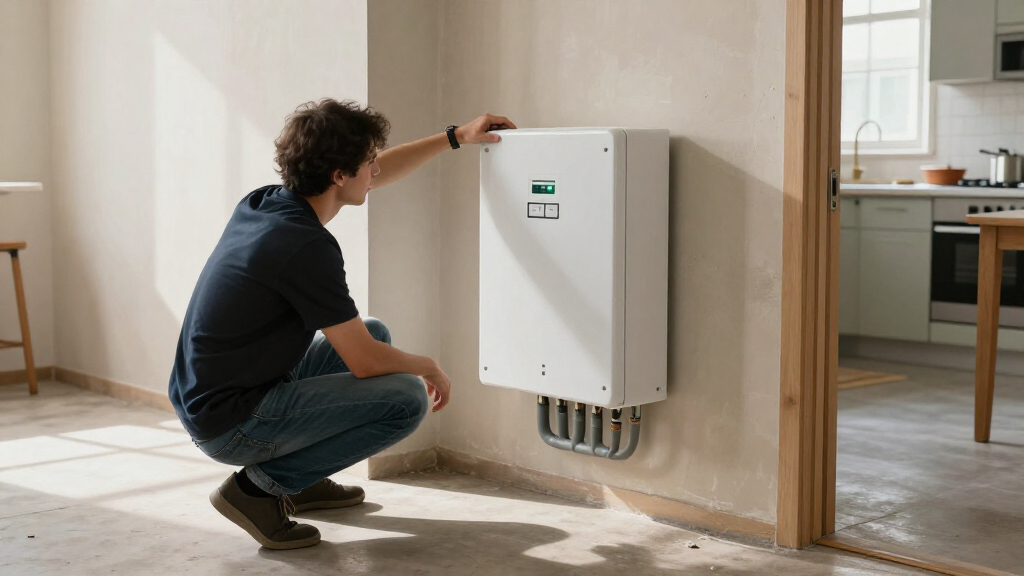
I ranked these options around how well each can serve as a home energy storage system, not just by battery capacity. I weighed whether a product includes solar generation or backup components, how clearly its capacity and system format suit different household needs, and whether its configuration supports a straightforward path to expansion. I also considered the practical work left to the buyer: inverter and charger matching, installation planning, and confirming that the equipment suits the home’s electrical setup.
The ECO-WORTHY 10kW Off-Grid Solar Kit leads because it brings panels, inverter capacity, and a substantial battery together, giving buyers a more cohesive starting point than a standalone battery. The AOUSK 16.07kWh battery and ECO-WORTHY’s larger multi-battery options rank well for buyers prioritizing storage capacity, but they leave more system-integration decisions. The Cubix100 100Ah and 200Ah units rank as more incremental choices, while the Solar Panel and LiFePO4 Home Backup System and Powermega two-pack serve buyers with more specific system or capacity priorities. Product names and stated configurations guide this comparison; buyers should confirm current compatibility and installation details with the seller and a qualified installer.
| home battery energy storage system | Battery chemistry | Communication |
|---|---|---|
| ECO-WORTHY 10kW Off-Grid Solar | — | — |
| ECO-WORTHY Cubix100 48V 200Ah | LiFePO₄ | CAN, RS485, Bluetooth, and Wi-Fi |
| ECO-WORTHY Solar Panel and LiF | — | — |
| ECO-WORTHY Cubix100 48V 100Ah | LiFePO₄ | CAN, RS485, Bluetooth, and Wi-Fi |
| AOUSK 48V 314Ah LiFePO4 Lithiu | LiFePO₄ | RS485, CAN, and RS232 |
| ECO-WORTHY Cubix100 48V 400Ah | LiFePO4 | CAN, RS485, Bluetooth, and Wi-Fi |
| ECO-WORTHY Powermega 48V 314Ah | LiFePO4 | — |
Factors to Consider When Choosing Best Home Battery Energy Storage Systems
Choosing a home battery is less about picking the biggest capacity and more about matching storage to the way your home uses and produces electricity. I would settle the system design questions before comparing individual battery formats: what needs backup, how it will recharge, and what equipment can connect safely.
Start With the Loads You Need to Keep Running
List the circuits or appliances you want available during an outage, then estimate how much energy they use over the period you want to cover. A battery’s stated capacity does not tell you how long it will run your home without knowing the loads and system losses. Separate essentials such as refrigeration, communications, and selected lights from high-demand equipment that may need a dedicated plan. Buyers often size storage around whole-home backup before checking whether the inverter can supply the required power at once. A qualified installer can help distinguish daily energy needs from peak power needs. That distinction can prevent paying for capacity that does not solve the actual backup problem.
Check the Inverter, Voltage, and Battery Compatibility
A standalone battery is only one part of a working storage system; it must communicate and operate correctly with the inverter, charger, and any solar equipment. Confirm supported battery chemistry, nominal voltage, communication protocols, and allowable charge and discharge limits before buying. Similar voltage labels do not prove that two products will work together as a managed system. Mixing batteries from different models or ages can create performance and warranty complications, so check manufacturer guidance before expanding. Ask the installer to confirm the exact component list rather than relying on a general compatibility claim. This homework matters especially when choosing rack batteries instead of an integrated kit.
Choose Between an Integrated Kit and a Battery-First Build
An integrated kit can simplify sourcing because key generation and storage components are packaged together, but it may limit your choice of equipment or system layout. A battery-first purchase gives you more freedom to select an inverter and solar array, though that flexibility shifts compatibility and design work onto you. Compare what is actually included: panels, inverter, cabling, monitoring, protection equipment, and installation support can vary by package. A common mistake is treating a kit title as proof that every component needed for a code-compliant installation is in the box. Get a written parts list and confirm what labor and electrical work remain. The right format depends on whether you value a coordinated starting point or control over each component.
Plan Capacity Around Recharge, Not Just Storage
A large battery can provide more stored energy, but it also takes more generation or grid-charging time to refill. If you rely on solar, compare the array’s expected production with household use and seasonal conditions rather than assuming panels will recharge the battery every day. In a prolonged outage, cloudy weather and ongoing loads can matter more than the battery’s headline capacity. Buyers sometimes add storage before confirming that their solar inverter can charge it at a useful rate. Ask how the system behaves when the battery is depleted and what charging options are available. Capacity and recharge capability need to be planned as a pair.
Treat Expandability as a System Design Choice
Modular batteries can let a household add storage later, but expansion is only useful when the inverter, wiring, protection equipment, and manufacturer rules support it. Find out whether future additions must match the original model, capacity, age, or firmware. A multi-battery bundle may offer a more coherent route to higher capacity than piecing together units over time, though it can be more than a small household needs. Plan physical space, ventilation, cable routing, and service access before choosing a rack or pack format. Ask how expansion affects monitoring and warranty coverage. Buying a smaller configuration first works best when the system design explicitly allows a later increase.
Confirm Installation, Safety, and Warranty Responsibilities
Home battery installation involves electrical, fire-safety, and local permitting requirements, so a product purchase does not replace professional system design. Before ordering, check whether the equipment is approved for the intended location and whether your local authority or utility requires specific paperwork or interconnection steps. Clarify who handles commissioning, warranty claims, and support if the battery is paired with third-party equipment. The lowest-complexity product on paper may still require specialist work at the home. Get installation and service responsibilities in writing, especially for off-grid or whole-home backup plans. This step can reveal practical costs and constraints that a capacity comparison will not show.
Frequently Asked Questions
Can I use one of these batteries for whole-home backup?
Possibly, but the battery alone does not determine whether a system can back up an entire home. The inverter’s continuous and peak output, the home’s starting loads, and the transfer equipment all affect what can run. A high-capacity battery may store plenty of energy yet still be unable to power several large appliances at the same time. Ask an installer to calculate both the home’s peak demand and the energy needed during an outage. If whole-home coverage is not practical, a critical-load panel can focus stored energy on selected circuits.
Is an integrated solar kit a better choice than buying a battery separately?
An integrated kit can reduce the amount of component matching a buyer has to do, particularly when it includes panels, inverter capacity, and storage as a coordinated package. It may be less suitable if you already own solar equipment or need a layout that differs from the kit’s design. A standalone battery can fit a custom system, but the buyer or installer must verify the inverter, charging, and communication compatibility. Compare the included equipment and installation requirements rather than relying on the word “kit.” The better choice depends on whether you need a complete starting point or a specific storage component.
How much battery capacity should I choose for an outage?
Base the decision on the appliances and circuits you plan to run, their energy use, and how long you want backup to last. Add up expected daily consumption for those loads, then account for system losses and the chance that solar or grid charging may be unavailable. Avoid sizing from the home’s total monthly electricity use alone, since outage plans often exclude high-consumption equipment. Also check the inverter’s power output: capacity and the ability to run loads simultaneously are separate questions. An installer can help translate your load list into a storage and inverter specification.
Can I add more batteries to a system later?
Expansion may be possible, but it depends on the battery model, inverter limits, wiring design, and the manufacturer’s rules for combining units. Check before purchase whether new batteries must match the existing units and whether the system supports parallel operation. Adding capacity later may also require changes to protection equipment, rack space, or communications setup. A small first purchase is not automatically a cheaper path if the original system cannot accept additional units. Ask for an expansion plan and its equipment requirements while the initial system is being designed.
What should I confirm before ordering a 48V battery?
Confirm that the inverter and charger support the battery’s voltage range, chemistry, charge limits, and communication method. Check whether the battery’s stated capacity matches the energy you expect to use and whether the inverter can supply the necessary power to your loads. Review installation location, required protection equipment, wiring, and local approval requirements with a qualified installer. If buying multiple batteries, verify that the specific models can operate together and that the system supports the planned configuration. A 48V label by itself is not enough to establish compatibility.
Conclusion
For the broadest starting point, I recommend the ECO-WORTHY 10kW Off-Grid Solar Kit as best overall because it combines solar generation and storage rather than leaving every component choice to the buyer. The AOUSK 16.07kWh battery is my best value-style pick for buyers who want substantial capacity in a battery-first setup, provided they already have compatible equipment or a clear integration plan. For a premium, higher-capacity direction, look at the ECO-WORTHY Cubix100 400Ah four-pack or the Powermega 314Ah two-pack, after confirming system compatibility and installation needs. Beginners are better served by the integrated ECO-WORTHY kit or the Solar Panel and LiFePO4 Home Backup System than by assembling a standalone battery system from scratch. If you want a smaller modular starting point, the Cubix100 100Ah suits a more incremental plan, while the 200Ah model offers a larger single-unit step; choose either only after checking the full system design.
Halloween Picks
halloween
As an affiliate, we earn on qualifying purchases.