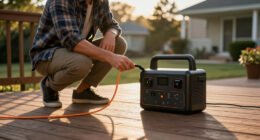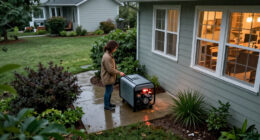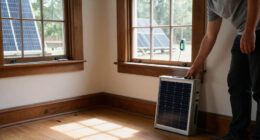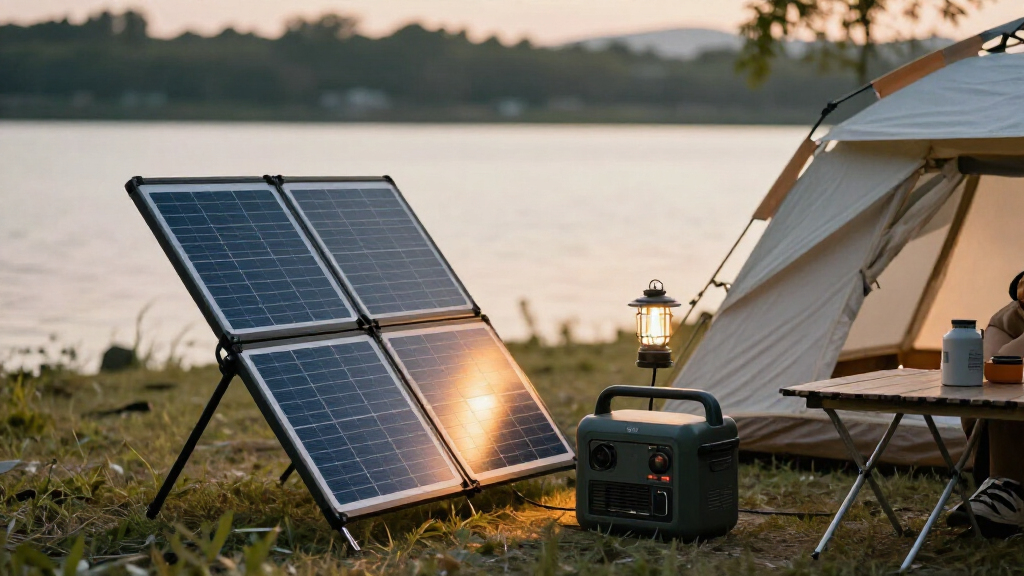
Among these portable solar generators, I rank the Anker SOLIX C1000 Gen 2 as the best overall for balancing useful capacity, output, and a manageable portable format. The Jackery Solar Generator 1000 v2 is a strong all-in-one alternative with a 200W panel, while the OUKITEL P5000 Pro suits buyers who need far more stored energy and can handle a much larger unit. The main tradeoff is straightforward: compact models are easier to carry but run fewer or smaller devices, while high-capacity systems cost more in space, weight, and setup effort. Solar panels add charging flexibility, but their wattage, included-panel configuration, and real-world sunlight all affect how quickly a generator can recharge. Read on for the full breakdown and guidance on matching a model to your power needs.

Get backup power and energy gear delivered free with Prime
- Fast, free delivery on millions of items
- Prime Video, Amazon Music and more included
- Member-only deals all year
Complete the kit


Key Takeaways
The Anker SOLIX C1000 Gen 2 leads the general-purpose group because it offers a stronger balance of output and portability than the tiny 300W-class kits, without taking on the bulk of the large home-backup units.
Included panels change the buying equation. The Jackery 1000 v2 arrives with a 200W panel, while several smaller kits include panels from 30W to 60W; panel size affects recharge potential, not just convenience.
Capacity separates travel power from home backup. The OUKITEL P5000 Pro and Jackery HomePower models target longer runtime and larger loads, but their size makes them poor substitutes for a grab-and-go camping unit.
“Portable” covers very different formats in this lineup. The MARBERO 155Wh and Jackery Explorer 300 options favor lighter, lower-demand use; a 3,584Wh-class unit is a much bigger commitment to transport and storage.
Similar model names do not mean identical kits. The Jackery Explorer 300 appears both with a 40W solar panel and as a 292Wh power station alone, so buyers should check whether the bundle includes the accessories they need.
| Anker SOLIX C1000 Gen 2 Portable Power Station with Car Charging Cable |  | Best Overall for Fast Recharging | Battery capacity: 1,024Wh | Battery chemistry: LiFePO4 | Output / peak output: 2,000W / 3,000W | VIEW LATEST PRICE | See Our Full Breakdown |
| Jackery Solar Generator 1000 v2 with 200W Solar Panel |  | Best Solar Starter Kit | Battery capacity: 1,070Wh | Battery type: LFP | AC output / surge peak: 1,500W / 3,000W | VIEW LATEST PRICE | See Our Full Breakdown |
| OUKITEL P5000 Pro 5120Wh Portable Power Station with 400W Solar Panel |  | Best for Extended Off-Grid Backup | Battery capacity: 5,120Wh | Battery type: LiFePO4 | Output / surge wattage: 3,600W / 6,000W | VIEW LATEST PRICE | See Our Full Breakdown |
| Apowking 300W Portable Power Station with 40W Solar Panel |  | Best Compact Pick for Light Loads | Battery capacity: 220Wh (60,000mAh) | Solar panel: 40W monocrystalline | AC outlets: 2 × 110V pure sine wave | VIEW LATEST PRICE | See Our Full Breakdown |
| Jackery HomePower 3600 Plus Portable Power Station with Two 200W Solar Panels |  | Best Expandable Home-Backup System | Battery capacity: 3,584Wh | Output wattage: 3,600W | Parallel output: 7,200W | VIEW LATEST PRICE | See Our Full Breakdown |
| BROWEY 1600W (3200W Peak) Portable Power Station with Built-in Solar Panel |  | Best for Higher-Power Loads | Battery capacity: 1024Wh | Battery chemistry: LiFePO4 | Continuous / peak output: 1600W / 3200W | VIEW LATEST PRICE | See Our Full Breakdown |
| BROWEY 1600W Portable Power Station with Built-In Solar Panel |  | Best for Long-Life Battery Value | Battery capacity: 1024Wh | Battery chemistry: LiFePO4 | Output: 1600W continuous / 3200W peak | VIEW LATEST PRICE | See Our Full Breakdown |
| EnginStar 300W Portable Power Station with 60W Foldable Solar Panel |  | Best Complete Compact Solar Kit | Battery capacity: 296Wh | Battery chemistry: Lithium-ion | AC output: 300W | VIEW LATEST PRICE | See Our Full Breakdown |
| ZeroKor 300W Portable Power Station with 60W Solar Panel |  | Best for Basic Off-Grid Essentials | Maximum output: 300W | Included solar panel: 60W monocrystalline | Solar conversion efficiency: 20.5% | VIEW LATEST PRICE | See Our Full Breakdown |
| Jackery Explorer 300 Portable Power Station with 40W Solar Panel |  | Best Compact LiFePO4 Pick | Battery capacity: 292Wh | Battery chemistry: LiFePO4 | Included solar panel: 40W | VIEW LATEST PRICE | See Our Full Breakdown |
| Jackery HomePower 3000 Portable Power Station with Two 200W Solar Panels |  | Best for Fast-Switching Home Backup | Battery capacity: 3,072Wh | Battery type: LiFePO4 | AC output: 3,600W | VIEW LATEST PRICE | See Our Full Breakdown |
| Jackery HomePower 3600 Plus Portable Power Station, 3584Wh, 3600W |  | Best for Expandable Backup Systems | Battery capacity: 3,584Wh | AC output: 3,600W | Parallel output: Up to 7,200W | VIEW LATEST PRICE | See Our Full Breakdown |
| MARBERO 155Wh Solar Generator with 30W Solar Panel Kit |  | Best Lightweight Starter Solar Kit | Capacity: 155Wh / 42,000mAh | Solar panel: 30W | Solar charging time: 6–7 hours | VIEW LATEST PRICE | See Our Full Breakdown |
| Jackery Explorer 2000 v2 Portable Power Station with Two 200W Solar Panels |  | Best Included-Panel Mid-Size Backup | Battery capacity: 2,042Wh | Battery type: LiFePO4 | AC output: 2,200W | VIEW LATEST PRICE | See Our Full Breakdown |
| Jackery Explorer 300 Portable Power Station, 292Wh |  | Best Compact LiFePO4 Power Station | Battery capacity: 292Wh | Battery chemistry: LiFePO4 | Peak surge output: 600W | VIEW LATEST PRICE | See Our Full Breakdown |
| portable solar generator | Battery capacity | Weight | Dimensions |
|---|---|---|---|
| Anker SOLIX C1000 Gen 2 Portab | 1,024Wh | — | 15.1 x 8.2 x 9.6 inches |
| Jackery Solar Generator 1000 v | 1,070Wh | 23.8 lbs | 12.87 × 8.82 × 9.72 inches |
| OUKITEL P5000 Pro 5120Wh Porta | 5,120Wh | 52 lbs | 21.6 × 11.8 × 19.2 inches |
| Apowking 300W Portable Power S | 220Wh (60,000mAh) | 5 lbs | 8.5 × 6.7 × 4.1 inches |
| Jackery HomePower 3600 Plus Po | 3,584Wh | 77.2 lbs | 19.3 × 15.2 × 12.2 inches |
| BROWEY 1600W | 1024Wh | 12 kg | 17.2 x 13.3 x 5.7 in |
| BROWEY 1600W Portable Power St | 1024Wh | 26 lb | 13.3 x 17.1 x 5.5 in |
| EnginStar 300W Portable Power | 296Wh | 6.5 lb | — |
| ZeroKor 300W Portable Power St | — | — | — |
| Jackery Explorer 300 Portable | 292Wh | 12.9 lb | 15.43 x 9.92 x 11.89 in |
| Jackery HomePower 3000 Portabl | 3,072Wh | 59.5 pounds | — |
| Jackery HomePower 3600 Plus Po | 3,584Wh | 77.2 pounds | — |
| MARBERO 155Wh Solar Generator | — | 3.7 pounds | — |
| Jackery Explorer 2000 v2 Porta | 2,042Wh | 66.8 pounds | — |
| Jackery Explorer 300 Portable | 292Wh | 7.5 pounds | — |
More Details on Our Top Picks
Anker SOLIX C1000 Gen 2 Portable Power Station with Car Charging Cable
The Anker SOLIX C1000 Gen 2 is my strongest all-around pick for buyers who want substantial capacity without stepping up to a home-backup-sized unit. Its 1,024Wh LiFePO4 battery and 2,000W output can support a wider range of appliances than the compact Apowking 300W, while its 15.1-inch footprint is much easier to manage than the 52-pound OUKITEL P5000 Pro. Fast AC charging is a practical advantage when there is a short window to recharge between outages or trips; solar input reaches 600W, with a stated recharge time of 1.8 hours. The IP54 water-resistant cover adds some protection outdoors, not permission to leave the unit exposed to heavy weather. The tradeoffs are its 600W solar-input ceiling and the need to verify the included car-charging cable arrangement before relying on it for vehicle charging.
Pros:- 1,024Wh LiFePO4 capacity and 2,000W output cover more demanding uses than compact 300W-class units.
- AC recharge is listed at 49 minutes with 1,600W input.
- 600W maximum solar input and a stated 1.8-hour solar recharge support faster replenishment than small-panel kits.
- IP54 water resistance, 10 ports, and a five-year warranty add useful flexibility for travel and backup.
Cons:- Solar input is capped at 600W, limiting how much larger panel arrays can contribute.
- It has far less stored energy than the OUKITEL P5000 Pro or Jackery HomePower 3600 Plus.
- The included car-charging cable details may require checking before planning vehicle-based charging.
Best for: Campers and homeowners who want a mid-size power station with strong appliance output, quick recharging, and some weather protection.
Not ideal for: Buyers who need multi-day whole-home backup or want to maximize solar input beyond 600W; the OUKITEL P5000 Pro and Jackery HomePower 3600 Plus offer much larger capacity.
- Battery capacity:1,024Wh
- Battery chemistry:LiFePO4
- Output / peak output:2,000W / 3,000W
- Number of ports:10
- AC recharge time:49 minutes at 1,600W
- Maximum solar input:600W, 60V maximum
- Solar recharge time:1.8 hours
- Dimensions:15.1 x 8.2 x 9.6 inches
- Water resistance:IP54
Our verdict“Choose the Anker SOLIX C1000 Gen 2 for a versatile, quick-recharging portable unit; choose a larger model if extended backup matters more than manageable size.”
Jackery Solar Generator 1000 v2 with 200W Solar Panel
The Jackery Solar Generator 1000 v2 makes the most sense for buyers who want a ready-made solar setup rather than matching a station and panel themselves. Its included 200W panel gives campers and road-trippers a straightforward entry point, while the 1,070Wh LFP battery provides a similar amount of stored energy to the Anker SOLIX C1000 Gen 2. The difference is output: Jackery supplies 1,500W AC, compared with Anker’s 2,000W, so it is less suited to higher-draw appliances even though its 3,000W surge rating helps with startup loads. At 23.8 pounds, it is also a manageable carry for a unit in this capacity class. App-based charging modes, including quiet overnight charging, add useful control. The panel and station may ship separately, and one-hour AC charging requires enabling emergency charging in the app.
Pros:- A 1,070Wh LFP battery offers substantial capacity for travel and short-duration backup.
- Includes a 200W solar panel, so buyers can begin with a matched charging setup.
- At 23.8 pounds, it is lighter than the much larger OUKITEL P5000 Pro and Jackery HomePower 3600 Plus.
- App charging modes include a quiet overnight option.
Cons:- Its 1,500W AC output is lower than the Anker SOLIX C1000 Gen 2’s 2,000W.
- The panel and station may arrive in separate packages.
- One-hour AC charging requires enabling emergency charging in the app.
Best for: Campers and road-trippers seeking a matched power station and solar panel, with app controls and enough capacity for several everyday devices.
Not ideal for: Buyers who need more than 1,500W of continuous AC output or want the fastest possible charging without enabling a special app mode; the Anker C1000 Gen 2 has higher output.
- Battery capacity:1,070Wh
- Battery type:LFP
- AC output / surge peak:1,500W / 3,000W
- Included solar panel:200W
- Weight:23.8 lbs
- Ports:3 AC, 2 USB-C, 1 USB-A, 1 DC car port
- USB-C output:100W
- Dimensions:12.87 × 8.82 × 9.72 inches
- Warranty coverage:5 years
Our verdict“Pick this Jackery if you want a portable station paired with a starter solar panel, but choose the Anker for more continuous AC output.”
OUKITEL P5000 Pro 5120Wh Portable Power Station with 400W Solar Panel
For buyers prioritizing stored energy over easy lifting, the OUKITEL P5000 Pro is the lineup’s capacity leader: its 5,120Wh battery and 3,600W output can support longer outages or a busy off-grid setup that would quickly outlast the Anker SOLIX C1000 Gen 2. It also arrives with a 400W solar panel, and its 15 ports offer more connection variety than the Jackery Solar Generator 1000 v2. UPS backup and pass-through charging make it more adaptable as a home power hub, while wheels and a drawbar help move it across a floor. Those features do not make it lightweight: at 52 pounds and 21.6 inches long, it is a poor choice for frequent carrying or cramped campsites. Solar recharge is listed at five hours with 400W panels in series, so its large capacity still takes planning to refill.
Pros:- 5,120Wh capacity and 3,600W output suit longer backup needs and higher-demand equipment.
- Includes a 400W solar panel and supports solar or AC recharging.
- UPS backup and pass-through charging add home-backup flexibility.
- Wheels and a drawbar help move the 52-pound unit without carrying it for every trip.
Cons:- At 52 pounds and 21.6 × 11.8 × 19.2 inches, it is bulky for mobile camping.
- Solar recharge is listed at five hours with 400W panels in series.
- Its capacity and size are excessive for buyers powering only phones, lights, and small electronics.
Best for: Households and longer-stay campers who need high-capacity backup, multiple outlet types, and wheeled movement over relatively smooth ground.
Not ideal for: Backpackers, frequent car campers with limited cargo space, or anyone who must lift a station often; the Anker SOLIX C1000 Gen 2 is far easier to transport.
- Battery capacity:5,120Wh
- Battery type:LiFePO4
- Output / surge wattage:3,600W / 6,000W
- Battery lifespan:6,000 cycles to 70%
- Included solar panel:400W
- Solar recharge time:5 hours with 400W panels in series
- Output ports:15 total: 5 AC, 4 USB-A, 2 USB-C, 2 DC, 1 cigarette lighter, 1 airline socket
- Weight:52 lbs
- Dimensions:21.6 × 11.8 × 19.2 inches
Our verdict“Choose the OUKITEL P5000 Pro for extended backup and high output when you can roll rather than carry it.”
Apowking 300W Portable Power Station with 40W Solar Panel
The Apowking 300W is the clear choice here when low weight matters more than running appliances: at 5 pounds, it is much easier to pack than the Jackery Solar Generator 1000 v2, but its 220Wh battery and 300W rated output put it in a different, smaller-use category. It can handle phones, lights, and other modest electronics, and the included 40W monocrystalline panel gives buyers a simple way to recharge in sunlight. Seven listed output connections and a built-in floodlight make it handy around a campsite or as a small emergency kit. However, the low capacity limits how long it can support multiple devices, and it is not a substitute for the Anker C1000 Gen 2 or OUKITEL P5000 Pro when appliances or longer backup are involved. The 12-month warranty is also shorter than those larger options’ five-year coverage.
Pros:- Five-pound weight and compact dimensions suit car camping and travel.
- Includes a 40W monocrystalline solar panel.
- Two pure-sine-wave AC outlets, USB ports, USB-C, and a DC car port cover common small-device needs.
- Built-in LED floodlight and battery protections add practical campsite and emergency use.
Cons:- The 300W rated output rules out many higher-draw appliances.
- Its 220Wh capacity is far below the Jackery Solar Generator 1000 v2 and Anker SOLIX C1000 Gen 2.
- The 12-month warranty is shorter than the five-year coverage listed for several larger models.
Best for: Minimalist campers, day-trip travelers, and emergency-kit owners who need a lightweight source for phones, lights, and small electronics.
Not ideal for: Buyers expecting to run kitchen appliances, power tools, or household essentials for long periods; its 220Wh capacity and 300W rated output are limited.
- Battery capacity:220Wh (60,000mAh)
- Solar panel:40W monocrystalline
- AC outlets:2 × 110V pure sine wave
- Other ports:2 USB-C PD, 3 USB-A, 1 DC car port
- Weight:5 lbs
- Dimensions:8.5 × 6.7 × 4.1 inches
- LED light:Approximately 300 lumens, up to 30+ hours
- Warranty support:12 months
Our verdict“Choose the Apowking for lightweight charging and lighting, not as a substitute for a high-capacity portable solar generator.”
Jackery HomePower 3600 Plus Portable Power Station with Two 200W Solar Panels
The Jackery HomePower 3600 Plus is aimed at buyers who want a portable unit that can grow into a substantial backup system. Its 3,584Wh capacity and 3,600W output put it far beyond the Jackery Solar Generator 1000 v2 for running larger loads or extending outage coverage, and capacity can expand to 21kWh per unit. Two 200W solar panels are included, while AC, solar, gas-generator, and hybrid charging give owners more ways to restore power than the OUKITEL P5000 Pro’s listed AC and solar options. The wheeled design and telescopic handle help with movement, but at 77.2 pounds, this is not a station I would choose for frequent lifting or campsite portability. It also supports 240V output only in parallel, and the panels may ship separately, so it is best treated as a movable home-backup system rather than a grab-and-go kit.
Pros:- 3,584Wh capacity and 3,600W output support larger loads than the 1,070Wh Jackery Solar Generator 1000 v2.
- Expandable capacity reaches 21kWh per unit or 43kWh with multiple units.
- AC, solar, gas-generator, and hybrid charging offer several replenishment paths.
- Includes two 200W solar panels and has wheels with a telescopic handle.
Cons:- At 77.2 pounds, it is heavy to lift and poorly suited to frequent transport.
- The solar panels and power station may arrive in separate packages.
- 240V output requires parallel operation, adding setup and equipment requirements for those loads.
Best for: Homeowners seeking a high-output backup unit with expansion headroom, multiple charging options, and wheels for repositioning around a property.
Not ideal for: Campers who need a station to carry by hand or buyers seeking a lightweight solar kit; the 77.2-pound unit is much heavier than the Jackery Solar Generator 1000 v2.
- Battery capacity:3,584Wh
- Output wattage:3,600W
- Parallel output:7,200W
- Expandable capacity:Up to 21kWh per unit or 43kWh with multiple units
- Included solar panels:2 × 200W
- Charging times:Hybrid AC+DC: 2 hours; AC: 2.5 hours; solar: 4 hours; gas generator: 2.5 hours
- Battery cycle life:6,000 cycles
- Weight:77.2 lbs
- Dimensions:19.3 × 15.2 × 12.2 inches
Our verdict“Choose the HomePower 3600 Plus for expandable, high-output backup at home, but pick a smaller Jackery if portability means carrying it often.”
BROWEY 1600W (3200W Peak) Portable Power Station with Built-in Solar Panel
The BROWEY S1600 is the strongest fit here for buyers who need more than phone and laptop charging: its 1024Wh LiFePO4 battery and 1600W continuous output can support a wider range of small appliances than the 300W EnginStar or ZeroKor. Its built-in 40W panel gives you a way to collect solar without setting up a separate panel, while AC, USB-C PD, and car charging add flexibility when sunlight is limited. The tradeoff is portability: at 12 kg, it is heavier than the small 300W units, and its built-in panel is modest for refilling a 1024Wh battery quickly. I’d choose it for camp or backup use where output matters more than carrying comfort, but look at the Jackery Explorer 300 for lighter, lower-demand trips.
Pros:- 1600W continuous output supports substantially more load than the 300W EnginStar and ZeroKor
- 1024Wh LiFePO4 battery is rated for more than 3,000 cycles
- Built-in 40W solar panel and MPPT controller allow solar input without a separate panel setup
- AC, USB-C PD, car, and solar charging provide several ways to replenish the unit
Cons:- 12 kg weight makes it less convenient to carry than the compact 300W options
- Built-in 40W panel is slow relative to the battery’s 1024Wh capacity
- The supplied details give differing outlet and port counts, so buyers should verify the configuration before purchase
Best for: Campers and households wanting a portable unit for small appliances, electronics, and short backup needs, with solar charging built in.
Not ideal for: Hikers or buyers prioritizing a light kit, and anyone expecting the built-in 40W panel to rapidly refill a 1024Wh battery.
- Battery capacity:1024Wh
- Battery chemistry:LiFePO4
- Continuous / peak output:1600W / 3200W
- Built-in solar panel:40W
- USB-C PD output:100W
- Battery cycle life:3000+ cycles
- Weight:12 kg
- Dimensions:17.2 x 13.3 x 5.7 in
Our verdict“Choose the BROWEY S1600 if you need considerably more output and capacity than a compact 300W solar generator and can accept its weight.”
BROWEY 1600W Portable Power Station with Built-In Solar Panel
This BROWEY shares the S1600’s core proposition: a 1024Wh LiFePO4 battery, 1600W output, and a built-in 40W solar panel. Its appeal is the combination of useful appliance-level output and a stated battery life of more than 3,000 cycles, rather than a lightweight travel setup. Compared with the Jackery Explorer 300, it can handle much larger loads, but the Jackery is easier to carry and includes a panel for separate placement in the sun. The BROWEY’s own panel reduces setup clutter, though 40W is limited against a battery this large; AC charging combined with 100W USB-C PD is listed as reaching 80% in three hours. At 26 lb, I’d reserve it for car camping or home backup rather than trips involving frequent carrying.
Pros:- 1024Wh capacity and 1600W output are far above the 300W units in this roundup
- LiFePO4 battery is rated for more than 3,000 cycles to 80% capacity
- Built-in 40W panel with MPPT avoids carrying a separate panel for basic solar input
- AC and 100W USB-C PD can be used together for a stated 80% charge in three hours
Cons:- 26 lb weight limits its usefulness for trips that involve carrying it far
- 40W built-in solar panel is small relative to the battery capacity
- No expandable battery capacity is listed in the supplied product details
Best for: Car campers and backup-minded buyers seeking a high-capacity LiFePO4 station with built-in solar and the ability to run higher-wattage devices.
Not ideal for: Backpackers, frequent movers, or buyers who need fast solar replenishment from the included 40W panel.
- Battery capacity:1024Wh
- Battery chemistry:LiFePO4
- Output:1600W continuous / 3200W peak
- Built-in solar panel:40W
- USB-C PD output:100W
- Battery cycle life:3000+ cycles to 80% capacity
- Weight:26 lb
- Dimensions:13.3 x 17.1 x 5.5 in
Our verdict“Pick this BROWEY for substantial capacity and long-cycle battery chemistry in a car-camping or backup package, not for lightweight travel.”
EnginStar 300W Portable Power Station with 60W Foldable Solar Panel
The EnginStar is a practical entry point for buyers who want the panel included and do not need to run appliances with large power demands. Its 296Wh battery and 300W AC output suit device charging and modest loads, while the foldable 60W monocrystalline panel can be placed separately in sunlight instead of limiting collection to the station’s position. That setup is more flexible than the built-in 40W panels on the BROWEY units, though the BROWEYs offer far more capacity and output. At 6.5 lb, this EnginStar is also much easier to carry than either BROWEY. The compromises are a low 300W ceiling, 18W USB-C output, and a listed maximum charging speed of 65W. I’d favor it for weekend camping and electronics, not appliance-heavy backup.
Pros:- Included 60W foldable panel can be positioned independently to catch sunlight
- 6.5 lb weight is easier to manage than the 26 lb BROWEY stations
- Two pure sine wave AC outlets and eight total output ports support a range of small devices
- Battery protections cover short circuit, overcharging, and overload
Cons:- 300W AC limit rules out appliances that draw more power
- 296Wh capacity is far below either 1024Wh BROWEY option
- 18W USB-C output and 65W maximum charging speed are modest
Best for: Weekend campers and day-trip users who want a relatively light power station bundled with a separately positionable solar panel for charging small devices.
Not ideal for: Buyers who need to run high-wattage appliances, power several demanding devices for long periods, or rely on fast USB-C charging.
- Battery capacity:296Wh
- Battery chemistry:Lithium-ion
- AC output:300W
- Included solar panel:60W monocrystalline
- USB-C output:18W
- Maximum charging speed:65W
- Weight:6.5 lb
- Battery cycle life:More than 1,000 cycles
Our verdict“Choose the EnginStar if you want a carryable, panel-included kit for modest camping loads and can work within its 300W output limit.”
ZeroKor 300W Portable Power Station with 60W Solar Panel
ZeroKor bundles a 60W monocrystalline panel with a 300W power station, making it a straightforward option for basic outdoor charging when buyers want a solar kit in one package. Its AC, DC, and USB outputs cover small electronics, and the SOS flashlight adds a practical emergency feature. The ceiling is the key limitation: like the EnginStar, it cannot support appliances drawing more than 300W, and unlike that model, ZeroKor does not specify battery capacity in the supplied data. That missing figure makes it harder to estimate runtime before buying. Its 60W panel is more powerful than the 40W panel bundled with the Jackery Explorer 300, but the ZeroKor’s panel junction box is not waterproof, so I’d keep that component protected from rain. This is best for modest loads, not backup planning.
Pros:- Bundled 60W monocrystalline panel provides more rated panel power than the Jackery Explorer 300’s 40W panel
- AC, DC, and USB outputs support several types of small devices
- SOS and reading modes add useful lighting for outages or camp use
- Built-in protections cover short circuit, over-current, over-voltage, overload, and overheating
Cons:- 300W maximum output excludes higher-draw appliances
- Battery capacity is not specified, making runtime difficult to compare
- Solar panel junction box is not waterproof
Best for: Campers and emergency-kit buyers who need basic device charging, a bundled solar panel, and an SOS light rather than substantial appliance power.
Not ideal for: Buyers who need predictable runtime, want to operate loads above 300W, or expect the panel components to tolerate wet weather without protection.
- Maximum output:300W
- Included solar panel:60W monocrystalline
- Solar conversion efficiency:20.5%
- AC outlets:2
- USB outputs:3 USB-A ports and 1 quick-charge USB port
- DC output:9V–12.6V, 10A maximum
- Solar input:13V–23V with built-in MPPT
- Protection features:Short circuit, over-current, over-voltage, overload, and overheating
Our verdict“Choose ZeroKor for basic device charging and emergency lighting with a bundled panel, but skip it if you need clearly stated capacity or appliance-level output.”
Jackery Explorer 300 Portable Power Station with 40W Solar Panel
The Jackery Explorer 300 is the most appealing choice here for buyers who value a compact, established-format kit and a long-cycle LiFePO4 battery more than raw capacity. Its 292Wh battery and 300W rated output place it alongside the EnginStar and ZeroKor for modest loads, while its 100W USB-C PD port is substantially stronger than the EnginStar’s 18W USB-C output. The included 40W solar panel is less powerful than the 60W panels supplied with those two rivals, and the listed solar charging time—about 7.5 hours to 80%—is not especially quick. Its 12.9 lb weight is also heavier than the EnginStar’s 6.5 lb. I’d pick the Jackery for device-focused camping and cycle-life emphasis, but choose a BROWEY when appliance output or capacity matters more.
Pros:- LiFePO4 battery is rated for more than 4,000 cycles to 70% capacity
- 100W USB-C PD output can charge compatible devices faster than the EnginStar’s 18W USB-C port
- Includes AC, USB-C, USB-A, and car-port outputs
- 600W peak output provides headroom above its 300W rated output for supported surges
Cons:- 40W solar panel is lower-powered than the 60W panels included with EnginStar and ZeroKor
- Listed solar charging time to 80% is about 7.5 hours
- At 12.9 lb, it weighs considerably more than the 6.5 lb EnginStar
Best for: Campers and travelers who want a compact, device-focused station with LiFePO4 chemistry, strong USB-C charging, and a bundled solar panel.
Not ideal for: Buyers seeking a lightweight kit, faster solar charging, or enough capacity and output for larger appliances or extended backup.
- Battery capacity:292Wh
- Battery chemistry:LiFePO4
- Included solar panel:40W
- USB-C PD output:100W
- Battery cycle life:4000+ cycles to 70% capacity
- Weight:12.9 lb
- Dimensions:15.43 x 9.92 x 11.89 in
Our verdict“Pick the Jackery Explorer 300 for a compact-device setup with long-cycle LiFePO4 chemistry and 100W USB-C, not for fast solar refills or larger loads.”
Jackery HomePower 3000 Portable Power Station with Two 200W Solar Panels
The HomePower 3000 pairs a 3,072Wh LiFePO4 battery with 3,600W AC output, giving it enough headroom for several household essentials while its UPS switches in 20ms or less for supported devices. Compared with the Jackery Explorer 2000 v2, it offers more capacity and output, making it the stronger fit for heavier loads; the Explorer is lighter on capacity but includes a similar solar-panel setup. The two included 200W panels provide a defined solar charging path, though the stated charge time is up to 80% in nine hours, so restoring this large battery takes patience. At 59.5 pounds, it is also a substantial unit to reposition, and the panels may arrive separately. I’d choose it for backup versatility, not frequent carry-in camping.
Pros:- 3,072Wh capacity and 3,600W AC output suit a range of household backup loads.
- UPS switching of 20ms or less can help supported devices stay powered through outages.
- Includes two 200W solar panels and supports several other charging methods.
- LiFePO4 battery is rated for 4,000 cycles to 70% capacity.
Cons:- At 59.5 pounds, it is cumbersome to carry frequently.
- Solar charging with the included panels takes up to nine hours to reach 80%.
- The power station and panels may ship separately.
Best for: Households seeking a high-output backup source for essential appliances and supported devices that benefit from UPS switching.
Not ideal for: Campers who regularly move their power station by hand, or buyers who need a light, compact solar kit.
- Battery capacity:3,072Wh
- Battery type:LiFePO4
- AC output:3,600W
- Surge output:7,200W
- UPS switching:≤20ms
- Battery lifespan:4,000 cycles to 70% capacity
- Included solar panels:Two 200W panels
- Weight:59.5 pounds
Our verdict“Choose the HomePower 3000 for substantial home-backup output and UPS support if its weight and slow solar replenishment are acceptable.”
Jackery HomePower 3600 Plus Portable Power Station, 3584Wh, 3600W
The HomePower 3600 Plus is built for buyers who may grow a backup setup over time: it starts at 3,584Wh and supports expansion up to 21kWh per unit, with parallel units enabling up to 43kWh and 240V output. That flexibility sets it apart from the HomePower 3000, which includes two solar panels and UPS switching but does not list the same expansion range. The 3600 Plus also has a 3,600W output and a stated 6,000-cycle battery life, plus a five-year warranty. Its wheels and telescopic handle make moving it more manageable than lifting the 59.5-pound HomePower 3000, yet this unit still weighs 77.2 pounds. Solar panels are optional, so the listed capacity does not make this a complete solar kit out of the box.
Pros:- 3,584Wh capacity and 3,600W output provide substantial standalone power.
- Expandable capacity supports larger backup needs over time.
- Parallel operation can provide 240V output and up to 7,200W.
- Wheels, telescopic handle, 6,000-cycle rating, and five-year warranty support long-term ownership.
Cons:- At 77.2 pounds, it remains heavy despite the wheels and handle.
- Solar panels are optional, adding a separate purchase and setup decision.
- The expansion and parallel benefits require additional compatible equipment.
Best for: Homeowners planning a scalable backup system who want high capacity now, the option to add storage, and wheeled transport.
Not ideal for: Buyers seeking an all-in-one solar kit or a lightweight station for camping and frequent hand-carrying.
- Battery capacity:3,584Wh
- AC output:3,600W
- Parallel output:Up to 7,200W
- Expandable capacity:Up to 21kWh per unit or 43kWh with multiple units
- Voltage:120V; 240V in parallel
- Battery cycle life:6,000 cycles
- Weight:77.2 pounds
- Warranty:5 years
Our verdict“Pick the HomePower 3600 Plus if you want a wheeled, expandable home-backup foundation and are prepared to source solar panels separately.”
MARBERO 155Wh Solar Generator with 30W Solar Panel Kit
The MARBERO is the most approachable solar kit here for light loads: its 155Wh station, 30W panel, and converter come together as a small package weighing 3.7 pounds. Unlike the Jackery Explorer 300, which offers 292Wh and a 300W rated output but requires a separately sourced solar panel, this kit is ready for basic solar charging without assembling the core pieces yourself. Its several USB, DC, and car outputs suit phones, small accessories, and other modest electronics. The tradeoff is a firm limit: 100W running AC output rules out many appliances, while the 30W panel takes six to seven hours for a full charge under the stated conditions. I’d treat it as a compact device-charging kit, not a home-backup generator.
Pros:- Includes the power station, 30W solar panel, and converter in one kit.
- At 3.7 pounds, it is much easier to carry than the Jackery Explorer 300.
- Multiple USB, DC, and car outputs accommodate small electronics.
- Three-mode flashlight includes steady, SOS, and strobe settings.
Cons:- 100W running AC output limits the devices it can power.
- 155Wh capacity is suited to small electronics, not extended appliance backup.
- The included 30W panel takes six to seven hours for solar charging.
Best for: Solo campers and emergency-kit builders who want a light, ready-to-use solar setup for phones and other low-power devices.
Not ideal for: Buyers who need to run appliances above 100W, store substantial energy, or recharge quickly from a small panel.
- Capacity:155Wh / 42,000mAh
- Solar panel:30W
- Solar charging time:6–7 hours
- AC output:2 × 100W
- Running wattage:100W
- Surge wattage:150W
- Weight:3.7 pounds
- Solar panel efficiency:23%
Our verdict“Choose the MARBERO for a lightweight, complete solar kit for small electronics, not for appliance-level power or long backup runtimes.”
Jackery Explorer 2000 v2 Portable Power Station with Two 200W Solar Panels
The Explorer 2000 v2 balances a 2,042Wh LiFePO4 battery with 2,200W AC output, and this bundle includes two 200W solar panels. That makes it a more ready-to-solar choice than the HomePower 3600 Plus, which has greater capacity and expansion options but lists its solar panels as optional. Against the HomePower 3000, the Explorer gives up capacity and output while retaining a 20ms UPS feature and a substantial panel bundle. Its stated AC charging figures are particularly brisk—80% in 66 minutes, or a full charge in 102 minutes with Emergency Super Charging—while solar charging with 400W of panels is listed at six hours. At 66.8 pounds, it is still heavy for camping portability, and the straight DC8020 connection may make panel setup less convenient.
Pros:- 2,042Wh capacity and 2,200W AC output cover a broad set of backup needs.
- Includes two 200W solar panels rather than leaving panel selection to the buyer.
- 20ms UPS switching can help supported connected devices stay powered during an outage.
- LiFePO4 battery chemistry and fast stated AC charging support repeated use.
Cons:- At 66.8 pounds, it is not an easy station to carry for camping.
- Solar panel connection requires a straight DC8020 plug.
- Its capacity and output are below the Jackery HomePower 3000 and 3600 Plus.
Best for: Buyers wanting a substantial backup battery with solar panels included and enough output for common household essentials.
Not ideal for: People who prioritize easy carrying, need more than 2,200W AC output, or want a simpler solar-panel connector.
- Battery capacity:2,042Wh
- Battery type:LiFePO4
- AC output:2,200W
- Solar panels:Two 200W panels
- AC outlets:3
- USB-C PD output:100W
- UPS switching:20ms
- Weight:66.8 pounds
Our verdict“Choose the Explorer 2000 v2 for a high-capacity, panel-included backup bundle if you can accommodate its weight and connector requirements.”
Jackery Explorer 300 Portable Power Station, 292Wh
The Explorer 300 brings 292Wh of LiFePO4 storage and a 300W rated output into a 7.5-pound package, making it far more practical for short trips than the 66.8-pound Jackery Explorer 2000 v2. It can run or charge small devices through two AC outlets, USB ports, and a car port, but its output ceiling makes it a poor match for appliances with substantial draw. Compared with the MARBERO 155Wh kit, the Explorer offers nearly twice the stated capacity and stronger AC output, while the MARBERO includes a solar panel and this model does not. Solar charging is supported, with a 100W panel listed as reaching 80% in about 2.8 hours; that panel must be sourced separately. The 4,000-cycle rating to 70% adds longevity, but does not change its limited runtime for larger loads.
Pros:- 7.5-pound body with an integrated handle is convenient for travel.
- 292Wh capacity and several port types support small devices and accessories.
- 100W USB-C PD port provides a useful option for compatible electronics.
- LiFePO4 battery is rated for over 4,000 cycles to 70% capacity.
Cons:- 300W rated output excludes many larger appliances.
- Solar panel is not included.
- 292Wh capacity is limited for extended use or household backup.
Best for: Campers, day-trippers, and mobile workers who need a compact source for phones, laptops, lights, and other modest loads.
Not ideal for: Households seeking outage backup for appliances or buyers who want a solar panel included with the station.
- Battery capacity:292Wh
- Battery chemistry:LiFePO4
- Peak surge output:600W
- Ports:2 AC, 1 USB-C PD, 2 USB-A, 1 car port
- USB-C PD output:100W
- Solar charging:80% in about 2.8 hours with a 100W panel
- Weight:7.5 pounds
Our verdict“Pick the Explorer 300 for portable power for modest devices, but choose the MARBERO if an included small solar panel matters more than extra capacity.”
How We Picked
I ranked these options around what matters when a generator has to travel as well as supply power: usable capacity, rated output, charging flexibility, included solar-panel wattage, and the practical burden of carrying and setting up the system. I gave more weight to combinations that make sense as a complete portable power source than to a large capacity figure alone. A panel bundled with a unit can simplify solar charging, but a small panel may refill a battery slowly; I treated those details as part of the overall fit.
The order favors versatile models for the widest range of portable use, followed by specialized picks for low-demand travel, larger loads, or extended backup. I also compared closely related listings rather than treating them as interchangeable: panel bundles differ, and a power station sold without a panel may need extra equipment before it can use solar charging. Since the products span very different capacities and formats, the ranking reflects intended use rather than a single feature being best for every buyer.
Factors to Consider When Choosing Portable Solar Generators
Before choosing a portable solar generator, I would start with the devices you need to run and how far you expect to carry the unit. A bigger battery can support longer outages, but it does not automatically make a better travel companion. These broader checks help prevent mismatches between a generator’s advertised capability and the way you plan to use it.
Match Battery Capacity to Runtime, Not Just Device Count
List the devices you expect to power and estimate how many hours each will run; a phone, a small cooler, and a household appliance create very different demands. Battery capacity describes stored energy, while actual runtime also depends on device draw and conversion losses. A unit that can charge several phones may still run out quickly when asked to power a heat-producing appliance. For outage planning, leave a reserve for communication devices and lighting rather than allocating every watt-hour to convenience loads. If your needs are occasional and low-draw, carrying a much larger battery can add weight without improving your everyday experience.
Check Output Limits Before Planning Appliances
Capacity alone does not tell you whether a generator can start or operate a particular device. Compare the device’s running wattage with the generator’s continuous AC output, and check startup demand for equipment with a motor or compressor. Peak output is a short-term figure, not a promise that a unit can run at that level continuously. Also check how many outlets and ports are available, since enough total power can still leave you short on the connections your setup needs. When a device is essential, use its nameplate or manufacturer guidance rather than relying on a rough online estimate.
Treat Solar Panels as a Recharge System, Not a Guarantee
A bundled panel makes solar charging easier to start, but panel wattage does not equal steady power throughout the day. Cloud cover, shade, season, panel angle, and the generator’s solar input limits all affect how much energy reaches the battery. Check the supported solar input and connector requirements before buying an extra panel; a higher-wattage panel may not deliver its full rating through a unit with a lower input limit. For multi-day use, estimate whether your panel can replace the energy you consume between charging windows. If you need dependable charging in mixed conditions, keep a wall or vehicle charging plan as a backup.
Be Realistic About Weight and Setup
Portable can mean easy to lift into a car, or merely movable between rooms with planning. Battery capacity, enclosure, handles, and panel size all affect the effort needed to transport and deploy a system. A compact unit is often the better match for hiking-style trips or frequent moves, while a large backup unit makes more sense when it can stay in one place or travel by vehicle. Think through the whole kit: folding panels need space to open, a sunny spot, and time to reposition as light changes. If one person must carry everything, prioritize manageable component weights over a large headline capacity.
Compare Complete Kits With Bare Power Stations
A solar-generator bundle usually pairs a power station with panels, but listings may also sell the station by itself. Compare what is in the box, including panel wattage, cables, adapters, and any required charging accessories, rather than assuming the product name guarantees a complete solar setup. A bundled low-wattage panel can be useful for topping up but may not suit frequent, energy-intensive use. Buying components separately can give you more control over panel size, though compatibility and connector details become your responsibility. This distinction matters especially when two listings share a model family but include different equipment.
Pay More for the Problem You Need Solved
Spending more is most defensible when it buys a meaningful improvement in runtime, output, recharge flexibility, or the ability to support loads you genuinely use. It is less useful to pay for capacity that will stay unused while making the generator harder to store and move. For occasional phone charging, a small unit may cover the job; for longer outages, a larger battery and a practical recharging plan matter more. Compare the total system you need, including suitable panels and cables, instead of judging the power station alone. Buyers should also check warranty terms, battery care guidance, and storage recommendations for the specific model before relying on it as emergency equipment.
Frequently Asked Questions
Should I choose a solar-generator bundle or buy the power station by itself?
A bundle is convenient if its included panel has enough output for the way you plan to recharge, and it reduces the chance of missing a required cable or compatible accessory. A power station sold alone can be a better fit if you already own compatible panels or want to select a larger array. Compare the generator’s solar input limits with the panel’s rated output before assuming a separate panel will charge faster. Also check whether the listing includes the connection hardware required for that pairing. The right choice depends on the complete charging setup, not just the power station’s capacity.
Can a portable solar generator run a refrigerator during an outage?
It may, but the answer depends on both the refrigerator’s starting demand and the generator’s continuous and surge output. Runtime depends on the refrigerator’s energy use over time, how often its compressor runs, and the generator’s usable battery capacity. Check the appliance label or manufacturer specifications, then allow a margin rather than planning around a perfect match. Solar panels can extend use when conditions allow, but they may not replace all the energy consumed each day. For outage planning, have a backup charging method and prioritize essential loads.
Is a higher-wattage solar panel always the better choice?
No. The generator must support the panel’s voltage, current, connector, and maximum solar input, or the panel may not deliver its rated power to the battery. Real sunlight also varies, so a panel’s stated wattage is not a promise of constant charging. A larger panel can shorten charging time in good conditions, but it may take more room to transport and deploy. Check the station’s solar-input specifications and the panel’s compatibility before choosing a higher-output option. For frequent use, compare the full charging setup rather than panel wattage alone.
How much portable power do I need for camping?
Start with the devices you will actually bring, their wattage, and how long you plan to use them between charges. Phone charging and small lights typically call for less stored energy than a cooler or cooking appliance, so avoid sizing from a list of possible devices you may never use. Check whether your equipment needs AC outlets or can charge from USB or DC ports, since that can affect efficiency and convenience. For longer trips, plan how solar or vehicle charging will replace the energy you use. If you need to carry the generator far from your vehicle, weight may matter as much as capacity.
What should I check before relying on a generator for home backup?
Identify the essential circuits or devices you want to power and confirm their combined running and startup demands fit the generator’s output. A portable power station does not automatically connect to household wiring; check the manufacturer’s guidance and use an appropriate, safe connection method. Estimate how long the battery can support those loads, then decide how you will recharge it if an outage lasts beyond that period. Solar replenishment depends on panel capacity, weather, and available sun exposure, so avoid treating it as guaranteed continuous power. Also review storage temperature, periodic charging guidance, and warranty coverage before setting the unit aside for emergencies.
Conclusion
For the broadest mix of portable use, I recommend the Anker SOLIX C1000 Gen 2 as best overall; it sits between the compact low-output kits and the heavier home-backup choices. The Jackery Explorer 300 with a 40W panel is my best value-style pick for modest needs, while the Jackery Solar Generator 1000 v2 is the best choice for beginners who want a mid-size station paired with a panel in one bundle. For buyers prioritizing extended backup and substantial stored energy, the OUKITEL P5000 Pro is my premium-capacity pick, provided its large format suits their space and transport plans. Choose the MARBERO 155Wh kit or a Jackery Explorer 300 for lighter, lower-demand trips; look to the Jackery HomePower 3000 or 3600 Plus when home backup matters more than easy carrying. The best match is the smallest system that can handle your real loads and a charging plan you can use.