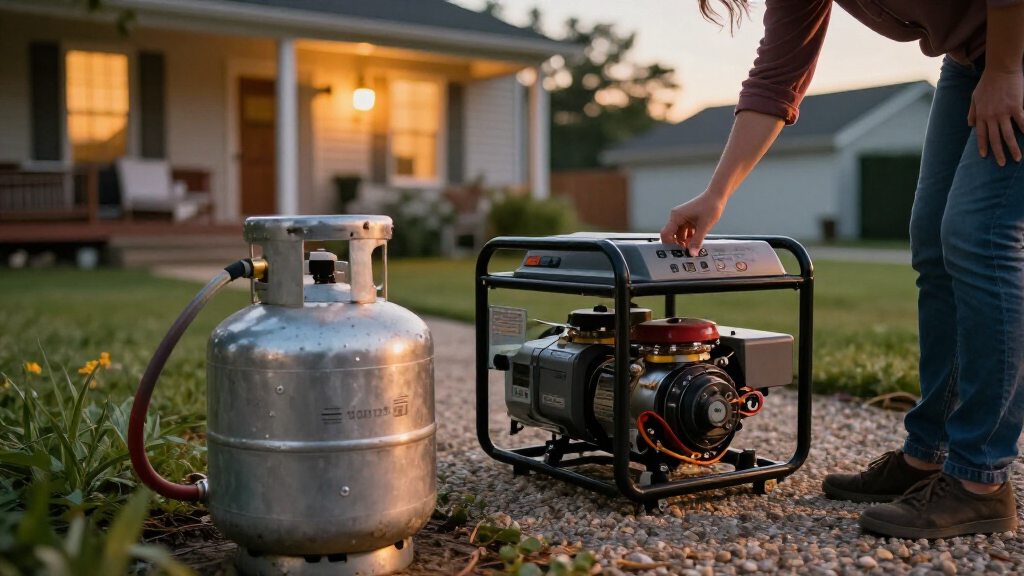

The Westinghouse WGen9500TFc is my best overall pick for buyers who want substantial backup capacity without stepping up to the largest machines. The Westinghouse iGen12000TFc stands out for inverter power, while the WEN TF-1450 offers a straightforward high-output alternative. Across these tri-fuel generators, the main tradeoffs are output versus portability, conventional versus inverter power, and convenience features versus a simpler setup. I compare those differences below so you can match a model to your loads, fuel access and noise expectations.

Get backup power and energy gear delivered free with Prime
- Fast, free delivery on millions of items
- Prime Video, Amazon Music and more included
- Member-only deals all year
Complete the kit


Key Takeaways
- The WGen9500TFc is the balanced pick: it offers a more manageable scale than the 14,500- to 20,000-watt models while retaining substantial backup capability.
- Inverter design marks a different use case: the Westinghouse iGen12000TFc and iGen8200TFc prioritize cleaner, quieter power, with lower output than the biggest conventional units.
- Peak wattage is not the whole backup plan: compare running output on each fuel and account for motor starting loads before choosing a generator.
- Remote and electric start are convenience features, not capacity upgrades: models such as the WGen14500TFc and DuroMax XP15000HXT suit buyers who value easier starts, but still require safe placement and correct connections.
- The lineup spans very different footprints: the 8,200-watt inverter option favors lighter demands, while the WGen20000TFc and other 15,000-watt-class models target larger loads and demand more space and handling effort.
| Westinghouse WGen9500TFc Tri-Fuel Portable Generator |  | Best Overall | Fuel types: Gasoline, propane, natural gas | Running output: 9,500 W gasoline; 8,500 W propane; 7,500 W natural gas | Peak output: 12,500 W gasoline; 11,200 W propane; 9,500 W natural gas | VIEW LATEST PRICE | See Our Full Breakdown |
| Westinghouse WGen14500TFc Tri-Fuel Portable Generator with Remote Electric Start and CO Sensor |  | Best for Large-Home Backup | Fuel types: Gasoline, propane, natural gas | Running output: 14,500 W gasoline; 13,000 W propane; 11,600 W natural gas | Peak output: 18,000 W gasoline; 16,000 W propane; 14,400 W natural gas | VIEW LATEST PRICE | See Our Full Breakdown |
| Westinghouse 14,500-Watt Tri-Fuel Portable Generator with Remote Electric Start |  | Best for Longer Gasoline Runtime | Fuel types: Gasoline, propane, natural gas | Running output: 11,500 W gasoline; 10,500 W propane; 9,500 W natural gas | Peak output: 14,500 W gasoline; 13,500 W propane; 12,000 W natural gas | VIEW LATEST PRICE | See Our Full Breakdown |
| WEN 13,000-Watt Tri-Fuel Inverter Generator with Electric Start |  | Best for Inverter-Style Versatility | Model: TF1300iX | Fuel types: Gasoline, propane, natural gas | Running output: 10,500 W gasoline; 9,000 W propane; 8,000 W natural gas | VIEW LATEST PRICE | See Our Full Breakdown |
| GENMAX GM15000ET Tri-Fuel Portable Generator |  | Best for Flexible Starting | Model: GM15000ET | Fuel types: Gasoline, LPG, natural gas | Peak power: 15,000 W | VIEW LATEST PRICE | See Our Full Breakdown |
| Westinghouse iGen12000TFc Tri-Fuel Portable Inverter Generator |  | Best for Clean Power and Home Backup | Fuel types: Gasoline, propane, natural gas | Gasoline output: 9,000W running; 12,000W peak | Propane output: 8,100W running; 11,000W peak | VIEW LATEST PRICE | See Our Full Breakdown |
| Westinghouse WGen20000TFc Tri-Fuel Portable Generator, 28,000 Peak Watts |  | Best for Maximum Home Backup Capacity | Fuel types: Gasoline, propane, natural gas | Peak output: 28,000W gasoline; 25,200W propane; 22,400W natural gas | Running output: 20,000W gasoline; 18,000W propane; 16,000W natural gas | VIEW LATEST PRICE | See Our Full Breakdown |
| Generac 12,500-Watt Tri-Fuel Portable Generator with Electric Start |  | Best for Straightforward Emergency Backup | Fuel types: Gasoline, liquid propane, natural gas | Output: 9,500W running; 12,500W starting on gasoline | Engine: 500cc Generac OHV | VIEW LATEST PRICE | See Our Full Breakdown |
| WEN TF-1450 14,500-Watt Tri-Fuel Generator with Electric Start |  | Best for Midrange Output and Half-Load Runtime | Fuel types: Gasoline, propane, natural gas | Gasoline output: 11,500W running; 14,500W surge | Propane output: 10,300W running; 12,500W surge | VIEW LATEST PRICE | See Our Full Breakdown |
| Westinghouse iGen8200TFc Tri-Fuel Portable Inverter Generator |  | Best Compact Inverter Pick | Fuel types: Gasoline, propane, natural gas | Gasoline output: 6,600W running; 8,200W peak | Propane output: 5,940W running; 7,380W peak | VIEW LATEST PRICE | See Our Full Breakdown |
| Westinghouse 13,500-Watt Tri-Fuel Portable Generator with Remote Electric Start |  | Best for Long Gasoline Runtime | Fuel types: Gasoline, propane, natural gas | Gasoline output: 13,500 peak watts; 10,500 running watts | Propane output: 12,500 peak watts; 9,500 running watts | VIEW LATEST PRICE | See Our Full Breakdown |
| DuroMax XP15000HXT 15,000-Watt Tri-Fuel Portable Generator with CO Alert |  | Best for High Output and Load Monitoring | Power output: 15,000 watts | Engine: 500cc OHV | Fuel types: Gasoline, propane, natural gas | VIEW LATEST PRICE | See Our Full Breakdown |
| WEN 14,500-Watt Tri-Fuel Generator with Electric Start |  | Best for Strong Gasoline and Natural Gas Output | Fuel types: Gasoline, propane, natural gas | Surge output: 14,500 watts gasoline; 12,500 watts propane; 10,500 watts natural gas | Running output: 11,500 watts gasoline; 10,300 watts propane; 8,750 watts natural gas | VIEW LATEST PRICE | See Our Full Breakdown |
| DuroStar DS13000MXT 13,000-Watt Tri-Fuel Portable Generator |  | Best for Straightforward Transfer-Switch Backup | Model: DS13000MXT | Power output: Up to 13,000 watts | Engine displacement: 500cc | VIEW LATEST PRICE | See Our Full Breakdown |
| DuroMax XP13000HXT 13,000-Watt Tri-Fuel Portable Generator |  | Best for Remote Starting at 13,000 Watts | Peak output: 13,000 watts | Running output: 10,500 watts | Fuel types: Gasoline, propane, natural gas | VIEW LATEST PRICE | See Our Full Breakdown |
| tri-fuel generator | Fuel types | Engine | Fuel tank | Runtime |
|---|---|---|---|---|
| Westinghouse WGen9500TFc Tri-F | Gasoline, propane, natural gas | 457cc 4-stroke OHV | 6.6 gallons | Up to 12 hours on gasoline |
| Westinghouse WGen14500TFc Tri- | Gasoline, propane, natural gas | 713cc Westinghouse V-Twin OHV | 10.5 gallons | Up to 16 hours at 25% load on gasoline |
| Westinghouse 14,500-Watt Tri-F | Gasoline, propane, natural gas | 550cc 4-stroke OHV | 9.5 gallons | Up to 19 hours on gasoline; up to 7 hours on a 20 lb propane tank |
| WEN 13,000-Watt Tri-Fuel Inver | Gasoline, propane, natural gas | 550cc 4-stroke OHV | 7.1 gallons | Up to 7.7 hours at half load |
| GENMAX GM15000ET Tri-Fuel Port | Gasoline, LPG, natural gas | — | 10.56 gallons | — |
| Westinghouse iGen12000TFc Tri- | Gasoline, propane, natural gas | 457cc 4-stroke OHV | 7.9 gallons | Up to 19 hours at 25% load |
| Westinghouse WGen20000TFc Tri- | Gasoline, propane, natural gas | 999cc 4-stroke OHV V-Twin | 17.2 gallons | Up to 15 hours at 25% load |
| Generac 12,500-Watt Tri-Fuel P | Gasoline, liquid propane, natural gas | 500cc Generac OHV | 7.5 gallons | Up to 9.5 hours at 50% load; up to 14 hours at 25% load |
| WEN TF-1450 14,500-Watt Tri-Fu | Gasoline, propane, natural gas | 500cc 4-stroke OHV | 8.2 gallons | Up to 12 hours at half load |
| Westinghouse iGen8200TFc Tri-F | Gasoline, propane, natural gas | 298cc 4-stroke OHV with cast iron sleeve | 3.9 gallons | Up to 17 hours at 25% load |
| Westinghouse 13,500-Watt Tri-F | Gasoline, propane, natural gas | 500cc 4-stroke OHV | 9.5 gallons | — |
| DuroMax XP15000HXT 15,000-Watt | Gasoline, propane, natural gas | 500cc OHV | — | — |
| WEN 14,500-Watt Tri-Fuel Gener | Gasoline, propane, natural gas | 500cc 4-stroke OHV | — | — |
| DuroStar DS13000MXT 13,000-Wat | Gasoline, propane, natural gas | — | — | — |
| DuroMax XP13000HXT 13,000-Watt | Gasoline, propane, natural gas | 500cc four-stroke OHV | — | 8 hours |
More Details on Our Top Picks
Westinghouse WGen9500TFc Tri-Fuel Portable Generator
The WGen9500TFc balances backup capacity with useful fuel flexibility, making it a strong fit for households that want one generator for outages and occasional RV use. On gasoline it delivers 9,500 running watts, while propane and natural gas let owners adapt to fuel availability. Its remote, electric, and recoil starts give more options than the electric-start-only setup listed for the larger WGen14500TFc. The tradeoff is less output: buyers with larger homes or several high-draw appliances should look to that 14,500-watt model instead. A 6.6-gallon tank provides up to 12 hours of runtime, but the heavy-duty build can be difficult to move and some assembly is required. I rank it first for its practical mix of output, three fuels, and starting choices.
Pros:- Runs on gasoline, propane, or natural gas
- Remote, electric, and recoil starting provide flexible restart options
- Transfer-switch-ready and RV-ready outlets support home backup and campsite use
- Up to 12 hours of gasoline runtime from a 6.6-gallon tank
Cons:- Lower running output than the Westinghouse WGen14500TFc
- Heavy-duty design can be difficult to reposition
- Requires some assembly
Best for: Homeowners who want substantial outage coverage, multiple fuel choices, and RV-ready outlets without stepping up to a higher-output generator
Not ideal for: Buyers planning to power a large home with several demanding appliances, or anyone who needs a generator that is easy to move frequently
- Fuel types:Gasoline, propane, natural gas
- Running output:9,500 W gasoline; 8,500 W propane; 7,500 W natural gas
- Peak output:12,500 W gasoline; 11,200 W propane; 9,500 W natural gas
- Engine:457cc 4-stroke OHV
- Fuel tank:6.6 gallons
- Runtime:Up to 12 hours on gasoline
- Starting methods:Remote, electric, recoil
- Safety:Automatic low-oil and carbon monoxide shutdown
Our verdict“Choose the WGen9500TFc for versatile home and RV backup when its 9,500 gasoline running watts cover your needs.”
Westinghouse WGen14500TFc Tri-Fuel Portable Generator with Remote Electric Start and CO Sensor
When the priority is running more of a home at once, the WGen14500TFc offers the strongest stated running output among these five: 14,500 watts on gasoline and 11,600 watts on natural gas. That extra capacity gives it an advantage over the WGen9500TFc for larger loads, though it also means a larger, heavier machine. Remote and push-button electric start make operation more convenient than a recoil-dependent routine, and the 50-amp outlet suits compatible backup connections. Its published 16-hour runtime is measured at just 25% load, so buyers should not treat that figure as a full-load estimate. Low THD and a CO shutdown add useful features, but buyers who value longer stated runtimes may prefer the 14,500-watt Westinghouse model rated for up to 19 hours on gasoline.
Pros:- Highest gasoline running output in this five-product batch
- Three fuel options include natural gas for a household supply connection
- Remote and push-button electric start simplify operation
- Low-THD output and CO shutdown are useful for backup use
Cons:- Large, heavy design can be difficult to move
- The 16-hour runtime figure applies at only 25% load
- Its output may be more than needed for smaller backup plans
Best for: Homeowners with a compatible transfer setup who need high output for several household circuits or larger appliances
Not ideal for: People who need to move a generator often, or buyers who expect the stated 16-hour runtime to apply at heavy loads
- Fuel types:Gasoline, propane, natural gas
- Running output:14,500 W gasoline; 13,000 W propane; 11,600 W natural gas
- Peak output:18,000 W gasoline; 16,000 W propane; 14,400 W natural gas
- Engine:713cc Westinghouse V-Twin OHV
- Fuel tank:10.5 gallons
- Runtime:Up to 16 hours at 25% load on gasoline
- Total harmonic distortion:Less than 5%
- Outlets:120/240V 14-50R 50A; 120/240V L14-30R 30A; 120V L5-30R 30A; two GFCI 120V 5–20R duplex outlets
Our verdict“Pick the WGen14500TFc when high household output matters more than portability or a runtime figure at heavier loads.”
Westinghouse 14,500-Watt Tri-Fuel Portable Generator with Remote Electric Start
This Westinghouse pairs 11,500 gasoline running watts with a stated runtime of up to 19 hours, giving it a different appeal from the WGen14500TFc. Its 19-hour figure is not paired with a load level in the supplied details, so I would compare it cautiously with the WGen14500TFc’s 16 hours at 25% load. The model also reports propane runtime of up to seven hours on a 20-pound tank, a helpful planning detail for buyers who expect to use stored cylinders. Low-THD output and copper windings are intended to support sensitive electronics. It runs on all three common fuels and includes remote start, but the large tank and heavy-duty engine work against frequent transport. For buyers focused on higher gasoline output, the WGen14500TFc has the edge.
Pros:- Three fuel choices provide flexibility during outages
- Up to 19 hours of stated gasoline runtime
- Low-THD output and copper windings are designed for sensitive electronics
- Remote electric start and built-in fuel gauge aid operation
Cons:- Gasoline running output is lower than the WGen14500TFc’s 14,500 watts
- The runtime figure lacks a stated load level
- Large tank and engine make it less convenient to move
Best for: Homeowners seeking tri-fuel backup with a long stated gasoline runtime and output suited to multiple household loads
Not ideal for: Buyers who need a clearly specified runtime at a particular load, or who plan to transport their generator often
- Fuel types:Gasoline, propane, natural gas
- Running output:11,500 W gasoline; 10,500 W propane; 9,500 W natural gas
- Peak output:14,500 W gasoline; 13,500 W propane; 12,000 W natural gas
- Engine:550cc 4-stroke OHV
- Fuel tank:9.5 gallons
- Runtime:Up to 19 hours on gasoline; up to 7 hours on a 20 lb propane tank
- Features:Remote electric start, transfer-switch ready, built-in fuel gauge
- Warranty:3-year limited service, labor, and parts coverage
Our verdict“Choose this Westinghouse if its long stated gasoline runtime and electronics-oriented output suit your backup plan.”
WEN 13,000-Watt Tri-Fuel Inverter Generator with Electric Start
The WEN TF1300iX stands apart through its inverter-generator design and broad mix of outlets, including USB and 12V DC connections alongside 120V/240V AC. That makes it a flexible choice for buyers who want to serve household backup needs while also powering smaller devices directly. It supplies 10,500 running watts on gasoline, below the Westinghouse WGen9500TFc’s 9,500 only by a modest margin and well below either 14,500-watt Westinghouse model’s gasoline rating. The included wheel kit helps with repositioning, although a 13,000-watt class unit remains bulky. Runtime reaches 7.7 hours at half load, shorter than the WGen9500TFc’s stated 12 hours. Electric start and CO Watchdog add convenience and protection, but this is not the pick for buyers who prioritize long intervals between refueling.
Pros:- Tri-fuel capability supports changing fuel availability
- Inverter-generator design suits buyers seeking cleaner power for electronics
- USB and 12V DC outlets can power smaller devices directly
- Electric start, CO Watchdog, and wheel kit support practical operation
Cons:- 7.7-hour runtime is specified at half load
- Lower gasoline running output than the 14,500-watt Westinghouse models
- Still bulky for frequent transport despite the wheel kit
Best for: Buyers who want tri-fuel home backup with inverter-style power and direct USB or DC connections for smaller electronics
Not ideal for: Households needing the highest output in the group or longer stated runtime between gasoline refills
- Model:TF1300iX
- Fuel types:Gasoline, propane, natural gas
- Running output:10,500 W gasoline; 9,000 W propane; 8,000 W natural gas
- Surge output:13,000 W gasoline; 11,250 W propane; 10,000 W natural gas
- Engine:550cc 4-stroke OHV
- Fuel tank:7.1 gallons
- Runtime:Up to 7.7 hours at half load
- Outlets:Two 120V 5-20R; one 120V/240V 14-50R; one 120V L5-30R; one 120V 10-50R; one 12V DC; two USB
Our verdict“Choose the WEN TF1300iX for outlet variety and inverter-style versatility if its runtime and output fit your load plan.”
GENMAX GM15000ET Tri-Fuel Portable Generator
The GENMAX GM15000ET is a high-output option for buyers who want three ways to start: one-button, remote, or recoil. Its listing gives 15,000 watts peak and 11,000 watts rated, but it does not break those figures out by fuel type. That missing detail makes its propane and natural-gas capacity harder to compare with the WGen14500TFc, whose running outputs are stated for each fuel. The digital display and CO detection add useful operating information and a safety feature, while 120V/240V output suits compatible backup connections. A 10.56-gallon tank suggests a substantial machine, and the listing gives no weight, noise level, or runtime to help buyers plan transport and refueling. It makes more sense for shoppers who value starting flexibility than for those who need fully specified performance figures.
Pros:- Gasoline peak power is listed at 15,000 watts with 11,000 watts rated
- Runs on gasoline, LPG, or natural gas
- One-button, remote, and recoil starting provide several operating options
- Digital display and CO detection add useful features
Cons:- Output is not broken down by fuel type
- Runtime, weight, and noise level are not provided
- Large fuel tank and high output may make transport difficult
Best for: Homeowners who want a high-output tri-fuel generator with remote, button, and recoil starting options
Not ideal for: Buyers who need fuel-by-fuel output, runtime, noise, or weight information before choosing a backup generator
- Model:GM15000ET
- Fuel types:Gasoline, LPG, natural gas
- Peak power:15,000 W
- Fuel tank:10.56 gallons
- Starting methods:One-button, remote, recoil
- Voltage:120V/240V
- Warranty:3 years
Our verdict“Consider the GM15000ET if multiple starting methods matter and you can confirm its fuel-specific output and runtime for your setup.”
Westinghouse iGen12000TFc Tri-Fuel Portable Inverter Generator
The iGen12000TFc combines substantial backup output with inverter power rated at 3% THD or less, a useful pairing for households running electronics alongside larger appliances. Its 50A outlet supports a high-capacity connection, while remote start and three fuel choices give owners flexibility when a preferred fuel is unavailable. Compared with the smaller iGen8200TFc, it offers more running watts and a larger fuel tank, but takes up more space and is less suited to casual transport. The stated 19-hour runtime applies at just 25% load, so buyers should not treat it as a full-load estimate. Choose it for cleaner inverter output and strong home-backup connections; skip it if compact size matters more than capacity.
Pros:- Tri-fuel operation gives owners options when fuel availability changes
- Low THD is suited to sensitive electronics
- 50A outlet supports substantial home or RV connections
- Remote start and parallel capability add operating flexibility
Cons:- Large, heavy-duty design is harder to transport than smaller inverter models
- The 19-hour runtime figure is specified only at 25% load
Best for: Homeowners who want low-THD inverter power, a 50A backup connection, and the option to use three fuels
Not ideal for: Buyers who need a compact generator they can move often or who expect long runtime under heavy loads
- Fuel types:Gasoline, propane, natural gas
- Gasoline output:9,000W running; 12,000W peak
- Propane output:8,100W running; 11,000W peak
- Natural gas output:7,200W running; 9,800W peak
- Engine:457cc 4-stroke OHV
- Fuel tank:7.9 gallons
- Runtime:Up to 19 hours at 25% load
- Total harmonic distortion:≤3%
- Outlets:120/240V 14-50R 50A; 120/240V L14-30R 30A; 120V 5-20R 20A duplex
Our verdict“Pick the iGen12000TFc if you want high-output inverter power and a 50A connection, and can accommodate a bulky unit.”
Westinghouse WGen20000TFc Tri-Fuel Portable Generator, 28,000 Peak Watts
With 20,000 running watts on gasoline and a 125A hardwire terminal block, the WGen20000TFc is aimed at buyers planning broad whole-home backup or demanding jobsite use. Its output stays higher than the other listed models across all three fuels, giving it more headroom for simultaneous loads than the Westinghouse iGen12000TFc. That scale comes with a real handling cost: the 999cc V-Twin and large frame make it cumbersome despite the wheels and lift bracket. The multiple transfer-switch-ready outlets also reduce the need to rely on one connection type, while the less-than-5% THD rating is higher than the inverter models’ figures. Hardwiring requires a licensed electrician, and its 15-hour runtime is stated at 25% load.
Pros:- Highest listed running output in this batch on all three fuels
- 125A terminal block supports hardwired backup installation
- Remote start and several transfer-switch-ready outlet types
- Wheels and lift bracket assist with moving and loading
Cons:- Large 999cc engine and frame are cumbersome to maneuver
- Hardwiring requires a licensed electrician
- Runtime figure is measured at 25% load
Best for: Homeowners or jobsite operators who need very high output across multiple circuits and have space to store a large generator
Not ideal for: Buyers prioritizing easy solo transport, compact storage, or the lower THD ratings of inverter generators
- Fuel types:Gasoline, propane, natural gas
- Peak output:28,000W gasoline; 25,200W propane; 22,400W natural gas
- Running output:20,000W gasoline; 18,000W propane; 16,000W natural gas
- Engine:999cc 4-stroke OHV V-Twin
- Fuel tank:17.2 gallons
- Runtime:Up to 15 hours at 25% load
- Total harmonic distortion:Less than 5%
- Hardwire connection:125A 240V AC terminal block
- Starting:Push-button electric start and remote-start key fob
Our verdict“Choose the WGen20000TFc when maximum backup capacity is the priority and you can manage its size and installation needs.”
Generac 12,500-Watt Tri-Fuel Portable Generator with Electric Start
The Generac brings a practical combination of 9,500 running watts, electric start, and COsense shutdown for buyers who want a familiar portable setup for outages. Automatic voltage regulation supports steadier output, while the included battery and wheel kit help make the unit ready to move and start. Its 219-pound weight is still a substantial lift, so the wheels matter more than the word portable might suggest. Compared with the Westinghouse iGen12000TFc, this model has lower running output and lacks the stated low-THD inverter advantage, but its 25%-load runtime reaches 14 hours and its 50% figure gives buyers another useful operating reference. The gasoline tank is modest, and runtime will vary with the connected load.
Pros:- Gasoline, propane, and natural gas operation
- COsense detection and shutdown add a safety feature for outage use
- AVR and electric start simplify everyday operation
- Includes battery, oil, LP hose, and wheel kit
Cons:- At 219 pounds, it is difficult to lift without help
- 7.5-gallon tank limits gasoline runtime compared with larger-tank models
- No low-THD inverter rating is specified
Best for: Households seeking electric-start tri-fuel backup with CO shutdown and conventional 120V and 240V outlets
Not ideal for: Buyers needing inverter-grade low-THD output or a generator light enough to lift and carry easily
- Fuel types:Gasoline, liquid propane, natural gas
- Output:9,500W running; 12,500W starting on gasoline
- Engine:500cc Generac OHV
- Fuel tank:7.5 gallons
- Runtime:Up to 9.5 hours at 50% load; up to 14 hours at 25% load
- Starting:Electric start with included 12V battery
- Safety:COsense carbon monoxide detection and shutdown
- Outlets:Two 120V 20A GFCI duplex; one 120/240V 30A L14-30R; one 120/240V 50A 14-50R
- Weight:219 lbs
Our verdict“Pick this Generac for conventional tri-fuel backup with electric start and CO shutdown, provided its weight and non-inverter output suit your setup.”
WEN TF-1450 14,500-Watt Tri-Fuel Generator with Electric Start
The TF-1450 makes a strong case for buyers who need more gasoline output than the Generac’s 9,500 running watts but do not need the WGen20000TFc’s much larger engine. It delivers 11,500 running watts on gasoline, with 120V and 240V outlets that can serve household circuits through a transfer switch. Its stated 12-hour runtime at half load gives a more demanding reference point than models whose headline runtime is measured only at 25% load. Output falls as fuel changes, reaching 8,750 running watts on natural gas, so buyers planning to rely on gas should size their loads around that figure. Electric start and included fuel adapters make setup more approachable, though the specs do not state a noise rating or inverter-level THD.
Pros:- 11,500W gasoline running output suits substantial backup loads
- Three fuel choices include natural gas
- Up to 12 hours of runtime is specified at half load
- Wheel kit and fuel connection accessories are included
Cons:- Running output drops to 8,750W on natural gas
- No inverter THD or noise rating is provided in the supplied specs
- Runtime varies with load and the stated figure is limited to half load
Best for: Homeowners who want midrange gasoline capacity, 240V backup outlets, and a runtime estimate at half load
Not ideal for: Buyers who need the same high output on natural gas as on gasoline or want a specified low-THD inverter output
- Fuel types:Gasoline, propane, natural gas
- Gasoline output:11,500W running; 14,500W surge
- Propane output:10,300W running; 12,500W surge
- Natural gas output:8,750W running; 10,500W surge
- Engine:500cc 4-stroke OHV
- Fuel tank:8.2 gallons
- Runtime:Up to 12 hours at half load
- Voltage:120V/240V
- Outlets:Four 120V 5-20R; one 120V/240V L14-30R; one 120V/240V 14-50R; one 12V DC automotive outlet
Our verdict“Choose the TF-1450 for a middle ground between conventional backup capacity and a useful half-load runtime estimate.”
Westinghouse iGen8200TFc Tri-Fuel Portable Inverter Generator
The iGen8200TFc is the smaller inverter choice here, pairing tri-fuel flexibility with less than 3% THD for sensitive electronics. Its 6,600 running watts on gasoline can support a measured set of essentials, and the 50A outlet allows a home-backup connection despite its lower capacity than the iGen12000TFc. The tradeoff is a sizable output reduction when using propane or natural gas: running watts fall to 5,940 and 5,280 respectively. Its 3.9-gallon tank is smaller than the iGen12000TFc’s, while the 17-hour claim applies at 25% load. At around 60 dBA at that load, it is quieter on paper than the larger WGen20000TFc’s conventional-generator design, though it can still be heard nearby.
Pros:- Inverter output with less than 3% THD suits sensitive electronics
- Three fuels provide backup flexibility
- 50A outlet supports home backup connections
- Up to 17 hours of runtime at 25% load
Cons:- Running output drops to 5,280W on natural gas
- Small 3.9-gallon gasoline tank
- Runtime figure is specified only at 25% load
Best for: RV owners and households powering essential circuits who want tri-fuel flexibility and inverter output in a lower-capacity package
Not ideal for: Buyers needing to run many high-draw appliances at once or expecting long runtimes under heavy loads
- Fuel types:Gasoline, propane, natural gas
- Gasoline output:6,600W running; 8,200W peak
- Propane output:5,940W running; 7,380W peak
- Natural gas output:5,280W running; 6,560W peak
- Engine:298cc 4-stroke OHV with cast iron sleeve
- Fuel tank:3.9 gallons
- Runtime:Up to 17 hours at 25% load
- Noise level:Around 60 dBA at 25% load
- Total harmonic distortion:Less than 3%
Our verdict“Pick the iGen8200TFc for clean inverter power and a 50A connection when its lower capacity is enough for your planned loads.”
Westinghouse 13,500-Watt Tri-Fuel Portable Generator with Remote Electric Start
The Westinghouse stands out for pairing 10,500 running watts on gasoline with a listed runtime of up to 19 hours, giving households fewer interruptions between refueling when they can use its 9.5-gallon tank. Its remote, electric, and recoil starting also gives it more starting flexibility than the electric-and-recoil setup on the WEN 14,500-Watt Tri-Fuel Generator. The 50-amp outlet suits transfer-switch connections, while the 14-50R adds an option for compatible RV or high-load equipment. It gives up some gasoline output to the WEN’s 11,500 running watts, though, and its 500cc engine makes this a substantial unit to move. I’d choose it for backup plans that value long stretches between gasoline refills over the highest output in this group.
Pros:- Runs on gasoline, propane, or natural gas
- Up to 19 hours of listed runtime from its 9.5-gallon tank
- Remote, electric, and recoil starting provide multiple ways to start
- Includes a 50-amp outlet and automatic low-oil and carbon monoxide shutdown
Cons:- Its 10,500 gasoline running watts are below the WEN 14,500-Watt Tri-Fuel Generator’s 11,500
- The large 500cc engine can make transport and handling difficult
- Minimal assembly is required
Best for: Homeowners who want extended gasoline runtime, remote starting, and a 50-amp connection for home backup
Not ideal for: Buyers who need the highest listed gasoline output or a generator that is easy to move and store
- Fuel types:Gasoline, propane, natural gas
- Gasoline output:13,500 peak watts; 10,500 running watts
- Propane output:12,500 peak watts; 9,500 running watts
- Natural gas output:10,000 peak watts; 8,500 running watts
- Engine:500cc 4-stroke OHV
- Fuel tank:9.5 gallons
- Maximum runtime:Up to 19 hours
- Starting methods:Remote, electric, recoil
- Safety:Automatic low-oil and carbon monoxide shutdown
Our verdict“Choose this Westinghouse if long gasoline runtime and remote starting matter more than maximum output or easy handling.”
DuroMax XP15000HXT 15,000-Watt Tri-Fuel Portable Generator with CO Alert
The XP15000HXT is the output-focused choice here, with a 15,000-watt rating, a 500cc engine, and a 50-amp outlet for larger backup loads. Its LED display reports fuel level, load, voltage, frequency, and time, helping an operator track several useful readings from one panel. That makes it more informative at a glance than the simpler outlet-and-output details listed for the DuroStar DS13000MXT. Push-button and remote starting add convenience, and CO Alert provides automatic shutdown if harmful fumes are detected. The buying tradeoff is incomplete planning data: no runtime or fuel-consumption figures are provided, so estimating refueling intervals is harder than with the Westinghouse 13,500-Watt Tri-Fuel Generator, which lists up to 19 hours. Its large engine also limits portability.
Pros:- Runs on gasoline, propane, or natural gas
- LED display shows fuel level, load, voltage, frequency, and time
- Push-button and remote starting
- Includes a 50-amp outlet and CO Alert automatic shutdown
Cons:- Runtime and fuel-consumption details are not provided
- The 500cc engine can make transport and storage difficult
Best for: Homeowners with substantial backup loads who want a detailed operating display and remote starting
Not ideal for: Buyers who need documented runtime for refueling plans or expect to move the generator often
- Power output:15,000 watts
- Engine:500cc OHV
- Fuel types:Gasoline, propane, natural gas
- Starting:Push-button and remote
- Outlets:Four 120V 20A GFCI; one 120V 30A twist lock; one 120/240V 30A twist lock; one 120/240V 50A
- Display:LED display with gas gauge, load gauge, voltage, frequency, and time
- Safety:CO Alert automatic shutdown
- Windings:100% copper
Our verdict“Pick the XP15000HXT for its high stated output and useful monitoring display if you can plan around missing runtime figures.”
WEN 14,500-Watt Tri-Fuel Generator with Electric Start
This WEN pairs 11,500 running watts on gasoline with 8,750 running watts on natural gas, making it a strong fit for buyers comparing output across fuel sources rather than focusing on gasoline alone. Its natural-gas figure exceeds the Westinghouse 13,500-Watt Tri-Fuel Generator’s listed 8,500 running watts, while that Westinghouse offers a longer maximum runtime and remote starting. WEN supplies electric start with recoil backup, a digital data meter, and a wheel and handle kit, which help with startup and routine monitoring. The 8.2-gallon tank is listed for up to 12 hours at half load on gasoline. The natural gas hose is sold separately, and the large 500cc engine means the wheels help with rolling but do not make it a compact choice.
Pros:- Runs on gasoline, propane, and natural gas
- 11,500 gasoline running watts and 8,750 natural-gas running watts
- Electric start with recoil backup and a digital data meter
- Includes a wheel and handle kit, 50-amp outlet, and CO shutdown sensor
Cons:- Natural gas hose is sold separately
- Listed gasoline runtime is up to 12 hours at half load, shorter than the Westinghouse 13,500-Watt Tri-Fuel Generator’s maximum figure
- The 500cc engine makes it a bulky option to transport
Best for: Homeowners who want strong listed gasoline and natural-gas output with a 120/240V connection for backup circuits
Not ideal for: Buyers who want remote starting, a longer listed gasoline runtime, or a natural gas hose included
- Fuel types:Gasoline, propane, natural gas
- Surge output:14,500 watts gasoline; 12,500 watts propane; 10,500 watts natural gas
- Running output:11,500 watts gasoline; 10,300 watts propane; 8,750 watts natural gas
- Voltage:120V/240V
- Engine:500cc 4-stroke OHV
- Gas tank:8.2 gallons
- Gasoline runtime:Up to 12 hours at half load
- Starting:Electric start with recoil backup
- Safety:WEN Watchdog CO shutdown sensor
Our verdict“Choose this WEN if you want high stated output on gasoline and natural gas and can supply your own natural-gas hose.”
DuroStar DS13000MXT 13,000-Watt Tri-Fuel Portable Generator
The DS13000MXT keeps its listed feature set focused on core home-backup needs: three fuel choices, push-button starting, and a 50-amp transfer-switch-ready outlet. That makes it a simpler fit for a household prioritizing a direct connection to backup circuits over the XP15000HXT’s detailed LED display and higher stated power rating. DuroStar also includes CO Alert automatic shutdown, adding a safety response if harmful carbon monoxide levels are detected. The brief specs leave important planning questions unanswered, though: no runtime, fuel-specific output figures, or outlet details beyond the 50-amp connection are supplied. By comparison, the Westinghouse 13,500-Watt Tri-Fuel Generator lists output for each fuel and a maximum runtime of up to 19 hours. I’d place this DuroStar with buyers whose needs match its basic connection and start features, and who can confirm capacity details before choosing.
Pros:- Runs on gasoline, propane, or natural gas
- Push-button electric starting
- Includes a 50-amp transfer-switch-ready outlet
- CO Alert provides automatic shutdown when harmful carbon monoxide levels are detected
Cons:- Runtime and fuel-consumption details are not provided
- Fuel-specific output figures and a full outlet list are not supplied
Best for: Homeowners seeking tri-fuel operation, push-button starting, and a 50-amp transfer-switch connection
Not ideal for: Buyers who need fuel-by-fuel output, runtime figures, or a detailed outlet list to plan their backup setup
- Model:DS13000MXT
- Power output:Up to 13,000 watts
- Engine displacement:500cc
- Fuel types:Gasoline, propane, natural gas
- Starting:Push-button electric start
- Outlet:50-amp transfer-switch-ready outlet
- Safety:CO Alert automatic shutdown
Our verdict“Consider the DS13000MXT if its tri-fuel operation and 50-amp connection fit your plan and you can verify the missing capacity details.”
DuroMax XP13000HXT 13,000-Watt Tri-Fuel Portable Generator
The XP13000HXT offers a 13,000-watt peak rating, tri-fuel operation, and both remote and push-button starting, giving it a practical convenience edge over the push-button-only DuroStar DS13000MXT. Its 50-amp transfer-switch-ready outlet supports a home-backup connection, while CO Alert adds automatic shutdown when harmful fumes are detected. The listed 10,500 running watts and 8-hour runtime give buyers more planning information than the DS13000MXT listing, but that runtime is modest beside the Westinghouse 13,500-Watt Tri-Fuel Generator’s up-to-19-hour figure. The 8.3-gallon tank and 500cc engine also point to a substantial unit, not an easy-carry option. This DuroMax makes the most sense for buyers who value remote startup and a defined output rating more than long intervals between gasoline refills.
Pros:- Runs on gasoline, propane, and natural gas
- Offers both electric push-button and remote starting
- Includes a 50-amp transfer-switch-ready outlet
- CO Alert automatic shutdown and listed running wattage support backup planning
Cons:- Listed runtime is 8 hours, shorter than the Westinghouse 13,500-Watt Tri-Fuel Generator’s maximum figure
- The 500cc engine and 8.3-gallon tank make it a substantial unit to handle
Best for: Homeowners who want remote starting, tri-fuel flexibility, and a 50-amp outlet for backup circuits
Not ideal for: Buyers who prioritize long gasoline runtime or a compact generator for frequent transport
- Peak output:13,000 watts
- Running output:10,500 watts
- Fuel types:Gasoline, propane, natural gas
- Engine:500cc four-stroke OHV
- Starting:Electric push-button and remote
- Tank capacity:8.3 gallons
- Runtime:8 hours
- Voltage and frequency:240 volts; 60 Hz
- Safety:CO Alert
Our verdict“Choose the XP13000HXT if remote starting and a stated 10,500 running watts matter more than extended runtime.”

How We Picked
I compared these 15 models on the factors that change a tri-fuel generator buying decision: usable output, available inverter designs, start controls, safety features, fuel flexibility, and the practical demands of moving, storing and maintaining a large engine. I gave weight to how clearly each model fits a buyer need, since a generator’s value depends on whether its capacity and features suit the loads it must support.
The order favors balance and usability for typical backup buyers, then separates out high-capacity, inverter, and simpler alternatives by their strengths and compromises. Models with larger wattage figures are not automatically ranked higher: running output, fuel-specific capacity, portability, and intended use matter more than the largest peak number. The product list does not provide consistent measured noise, weight, runtime, or fuel-specific output figures, so I avoid treating those as proven advantages.
| tri-fuel generator | Fuel types |
|---|---|
| Westinghouse WGen9500TFc Tri-F | Gasoline, propane, natural gas |
| Westinghouse WGen14500TFc Tri- | Gasoline, propane, natural gas |
| Westinghouse 14,500-Watt Tri-F | Gasoline, propane, natural gas |
| WEN 13,000-Watt Tri-Fuel Inver | Gasoline, propane, natural gas |
| GENMAX GM15000ET Tri-Fuel Port | Gasoline, LPG, natural gas |
| Westinghouse iGen12000TFc Tri- | Gasoline, propane, natural gas |
| Westinghouse WGen20000TFc Tri- | Gasoline, propane, natural gas |
| Generac 12,500-Watt Tri-Fuel P | Gasoline, liquid propane, natural gas |
| WEN TF-1450 14,500-Watt Tri-Fu | Gasoline, propane, natural gas |
| Westinghouse iGen8200TFc Tri-F | Gasoline, propane, natural gas |
| Westinghouse 13,500-Watt Tri-F | Gasoline, propane, natural gas |
| DuroMax XP15000HXT 15,000-Watt | Gasoline, propane, natural gas |
| WEN 14,500-Watt Tri-Fuel Gener | Gasoline, propane, natural gas |
| DuroStar DS13000MXT 13,000-Wat | Gasoline, propane, natural gas |
| DuroMax XP13000HXT 13,000-Watt | Gasoline, propane, natural gas |
Factors to Consider When Choosing Best Tri-fuel Generators
Choosing among tri-fuel generators starts with the job you need done and the way you will connect and run the machine. These broader checks can prevent a mismatch that a product feature list alone may not reveal.
Size the Generator Around Running Loads
List the appliances you expect to run at the same time, then use their running watts as your baseline. Refrigerators, pumps and air conditioners can draw much more power briefly when their motors start, so add those surges separately. A generator with a large peak figure may still fall short if its continuous output on your chosen fuel is too low. Avoid adding every appliance in the house unless you plan to power them all together. For a whole-home connection, have an electrician help identify the circuits and starting loads that matter. That calculation is more useful than choosing by the headline wattage alone.
Check Output on the Fuel You Plan to Use
Tri-fuel capability gives you options, but the generator may not deliver identical output or runtime on gasoline, propane and natural gas. Check the manufacturer’s specifications for running watts on each fuel, rather than assuming the largest listed number applies to all three. Consider what you can store safely and what remains available during a long outage. Natural gas can reduce the need to store fuel, while propane stores for extended periods when handled correctly; gasoline may be easier to obtain in some situations but needs more attention in storage. Confirm the required hose, regulator and connection details before relying on a fuel source. Fuel flexibility only helps when the supply and setup match your plan.
Choose Inverter Power for the Right Reasons
Inverter models can make sense when lower noise, more stable output or changing smaller loads matters more than maximum capacity. They are not automatically the right choice for every sensitive device, so check the manufacturer’s guidance and the requirements of your equipment. The iGen models in this lineup trade the very high output of large conventional generators for a more compact inverter-oriented role. A common mistake is to choose an inverter based on the word alone without checking whether it can start a well pump or other high-surge appliance. Buyers who need to run several major household loads at once may prioritize capacity instead. Match the design to both the electronics and the heaviest motor load you expect.
Plan for Placement, Connection and Noise
A portable generator still needs a safe outdoor location with exhaust directed away from doors, windows and vents. Carbon monoxide sensors add a layer of protection, but they do not make indoor, garage or enclosed use safe. Check whether your home connection requires a transfer switch and have that equipment installed by a qualified electrician. Think through cable reach, weather protection and access to the fuel connection before an outage, rather than improvising during one. Noise can affect neighbors and household comfort, so consult manufacturer sound data and local rules for the intended location. A powerful model is only practical if you can operate it safely where it needs to sit.
Be Realistic About Moving and Maintenance
High-output portable generators are heavy machines, even when wheels and handles are included. Check the listed weight and dimensions, and decide who will move the unit over your actual path from storage to operating location. Electric or remote start can simplify starting, but battery care and manual-start procedures still matter. Review the maintenance schedule for oil changes, air filters, spark plugs and fuel-system care, including how the generator should be stored between outages. A model that is difficult to access may receive less routine care, which can leave it unavailable when needed. Include storage space and maintenance effort in the purchase decision.
Pay for Capacity and Features You Will Use
Stepping up to a larger unit makes sense when measured loads or future expansion call for it, but extra capacity brings more bulk and fuel demand. Remote start, electric start and CO sensing can improve usability or safety, though they do not replace load planning or correct placement. Inverter designs may be worth prioritizing for a quieter operating environment or specific power needs, while a simpler conventional model may suit a buyer focused on large backup loads. Avoid treating every added feature as equally valuable; decide which one removes a real constraint for your household. Compare warranty terms, service access and replacement part availability as well as the spec sheet. The best fit is the smallest, easiest-to-operate generator that can reliably cover the loads you have identified.
Frequently Asked Questions
Can a tri-fuel generator run a home during an extended outage?
It can power selected household circuits when its running capacity, fuel supply and connection method suit the loads. A tri-fuel model gives you alternate fuel options, but it does not make fuel unlimited or guarantee the same output on every fuel. Decide which appliances must run together and confirm their starting demands. For a fixed home connection, use a properly installed transfer switch and follow local electrical requirements. Plan ahead for fuel availability, safe operation outdoors and routine maintenance.
How much generator output do I need for a well pump or air conditioner?
There is no reliable single wattage answer because motor size and starting demand vary by appliance. Find the running and starting requirements on the appliance label or in its manual, and total them with the other loads you will operate at the same time. A well pump or central air conditioner can create a brief surge that rules out a generator that appears adequate by its running wattage alone. Check the generator’s running capacity on your intended fuel, not only its peak rating. An electrician can help assess a household circuit plan and any large motor loads.
Does natural gas make a tri-fuel generator the best choice for long outages?
Natural gas can be useful when a dependable utility supply remains available, since it reduces the need to store liquid fuel or propane. But a gas outage can remove that advantage, and generator output may differ by fuel. Check the model’s natural-gas running watts and the required connection and pressure specifications. Many buyers value tri-fuel capability because it lets them switch when one source is unavailable. Keep a practical backup plan and follow the manufacturer’s instructions for changing fuels.
Should I choose an inverter generator or a higher-output conventional model?
Choose based on the loads and operating environment rather than the design label alone. An inverter model may suit buyers who value quieter operation or have electronics and smaller loads, while a large conventional unit may be a better match for several high-demand household circuits. Compare actual noise data, running output and motor-starting capacity for the specific models. If you need both quiet operation and substantial capacity, check whether the inverter option can handle your largest surge. The iGen8200TFc occupies a lower-output role in this lineup than the large conventional choices.
Is remote start worth prioritizing on a portable backup generator?
Remote start can be valuable when the generator is stored or placed where walking to the controls is inconvenient, and electric start can reduce the effort of starting it. Neither feature removes the need to inspect the generator, set it up outdoors and manage fuel safely. Check the starting system’s battery requirements and learn the manual start procedure in case the battery is discharged. If your main concern is running several large appliances, capacity and fuel-specific output deserve attention first. For buyers who value convenience, models with remote start can make routine operation easier.
Conclusion
For a balanced home-backup choice, I recommend the Westinghouse WGen9500TFc as the best overall fit in this lineup. Buyers seeking value in a straightforward high-output format should compare the WEN TF-1450 with the similarly sized conventional options and verify fuel-specific output and included features before deciding. For a premium inverter-oriented pick, the Westinghouse iGen12000TFc best suits buyers who prioritize inverter design while needing more capacity than the iGen8200TFc. Beginners may prefer an electric-start model with clear controls and a manageable load plan, such as the WGen9500TFc, while remembering that setup and connection still need care. For the largest household loads, consider the WGen20000TFc or another high-capacity model only after confirming your circuits, fuel supply, storage space and safe operating location.