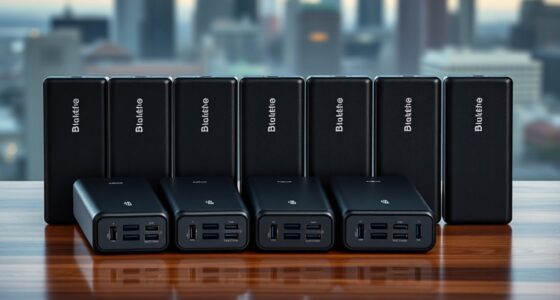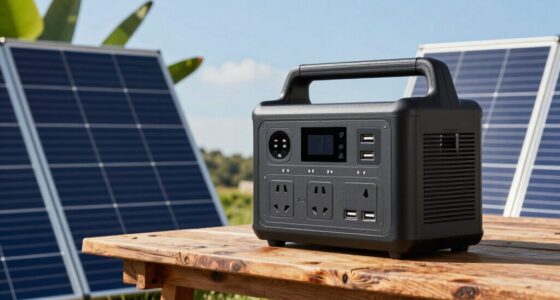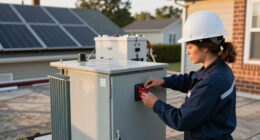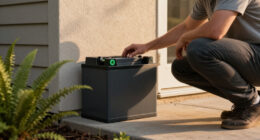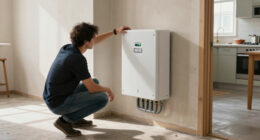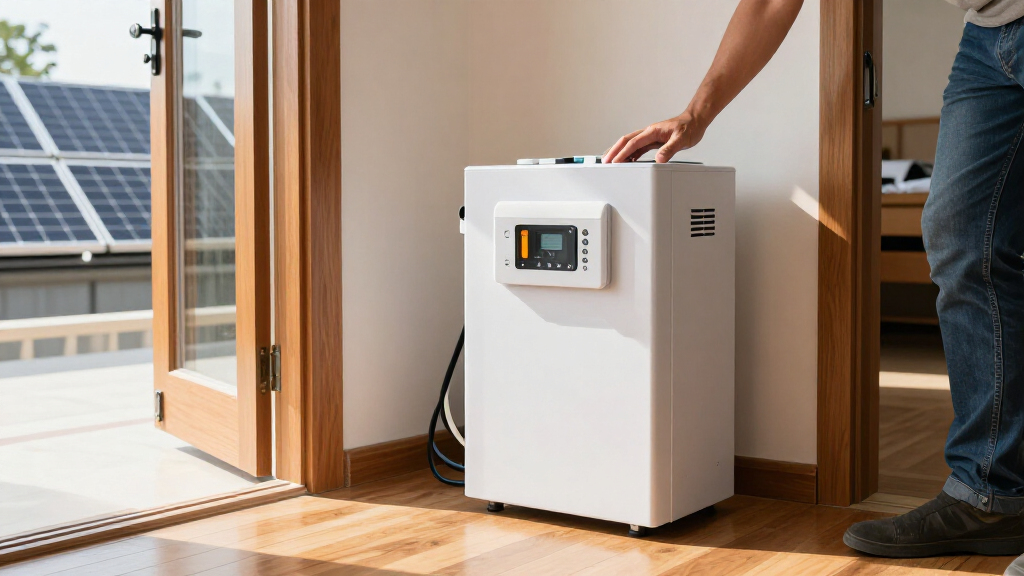
Choosing a home energy storage battery is less about finding one universal winner and more about matching storage capacity, inverter compatibility, installation space, and delivery logistics to your power needs. I rank the ECO-WORTHY Cubix100 48V 100Ah first for its monitoring, listed certifications, and flexible expansion in a manageable single-battery format. For buyers who need substantial capacity out of the box, the ECO-WORTHY Powermega 314Ah two-pack and AOUSK 314Ah both offer 16.07 kWh per battery, though they differ in safety features, warranty, and handling.

Get backup power and energy gear delivered free with Prime
- Fast, free delivery on millions of items
- Prime Video, Amazon Music and more included
- Member-only deals all year
The main tradeoff is straightforward: smaller rack batteries can be easier to build into a modular system, but reaching whole-home backup capacity means adding units and planning rack space. Large-format batteries and multi-battery sets store more energy at once, yet they bring greater weight, delivery constraints, and more demanding installation. I also flag two listing conflicts—a capacity description on one Cubix set and inconsistent warranty terms on another—because those details should be confirmed before ordering.
Key Takeaways
- The ECO-WORTHY Cubix100 100Ah is my modular pick: it stores 5.12 kWh and supports expansion up to 32 units, but it needs rack space and weighs 103 lb.
- The ECO-WORTHY Powermega two-pack offers 16.07 kWh per battery, active cell balancing, fire suppression, and a touchscreen; pallet delivery and a heavy installation are part of the deal.
- The AOUSK 314Ah also provides 16.07 kWh, with wheels and handles for positioning, but its 291 lb weight still calls for a planned installation and inverter compatibility check.
- The Cubix100 200Ah two-pack listing describes its capacity as both 200Ah total and 100Ah × 2; verify the exact configuration and energy rating before buying.
- The Cubix100 400Ah four-pack is listed at 20.48 kWh total, but its warranty is described as both three years and ten years, so written confirmation matters.
| ECO-WORTHY Cubix100 48V 100Ah LiFePO4 Server Rack Battery |  | Best Overall for Modular Home Storage | Chemistry: LiFePO4 | Nominal voltage: 51.2 V | Capacity: 100 Ah | VIEW LATEST PRICE | See Our Full Breakdown |
| ECO-WORTHY Powermega 48V 314Ah LiFePO4 Battery, 2-Pack |  | Best for High-Capacity Storage with On-Unit Monitoring | Chemistry: LiFePO4 | Quantity: 2 batteries | Nominal voltage: 48V (51.2V) | VIEW LATEST PRICE | See Our Full Breakdown |
| ECO-WORTHY Cubix100 48V 200Ah LiFePO4 Server Rack Battery, 2-Pack |  | Best for Buyers Seeking a Two-Battery Rack Setup | Chemistry: LiFePO4 | Voltage: 51.2 V | Quantity and stated capacity: 2 batteries; listed as 200Ah total (2 × 100Ah) | VIEW LATEST PRICE | See Our Full Breakdown |
| ECO-WORTHY Cubix100 48V 400Ah LiFePO4 Server Rack Battery, 4-Pack |  | Best for a Larger Expandable Rack Bank | Chemistry: LiFePO4 | Quantity: 4 batteries | Voltage: 51.2V (48V nominal) | VIEW LATEST PRICE | See Our Full Breakdown |
| AOUSK 48V 314Ah LiFePO4 16.07kWh Energy Storage Battery |  | Best Large-Format Battery for Easier Positioning | Chemistry: LiFePO4 | Nominal voltage: 51.2 V | Capacity: 314 Ah | VIEW LATEST PRICE | See Our Full Breakdown |
| home energy storage batterie | Chemistry | Communications | Capacity | Nominal voltage |
|---|---|---|---|---|
| ECO-WORTHY Cubix100 48V 100Ah | LiFePO4 | CAN/RS485, Bluetooth, and Wi-Fi | 100 Ah | 51.2 V |
| ECO-WORTHY Powermega 48V 314Ah | LiFePO4 | RS485, CAN, and RS232 | 314Ah | 48V (51.2V) |
| ECO-WORTHY Cubix100 48V 200Ah | LiFePO4 | CAN, RS485, Bluetooth, and Wi-Fi | — | — |
| ECO-WORTHY Cubix100 48V 400Ah | LiFePO4 | CAN/RS485, Bluetooth, and Wi-Fi | 100Ah per battery; 400Ah total | — |
| AOUSK 48V 314Ah LiFePO4 16.07k | LiFePO4 | RS485, CAN, RS232, Bluetooth, and Wi-Fi | 314 Ah | 51.2 V |
More Details on Our Top Picks
ECO-WORTHY Cubix100 48V 100Ah LiFePO4 Server Rack Battery
I rank this Cubix100 first for buyers who want a clear, expandable starting point rather than a large battery bank delivered all at once. Its 51.2V, 100Ah rating equals 5.12 kWh, giving homeowners a defined unit that can be added to later. The listed support for CAN/RS485, Bluetooth, and Wi-Fi makes it more adaptable to systems where both inverter communication and local or app-based monitoring matter.
Compared with the 16.07 kWh Powermega and AOUSK options, one Cubix100 stores much less energy, so it is a weaker fit for long outages unless several batteries are installed. Its advantage is expansion: the listing allows up to 32 units in parallel, while the larger-format batteries in this roundup list a limit of 15. The tradeoff is that scaling means planning rack capacity, electrical connections, and system configuration rather than simply choosing a larger single unit.
The stated UL9540, UL1973, and CEC listings and 10-year limited warranty give buyers useful points to verify when planning a residential system. This is still a 103 lb rack battery, not a light carry-in product, and the rack-compatible dimensions mean installation space matters. I would check that the inverter supports the battery’s communications protocol and that the rack and installation plan can handle its weight before ordering.
Pros:- 5.12 kWh capacity in a defined 51.2V, 100Ah format
- CAN/RS485, Bluetooth, and Wi-Fi monitoring options
- Parallel expansion listed for up to 32 units
- UL9540, UL1973, and CEC listed, with a stated 10-year limited warranty
Cons:- A single battery offers much less storage than the 16.07 kWh formats in this roundup
- 103 lb weight and rack installation require deliberate placement and lifting plans
- Actual inverter compatibility and system configuration need confirmation
Best for: Homeowners building a 48V solar or backup system in stages who have rack space, a compatible inverter, and a preference for listed monitoring and expansion options.
Not ideal for: Buyers who need large storage capacity from a single battery, lack a suitable rack location, or want a ready-to-use backup appliance without inverter and installation planning.
- Chemistry:LiFePO4
- Nominal voltage:51.2 V
- Capacity:100 Ah
- Energy:5,120 Wh
- Weight:103 lb
- Dimensions:22.09 × 19.02 × 5.63 in
- Communications:CAN/RS485, Bluetooth, and Wi-Fi
- Expansion:Up to 32 units in parallel
- Certifications and warranty:UL9540, UL1973, and CEC listed; 10-year limited warranty
Our verdict“I recommend the Cubix100 100Ah as the most balanced modular pick for buyers who value system flexibility over maximum capacity in one unit.”
ECO-WORTHY Powermega 48V 314Ah LiFePO4 Battery, 2-Pack
The Powermega is the strongest fit here for a buyer who wants substantial storage and more built-in system feedback than a compact rack battery provides. Each battery is listed at 16.07 kWh, and the two-pack includes a 200A active-balancing BMS, aerosol fire suppression, and a 7-inch touchscreen alongside Wi-Fi and Bluetooth monitoring. That mix gives the product a more feature-rich presentation than the Cubix100 100Ah, which is a smaller modular building block rather than a large-format storage unit.
Each battery’s capacity is substantial, but the listing’s two-pack quantity and “per battery” energy figure deserve careful attention when planning the system: the stated energy is 16.07 kWh per battery, not a combined 16.07 kWh for both. Confirm the delivered configuration, system wiring, and usable-energy figures with the seller or installer. The Powermega lists RS485, CAN, and RS232, providing several communication routes, but those ports do not remove the need to check inverter compatibility.
Compared with the AOUSK 314Ah, the Powermega has the more explicit touchscreen, active balancing, and fire-suppression details in the supplied specifications. The AOUSK, by contrast, highlights wheels and handles and gives a five-year warranty term. The Powermega’s major practical drawback is logistics: it is large and heavy and ships on a pallet by truck, so the delivery address must accommodate freight access. It makes more sense for a planned installation than for a casual retrofit with limited space or difficult access.
Pros:- Each battery is listed at 16.07 kWh of storage
- 200A active-balancing BMS and aerosol fire suppression are specified
- 7-inch touchscreen plus Wi-Fi and Bluetooth monitoring
- UL 1973 certification and a stated 10-year warranty
Cons:- Large and heavy units call for careful placement and installation planning
- Pallet delivery by truck requires an address that can accept freight
- Buyers should confirm the two-pack’s exact delivered capacity and inverter compatibility
Best for: Homeowners or off-grid users planning a high-capacity installation who want an on-unit touchscreen, remote monitoring, active balancing, and a truck-accessible delivery location.
Not ideal for: Buyers with limited access for pallet delivery, no clear installation and lifting plan, or a small system that does not need large-format storage.
- Chemistry:LiFePO4
- Quantity:2 batteries
- Nominal voltage:48V (51.2V)
- Capacity:314Ah
- Energy:16.07 kWh per battery
- Battery management:200A BMS with active cell balancing
- Monitoring:7-inch HD touchscreen, Wi-Fi, and Bluetooth
- Communications:RS485, CAN, and RS232
- Certification and warranty:UL 1973 certified; 10-year warranty stated
Our verdict“I favor the Powermega for buyers prioritizing high storage and detailed monitoring, provided freight delivery and installation are manageable.”
ECO-WORTHY Cubix100 48V 200Ah LiFePO4 Server Rack Battery, 2-Pack
This Cubix100 two-pack is aimed at homeowners who want the same rack-oriented ecosystem as the 100Ah model but a larger combined battery bank from the outset. It lists two 100Ah batteries and names CAN/RS485, Bluetooth, and Wi-Fi monitoring, with parallel expansion up to 32 units. The stated certifications—UL9540, UL1973, and CEC listing—and 10-year limited warranty align with the single Cubix100 option, making this a natural step up for buyers who prefer multiple rack batteries over one large-format unit.
The key limitation is not simply that this set weighs 206 lb in total; it is that the capacity wording conflicts. The listing says “200Ah total (2 × 100Ah)” but the product content also refers to the system as 100Ah × 2, leaving the combined energy specification less clear than it should be. I would not infer a confirmed total kWh figure from the supplied details alone. Buyers should request written confirmation of the exact battery count, total capacity, and energy rating before committing.
Compared with the single 5.12 kWh Cubix100, this set is intended to deliver more storage while retaining the same rack format and expansion approach. It is still less straightforward than the Powermega or AOUSK listings, which state 16.07 kWh per battery. The two separate units can suit a modular layout, but they require adequate rack space, installation hardware, and help positioning the combined 206 lb load. The “RV” compatibility text in the listing does not establish fit for every vehicle or home inverter, so I would treat system compatibility as a separate check.
Pros:- Two rack-format LiFePO4 batteries can form a larger starting bank than the single 100Ah model
- Bluetooth and Wi-Fi monitoring with CAN/RS485 communication
- Listed for expansion up to 32 units
- UL9540, UL1973, and CEC listed, with a stated 10-year limited warranty
Cons:- Capacity is described inconsistently as 200Ah total and 100Ah × 2
- Combined weight is listed at 206 lb, requiring a planned installation
- Total energy capacity should be confirmed before system sizing
Best for: Buyers who want a two-unit Cubix rack setup with listed certifications and monitoring, and who can confirm the exact combined capacity before purchase.
Not ideal for: Anyone who needs an unambiguous energy figure to size a backup system, cannot accommodate rack batteries, or wants a single large battery with a clearly stated 16.07 kWh rating.
- Chemistry:LiFePO4
- Voltage:51.2 V
- Quantity and stated capacity:2 batteries; listed as 200Ah total (2 × 100Ah)
- Weight:206 lb
- Dimensions:22.09 × 19.02 × 5.63 in
- Communications:CAN, RS485, Bluetooth, and Wi-Fi
- Expansion:Up to 32 units in parallel
- Certifications:UL9540, UL1973, and CEC listed
- Warranty:10-year limited warranty stated
Our verdict“I would choose this two-pack only after confirming its total capacity in writing; its rack-system flexibility is appealing, but the listing ambiguity keeps it below the clearer options.”
ECO-WORTHY Cubix100 48V 400Ah LiFePO4 Server Rack Battery, 4-Pack
For a buyer who has already decided on rack-mounted storage, the Cubix100 four-pack offers the most clearly stated total capacity among these ECO-WORTHY rack sets: 20.48 kWh across four 100Ah batteries. The listing also includes parallel and communication cables and installation accessories, while Bluetooth and Wi-Fi monitoring and CAN/RS485 communications support system oversight and inverter integration where compatible. Expansion is stated up to 32 units, which makes this the largest listed starting bank in the lineup that can still grow substantially.
That capacity advantage comes with real installation demands. Four batteries mean more rack space, more connections, and more weight to handle than the single Cubix100 or two-pack. The listing says the set may arrive in multiple packages, so receiving and staging the full system can take coordination. Compared with the Powermega two-pack, this option favors a distributed rack configuration and a larger stated combined capacity; the Powermega instead highlights a touchscreen, active cell balancing, and aerosol fire suppression in its listed feature set.
I would make warranty verification a condition of purchase. The product information gives both a three-year product warranty and a 10-year limited warranty, an inconsistency that can materially affect ownership expectations. Confirm which term applies to the complete four-battery set, and ask how coverage applies to each battery and any system components. This option can suit a well-planned installation, but the conflicting warranty details make it harder to recommend without clarification.
Pros:- 20.48 kWh stated total storage across four 100Ah batteries
- Includes parallel and communication cables and installation accessories
- Bluetooth and Wi-Fi monitoring with CAN/RS485 communication
- Listed expansion up to 32 units, with UL9540, UL1973, and CEC listings stated
Cons:- Warranty details conflict: three-year product warranty versus 10-year limited warranty
- Four batteries require substantial rack space and more involved installation
- May arrive in multiple packages, complicating delivery and staging
Best for: Homeowners with a rack, suitable inverter, and professional installation plan who want a clearly stated 20.48 kWh starting bank and room to expand.
Not ideal for: Buyers who need a compact or simple installation, cannot receive multiple packages, or are unwilling to proceed without consistent written warranty terms.
- Chemistry:LiFePO4
- Quantity:4 batteries
- Voltage:51.2V (48V nominal)
- Capacity:100Ah per battery; 400Ah total
- Total energy:20.48 kWh
- Communications:CAN/RS485, Bluetooth, and Wi-Fi
- Expansion:Up to 32 units
- Certifications:UL9540, UL1973, and CEC listed
- Warranty information:Listing states both a 3-year product warranty and a 10-year limited warranty
Our verdict“I see this as the capacity leader for a planned Cubix rack bank, but I would not buy until the applicable warranty term is confirmed in writing.”
AOUSK 48V 314Ah LiFePO4 16.07kWh Energy Storage Battery
The AOUSK is a direct alternative to the Powermega when a buyer wants a 16.07 kWh LiFePO4 battery in a large-format enclosure. It lists a 200A BMS, dual breakers, Grade A cells, and cycle life of up to 6,000 cycles at 80% state of health. Monitoring options span the display, app, and PC, with RS485, CAN, RS232, Bluetooth, and Wi-Fi listed. That broad set of interfaces may be useful in a system with compatible equipment, but buyers still need to match protocols and settings to their inverter.
Its distinguishing practical feature is the set of built-in handles and wheels. At 291 lb, the battery remains far too heavy to treat as an easy solo move, but rolling and positioning aids may make local placement less awkward than handling a comparable heavy unit without them. The Powermega two-pack adds a touchscreen, active cell balancing, and aerosol fire suppression to its listed features; the AOUSK’s materials instead foreground dual breakers, broad monitoring, mobility aids, and a five-year warranty.
Compared with the rack-style Cubix batteries, the AOUSK avoids building storage through several shallow modules, but it is a single large object that needs a suitable floor location and access route. The supplied specifications do not list the certifications provided for the ECO-WORTHY Cubix models, so buyers who need particular certification documentation should ask for it. Its 15-unit parallel limit is also lower than the Cubix100’s stated 32-unit limit, although either ceiling may exceed the needs of a typical residential build.
Pros:- 16.07 kWh capacity in a single battery
- Display, app, and PC monitoring, with RS485, CAN, RS232, Bluetooth, and Wi-Fi listed
- Built-in handles and wheels can assist with positioning
- 200A BMS, dual breakers, and a stated five-year warranty
Cons:- 291 lb weight requires a safe delivery, lifting, and placement plan
- Inverter compatibility must be confirmed for system integration
- Certification details are not specified in the supplied product information
Best for: Buyers seeking 16.07 kWh in one large-format battery who value multiple monitoring methods, positioning wheels, and a stated five-year warranty.
Not ideal for: Homeowners who need a light or compact battery, lack a compatible inverter or suitable floor space, or require certifications that are not specified in the provided product details.
- Chemistry:LiFePO4
- Nominal voltage:51.2 V
- Capacity:314 Ah
- Energy:16.07 kWh
- BMS current:200 A
- Cycle life:Up to 6,000 cycles at 80% state of health
- Communications:RS485, CAN, RS232, Bluetooth, and Wi-Fi
- Weight and dimensions:291 lb; 20.08 × 10.87 × 33.54 in
- Expansion and warranty:Up to 15 units in parallel; 5-year warranty
Our verdict“I recommend the AOUSK to buyers who want a large single battery with positioning aids, while the Powermega is the stronger fit for those prioritizing its listed safety and touchscreen features.”
How We Picked
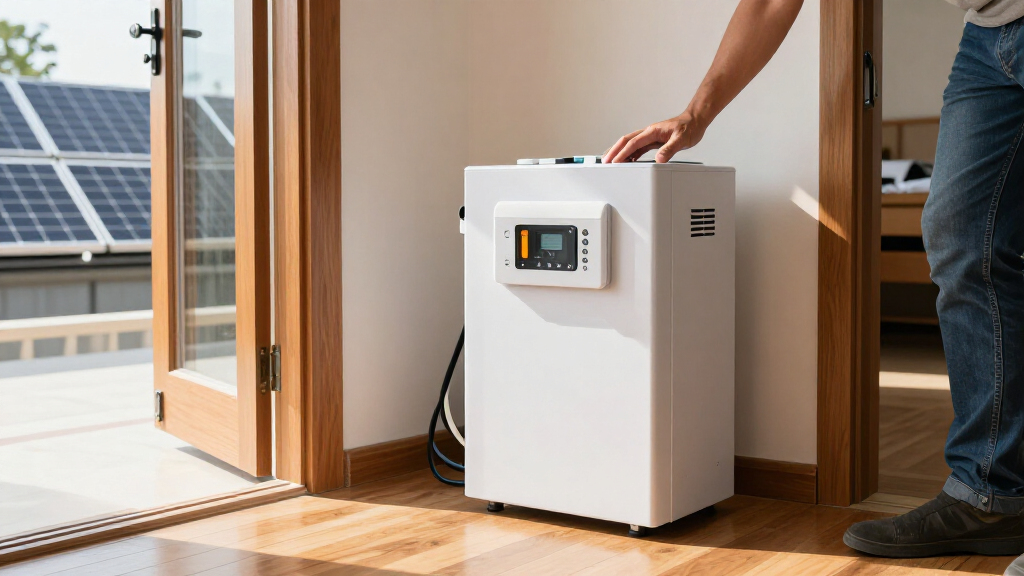
I compared these batteries as home energy storage components, not as plug-and-play backup appliances. A battery’s listed capacity only tells part of the story: buyers also need to know whether the unit can communicate with their inverter, how it can be expanded, how much room and lifting help installation may require, and which protection and warranty details are stated clearly.
My ranking favors a useful balance of capacity, system flexibility, and decision clarity. The single Cubix100 100Ah earns the lead because its 5.12 kWh capacity is easy to understand, it lists several certifications, includes communications and monitoring options, and can be built into a larger bank. It is not the highest-capacity choice; it ranks first for buyers who value a modular starting point and want the clearest configuration in this group.
I place the Powermega two-pack and AOUSK 314Ah close together because each is listed at 16.07 kWh per battery. The Powermega has a stronger stated safety and monitoring package, while the AOUSK adds wheels and handles and specifies a five-year warranty. The Cubix100 two-pack and four-pack can suit buyers committed to the rack format, but I account for the capacity and warranty discrepancies in their listings rather than treating uncertain details as settled facts.
I do not assume any battery will work with every solar inverter, backup panel, or home electrical setup. I give weight to listed certifications and communication protocols, while noting that buyers should confirm local requirements and compatibility with the manufacturer or a qualified installer. Delivery, rack or floor space, cable needs, and the weight of each unit also affect whether a nominally capable battery is practical for a particular home.
| home energy storage batterie | Communications | Expansion |
|---|---|---|
| ECO-WORTHY Cubix100 48V 100Ah | CAN/RS485, Bluetooth, and Wi-Fi | Up to 32 units in parallel |
| ECO-WORTHY Powermega 48V 314Ah | RS485, CAN, and RS232 | — |
| ECO-WORTHY Cubix100 48V 200Ah | CAN, RS485, Bluetooth, and Wi-Fi | Up to 32 units in parallel |
| ECO-WORTHY Cubix100 48V 400Ah | CAN/RS485, Bluetooth, and Wi-Fi | Up to 32 units |
| AOUSK 48V 314Ah LiFePO4 16.07k | RS485, CAN, RS232, Bluetooth, and Wi-Fi | — |
Factors to Consider When Choosing Best Home Energy Storage Batteries
I would size a home battery around the loads you want to support and the equipment you already own, not just the largest capacity number on a product page. These five options all use LiFePO4 chemistry, but their formats and installation assumptions differ.Start with the loads and outage length
List the circuits you want to keep running—such as refrigeration, lights, internet equipment, pumps, or selected outlets—and estimate how long they may need power. Battery energy is listed in kilowatt-hours, while the loads you run determine how quickly that energy is used. A 5.12 kWh Cubix100 is a smaller building block than the 16.07 kWh Powermega or AOUSK options, and the Cubix100 four-pack is listed at 20.48 kWh total. Those figures are not the same as guaranteed usable energy at the outlets: inverter losses, reserve settings, discharge limits, and load surges affect what a system can deliver. Ask the installer to size the battery bank around both daily energy use and the peak power requirements of the equipment you plan to run.
Match the battery to the inverter and system
Confirm the battery’s nominal voltage, inverter compatibility, and communication protocol before choosing a model. These products list interfaces such as CAN, RS485, and RS232, but the presence of a port does not guarantee that a particular inverter will communicate correctly or support all battery controls. Check manufacturer compatibility lists, cable requirements, firmware expectations, and whether the intended system uses one battery or several in parallel. A qualified installer can also check how the battery connects to the inverter, transfer equipment, and backup circuits. This step is especially important for the AOUSK, whose listing explicitly calls for inverter compatibility, and for any multi-unit Cubix installation.
Choose between rack modules and large-format batteries
The Cubix100 range uses server-rack-style batteries, which can suit a dedicated rack and a staged expansion plan. A single 100Ah unit is listed at 103 lb; adding batteries increases the required rack space, cabling, and handling work. The Powermega and AOUSK offer 16.07 kWh per battery, avoiding the need to assemble that capacity from several smaller listed units, but large-format storage brings its own placement and access demands. The AOUSK weighs 291 lb despite its wheels and handles, and the Powermega is shipped on a pallet. Measure doorways, routes, floor area, and ventilation clearances with the installer before delivery, and plan how each battery will reach its final location.
Read capacity and package quantities carefully
Capacity language should make it easy to identify what arrives and how much energy the full package is rated to store. The Powermega is a two-pack and lists 16.07 kWh per battery, so do not mistake that per-unit figure for the pack total. The Cubix100 two-pack describes the set as 200Ah total and also as 100Ah × 2, but its content has a capacity conflict that warrants written clarification. By contrast, the four-pack listing states 100Ah per battery, 400Ah total, and 20.48 kWh total. Before ordering, confirm the battery count, nominal voltage, energy capacity, included cables, and whether accessories needed for parallel operation are included.
Check safety documentation and warranty terms
Certification information can help buyers and installers assess whether a battery fits a project’s requirements, but requirements vary by location and system design. The Cubix listings state UL9540, UL1973, and CEC listings; the Powermega states UL 1973 certification. The supplied AOUSK details do not specify a certification, so ask for documentation if it is required for your installation or permitting. Warranty terms also deserve a close read: the Cubix100 four-pack has both a three-year product warranty and a 10-year limited warranty stated in its listing. Request the applicable written warranty, including coverage conditions, exclusions, and whether it applies to every battery in the set.
Plan delivery, installation, and monitoring
Home storage is a system installation, not just a battery purchase. Check whether a truck can reach the delivery address, whether the package needs a pallet jack or extra crew, and who will move it from the drop-off point to the equipment room. The Powermega calls out pallet delivery by truck, the Cubix four-pack may arrive in multiple packages, and several listed batteries weigh over 100 lb. Monitoring can also vary: the Cubix units list Bluetooth and Wi-Fi, the Powermega adds a touchscreen, and the AOUSK lists display, app, and PC monitoring. Decide whether you want information at the battery, on a phone, or through compatible inverter software, then confirm the features work with the equipment you plan to use.
Frequently Asked Questions
Which battery in this roundup has the largest stated total storage?
The ECO-WORTHY Cubix100 four-pack is listed at 20.48 kWh total, the highest stated starting-bank capacity among these five products. That figure assumes the described four-battery configuration; buyers should also clarify its conflicting warranty terms and plan for rack space, cabling, and delivery of multiple packages. The Powermega and AOUSK each state 16.07 kWh per battery, while the single Cubix100 100Ah is rated at 5.12 kWh.
Are these batteries ready to connect to any home solar inverter?
No. A shared nominal voltage or a listed CAN, RS485, or RS232 port does not guarantee compatibility with every inverter. Before buying, check the battery and inverter manufacturers’ compatibility information, the supported communications profile, operating limits, wiring, and system configuration. A qualified installer can confirm that the proposed battery bank will work with the inverter and the home’s backup equipment.
What should I check before choosing a rack battery?
Measure the available rack location and the route the battery must take to reach it, then confirm the rack’s load capacity, required clearances, cable layout, and installer’s plan. The single Cubix100 weighs 103 lb, and the two-pack is listed at 206 lb combined, so placement and lifting should not be an afterthought. Also verify whether the product includes the cables and mounting accessories needed for the number of batteries you plan to install.
Why should I verify the Cubix two-pack capacity and four-pack warranty?
The Cubix100 two-pack listing uses conflicting capacity wording: it says 200Ah total while also describing the set as two 100Ah batteries, so buyers should confirm the exact total energy rating before sizing a system. The four-pack listing gives both a three-year product warranty and a 10-year limited warranty. Ask the seller or manufacturer for written clarification on the capacity and applicable warranty terms for the exact package being sold.
Can I expand these batteries later?
Each listing describes a parallel expansion limit: up to 32 units for the Cubix100 models and up to 15 for the Powermega and AOUSK. Those maximums do not mean every combination will work automatically. Expansion depends on compatible battery models, inverter limits, wiring, configuration, and installation requirements. If future growth matters, confirm the approved setup and any limits on mixing battery ages or capacities before choosing a starting configuration.
Conclusion
For a modular solar or backup system, I would start with the ECO-WORTHY Cubix100 100Ah: it offers a clear 5.12 kWh unit, a stated 10-year limited warranty, multiple communication options, and room to expand, provided you have rack space. If your priority is high capacity plus detailed built-in monitoring, the Powermega is a better match, especially when active balancing and its listed fire-suppression feature matter and pallet delivery is workable. The AOUSK suits buyers who prefer 16.07 kWh in one large-format battery and value wheels and handles, as long as they can manage its weight and confirm inverter fit.
I would choose the Cubix100 four-pack only for a planned rack installation after getting its warranty terms in writing. I would consider the Cubix100 two-pack after receiving clear confirmation of the total capacity. Whichever route you take, base the final decision on the circuits you need backed up, inverter compatibility, site access, installation requirements, and documented warranty and certification details—not capacity alone.
Fall Picks
fall essentials
As an affiliate, we earn on qualifying purchases.