
The best home energy storage system for most homes in 2026 is the ECO-WORTHY Powermega 48V 314Ah system with the Liber 10KP hybrid inverter, because it combines a large 16kWh-plus capacity, active battery balancing, and built-in Bluetooth and WiFi monitoring in a package designed for serious home backup. Close behind, the ECO-WORTHY 10000W Complete Off-Grid Kit stands out for buyers who want a whole-house solution with solar panels and split-phase 120V/240V output included in one purchase. The main tradeoff in this category is flexibility versus scale: rack-style batteries like the Cubix100 let you start small and stack capacity over time, while complete kits cost more upfront but eliminate compatibility guesswork. Safety certification is another dividing line, since only some of these systems carry UL9540 or UL1973 listing, which affects insurability and code compliance. Read on for the full breakdown of all six systems.

Get backup power and energy gear delivered free — and shop member deals
- Fast, free delivery on millions of items
- Access to Prime Big Deal Days deals on October 6–7
- Prime Video, Amazon Music and more included
Key Takeaways
- The Powermega system earned the top spot because it’s the only pick that pairs a UL1973-certified 314Ah battery with a 10kW hybrid inverter and remote monitoring, making it the most complete turnkey storage option here.
- The two Cubix100 rack batteries (400Ah and 200Ah) are the same platform at different sizes — the 400Ah wins on cost per kWh, while the 200Ah wins for buyers who want to start small and expand later.
- The 10000W Complete Off-Grid Kit is the only option that ships with solar panels (2950W) included, but it demands the most installation effort and assumes you actually want a full off-grid setup rather than just backup power.
- The AFERIY 1024Wh portable station plays a completely different role: it’s the only plug-and-play option, expandable to 5120Wh, and the right choice for renters or apartment dwellers — but it cannot run a household.
- Across the lineup, UL certification (UL9540 or UL1973) was the single biggest quality differentiator, and skipping it can complicate homeowner’s insurance and permitting.
| ECO-Worthy Cubix100 48V 400Ah LiFePO4 Server Rack Battery (4-Pack) |  | Best Overall Whole-Home Storage | Capacity: 20.48kWh (4 x 5.12kWh modules) | Voltage: 51.2V (48V nominal) | Chemistry: Grade A LiFePO4 | VIEW LATEST PRICE | See Our Full Breakdown |
| ECO-WORTHY 32kWh Solar Panel Kit with 10kW Hybrid Inverter |  | Best Complete Off-Grid Kit | Total Storage: ~32kWh (2 x 48V 314Ah LiFePO4) | Solar Array: 6 x 590W N-type panels (3.54kW) | Inverter: 10kW Liber hybrid, 99.9% MPPT efficiency | VIEW LATEST PRICE | See Our Full Breakdown |
| ECO-WORTHY Powermega 48V 314Ah Battery with Liber 10KP 10kW Hybrid Inverter |  | Best Battery-and-Inverter Starter System | Capacity: 16.1kWh (48V 314Ah LiFePO4) | Inverter: Liber 10KP 10kW hybrid, 99.9% MPPT | Output: 120V / 240V split-phase, 60Hz pure sine wave | VIEW LATEST PRICE | See Our Full Breakdown |
| ECO-WORTHY 10kW Off-Grid Solar Kit with 16.1kWh Battery and 2950W PV |  | Best Compact Whole-Home Solar Kit | Storage: 16.1kWh (48V 314Ah LiFePO4) | Solar Array: 5 x 590W monocrystalline (2950W) | Inverter Output: 10,000W continuous / 20,000W peak | VIEW LATEST PRICE | See Our Full Breakdown |
| ECO-Worthy Cubix100 48V 200Ah Server Rack Battery (2-Pack) |  | Best Scalable Starter Battery | Capacity: 10.24kWh (2 x 5.12kWh modules) | Voltage: 51.2V (48V nominal) | Chemistry: Grade A LiFePO4 | VIEW LATEST PRICE | See Our Full Breakdown |
| AFERIY Portable Power Station 1024Wh, Expandable to 5120Wh |  | Best for Whole-Home Newbies Who Want Backup They Can Move | Base Capacity: 1024Wh | Expandable Capacity: Up to 5120Wh with additional battery packs | AC Output: 1800W continuous, 3600W peak | VIEW LATEST PRICE | See Our Full Breakdown |
| home energy storage system | Capacity | Expansion | Communication | Warranty |
|---|---|---|---|---|
| ECO-Worthy Cubix100 48V 400Ah | 20.48kWh (4 x 5.12kWh modules) | Up to 32 units in parallel (163.8kWh) | CAN / RS485, Bluetooth, WiFi | 10-year limited |
| ECO-WORTHY 32kWh Solar Panel K | — | — | — | — |
| ECO-WORTHY Powermega 48V 314Ah | 16.1kWh (48V 314Ah LiFePO4) | — | RS485, CAN, RS232, Bluetooth, WiFi | 10 years |
| ECO-WORTHY 10kW Off-Grid Solar | — | Up to 15 parallel batteries (241kWh) | — | — |
| ECO-Worthy Cubix100 48V 200Ah | 10.24kWh (2 x 5.12kWh modules) | Up to 32 units in parallel (163.8kWh) | CAN / RS485, Bluetooth, WiFi | 10-year limited |
| AFERIY Portable Power Station | — | — | — | — |
More Details on Our Top Picks
ECO-Worthy Cubix100 48V 400Ah LiFePO4 Server Rack Battery (4-Pack)
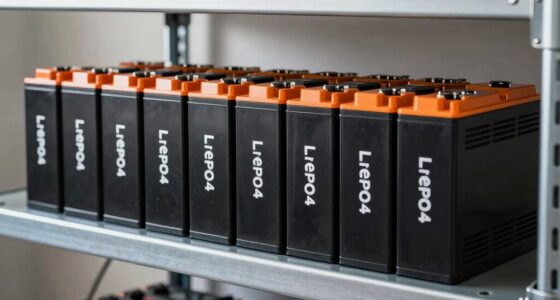
This 4-pack of Cubix100 server rack batteries is the strongest pure-storage pick here because it starts at a genuine whole-home capacity — 20.48kWh — and scales further than anything else in the lineup, up to 32 units and 163.8kWh. Unlike the Powermega single-battery system, which locks you into one form factor, the rack-mounted design lets you add capacity in 5.12kWh increments as your needs grow. The UL9540, UL1973 and CEC listings matter more than spec-sheet bragging: many jurisdictions and insurers require them for permitted indoor installs, and the smaller AFERIY portable station can’t compete on that front. Closed-loop CAN/RS485 communication with major hybrid inverters, plus Bluetooth and WiFi app monitoring, keeps the system transparent day to day. The tradeoff is weight and setup: at roughly 412 pounds shipped across multiple boxes, you’ll want a proper rack and likely a second pair of hands.
Pros:- UL9540A, UL1973 and CEC certified for permitted indoor installation
- Scales from 20.48kWh up to 163.8kWh across 32 parallel units
- Closed-loop CAN/RS485 communication with major hybrid inverters
- Bluetooth and WiFi app monitoring plus a 10-year limited warranty
Cons:- Extremely heavy at around 412 pounds total, requiring a server rack and careful planning
- Battery-only purchase — inverter, solar and installation are separate costs
Best for: Homeowners building a code-compliant whole-home backup bank who want certified hardware and room to expand later
Not ideal for: Renters or apartment dwellers — this is a fixed, rack-mounted, 400-pound system with no portable use case
- Capacity:20.48kWh (4 x 5.12kWh modules)
- Voltage:51.2V (48V nominal)
- Chemistry:Grade A LiFePO4
- Expansion:Up to 32 units in parallel (163.8kWh)
- Communication:CAN / RS485, Bluetooth, WiFi
- Certifications:UL9540A, UL1973, CEC listed
- Form Factor:Server rack, vertical mount
- Warranty:10-year limited
Our verdict“If you want certified, expandable whole-home storage as a long-term investment, this is the foundation to build on.”
ECO-WORTHY 32kWh Solar Panel Kit with 10kW Hybrid Inverter
This is the only option in the roundup that arrives as a true turnkey off-grid system: six 590W N-type panels, a 10kW hybrid inverter and two 48V 314Ah batteries delivering 30kWh+ of usable storage. Compared with the smaller 10kW off-grid kit (Product 4), it doubles both panel count and battery capacity, which is the difference between covering essentials and actually living off-grid through cloudy stretches. The 99.9% MPPT tracking efficiency and 9000+ cycle rating at 80% depth of discharge translate to years of daily cycling without dramatic capacity loss, and split-phase 240V output runs well pumps and larger appliances the AFERIY portable station simply can’t touch. The wheels on each battery are a thoughtful touch for a system this heavy. Real drawbacks: freight delivery only, and the inverter ships in two visually different versions depending on stock — functionally identical, but worth knowing before it arrives.
Pros:- Complete system: 3.54kW of N-type solar, 10kW hybrid inverter and ~32kWh of storage in one order
- 9000+ cycles at 80% DoD for long off-grid service life
- Split-phase 240V and single-phase 120V output from one inverter
- Batteries include wheels, LCD screen and app-based Bluetooth/WiFi monitoring
Cons:- Freight-only truck delivery demands an address that accepts pallet shipments
- Inverter ships in one of two cosmetic versions at random, which may bother buyers wanting a uniform look
Best for: Off-grid households or rural properties that want generation, inversion and storage delivered in one coordinated package
Not ideal for: Grid-tied suburban buyers who already have solar panels — most of this kit’s value would be duplicated
- Total Storage:~32kWh (2 x 48V 314Ah LiFePO4)
- Solar Array:6 x 590W N-type panels (3.54kW)
- Inverter:10kW Liber hybrid, 99.9% MPPT efficiency
- Output:120V single-phase / 240V split-phase
- Cycle Life:9000+ cycles at 80% DoD
- Battery Protection:Active balancing BMS, breaker, aerosol fire suppression
- Monitoring:LCD, Bluetooth, WiFi app
Our verdict“For a genuine off-grid lifestyle rather than occasional backup, this kit removes the guesswork of matching components.”
ECO-WORTHY Powermega 48V 314Ah Battery with Liber 10KP 10kW Hybrid Inverter
The Powermega pairing occupies a smart middle ground: you get a UL1973-certified 16.1kWh battery and a 10kW hybrid inverter matched and tested together, without paying for panels you may not need. Against the Cubix100 4-pack, it trades maximum scalability for convenience — one wheeled battery instead of four rack modules, with a built-in LCD and the same 9000+ cycle chemistry. Where the AFERIY portable station tops out at 5kWh expanded, this system can run a household’s essential circuits through a multi-day outage. Safety engineering is a step above most competitors at this capacity: an active balancing BMS, built-in circuit breaker and aerosol fire suppression module are standard. Be aware that 16kWh is a real ceiling for whole-home use — heavy HVAC or electric water heating will drain it fast — and like its bigger sibling it arrives by truck freight in separate shipments.
Pros:- Matched battery-and-inverter pair avoids compatibility guesswork
- UL1973-certified battery with active balancing BMS and aerosol fire suppression
- 16.1kWh with 9000+ rated cycles and a 10-year warranty
- Reinforced casters and LCD screen simplify placement and monitoring
Cons:- Capacity is fixed at a single 16.1kWh battery unless you buy more hardware
- Truck freight delivery in multiple packages requires patience and a freight-accessible address
Best for: Homeowners with existing or planned solar who need a matched storage-plus-inverter core they can install once
Not ideal for: Whole-house buyers with high continuous loads — one battery won’t carry HVAC-heavy homes through extended outages
- Capacity:16.1kWh (48V 314Ah LiFePO4)
- Inverter:Liber 10KP 10kW hybrid, 99.9% MPPT
- Output:120V / 240V split-phase, 60Hz pure sine wave
- Cycle Life:9000+ cycles at 80% DoD
- Communication:RS485, CAN, RS232, Bluetooth, WiFi
- Safety:Active balancing BMS, breaker, fire suppression module
- Certification:UL1973, FCC
- Warranty:10 years
Our verdict“The cleanest path to a serious 10kW backup system when you already have — or will add — your own panels.”
ECO-WORTHY 10kW Off-Grid Solar Kit with 16.1kWh Battery and 2950W PV
Think of this as the right-sized entry into full off-grid capability: the same 10kW split-phase inverter platform and 16.1kWh battery as the Powermega system, but with five 590W panels bundled in. Compared with the 32kWh kit, it halves the array and storage, which makes it far more approachable for a garage, workshop or cabin where roof space and budget are limited — roughly 11.8kWh of daily generation under good sun is enough to keep the battery cycling healthily. The 7-inch full-color display and PC connectivity give it the richest monitoring interface of any ECO-WORTHY option here, and support for up to 15 parallel batteries (241kWh) means it won’t bottleneck future growth. Two honest caveats: 2950W of PV is thin for true whole-house off-grid living in winter, and the manufacturer itself recommends a professional installer — this is not a weekend DIY project despite the included cables.
Pros:- All-in-one package: 2950W of solar, 10kW inverter and 16.1kWh storage
- 7-inch color display with Bluetooth, WiFi and PC monitoring
- 20,000W peak output handles appliance startup surges
- Scalable to 241kWh across 15 parallel batteries
Cons:- Solar array is undersized for full off-grid living in low-sun seasons
- Professional installation effectively required, adding to total cost
Best for: Cabin, workshop or small-home owners who want solar, storage and inversion in one modestly scaled package
Not ideal for: Novice DIYers — the manufacturer explicitly warns against non-professional installation for safety and performance reasons
- Storage:16.1kWh (48V 314Ah LiFePO4)
- Solar Array:5 x 590W monocrystalline (2950W)
- Inverter Output:10,000W continuous / 20,000W peak
- Output Voltage:120V / 240V split-phase, pure sine wave
- Battery Charging:Up to 200A via dual MPPT controllers
- Expansion:Up to 15 parallel batteries (241kWh)
- Monitoring:7-inch display, Bluetooth, WiFi, PC
- BMS:PACE 200A with dual breakers
Our verdict“A sensible middle path for smaller properties that want a complete system without the 32kWh kit’s bulk and freight burden.”
ECO-Worthy Cubix100 48V 200Ah Server Rack Battery (2-Pack)
This 2-pack is the lowest-commitment way into certified rack-mounted storage: 10.24kWh across two slim modules with the same UL9540A, UL1973 and CEC credentials as the 4-pack version. The pitch is modularity — start with essentials-only backup today, then add units one at a time toward 163.8kWh, something neither the sealed Powermega battery nor the portable AFERIY station can match. At 206 pounds total and just 5.63 inches deep per module, it fits a corner of a garage rack where a wheeled 314Ah tower would not. Closed-loop inverter communication and app monitoring carry over unchanged from the larger kit. The catch is straightforward: 10kWh covers lights, fridge, internet and a few circuits, but not whole-house loads, so buyers with serious outage anxiety should step up to the 4-pack from the start rather than paying freight twice.
Pros:- Same UL9540A, UL1973 and CEC certifications as the larger kit at a lower entry capacity
- Slim 5.63-inch rack modules fit tight spaces
- Expandable to 163.8kWh across 32 parallel units
- Bluetooth and WiFi app monitoring with 10-year limited warranty
Cons:- 10.24kWh is essential-loads only for most homes
- Requires a separate inverter and rack, adding cost before the system is functional
Best for: Budget-conscious buyers who want certified, expandable essential-circuit backup and plan to grow the bank over time
Not ideal for: Households wanting immediate whole-home coverage — 10kWh runs out quickly with heavy appliances in the mix
- Capacity:10.24kWh (2 x 5.12kWh modules)
- Voltage:51.2V (48V nominal)
- Chemistry:Grade A LiFePO4
- Module Dimensions:22.09 x 19.02 x 5.63 inches each
- Expansion:Up to 32 units in parallel (163.8kWh)
- Communication:CAN / RS485, Bluetooth, WiFi
- Certifications:UL9540A, UL1973, CEC listed
- Warranty:10-year limited
Our verdict“The smart on-ramp to the Cubix ecosystem if you’d rather build capacity gradually than buy it all at once.”
AFERIY Portable Power Station 1024Wh, Expandable to 5120Wh
Everything else in this roundup is a permanently installed system — rack batteries, hybrid inverters, and kits like the ECO-WORTHY Powermega that assume you’re wiring a whole house. The AFERIY 1024Wh takes the opposite approach: it’s a portable power station that can stand in for home backup when the grid drops. The sub-10ms UPS switchover means your router, computer, and security gear won’t even blink during an outage — something rack-mounted server batteries can’t do on their own without a separate inverter.
The real hook is expandability from 1024Wh to 5120Wh, which lets you start small and add battery packs rather than replacing the whole unit. Compared with the Cubix100 200Ah, you give up raw capacity per dollar, but you gain a plug-and-play setup with no electrician, no 48V wiring, and 14 output ports ready out of the box. The tradeoff is fundamental: at 1800W continuous, it cannot run a well pump, HVAC, or an electric dryer the way the 10kW ECO-WORTHY whole-house kit can. Think of it as essentials backup plus camping flexibility, not whole-home energy independence.
Pros:- Expandable from 1024Wh to 5120Wh so you can scale capacity instead of replacing the unit
- Sub-10ms UPS switchover keeps computers, routers, and security systems running through outages without interruption
- LiFePO4 battery chemistry rated for 4000+ cycles for years of regular use
- 14 output ports plus AC, solar, car, and combined AC+solar charging for maximum flexibility indoors and out
Cons:- 1800W continuous output (3600W peak) is far below whole-home systems like the 10kW ECO-WORTHY kit, ruling out major appliances
- Cost per kWh of stored energy is much higher than rack batteries such as the Cubix100 400Ah once you add expansion packs
- Expansion batteries add bulk and weight, eroding the portability advantage over time
Best for: Renters, apartment dwellers, and first-time backup buyers who want outage protection for routers, computers, and small appliances without installing a wired system — and who also want a power station they can take camping or in an RV
Not ideal for: Homeowners seeking true whole-house backup — 1800W output and even the maxed-out 5120Wh capacity can’t run heavy loads like HVAC, well pumps, or electric dryers the way the 10kW ECO-WORTHY split-phase kit can
- Base Capacity:1024Wh
- Expandable Capacity:Up to 5120Wh with additional battery packs
- AC Output:1800W continuous, 3600W peak
- Battery Chemistry:LiFePO4, rated 4000+ charge cycles
- UPS Switchover Time:Under 10ms
- Output Ports:14 total (AC, USB-C, USB-A)
- Charging Options:AC wall, solar (MC4 to XT60), car outlet, combined AC + solar
- Safety Certification:UL Listed
- Support:Up to 7-year customer support
Our verdict“Buy this if you want instant, no-installation backup for essentials plus outdoor versatility — skip it if your goal is running an entire household through extended outages.”

How We Picked
I evaluated each system against four buyer-relevant criteria. Capacity and scalability came first: I looked at usable kWh, whether the battery stack supports parallel expansion, and how easily capacity can be added later without replacing existing components. Safety certification carried heavy weight because UL9540 and UL1973 listing affects insurance, permitting, and peace of mind with lithium batteries installed in a living space. Inverter integration mattered too — a storage system is only as useful as its ability to convert stored energy into household power, so bundled hybrid inverters and split-phase 120V/240V output ranked above battery-only options for whole-home use.
Finally, I judged ease of adoption: whether the product arrives as a ready-to-install kit or requires the buyer to source, size, and configure separate components. That’s why the rankings favor the Powermega and the complete off-grid kit at the top — they reduce compatibility risk — while the rack batteries and the portable station fill distinct niche roles rather than competing head-to-head for the same buyer.
| home energy storage system | Expansion | Communication |
|---|---|---|
| ECO-Worthy Cubix100 48V 400Ah | Up to 32 units in parallel (163.8kWh) | CAN / RS485, Bluetooth, WiFi |
| ECO-WORTHY 32kWh Solar Panel K | — | — |
| ECO-WORTHY Powermega 48V 314Ah | — | RS485, CAN, RS232, Bluetooth, WiFi |
| ECO-WORTHY 10kW Off-Grid Solar | Up to 15 parallel batteries (241kWh) | — |
| ECO-Worthy Cubix100 48V 200Ah | Up to 32 units in parallel (163.8kWh) | CAN / RS485, Bluetooth, WiFi |
| AFERIY Portable Power Station | — | — |
Factors to Consider When Choosing Best Home Energy Storage Systems
Choosing a home energy storage system involves more than picking the biggest battery. Before committing to any of the six systems above, think through these broader factors that shape whether an investment pays off over its 10-plus-year lifespan.
Know Your Real Energy Load Before Sizing
The most common mistake buyers make is sizing a system to their entire electric bill rather than to their backup priorities. A typical home cannot economically run everything — air conditioning, electric water heating, and laundry all at once — on a mid-size battery bank. Start by listing the circuits you genuinely need during an outage: refrigeration, lighting, internet, and medical devices usually top the list. Then calculate the daily watt-hours those loads consume and add 20 to 30 percent headroom for surge loads when appliances start. This exercise often reveals that a 10kWh system covers critical needs comfortably, while a whole-house setup like the 10000W kit only makes sense if you heat with electricity or live fully off-grid. Undersizing forces frustrating load management during outages, but oversizing means paying for capacity that sits idle.
Why UL Certification Actually Matters
UL9540 and UL1973 are not marketing badges — they are the certifications that fire marshals, insurers, and building departments look for when a lithium battery is installed in or near a home. Several systems in this roundup carry these listings, and that difference can decide whether your installer gets a permit approved or your insurance company declines a battery-related claim. uncertified batteries are often cheaper, but the savings evaporate if you’re forced to remove the system during a home sale inspection or after a denied claim. If you plan to hire a licensed electrician, expect many to refuse non-certified equipment outright. For DIY-oriented buyers in unpermitted areas, the calculus is different, but the fire-safety testing behind UL9540 still represents real protection for your home and family. Treat certification as a one-time cost that buys long-term compliance.
Hybrid Inverters Versus Battery-Only Purchases
A battery without an inverter is just a DC energy reserve — something has to convert that power into the AC your appliances use. Buying a bundled system like the Powermega with its Liber 10KP inverter eliminates the compatibility research that trips up most first-time buyers: communication protocols, charge profiles, and transfer switching all arrive pre-matched. The tradeoff is that you’re locked into one ecosystem, and if the inverter fails, the battery may be unusable with a different brand. Battery-only rack systems flip this equation, giving you freedom to choose or upgrade the inverter separately, but requiring you to confirm communication standards (CAN bus, RS485) work between components. Split-phase 120V/240V output is another deciding factor: wells pumps, dryers, and central AC typically need 240V, which rules out many smaller single-phase inverters. Decide your inverter strategy before buying the battery, not after.
LFP Chemistry and Cycle Life Expectations
Every system in this roundup uses LiFePO4 (LFP) chemistry, and that’s good news — but cycle life ratings still vary, and understanding them prevents disappointment. A battery rated for 4,000 cycles at 80 percent depth of discharge, cycled once daily, lasts roughly 11 years before capacity drops meaningfully. If you cycle twice daily (common with solar self-consumption), that lifespan halves, so a grid-tied buyer using the battery daily wears it faster than someone who only taps it during rare outages. Check whether the manufacturer’s cycle rating assumes full or partial discharge, because a 6,000-cycle rating at 50 percent depth is less impressive than it sounds. Also look at the warranty’s throughput terms, not just the year count, since many warranties expire based on total energy cycled. Active battery balancing, like the Powermega’s BMS, helps cells age evenly and protects that long-term capacity.
Installation Reality: DIY Versus Professional
Server-rack battery systems have made DIY installation far more accessible than the lead-acid era, but accessible is not the same as simple. Any system that ties into your home’s electrical panel legally requires permits and, in most jurisdictions, a licensed electrician for the final connection — especially for split-phase wiring on the 10000W kit. Budget 10 to 20 percent of the equipment cost for installation, cabling, breakers, and mounting hardware that kits don’t always include. The AFERIY portable station sidesteps all of this, which is exactly why it exists, but that convenience caps your power at appliance level rather than household level. Off-grid kits add another layer: racking, tilting, and wiring solar panels is a weekend-per-weekend project for most homeowners. Be honest about your electrical skills before choosing a whole-house system over a plug-in alternative.
Future Expansion: Buy for the System You’ll Have in Three Years
The smartest storage purchases anticipate growth, because energy needs rarely shrink — an EV purchase, a heat pump conversion, or rising outage frequency all increase demand later. Rack-mounted batteries like the Cubix100 exist precisely for this: buy 10kWh now, add modules as budget allows, and keep the same inverter and monitoring platform. Before buying any expandable system, verify the maximum stack size and whether the BMS supports mixed-capacity modules, since some platforms require identical batteries per string. Complete kits are harder to expand gracefully because their inverters and charge controllers are sized to the bundled array — adding panels may mean replacing the charge controller too. Also confirm the platform supports additional solar input later, not just additional batteries. A system that can’t grow becomes a bottleneck instead of an asset.
Frequently Asked Questions
How many kWh of storage do I actually need for home backup?
For critical backup — refrigerator, lights, phones, internet, and a few outlets — most homes get through a day with 5 to 10kWh of usable capacity. Whole-day comfort including a furnace blower, well pump, or window AC units typically pushes the need to 15 to 20kWh, which is where the Powermega and the 10000W kit become relevant. To calculate your own number, list each appliance’s running watts, multiply by the hours per day you’d run it during an outage, and add 25 percent headroom for startup surges and battery inefficiency. Remember that without solar panels to recharge during daylight, your battery only covers its rated capacity — a multi-day outage either needs generation input or aggressive load discipline. When in doubt, size to your true essentials first and expand later, since rack systems make that path affordable.
Is a UL9540 or UL1973 certification worth paying extra for?
In most cases, yes, and sometimes it’s not even optional. Building departments in many jurisdictions now require UL9540-listed energy storage for permitted residential installs, and several major insurers ask about certification when underwriting homes with battery systems. A non-certified battery can complicate a home sale, void an installer’s willingness to work on your system, and leave you exposed if a fire leads to a denied claim. The certification involves thermal runaway testing, abuse testing, and BMS safety validation — real engineering work, not paperwork. The exception is off-grid properties in unpermitted areas, where DIY buyers sometimes accept the risk for cost savings. But if your system lives in a garage attached to your family’s living space, certification is cheap insurance in its own right.
Can I start with one rack battery and add more later?
Yes, and that’s the core appeal of server-rack platforms like the Cubix100 — the 200Ah model exists almost specifically for this buying strategy. You can install a single module with a modest inverter today, then parallel additional batteries as budget allows without replacing anything you already own. Two caveats apply: verify the platform’s maximum series/parallel limits before you buy, and check whether the manufacturer requires matched capacities within a string. Mixing a 200Ah and a 400Ah module in one battery string can cause imbalance and premature wear on some systems, so plan your expansion path up front rather than grabbing whatever is on sale later. Also make sure your inverter and charge controller have headroom for the expanded capacity, or you’ll be upgrading those components anyway.
Do I need a full off-grid kit, or just a battery with an inverter?
It depends entirely on whether you need generation, not just storage. A battery-inverter combo like the Powermega keeps your lights on through a short outage by discharging stored energy, but once it’s empty, only grid power or solar can refill it. The 10000W complete kit adds 2950W of solar panels, which means multi-day autonomy and true off-grid capability — at the cost of roof or ground space, panel installation labor, and a bigger upfront commitment. Grid-tied buyers who experience brief outages a few times a year rarely need panels. Rural buyers facing multi-day outages, unreliable utility service, or expensive grid-extension costs almost always do. A middle path exists too: buy the storage system now and confirm it accepts solar input later, so generation can be added without starting over.
Is a portable power station a legitimate substitute for a home battery system?
For limited needs, yes — and for some buyers it’s the smarter purchase. The AFERIY 1024Wh, expandable to 5120Wh, can run a refrigerator, charge devices, and power lights through an outage with zero installation, zero permits, and zero electrician costs. Renters, apartment dwellers, and owners of small homes without space for rack batteries fall squarely in this camp. The limits appear quickly though: portable stations lack whole-house transfer switching, can’t run 240V appliances like well pumps or dryers, and top out well below the sustained output of a 10kW hybrid inverter. Recharging during an extended outage also requires portable solar panels you haul outside manually. Treat it as appliance-level backup rather than home backup, and the value proposition makes sense; expect household-level performance and you’ll be disappointed.
Conclusion
After comparing all six systems, the right choice depends less on which is ‘best’ in the abstract and more on what your home actually needs. Best overall goes to the ECO-WORTHY Powermega — its UL1973-certified 314Ah battery, 10kW hybrid inverter, and active balancing make it the most complete storage platform for a typical homeowner. Best premium pick is the 10000W Complete Off-Grid Kit, the only option that arrives with solar panels and split-phase output ready for true whole-house independence, provided you’re prepared for the installation effort. Best value belongs to the Cubix100 400Ah rack battery, which delivers the lowest cost per kWh here with the same UL9540 certification as its sibling.
Best for beginners is a split decision: the Cubix100 200Ah for homeowners who want an expandable entry point into permanent storage, or the AFERIY portable station for anyone who isn’t ready to wire anything into their home at all. For specific needs, the ECO-WORTHY Solar Panel Kit suits buyers who want generation and storage bundled at a moderate scale. Whatever you choose, size to your essential loads first, insist on certification if the system lives in your home, and buy a platform you can grow into rather than out of.
Halloween Picks
halloween
As an affiliate, we earn on qualifying purchases.