Choosing an AED with pediatric pads involves balancing safety features, ease of use, and budget. The Philips HeartStart OnSite AED stands out as the best overall for its reliability and user-friendly design. For training purposes, the PRESTAN AED Trainer Plus Kit offers realistic practice without risking actual device activation. The main tradeoffs involve weighing advanced features against simplicity and cost. Continue reading for a detailed breakdown of these options to find the best fit for your needs.

Get backup power and energy gear delivered free with Prime
- Fast, free delivery on millions of items
- Prime Video, Amazon Music and more included
- Member-only deals all year
Key Takeaways
- The top picks balance ease of use with comprehensive safety features tailored for children.
- Most high-performing AEDs include training options, but these often come at a higher price point.
- Portability, like slim carry cases, remains a key factor for emergency preparedness on the go.
- Some models focus on business or home use, influencing the type of pads and accessories included.
- Price varies widely, with value packages offering a good middle ground for most buyers.
| Philips HeartStart OnSite AED Defibrillator with Carry Case |  | Best Overall for Public Emergency Use | Model: M5066A-C01 | Warranty: 8 years for AED, 4 years for battery | Includes: Defibrillator, pre-installed battery, SMART Pads Cartridge, carry case, quick set-up guide, maintenance booklet, owner’s manual | VIEW ON AMAZON | See Our Full Breakdown |
| PRESTAN AED Trainer Plus Kit, PP-AEDT2-KIT-101 |  | Best for Training and Educational Use | Language Support: English/Spanish | Scenarios Included: 5 | Pad Usage: 25-30 times | VIEW ON AMAZON | See Our Full Breakdown |
| Philips HeartStart OnSite AED Defibrillator, Value Package | 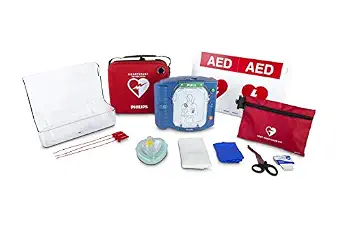 | Best Value for Public Emergency Preparedness | Model: M5066A-C02VPB | Warranty: 8 years for AED, 4 years for battery | Includes: Defibrillator, pre-installed battery, SMART Pads Cartridge, carry case, wall mount, wall sign, quick set-up and maintenance guides | VIEW ON AMAZON | See Our Full Breakdown |
| Philips HeartStart AED Infant/Child Training Pads Cartridge (Training Use Only) |  | Best for Pediatric Training Scenarios | Model: M5074A | Use: Training only | Compatibility: Philips HeartStart AEDs | VIEW ON AMAZON | See Our Full Breakdown |
| Philips HeartStart OnSite AED Defibrillator |  | Best for Basic Public Emergency Response | Model: M5066A-R01 | Warranty: 8 years for AED, 4 years for battery | Includes: Carry case, spare SMART Pads Cartridge, pre-installed pads, manuals | VIEW ON AMAZON | See Our Full Breakdown |
| ZOLL AED Plus with CPR-D Pads, Carry Case, and Batteries |  | Best Overall for Versatile Emergency Response | Shelf Life of Electrodes: 5 years | Battery Life: 5 years | Ingress Protection Rating: IP55 | VIEW ON AMAZON | See Our Full Breakdown |
| Philips HeartStart OnSite AED Defibrillator with Slim Carry Case | 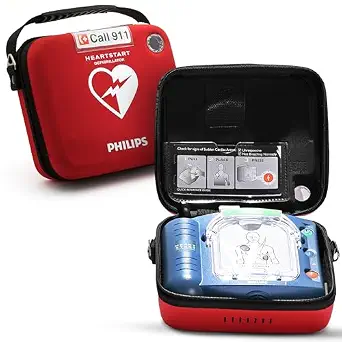 | Best for Public Environments with Portability Needs | Model: M5066A-C02 | Warranty: 8 years for AED, 4 years for battery | Includes: Defibrillator, pre-installed battery, SMART Pads Cartridge, slim carry case, manuals | VIEW ON AMAZON | See Our Full Breakdown |
| Philips HeartStart OnSite AED Defibrillator Business Package |  | Best for Business Settings Needing Comprehensive Accessories | Model: M5066A-C02BPB | Warranty: 8 years for AED, 4 years for battery | Includes: Defibrillator, pre-installed battery, SMART Pads Cartridge, carry case, wall sign, quick reference guides, maintenance booklet, owner’s manual | VIEW ON AMAZON | See Our Full Breakdown |
| Philips HeartStart Home AED Defibrillator with Training Pads Cartridge |  | Best for Home Use with Training Capabilities | Model: M5068A-C02 | Warranty: 8 years for AED, 4 years for battery | Includes: Defibrillator, pre-installed battery, SMART Pads Cartridge, carry case, training pads, manuals, DVD | VIEW ON AMAZON | See Our Full Breakdown |
| aed with pediatric pad | Includes | Model | Warranty | Conversion |
|---|---|---|---|---|
| Philips HeartStart OnSite AED | Defibrillator, pre-installed battery, SMART Pads Cartridge, carry case, quick set-up guide, maintenance booklet, owner’s manual | M5066A-C01 | 8 years for AED, 4 years for battery | — |
| PRESTAN AED Trainer Plus Kit | — | — | — | — |
| Philips HeartStart OnSite AED | Defibrillator, pre-installed battery, SMART Pads Cartridge, carry case, wall mount, wall sign, quick set-up and maintenance guides | M5066A-C02VPB | 8 years for AED, 4 years for battery | Can be converted to AED trainer with optional training pads |
| Philips HeartStart AED Infant/ | Training pads cartridge, placement guide, instructions | M5074A | — | — |
| Philips HeartStart OnSite AED | Carry case, spare SMART Pads Cartridge, pre-installed pads, manuals | M5066A-R01 | 8 years for AED, 4 years for battery | Can be converted to AED trainer with additional pads |
| ZOLL AED Plus with CPR-D Pads | CPR-D pads, carry case, batteries | — | — | — |
| Philips HeartStart OnSite AED | Defibrillator, pre-installed battery, SMART Pads Cartridge, slim carry case, manuals | M5066A-C02 | 8 years for AED, 4 years for battery | Can be converted to AED trainer with training pads |
| Philips HeartStart OnSite AED | Defibrillator, pre-installed battery, SMART Pads Cartridge, carry case, wall sign, quick reference guides, maintenance booklet, owner’s manual | M5066A-C02BPB | 8 years for AED, 4 years for battery | Can be converted to AED trainer with training pads |
| Philips HeartStart Home AED De | Defibrillator, pre-installed battery, SMART Pads Cartridge, carry case, training pads, manuals, DVD | M5068A-C02 | 8 years for AED, 4 years for battery | Enables AED training with additional pads |
More Details on Our Top Picks
Philips HeartStart OnSite AED Defibrillator with Carry Case
This model stands out for its combination of user-friendly features and portability, making it a top choice for public settings that require quick AED deployment. Compared with the Philips HeartStart OnSite AED Defibrillator, Value Package, it offers the same core functionality but without the additional accessories, which can be a drawback for those wanting a more comprehensive kit. Its step-by-step voice prompts and self-testing capabilities provide confidence for untrained users, though it requires a separate purchase for training pads if used for practice. The included SMART Pads Cartridge and carry case make it highly portable and ready for emergency scenarios. However, its limitation to public environments means it isn’t suited for home use, and the need for separate training pads can add to the overall cost. Best for organizations needing reliable, easy-to-operate AEDs in accessible public spaces.
Pros:- Intuitive step-by-step voice prompts for quick guidance
- Portable design with included carry case for easy transport
- Self-testing feature ensures device readiness
Cons:- Training pads sold separately, adding to total cost
- Limited to public environments, not for home use
Best for: Public facilities, schools, and workplaces requiring a reliable, portable AED for sudden emergencies
Not ideal for: Home users seeking a device suitable for everyday family use or frequent training practice
- Model:M5066A-C01
- Warranty:8 years for AED, 4 years for battery
- Includes:Defibrillator, pre-installed battery, SMART Pads Cartridge, carry case, quick set-up guide, maintenance booklet, owner’s manual
- Compatibility:Can be converted to AED trainer with optional training pads
Our verdict“This AED offers excellent ease of use and portability for public spaces but may require extra investment for training features.”
PRESTAN AED Trainer Plus Kit, PP-AEDT2-KIT-101
This training kit excels at providing realistic AED practice with bilingual support and multiple scenarios, making it ideal for CPR training programs. Unlike the Philips models designed for actual emergencies, this kit is built solely for instruction, with durable pads and scenario options that simulate real-life AED use. Its support for English and Spanish broadens usability across diverse training groups, but the need for replacement pads after extensive use can increase ongoing costs. It does not function as a real AED, so it’s not suitable for emergency deployment, only simulation. The inclusion of multiple scenarios and pad testing features makes it a comprehensive choice for teaching proper AED operation. Best for training centers, schools, and first aid courses that need realistic practice tools.
Pros:- Supports bilingual training in English and Spanish
- Durable construction for repeated use
- Includes multiple realistic scenarios for comprehensive training
Cons:- Pads need replacement after many uses, increasing costs
- Limited to training, cannot be used in actual emergencies
Best for: CPR and AED training programs, instructors, or organizations needing durable simulation equipment
Not ideal for: Individuals seeking a device for actual emergency response or home use
- Language Support:English/Spanish
- Scenarios Included:5
- Pad Usage:25-30 times
- Features:Scenario, volume control, language button, pad testing system
Our verdict“This trainer kit provides realistic AED practice for educational purposes but is not suitable for real-life emergencies.”
Philips HeartStart OnSite AED Defibrillator, Value Package
This value package provides the core Philips AED features with added accessories, making it a practical choice for those seeking a complete emergency kit. Compared to the basic Philips HeartStart OnSite AED Defibrillator with Carry Case, it includes a wall mount and additional manuals, which enhance deployment options in public environments. Its easy-to-follow voice prompts and self-test features promote confidence for untrained users, though the need for separate purchase of training pads limits its versatility for training purposes. Its robust design and comprehensive accessories make it suitable for organizations seeking a cost-effective yet reliable AED setup. The added wall mount and signage are beneficial for public spaces but make it less portable than standalone models. Best for organizations that want a comprehensive, ready-to-install AED solution.
Pros:- Includes wall mount and signage for visible placement
- Easy to operate with voice prompts
- Self-testing feature ensures device readiness
Cons:- Training pads are sold separately, limiting training use
- Less portable due to added mounting accessories
Best for: Public facilities, gyms, or community centers looking for a complete, easy-to-install AED system
Not ideal for: Home users or small offices that prefer a more compact, personal device
- Model:M5066A-C02VPB
- Warranty:8 years for AED, 4 years for battery
- Includes:Defibrillator, pre-installed battery, SMART Pads Cartridge, carry case, wall mount, wall sign, quick set-up and maintenance guides
- Conversion:Can be converted to AED trainer with optional training pads
Our verdict“This package offers a well-rounded, ready-to-deploy AED solution suitable for public spaces with installation needs.”
Philips HeartStart AED Infant/Child Training Pads Cartridge (Training Use Only)
This training cartridge is essential for demonstrating pediatric AED use on manikins, making it the best choice for educators. Its reusable adhesive pads and detailed placement guide allow repeated training sessions, unlike single-use pads that require constant replacement. While it cannot be used in actual emergencies, this cartridge closely simulates real AED operation, helping learners familiarize themselves with pediatric scenarios. Compared with adult training pads, its specific focus on child patients enhances the training experience. The primary tradeoff is its limited to training environments, so it won’t serve as an emergency device. Ideal for first aid courses, school programs, or professional training where pediatric AED skills are needed.
Pros:- Reusable adhesive pads for multiple training sessions
- Accurately simulates pediatric AED use
- Includes detailed setup instructions
Cons:- Pads cannot be used for real shocks
- Limited to training, not for actual emergencies
Best for: Instructors, first aid training centers, and schools teaching pediatric AED protocols
Not ideal for: Individuals seeking a device for actual pediatric emergency response at home
- Model:M5074A
- Use:Training only
- Compatibility:Philips HeartStart AEDs
- Includes:Training pads cartridge, placement guide, instructions
Our verdict“This pediatric training pads cartridge provides realistic practice for teaching AED use on children but is not suitable for real-life emergencies.”
Philips HeartStart OnSite AED Defibrillator
This model is a straightforward, reliable AED suited for public settings, offering the core features needed for emergency use. It closely resembles the Philips HeartStart OnSite AED Defibrillator with Carry Case but comes with a standard set of accessories for immediate deployment. Its ease of operation, with voice prompts and self-tests, makes it ideal for untrained bystanders. The device’s portability and pre-installed pads facilitate quick response, though the need for additional purchase of training pads for practice limits its flexibility. The lack of advanced features or accessories means it’s primarily a basic emergency tool rather than a comprehensive training device. Best for organizations that want a simple, reliable AED ready for public use.
Pros:- Easy-to-follow voice prompts for quick guidance
- Portable with pre-installed pads and manuals
- Self-testing features for ongoing reliability
Cons:- Requires additional purchase for training mode conversion
- Battery and pads have limited warranty periods
Best for: Public venues, small offices, or community groups needing a dependable AED for immediate response
Not ideal for: Home users or organizations prioritizing integrated training features or extensive accessories
- Model:M5066A-R01
- Warranty:8 years for AED, 4 years for battery
- Includes:Carry case, spare SMART Pads Cartridge, pre-installed pads, manuals
- Conversion:Can be converted to AED trainer with additional pads
Our verdict“This basic AED provides dependable emergency response capability but lacks integrated training features or extensive accessories.”
ZOLL AED Plus with CPR-D Pads, Carry Case, and Batteries
The ZOLL AED Plus stands out for its comprehensive features, including real-time CPR feedback and rugged, weather-resistant design, making it well-suited for varied environments. Unlike the Philips HeartStart OnSite models, which focus heavily on portability and simplicity, the ZOLL offers advanced feedback that can improve CPR quality. Its self-testing ensures it remains ready, but this does require regular attention, and the battery lifespan of 5 years means ongoing replacement costs. The included carry case and accessories make it a ready-to-go option for both public spaces and more demanding settings, but the higher price point may be a barrier for some.
Pros:- User-friendly with clear audio and visual prompts
- Rugged, weather-resistant design for harsh conditions
- Includes comprehensive accessories for immediate deployment
Cons:- Requires regular self-testing to confirm readiness
- Battery replacement needed after 5 years, adding ongoing costs
Best for: Organizations or individuals needing a durable, feature-rich AED for diverse environments, including outdoor or industrial settings.
Not ideal for: Home users or small offices seeking a more affordable, straightforward AED with minimal maintenance.
- Shelf Life of Electrodes:5 years
- Battery Life:5 years
- Ingress Protection Rating:IP55
- Includes:CPR-D pads, carry case, batteries
- Automatic Shock:Yes
- Pediatric Mode:Yes
Our verdict“This device is best for users who prioritize durability and detailed CPR feedback in challenging environments.”
Philips HeartStart OnSite AED Defibrillator with Slim Carry Case
The Philips HeartStart OnSite AED excels in ease of use, with clear voice prompts and a slim, lightweight carry case that makes it ideal for quick deployment in public spaces. Its regular self-tests, including daily, weekly, and monthly checks, provide confidence in readiness, similar to the Philips Business Package but with a focus on individual portability. Unlike the more feature-heavy ZOLL model, it sacrifices some advanced CPR feedback, but this tradeoff enhances simplicity and cost-effectiveness. The need to purchase separate training pads for conversions and periodic replacement of pads and batteries are notable considerations, especially for budget-conscious buyers.
Pros:- Intuitive operation with clear voice prompts
- Slim, lightweight carry case for easy transport
- Regular self-testing ensures device readiness
Cons:- Training pads for conversion are sold separately
- Limited to emergency use, not a regular medical device
Best for: Public venues or first responders who need a portable, reliable AED that’s easy for untrained users to operate quickly.
Not ideal for: Private residences seeking a device with integrated training features or more detailed feedback capabilities.
- Model:M5066A-C02
- Warranty:8 years for AED, 4 years for battery
- Includes:Defibrillator, pre-installed battery, SMART Pads Cartridge, slim carry case, manuals
- Self-test:Daily, weekly, monthly
- Conversion:Can be converted to AED trainer with training pads
Our verdict“This AED is ideal for public settings where portability and straightforward operation are priorities.”
Philips HeartStart OnSite AED Defibrillator Business Package
The Philips HeartStart OnSite Business Package offers a robust solution with additional accessories like wall signs and maintenance booklets, making it suitable for workplaces that require readiness verification and visual cues. Compared with the standard OnSite model, this package is tailored for organizations that want a complete setup, including a sturdy carry case and detailed documentation. Its self-tests, including daily, weekly, and monthly checks, mirror those in other Philips models, but the inclusion of signage and manuals simplifies compliance and training. The downside is the lack of information on battery life and the need for separate purchase of training pads if used for training scenarios.
Pros:- Easy operation with voice prompts and real-time instructions
- Sturdy carry case and extensive accessories included
- Self-testing maintains device readiness
Cons:- Requires separate purchase of training pads for training mode
- Price not specified, potentially higher for smaller budgets
Best for: Workplaces or public facilities that need a comprehensive AED setup with visual aids and maintenance support.
Not ideal for: Small households or individuals looking for a simple, budget-friendly AED without extra accessories.
- Model:M5066A-C02BPB
- Warranty:8 years for AED, 4 years for battery
- Includes:Defibrillator, pre-installed battery, SMART Pads Cartridge, carry case, wall sign, quick reference guides, maintenance booklet, owner’s manual
- Self-Tests:Daily, weekly, monthly
- Conversion:Can be converted to AED trainer with training pads
Our verdict“This package suits organizations that want a ready-to-deploy AED with comprehensive support materials.”
Philips HeartStart Home AED Defibrillator with Training Pads Cartridge
The Philips HeartStart Home AED is designed specifically for residential use, combining ease of operation with the ability to convert into a training device via additional training pads. Its clear voice prompts and regular self-tests make it suitable for users without prior medical training, unlike the professional-grade ZOLL model which offers more detailed feedback. The inclusion of training pads and a DVD supports family members in understanding AED use, but the need for separate purchase of training pads for conversion and its limited scope for professional use highlight its home-centric focus. Price and battery life details are less explicit, which might impact long-term planning.
Pros:- Simple, step-by-step voice prompts
- Can be converted into a training device
- Includes training materials like DVD and manuals
Cons:- Requires separate purchase of training pads for conversion
- Limited to home use, not suitable for professional or outdoor settings
Best for: Homeowners or family members seeking a user-friendly AED with training options for in-house emergencies.
Not ideal for: Public or professional environments where more rugged, feature-rich devices are required.
- Model:M5068A-C02
- Warranty:8 years for AED, 4 years for battery
- Includes:Defibrillator, pre-installed battery, SMART Pads Cartridge, carry case, training pads, manuals, DVD
- Self-Tests:Regular, automated
- Conversion:Enables AED training with additional pads
Our verdict“This AED fits families wanting an easy-to-use device with optional training capabilities for home emergencies.”

How We Picked
Our evaluation centered on performance, safety, ease of operation, and value. We prioritized devices with pediatric pads that meet current safety standards and are suitable for both home and public settings. Usability was assessed through clarity of instructions and design intuitiveness, essential for lay responders. Durability and portability also influenced our rankings, ensuring these AEDs are practical in real emergencies. We balanced premium features against affordability, aiming to cover a range of budgets and needs while emphasizing devices that can reliably save children’s lives.| aed with pediatric pad | Conversion |
|---|---|
| Philips HeartStart OnSite AED | — |
| PRESTAN AED Trainer Plus Kit | — |
| Philips HeartStart OnSite AED | Can be converted to AED trainer with optional training pads |
| Philips HeartStart AED Infant/ | — |
| Philips HeartStart OnSite AED | Can be converted to AED trainer with additional pads |
| ZOLL AED Plus with CPR-D Pads | — |
| Philips HeartStart OnSite AED | Can be converted to AED trainer with training pads |
| Philips HeartStart OnSite AED | Can be converted to AED trainer with training pads |
| Philips HeartStart Home AED De | Enables AED training with additional pads |
Factors to Consider When Choosing Aed With Pediatric Pads
Selecting an AED with pediatric pads requires understanding key features and how they align with your specific needs. Beyond basic safety, factors like device durability, ease of use, and maintenance significantly impact long-term effectiveness. Knowing what to prioritize helps avoid common pitfalls, such as choosing a device that’s too complicated or incompatible with your environment.Ease of Use and Instructions
For a device meant for emergencies, simplicity is paramount. Look for AEDs with clear voice prompts, visual instructions, and minimal steps to activate. Devices with intuitive interfaces reduce hesitation and ensure prompt response, especially if untrained users need to operate them. Be cautious of overly complex models that might delay critical action during a rescue.
Portability and Design
In emergencies, every second counts, and a lightweight, compact AED can be more practical, especially for schools or travel. Devices with slim carry cases or wall-mounted options are easier to store discreetly and access quickly. Balance portability with durability—some models sacrifice robustness for size, so consider your environment’s demands carefully.
Battery Life and Maintenance
Long-lasting batteries and easy maintenance reduce the risk of device failure when needed most. Check the expected battery life and whether replacement parts are readily available. Some AEDs have maintenance alerts, which are valuable for ensuring readiness over time. Don’t overlook the importance of available replacement pads, especially for pediatric use, to keep your device ready to go.
Compatibility with Pediatric Pads
Not all AEDs are compatible with pediatric pads, or they require specific cartridges. Confirm that the device you choose supports pediatric pads and that replacements are easy to find. This can be a critical factor if you need to switch between adult and child modes quickly, especially in mixed environments like schools or daycares.
Cost and Value Packages
While premium models offer advanced features, they often come with higher price tags. Look for value packages that include training pads, carrying cases, and replacement pads bundled together. These options can save money over time and ensure you have everything needed for ongoing readiness. However, avoid sacrificing essential safety features just to save a few dollars.
Frequently Asked Questions
Can I use adult AED pads on a child?
In a pinch, some AEDs allow the use of adult pads on children under 8, but this is not ideal. Pediatric pads are specifically designed to deliver the appropriate energy level for smaller bodies, reducing the risk of injury or ineffective shocks. If pediatric pads are unavailable, follow the device’s instructions and use adult pads only if the device supports it, and always prioritize calling emergency services immediately.
How often should I replace the pediatric pads on my AED?
Pediatric pads typically have an expiration date printed on the packaging, often ranging from one to five years. Regularly check and replace them before the expiration to ensure they are effective when needed. Some devices also have indicators or reminders for replacement, which help maintain readiness without guesswork.
Are training AEDs with pediatric pads useful for real emergencies?
Training AEDs with pediatric pads are primarily designed for practice and education, not actual emergency use. They simulate real device operation without delivering shocks, making them ideal for training staff or caregivers. However, having a real AED with pediatric pads on hand is essential for actual emergencies involving children, as training devices do not provide real defibrillation capability.
What features should I prioritize for a school AED?
For schools, prioritize devices that are simple to operate, portable, and include pediatric pads suitable for children. Durability and easy maintenance are also crucial, along with clear voice prompts and visual cues. Consider models that come with training cartridges for ongoing staff education and ensure compatibility with multiple pad types to handle various age groups.
Is it worth paying more for an AED with additional accessories?
Investing in a device with accessories like carrying cases, extra pads, and training options can enhance preparedness and convenience. These extras often improve usability and longevity, especially if the AED is used frequently or stored in busy environments. However, prioritize essential features first—additional accessories should complement, not replace, core safety and usability standards.
Conclusion
The best overall AED with pediatric pads is the Philips HeartStart OnSite AED for its reliability and user-friendly features, ideal for most home and public settings. For those on a budget, the Philips HeartStart Home AED offers essential safety at a lower price point, though with fewer advanced features. Schools and organizations needing frequent training should consider the PRESTAN AED Trainer Plus Kit for realistic practice. If premium quality and durability are priorities, the ZOLL AED Plus provides excellent performance with CPR integration. Ultimately, your choice should align with your environment, budget, and whether you need a device primarily for training, home, or public use.Halloween Picks
halloween
As an affiliate, we earn on qualifying purchases.