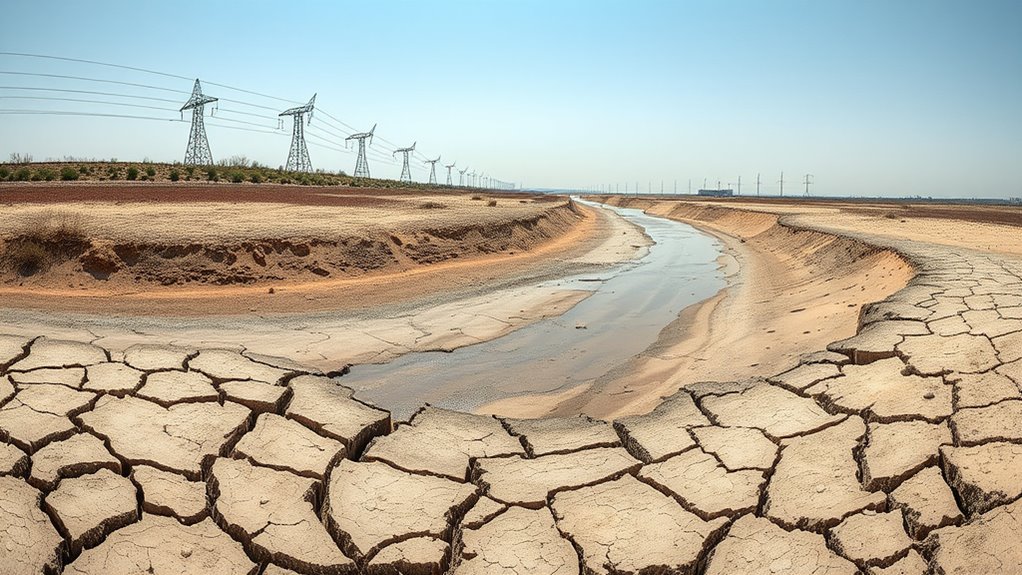

During a drought, you’ll notice water supply disruptions and higher costs as local systems struggle to meet demands. Power grids are also affected, especially in hydro-dependent areas, risking shortages and blackouts. To cope, communities adopt water conservation measures and diversify energy sources like wind or solar. If you want to understand how these challenges impact your region and what strategies help, keep exploring the ongoing effects of droughts on water and power systems.

Get backup power and energy gear delivered free with Prime
- Fast, free delivery on millions of items
- Prime Video, Amazon Music and more included
- Member-only deals all year
Key Takeaways
- Droughts cause water shortages, disrupting supplies and increasing costs for both households and industries.
- Reduced water levels impact hydroelectric power generation, risking shortages and higher energy prices.
- Water restrictions and conservation efforts become essential to manage limited resources during drought conditions.
- Power systems shift towards renewable energy sources like wind and solar to reduce water dependence.
- Community cooperation and policy measures are vital to sustain water and power supplies amid prolonged droughts.
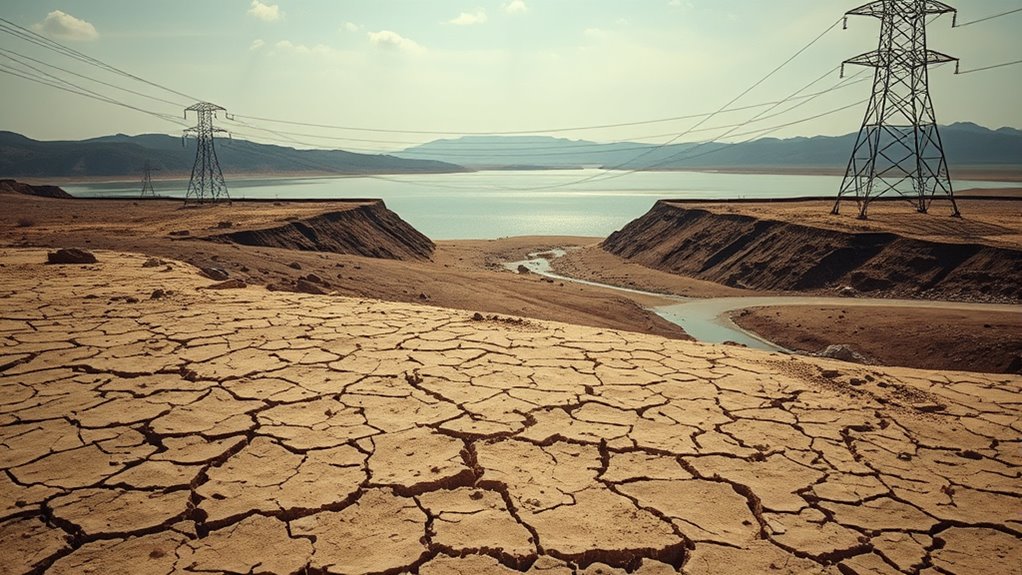
Droughts can have severe impacts on regions, disrupting water supplies, agriculture, and local ecosystems. When water becomes scarce, you may find yourself facing restrictions on daily water use or higher costs for essential supplies. These conditions push communities to adopt climate adaptation strategies, which include improving water conservation efforts and finding innovative ways to manage limited resources. Recognizing the importance of conserving water during droughts is critical, as it directly affects your ability to maintain normal routines and support local industries. By reducing unnecessary water usage, you help ensure that vital supplies last longer, easing the strain on water systems and helping the environment recover.
In terms of power systems, droughts often lead to decreased water availability for hydroelectric plants, which can cause power shortages or blackouts. If your region relies heavily on hydroelectric energy, you might notice increased energy prices or interruptions in service. This is because water levels in reservoirs drop below operational thresholds, forcing power providers to seek alternative sources or reduce output. During such times, climate adaptation measures become essential; communities and utilities work together to diversify energy sources, investing in renewable options like wind or solar power to lessen dependence on water-intensive energy generation. These steps not only help stabilize power supplies during droughts but also promote long-term resilience against climate variability.
Water conservation becomes even more critical during extended drought periods. Simple actions like fixing leaks, using water-efficient appliances, and limiting outdoor watering can significantly reduce your water footprint. When everyone contributes, the cumulative effect alleviates pressure on strained water systems and helps uphold essential services. Additionally, conservation efforts extend beyond individual actions. Local governments often implement policies such as watering bans or tiered billing to incentivize responsible water use. These measures are designed to encourage you and your neighbors to make mindful choices, ensuring that water remains available for critical needs and that ecosystems aren’t pushed beyond their limits. Moreover, understanding the capacity of water systems can help you better appreciate the importance of conservation during these times.
Ultimately, managing the effects of drought on power and water systems requires a combination of proactive planning and community cooperation. Embracing climate adaptation strategies and prioritizing water conservation can help mitigate the worst impacts, ensuring that vital resources are preserved for future generations. By staying informed and participating in conservation efforts, you play a vital role in strengthening your community’s resilience against the increasing threat of droughts.
Frequently Asked Questions
How Do Droughts Impact Renewable Energy Sources?
Droughts can reduce renewable energy output, especially affecting solar integration and wind variability. When droughts lower water levels, solar panels might get less sunlight due to dust or haze, decreasing efficiency. Similarly, drought-related changes in wind patterns can cause wind variability, making wind power less reliable. You might see fluctuations in energy generation, requiring backup sources or storage solutions to maintain steady power supply during drought conditions.
What Are the Long-Term Economic Effects of Drought on Utilities?
Droughts can cut utility revenues by up to 20%, challenging your economic resilience. Over time, these financial strains may lead to higher rates for consumers and reduced investments, risking your utility’s long-term stability. You need to adapt by diversifying energy sources and strengthening infrastructure. Addressing drought impacts now helps preserve your financial health and ensures reliable power and water services for the future.
How Do Drought Conditions Influence Water Quality Standards?
Drought conditions can lower water levels, leading to increased groundwater contamination and reservoir sedimentation. You might notice water quality standards become harder to meet, as contaminants concentrate and sediments disturb filtration. During droughts, you should anticipate stricter monitoring and potential treatment upgrades to ensure safe drinking water. These changes help protect public health despite the challenges posed by reduced water availability and quality during prolonged dry periods.
What Adaptive Strategies Are Most Effective for Drought Resilience?
You should prioritize water conservation, upgrade infrastructure, and implement efficient management practices. These strategies help you adapt by reducing water usage, strengthening existing systems, and preventing shortages. Emphasize public awareness campaigns to encourage conservation, invest in resilient infrastructure to withstand drought impacts, and adopt innovative technologies for better water management. By doing so, you enhance your community’s drought resilience, ensuring sustainable water supply and system reliability during challenging conditions.
How Does Drought Variability Affect Infrastructure Planning?
You should consider how drought variability influences infrastructure planning by incorporating drought forecasting into your strategies. This allows you to anticipate periods of water scarcity and adjust infrastructure adaptation measures accordingly. By analyzing predictive data, you can design resilient systems that withstand fluctuating drought conditions, ensuring reliable power and water services. Proactively integrating drought forecasting into planning helps you reduce risks and enhances your community’s resilience to future drought variability.
Conclusion
As you consider the ongoing drought’s impact, you realize the true extent of what’s at stake. Water and power systems hang in a fragile balance, teetering on the edge of crisis. Will these systems hold, or will the drought push them beyond recovery? The future remains uncertain, and your actions now could determine what comes next. One thing’s clear—what happens next could reshape your community in ways you never imagined.
Fall Picks
fall essentials
As an affiliate, we earn on qualifying purchases.