
According to CDC guidelines, you should store at least one gallon of water per person each day for a minimum of three days. This amount covers drinking, cooking, and sanitation needs during emergencies. Planning for your household size and specific circumstances is essential. Proper storage and regular replacement help keep water safe and ready to use. To learn more about how to plan effectively for emergencies, keep exploring the key strategies.

Get backup power and energy gear delivered free — and shop member deals
- Fast, free delivery on millions of items
- Access to Prime Big Deal Days deals on October 6–7
- Prime Video, Amazon Music and more included
Key Takeaways
- Store at least one gallon of water per person per day for a minimum of three days.
- Adjust water quantity based on household size, needs, and duration of potential emergencies.
- Use food-grade containers, label, and replace stored water every six months to ensure safety.
- Incorporate water purification methods like boiling or disinfecting with household bleach for added safety.
- Keep stored water in a cool, dark place and regularly inspect containers for leaks or contamination.
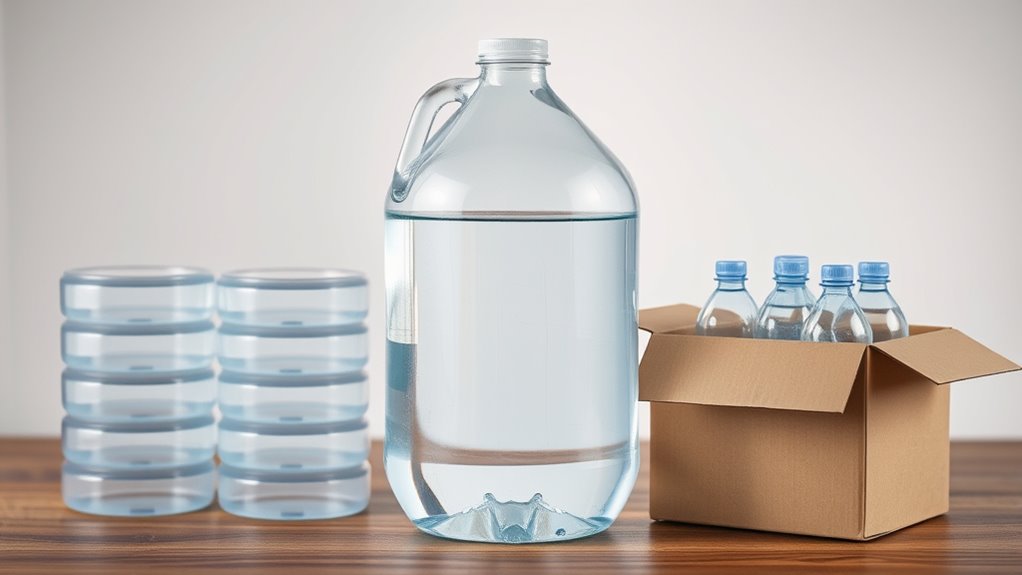
Have you ever considered what you’d do if your access to clean water suddenly disappeared? It’s a question that highlights the importance of being prepared for emergencies. The CDC recommends that individuals have enough water on hand to last at least three days, which usually amounts to about one gallon per person per day. This covers drinking, cooking, and basic sanitation needs. But knowing how much water to store isn’t enough—you also need to understand how to keep it safe and usable. That’s where water purification and proper storage containers come into play.
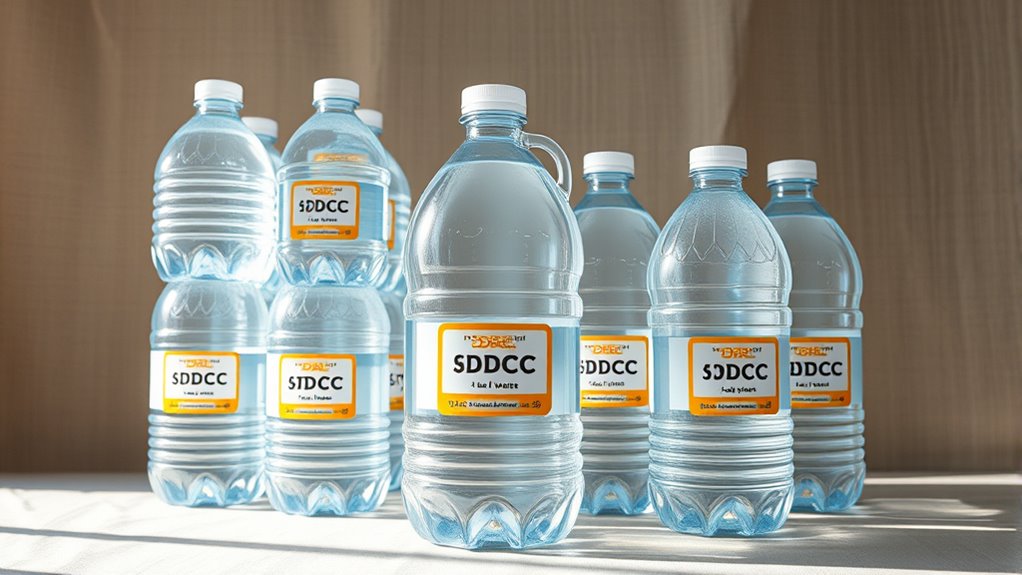
When it comes to storing emergency water, choosing the right storage containers makes all the difference. You want containers that are made of food-grade materials to prevent contamination. They should be sturdy, seal tightly, and be easy to clean and refill. Plastic bottles designed specifically for water storage are a popular choice because they’re lightweight, affordable, and resistant to leaks. For larger quantities, consider sturdy water storage barrels or jerry cans, which allow you to store multiple gallons safely. It’s essential to label your containers clearly with the date of storage and replace the water every six months to keep it fresh. Incorporating data-driven strategies can help you determine the optimal amount of water for your specific needs and household size.
Water purification is another vital step in maintaining safe drinking water during an emergency. Even if your water comes from a reliable source, it’s wise to purify it before use, especially if it’s stored for long periods or if you’re unsure of its cleanliness. Simple water purification methods include boiling water for at least one minute, which kills most bacteria and viruses. Chemical disinfectants like household bleach can also be used—just a few drops per gallon of water, mixed thoroughly, and left to sit for 30 minutes. Another option is portable water filters, which can remove bacteria, protozoa, and some viruses, making contaminated water safer to drink.
To guarantee your emergency water supply remains safe and effective, you need to prioritize proper storage and purification. Keep your water in a cool, dark place to prevent algae growth and degradation of the containers. Regularly inspect your storage containers for cracks or leaks, and replace the water every six months or sooner if it shows signs of contamination. By understanding how much water you need, selecting the right storage containers, and knowing how to purify water when necessary, you’ll be much better prepared for any emergency. In doing so, you protect yourself and your loved ones from the potentially devastating effects of water shortages or contamination during a crisis.
Frequently Asked Questions
How Long Can Stored Emergency Water Typically Last?
Stored emergency water typically lasts about 6 months to a year if you keep it in a cool, dark place and use proper containers. Regularly rotating your supply helps prevent water contamination and ensures freshness. Over time, storage duration impacts water quality, so it’s important to check for signs of contamination and replace it accordingly. Proper storage and timely replacement keep your emergency water safe and reliable when you need it most.
Should I Rotate My Emergency Water Supply Regularly?
You should definitely rotate your emergency water supply regularly. Water quality can deteriorate over time, even if it’s stored properly, affecting its safety. By rotating your supply based on storage duration, you ensure fresh, clean water when it’s needed most. Don’t risk using expired water—check and replace it periodically. Staying vigilant keeps your emergency plan reliable, giving you peace of mind during critical moments when every drop counts.
Can I Use Bottled Water for Emergencies?
Yes, you can use bottled water for emergencies. Just make sure it’s stored in clean, food-grade containers designed for water storage. You might need to purify it if it’s been opened or stored for a long time. Water purification methods like boiling or using tablets can guarantee safety. Regularly check your storage containers for leaks or contamination, and rotate your bottled water to keep your emergency supply fresh.
What Are the Best Containers for Storing Emergency Water?
Think of your emergency water storage as a fortress—strong and reliable. The best containers are made of durable, food-grade plastic or stainless steel, which resist cracks and contamination. Look for containers that are BPA-free, easy to clean, and have secure lids. Pair them with water filtration systems for added safety. This combo guarantees your water stays safe, fresh, and ready when you need it most.
How Do I Purify Water During an Emergency?
You can purify water during an emergency by using water filtration systems to remove debris and bacteria. Additionally, purification tablets are effective; just follow the instructions on the package to disinfect water safely. Boiling water for at least one minute is another reliable method. Combining filtration with purification tablets or boiling guarantees you get safe drinking water, helping you stay healthy until normal supplies are restored.
Conclusion
Remember, just like a ship needs enough water to sail through storms, you must stock enough for emergencies. The CDC’s guidelines are your compass, guiding you to safety amid chaos. Keep your supply steady, and you’ll be ready to face whatever nature throws your way. With proper planning, you’ll weather the storm unscathed, your home a sturdy vessel afloat in turbulent waters. Stay prepared, stay safe—your peace of mind depends on it.
Fall Picks
fall essentials
As an affiliate, we earn on qualifying purchases.