
A dependable home energy plan is about more than buying a generator or adding solar panels. It is a practical system for keeping essential appliances, communications, lighting, water, food preparation, and safety equipment available when the grid is expensive, unreliable, or unavailable. The right setup depends on where you live, which loads matter most, how long an interruption might last, and whether you need everyday savings, emergency resilience, or both.

Get backup power and energy gear delivered free — and shop member deals
- Fast, free delivery on millions of items
- Access to Prime Big Deal Days deals on October 6–7
- Prime Video, Amazon Music and more included
This guide explains the major parts of a home energy system, from efficiency and solar generation to batteries, portable power stations, fuel-burning generators, and low-power emergency supplies. Use it to identify your priorities, avoid mismatched equipment, and find the Stormwatt guides that address specific purchasing decisions in greater depth.
Start With an Energy and Resilience Plan
Before comparing equipment, decide what you actually need to power. Whole-home operation is very different from maintaining a refrigerator, internet connection, a few lights, and charged phones. Trying to support every household circuit can make a backup system unnecessarily large and complicated. Prioritizing essential loads usually produces a more affordable and manageable solution.
List your essential loads
Walk through the home and create three categories: critical, useful, and optional. Critical loads may include medical devices, refrigeration, a sump pump, communications equipment, or heating-system controls. Useful loads might include selected lights, fans, a microwave, or a laptop. Electric water heaters, clothes dryers, central air conditioners, and electric ranges are often among the most demanding loads and may require special planning.
Record each device’s running wattage and, where applicable, its starting or surge requirement. Motors and compressors can briefly draw considerably more power when they start. A backup source must be able to handle both the ongoing combined load and these short surges.
- Estimate how many hours per day each essential device must run.
- Separate continuous loads from appliances that can operate in shifts.
- Note any equipment that requires 240-volt power rather than a standard household outlet.
- Identify devices that cannot tolerate even a brief interruption.
- Plan for seasonal needs such as heating, cooling, or stormwater removal.
Think in watts and watt-hours
Watts describe how much power a device needs at a given moment. Watt-hours describe how much energy it consumes over time. A 100-watt device operating for five hours uses roughly 500 watt-hours. This distinction is essential when sizing batteries and portable power stations: output capacity determines what they can run, while stored energy influences how long they can run it.
Real-world runtime is also affected by conversion losses, temperature, battery condition, and changing appliance demand. Treat simple calculations as planning estimates, then preserve a margin instead of sizing a system to the exact theoretical requirement.
home solar backup battery system
As an affiliate, we earn on qualifying purchases.
As an affiliate, we earn on qualifying purchases.
Reduce Demand Before Adding Supply
Efficiency is often the least glamorous but most productive part of home energy planning. Every watt you avoid using is a watt that your solar array, battery, or generator does not need to provide. Lower demand can extend battery runtime, reduce fuel consumption, and make a smaller backup system genuinely useful.
Begin with basic improvements: replace inefficient lighting, eliminate unnecessary standby consumption, improve weather sealing, maintain heating and cooling equipment, and adjust schedules for high-demand appliances. Smart plugs or circuit-level monitors can reveal which devices consume energy continuously. During an outage, even simple habits—such as opening the refrigerator less often or charging devices together—can conserve limited energy.
Load shifting is equally valuable when solar is available. Dishwashing, laundry, device charging, and other flexible activities can be scheduled for periods of strong solar production. This allows more energy to be used directly instead of stored or exported.
portable power station for emergency backup
As an affiliate, we earn on qualifying purchases.
As an affiliate, we earn on qualifying purchases.
Understand Residential Solar Power
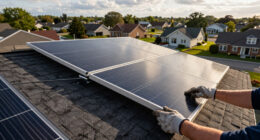
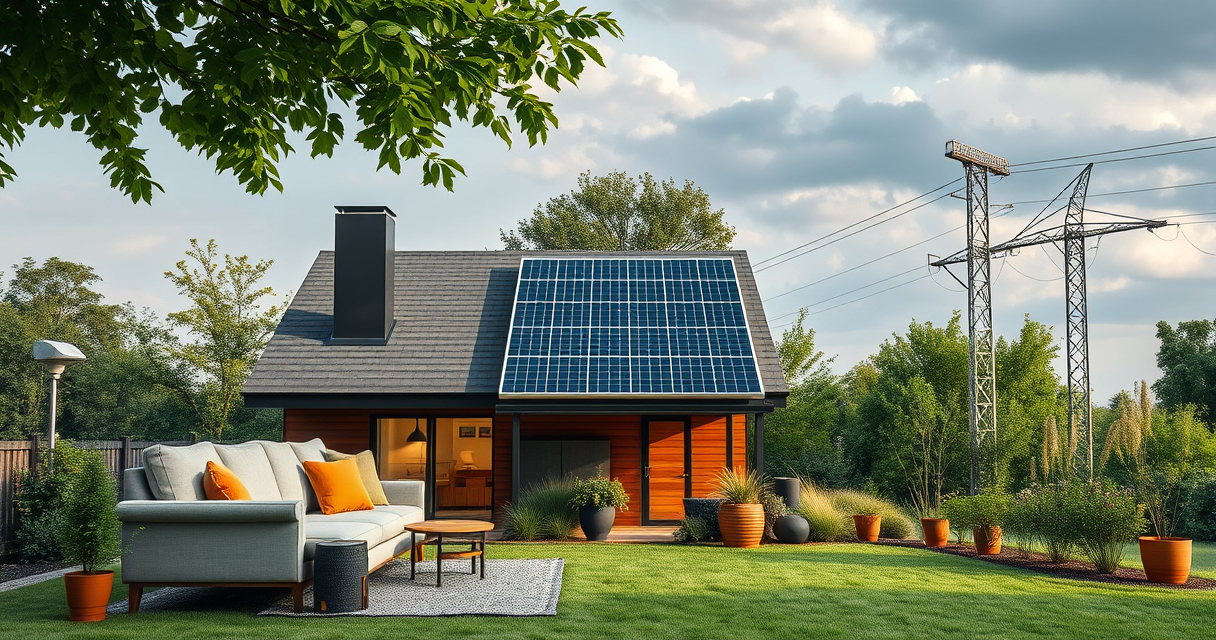
A solar array converts sunlight into electricity, but panels are only one part of the system. A typical installation also includes mounting hardware, wiring, safety equipment, and one or more inverters. Grid-connected systems may reduce utility consumption, while hybrid systems can combine solar panels with batteries and grid power.
Grid-tied solar is not automatically backup power
A common misconception is that rooftop panels will continue powering a home whenever the grid fails. Many grid-tied systems shut down during an outage to prevent electricity from feeding utility lines while crews may be working on them. Backup operation generally requires compatible equipment designed to isolate the home from the grid and form a stable local power source.
If outage protection is important, discuss that objective at the beginning of system design. Ask which circuits will be backed up, whether the system can start large loads, how it behaves when the battery is depleted, and whether solar can continue replenishing the battery while the utility supply is unavailable.
Solar output changes throughout the day
Panel ratings describe performance under standardized conditions, not guaranteed production at every moment. Roof direction, tilt, shading, cloud cover, temperature, dirt, snow, and seasonal daylight all influence energy yield. A sound plan considers annual production as well as the weaker days that matter most during an extended outage.
- Inspect the site for shade at different times and seasons.
- Confirm the roof condition before installing equipment expected to remain for years.
- Understand local permitting, utility interconnection, and electrical requirements.
- Leave room for realistic system losses when estimating production.
- Consider future loads such as an electric vehicle or heat pump.
whole house generator automatic transfer switch
As an affiliate, we earn on qualifying purchases.
As an affiliate, we earn on qualifying purchases.
Choose the Right Battery or Portable Power Station
Battery storage can capture solar energy, provide quiet short-term backup, and keep sensitive electronics operating without the noise or exhaust of an engine-driven generator. Options range from pocket-size power banks to portable solar generators and permanently installed home batteries.
Small power banks
Compact USB power banks are useful for phones, small lights, and other low-voltage electronics. They cannot replace a household backup system, but they can preserve communication and navigation when wall outlets are unavailable. Stormwatt’s guide to Energizer power banks for everyday charging is a focused starting point for this portable layer of preparedness.
Portable solar generators
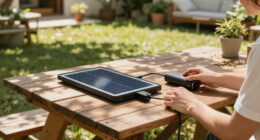
A “solar generator” commonly refers to a portable power station that combines a rechargeable battery, charging electronics, and several output types. Compatible solar panels can replenish it without fuel when sufficient sunlight is available. These units may support selected appliances, tools, communications equipment, or a compact off-grid setup, depending on their output and stored energy.
Compare continuous output, surge capability, battery capacity, input limits, port selection, charging options, weight, and expansion support. The guide to Bluetti solar generator kits can help readers explore packaged options designed around portable generation and storage.
Installed home batteries
A fixed battery system can serve selected circuits or, when appropriately designed, a much larger share of the home. Installation involves electrical integration, control equipment, code compliance, and decisions about which loads receive priority. A professional assessment is especially important when the system will interact with rooftop solar, a standby generator, or 240-volt equipment.
Whatever battery format you choose, protect it from unsuitable temperatures and follow the manufacturer’s charging and storage instructions. Periodically confirm that emergency equipment is charged, accessible, and functioning.
energy efficient LED lighting for home
As an affiliate, we earn on qualifying purchases.
As an affiliate, we earn on qualifying purchases.
Use Fuel-Burning Generators Safely
Generators can provide substantial power for as long as fuel remains available, making them valuable during prolonged outages. Their disadvantages include noise, maintenance, fuel storage, and serious carbon-monoxide and electrical hazards. They must never be operated inside a home, garage, basement, shed, or another enclosed or partly enclosed space. Position and operate equipment according to its instructions and applicable safety guidance.
Portable versus standby generators
A portable generator is flexible and can be stored when not needed, but it requires setup, fueling, and safe connection during an outage. A standby generator is permanently installed and may start automatically, although it requires professional installation and periodic service. The appropriate choice depends on outage frequency, required loads, available fuel, budget, and how much manual setup the household can manage.
Plan the electrical connection
Never attempt to power household wiring by connecting a generator to an ordinary wall receptacle. A properly designed transfer method prevents dangerous backfeeding and isolates the intended circuits. Consult a qualified electrician about transfer switches, interlocks, inlet boxes, grounding requirements, and local rules.
When extension cords are used directly with portable equipment, they must match the generator outlet, expected current, environment, and distance. Undersized or inappropriate cords can overheat or cause excessive voltage drop. For higher-current configurations, see the guide to 30-amp generator cords for safe, reliable connections.
- Test the generator before storm season rather than during an emergency.
- Keep operating instructions where they can be found without internet access.
- Store approved fuel safely and rotate it as appropriate.
- Maintain working carbon-monoxide alarms in the home.
- Allow hot equipment to cool before refueling.
Build a Layered Backup System
No single energy source is ideal for every situation. A layered system can cover short interruptions efficiently and preserve options during longer emergencies. Small batteries can handle phones and lights, a portable power station can support selected electronics or appliances, solar can provide renewable recharging, and a generator can supply heavier loads or operate through periods of poor sunlight.
The key is compatibility. Confirm voltage, connectors, maximum inputs, charging behavior, and transfer procedures before an emergency. Label cables and store necessary adapters with the equipment they serve. If multiple household members might operate the system, create a short written sequence for startup, load management, refueling, and shutdown.
Redundancy should also extend to ordinary batteries. Flashlights, radios, sensors, and other emergency devices are only useful when their batteries are charged, fresh, and easy to locate. A dedicated organizer can simplify inventory and help keep different sizes separated. Stormwatt’s review of battery organizers for winter-storm preparation covers practical storage options for this often-overlooked part of resilience.
Plan for Cooking When Power Is Limited
Food preparation can consume significant electricity, especially when it involves an electric range or oven. During a prolonged outage, a separate cooking method can preserve battery capacity for refrigeration, communications, medical equipment, and lighting.
Portable butane stoves are one option for suitable settings, including some RV and outdoor uses, but combustion equipment requires careful adherence to ventilation, clearance, fuel-storage, and manufacturer instructions. Never assume a stove is safe for indoor operation merely because it is compact. Readers comparing portable cooking equipment can consult the guide to butane stoves for RV living.
A resilient food plan should include meals that require little water, fuel, or refrigeration. Manual can openers, insulated containers, and simple cookware can be as useful as the stove itself. Rotate stored food through normal household use so supplies remain familiar and current.
Include Water in Your Energy Strategy
Water and power planning are closely connected. Private wells may stop pumping when electricity fails, municipal service can be disrupted, and boiling water consumes fuel or stored energy. Keep an appropriate emergency water supply and understand how your household would obtain and treat additional water if an outage lasts longer than expected.
Gravity filters can operate without grid electricity, making them useful as one component of a broader water plan. Filtration capabilities vary, so match any product to the actual water source and follow its maintenance and replacement instructions. The guide to Coleman gravity water filters for clean drinking water explores options intended for human use.
Pets also need dependable access to clean water, and their needs should be included when calculating stored volume. For household pet hydration equipment, see Stormwatt’s guide to gravity water filters for pets. A pet fountain or filter is not necessarily an emergency water-treatment system, so distinguish between routine hydration products and equipment intended to treat questionable source water.
Maintain and Test the Whole System
Backup equipment deteriorates when ignored. Batteries discharge, fuel ages, filters expire, cables become misplaced, and household needs change. Establish a recurring inspection schedule that covers every part of the plan.
- Recharge portable batteries and test their outputs.
- Run generators according to maintenance guidance and inspect cords.
- Check solar panels and accessible connections for visible damage.
- Replace depleted disposable batteries and remove leaking cells.
- Review stored water, food, fuel, and filter components.
- Update the essential-load list after purchasing major appliances.
- Practice the outage procedure with everyone who may need to use it.
A simulated outage is one of the best ways to discover missing adapters, unrealistic runtime expectations, difficult startup procedures, or competing loads. Conduct the exercise under controlled conditions, then revise the plan based on what actually worked.
Create a System That Matches Your Home
The best home energy strategy is not necessarily the largest. It is the one that supports clearly defined priorities, fits the building, can be operated safely, and remains maintainable over time. Start by reducing demand and measuring essential loads. Add solar when it suits the site and energy goals, choose batteries based on both output and runtime, and use generators only with proper outdoor operation and electrical connections.
Finally, treat power as part of a wider resilience system that includes water, cooking, communications, lighting, and organized supplies. When those pieces are planned together, even modest equipment can be far more effective. Revisit the plan regularly, test it before severe weather arrives, and expand it only when a real need—not simply a bigger specification—justifies the change.
Evergreen bestsellers Picks
bestsellers
As an affiliate, we earn on qualifying purchases.