If you see downed power lines or damaged electrical equipment, stay at least 30 feet away and warn others to keep clear. Never attempt to touch or move the wires. Call your local utility company’s emergency number or dial 911 immediately, providing clear details about the location and hazards. Keep others away until professionals arrive. To learn more about staying safe and how trained experts handle these situations, keep exploring the important safety steps.

Get backup power and energy gear delivered free with Prime
- Fast, free delivery on millions of items
- Prime Video, Amazon Music and more included
- Member-only deals all year
Key Takeaways
- Recognize downed power lines by hanging low, sparking, or smoke; maintain at least 30 feet distance.
- Keep others away and set up barriers or warning signs to prevent access.
- Immediately call the local utility company’s emergency number to report the hazard.
- Dial 911 if there is fire, injury, or immediate danger related to the electrical equipment.
- Stay at a safe distance until trained professionals arrive and declare the area safe.
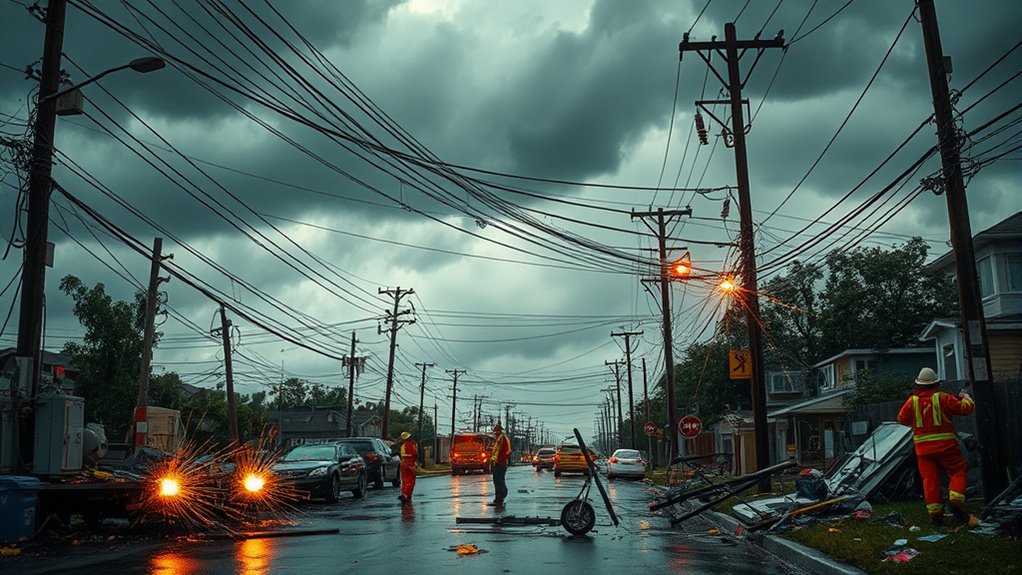
Have you ever encountered a downed power line or damaged electrical equipment? If so, it’s vital to act quickly and safely. First, remember that safety precautions are your top priority. Never approach or touch a downed wire, as it could still be energized and pose a serious risk of electrocution. Keep a safe distance—at least 30 feet away—and warn others nearby to stay clear. If you see sparks, smoke, or if the wire is hanging low or on the ground, assume it’s live and dangerous. In such situations, your immediate focus should be on preventing injury or further damage.
Next, you need to contact the right emergency contacts without delay. Most communities have a specific line for reporting power outages or hazardous electrical situations—usually the local utility company or electric service provider. Use your phone to call their emergency number, which is often available 24/7, and provide clear details about the location and nature of the problem. If you’re unsure of the exact number, dialing 911 is appropriate if the situation involves immediate danger, such as fire or someone in contact with the wire. When speaking with emergency dispatchers, be concise but thorough: describe the location, the condition of the equipment, and any hazards you’ve observed. This information helps responders prioritize and act swiftly.
While waiting for professional help, keep others away from the scene. If you’re in a public area, use barriers or warning signs if available, and instruct bystanders to stay back. Do not attempt to move or repair damaged equipment yourself—power lines and electrical devices require specialized training and equipment to handle safely. If the downed line is blocking a road or pathway, notify the utility company immediately so they can dispatch crews to shut off power and address the hazard. Be patient and stay at a safe distance until qualified personnel arrive and declare the area safe. Additionally, understanding the importance of skilled intervention can help emphasize why only trained professionals should handle such situations.
Frequently Asked Questions
Can I Report Downed Power Lines Anonymously?
Yes, you can report downed power lines anonymously if you’re concerned about safety. Many utility companies and local authorities offer anonymous reporting options to address safety concerns without revealing your identity. You should look for a dedicated hotline or online form that permits anonymous reports. Doing so helps ensure safety while safeguarding your privacy, encouraging more people to report hazards promptly and prevent accidents or injuries.
What Should I Do if I See Sparks Near a Power Line?
Seeing sparks near a power line is a red flag—don’t ignore it. Immediately stay away, as electrical hazards could cause serious injury or fire. Follow emergency procedures by keeping a safe distance and calling emergency services or your utility company to report the danger. Remember, it’s better to be safe than sorry; your quick action can prevent accidents and keep everyone safe.
Are There Specific Times When Reporting Is More Urgent?
Yes, reporting is more urgent during severe weather, power outages, or if you notice sparks, fallen lines, or damaged equipment. Your emergency preparedness and safety guidelines emphasize acting quickly to prevent accidents. If you see dangerous situations, don’t wait—call emergency services immediately. Prompt reporting helps authorities respond faster and keeps everyone safe. Always prioritize safety and follow established guidelines when dealing with downed power lines or damaged equipment.
How Long Does It Usually Take for Crews to Respond?
Think of response times like a relay race—crews pass the baton based on emergency prioritization. Usually, you’ll see crews arrive within a few hours for urgent situations, but it can take longer if the damage isn’t immediate danger. Factors like weather and location influence this timing. Rest assured, utility companies prioritize safety, so they’ll respond as quickly as possible to protect you and your community.
Can I Repair or Move Damaged Equipment Myself?
You shouldn’t attempt any DIY repairs or equipment relocation yourself. Damaged power lines and equipment are dangerous, and mishandling them can cause serious injury or further damage. Always wait for trained utility crews to arrive and handle repairs safely. If you notice downed lines or damaged equipment, keep a safe distance, report the issue, and let professionals take care of the rest. Your safety comes first.
Conclusion
Remember, reporting downed power lines and damaged equipment isn’t just about safety—some say it might even prevent a myth that sparks can jump from live wires, causing fires. While that’s partially true, the real priority is your safety and the safety of others. Always stay away and call your utility company immediately. Taking quick action not only helps prevent accidents but also debunks the myth that touching a downed line is safe—because it’s never worth the risk.
Halloween Picks
halloween
As an affiliate, we earn on qualifying purchases.